What determines eye color?
Short answer
Eye color is determined by the amount and quality of melanin pigment in the iris stroma. Genetic inheritance from parents dictates these pigment levels, primarily involving genes like OCA2 and HERC2. While light scattering, known as the Tyndall effect, influences blue and green hues, melanin density remains the fundamental biological driver of color.
On this page
How does genetics determine eye color?
Eye color is a polygenic trait, meaning it is influenced by the interaction of multiple genes rather than a single dominant or recessive factor. For decades, scientists simplified this by suggesting that brown eyes were dominant and blue eyes were recessive, but modern research reveals a much more complex reality. At least 16 different genes contribute to the final appearance of the iris, with the OCA2 and HERC2 genes playing the most significant roles.
These genes regulate the production and processing of melanin, the same pigment responsible for skin and hair color. HERC2 acts as a genetic switch that controls the activity of OCA2, which produces the P protein necessary for melanin synthesis. When these genes are highly active, the iris produces significant amounts of brown pigment. If these genes are less active or mutated, the iris produces minimal melanin, resulting in lighter colors. Because humans inherit two copies of each gene—one from each parent—the specific combination of these variants creates a unique spectrum of eye colors across the global population.
Why do eyes appear blue or green?
The appearance of blue, green, or hazel eyes is often a result of structural coloration rather than the presence of blue or green pigment. The iris contains two layers: the posterior pigment epithelium and the anterior stroma. In brown eyes, the stroma is packed with melanin, which absorbs incoming light. In blue eyes, the stroma contains very little melanin and is relatively translucent.
When light enters the eye, it strikes the collagen fibers in the stroma and scatters in a phenomenon known as the Tyndall effect. This is the same physical process that makes the sky appear blue. Because shorter, blue wavelengths of light scatter more easily than longer, red wavelengths, the reflected light gives the eye its blue appearance. Green and hazel eyes occur when there is a small amount of melanin mixed with the scattering of light, creating a shift in the reflected hue.
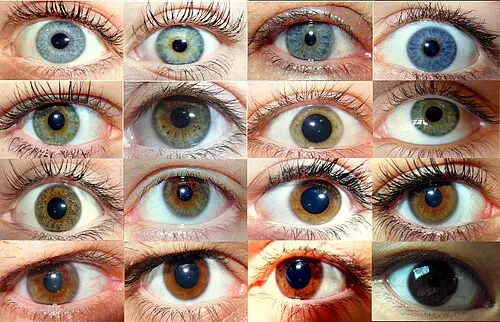
- Blue: Low melanin, high light scattering.
- Green: Low melanin, moderate lipochrome (yellow pigment).
- Brown: High melanin, minimal light scattering.
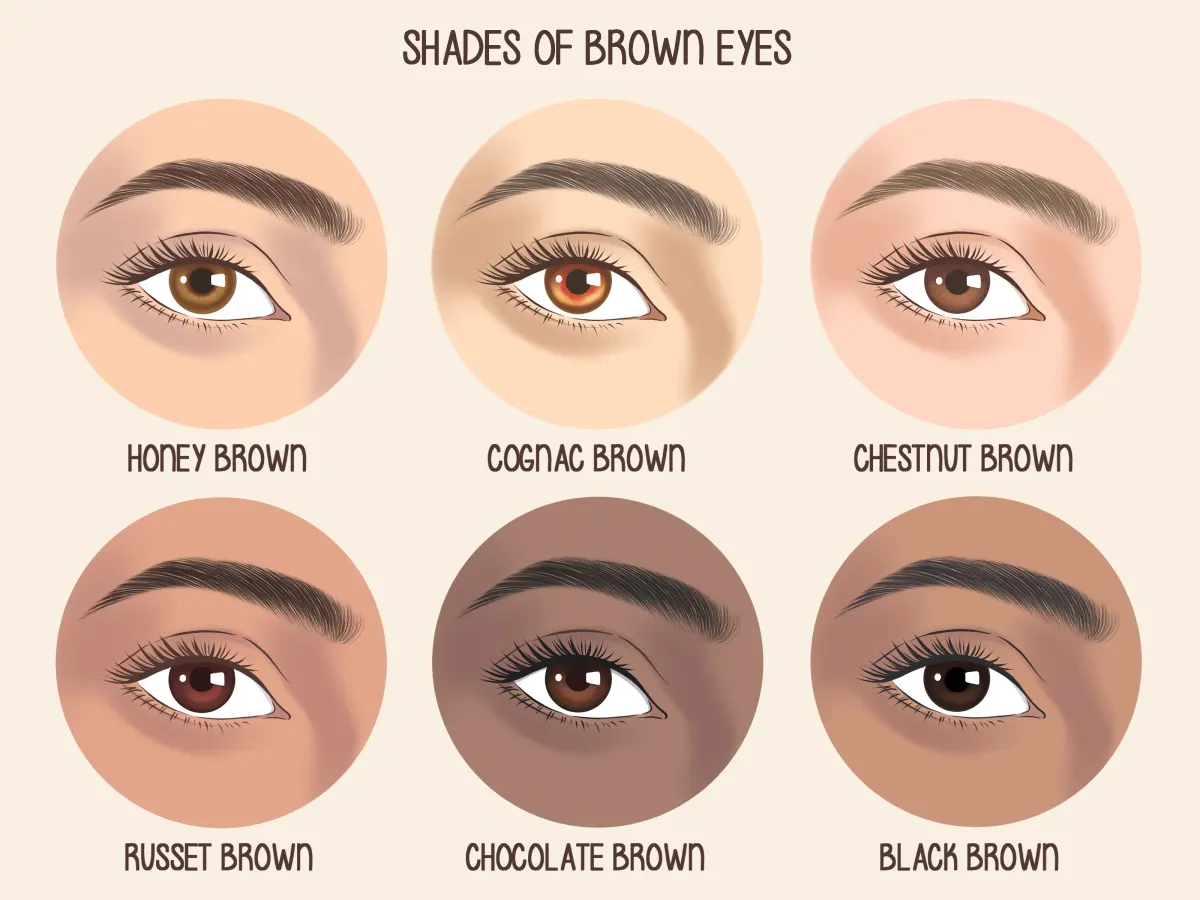
- Hazel: Moderate melanin, uneven distribution.
Can eye color change over time?
While eye color is largely determined at birth, it is not always permanent throughout a person's life. Many infants, particularly those of European descent, are born with blue or gray eyes because their melanin production has not yet reached full capacity. As the infant is exposed to sunlight, the melanocytes in the iris begin to produce more pigment, often resulting in a shift toward green, hazel, or brown within the first three years of life.
In adulthood, significant changes in eye color are rare and often indicate underlying health concerns rather than natural development. However, some adults may notice subtle shifts due to environmental factors or aging. Common triggers for perceived changes include:
- Pupil dilation: When the pupil expands, the iris is compressed, making the remaining color appear more intense or darker.
- Lighting conditions: Changes in ambient light alter how much color is reflected from the iris.
- Health issues: Conditions like Horner’s syndrome, pigmentary glaucoma, or certain medications can alter iris pigmentation.
- Clothing and makeup: High-contrast colors can make the iris appear to change hue due to optical illusions.
What are common mistakes when predicting eye color?
A frequent mistake people make is assuming that two blue-eyed parents cannot have a brown-eyed child. While this is statistically rare, it is biologically possible due to the sheer number of genes involved in the process. Because eye color is polygenic, a child can inherit a combination of rare gene variants from both parents that leads to the production of more melanin than either parent displays. Relying on outdated "Punnett square" models from high school biology often leads to incorrect assumptions about heredity.
Another common error is failing to distinguish between permanent color and temporary changes. Many people believe that diet or "detox" cleanses can permanently change iris color, but there is no scientific evidence to support these claims. The iris is a structural tissue, and its pigment density is fixed after early childhood. If you notice a sudden, dramatic change in the color of one or both eyes, it is essential to consult an ophthalmologist immediately. This could be a symptom of a medical condition, such as an iris tumor or inflammation, rather than a natural biological shift.
How to identify your true eye color?
Determining your exact eye color can be difficult because the iris is rarely a single, uniform shade. Most eyes feature a complex pattern of flecks, rings, and gradients that change depending on the light. To get an accurate assessment, follow these steps to observe your eyes without the interference of optical illusions or external lighting biases:
- Stand in a room with neutral, natural daylight, avoiding direct sunlight or dim artificial bulbs.
- Use a high-quality mirror and hold a white piece of paper near your face to provide a neutral color reference.
- Look closely at the iris to identify the primary color, noting any rings of different colors around the pupil or the outer edge.
- Take a macro photograph using a smartphone, ensuring the flash is off to prevent reflections that obscure the iris structure.
By examining the eye in this way, you can differentiate between the base color of the stroma and the secondary patterns caused by melanin distribution. Remember that your perception of color is subjective and can be influenced by your skin tone and hair color, which provide the contrast against which your eyes are viewed. Understanding these factors helps clarify why your eye color may seem to fluctuate throughout the day.
Key facts
- Eye color is determined by the amount and type of pigment, called melanin, in the iris.
- The OCA2 and HERC2 genes are the primary genetic drivers of human eye color variation.
- Blue eyes contain very little melanin, while brown eyes have high concentrations of the pigment.
- Green and hazel eyes result from a combination of low melanin and light scattering in the stroma.
- Eye color is a polygenic trait, meaning it is influenced by the interaction of multiple genes rather than just one.
- Infants often have lighter eyes at birth because their melanin production has not yet reached adult levels.
The bottom line
Eye color is a complex biological trait primarily determined by the concentration and distribution of melanin within the iris. While genetics dictate your baseline color, the interplay of light scattering and multiple gene interactions creates the vast spectrum of human eye shades. Understanding that eye color is polygenic helps explain why offspring may exhibit traits that differ from their parents, highlighting the fascinating diversity of human biology.
People also ask
Can eye color change as you get older?
Yes, eye color can shift during infancy or puberty as melanin production increases. While rare, some adults may experience subtle changes due to trauma, medication, or certain medical conditions like glaucoma.
Why do some people have two different colored eyes?
This condition is known as heterochromia. It is typically caused by genetic mutations, developmental issues, or injuries that affect the distribution of melanin in one iris compared to the other.
Is it possible for two blue-eyed parents to have a brown-eyed child?
While rare, it is genetically possible due to the complex nature of the genes involved. Because eye color is polygenic, recessive traits can occasionally combine in unexpected ways to produce a different phenotype.
Does light reflection affect how eye color appears?
Yes, the Tyndall effect causes light to scatter through the iris stroma. This physical phenomenon makes eyes appear blue or green even though the pigment itself is actually brown.
Are there more than just brown, blue, green, and hazel eyes?
Yes, variations such as gray, violet, and amber exist. These are primarily determined by the specific density of melanin and the way light interacts with the structural fibers of the iris.
Does sun exposure change your eye color?
Sun exposure does not fundamentally change your genetic eye color. However, chronic UV exposure can sometimes lead to the development of iris freckles or spots, which may alter the appearance of the iris.
This answer was created with the help of AI research tools and reference sources. Spotted an error? Let us know — we correct mistakes quickly. See our editorial policy.