What is gravity?
Short answer
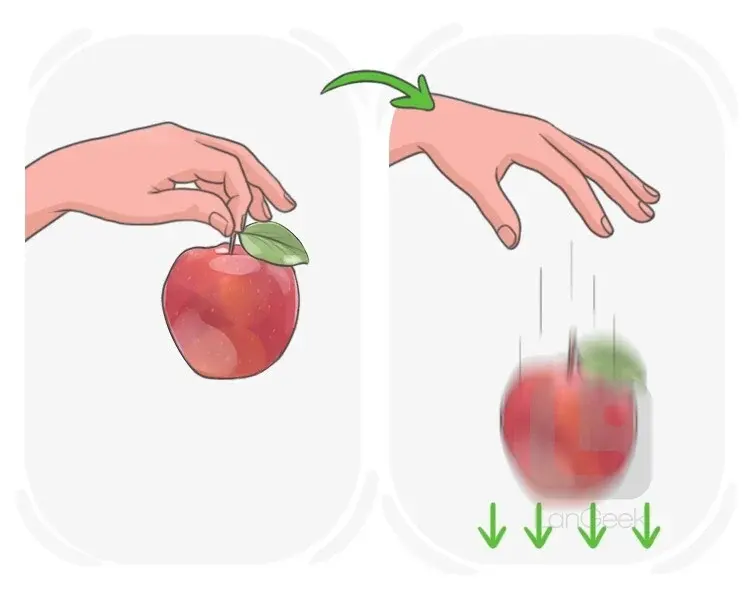
Gravity is a fundamental force of attraction that pulls objects with mass toward one another. It keeps planets in orbit around stars and ensures that objects remain on the ground. On Earth, this force creates weight, causing everything to accelerate downward at approximately 9.8 meters per second squared toward the planet's center.

On this page
Why gravity happens on Earth
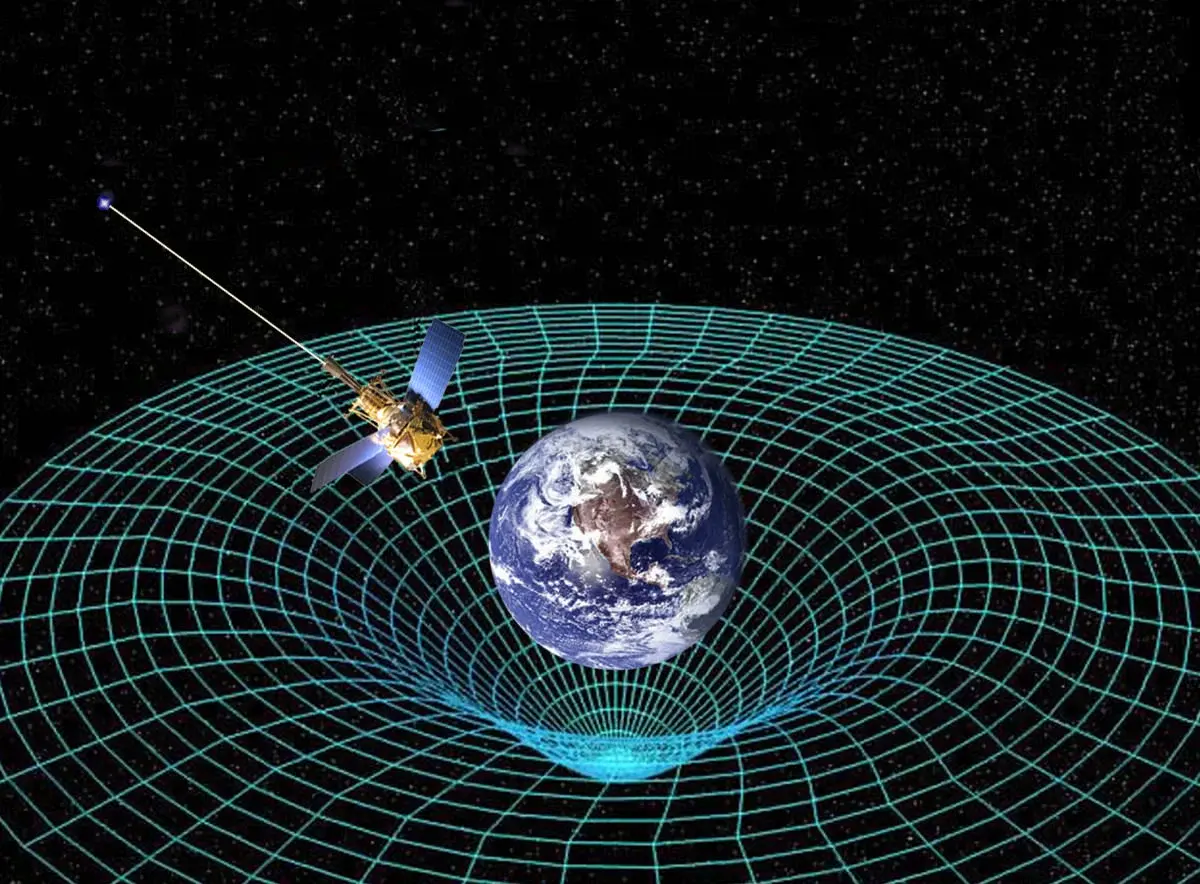
Gravity is the result of mass curving the fabric of space and time, a concept famously introduced by Albert Einstein in his 1915 theory of general relativity. While Isaac Newton previously described gravity as an invisible force pulling objects together, Einstein showed that massive objects like Earth physically warp the space around them. Imagine placing a heavy bowling ball on a trampoline; the fabric curves inward, causing smaller objects to roll toward the center. This curvature dictates how objects move, creating the sensation we interpret as downward weight.
The strength of this gravitational pull depends on two primary factors: the mass of the objects involved and the distance between them. Because Earth is incredibly massive, its gravitational field is strong enough to hold our atmosphere in place and keep us firmly on the surface. However, gravity is actually the weakest of the four fundamental forces in nature, which also include electromagnetism and the strong and weak nuclear forces. Despite its weakness, it dominates on a cosmic scale because it acts over vast distances.
How to calculate gravitational force
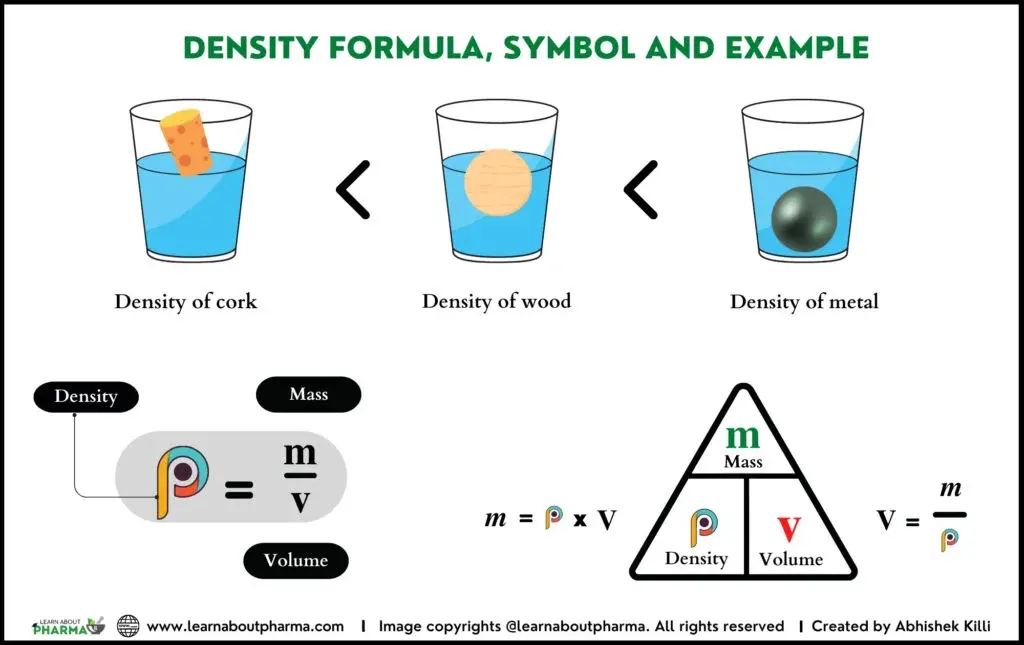
Calculating the force of gravity between two objects requires using Newton’s law of universal gravitation. This formula states that the force is proportional to the product of the two masses and inversely proportional to the square of the distance between their centers. By using this mathematical approach, scientists can predict the orbits of satellites and the trajectories of space probes with extreme precision. Understanding these mechanics is essential for modern space exploration and global positioning systems.
To calculate the force, follow these steps:
- Identify the mass of the first object (m1) and the second object (m2) in kilograms.
- Determine the distance (r) between the centers of the two objects in meters.
- Use the gravitational constant (G), which is approximately 6.674 × 10⁻¹¹ N·m²/kg².
- Apply the formula: F = G * (m1 * m2) / r².
Common mistakes when calculating gravity include:
- Forgetting to convert units, such as using kilometers instead of meters for distance.
- Measuring the distance from the surface of the object rather than its center of mass.
- Neglecting to square the distance value in the denominator of the equation.
What is the difference between mass and weight
Many people mistakenly use the terms mass and weight interchangeably, but they represent distinct physical concepts. Mass refers to the amount of matter contained within an object and remains constant regardless of where that object is located in the universe. Weight, conversely, is a measure of the gravitational force acting on that mass. Because weight depends on the local gravitational field, your weight would fluctuate significantly if you traveled to different planets or stood on the moon.
On the moon, for example, the gravitational pull is only about one-sixth as strong as it is on Earth. If you weigh 60 kilograms, your mass remains 60 kilograms everywhere, but your weight would be significantly lower on the lunar surface. This distinction is vital for engineers designing spacecraft, as they must account for the actual mass of the vessel to calculate the fuel required for propulsion. Understanding this difference helps clarify why astronauts appear weightless in orbit, even though they still possess their full mass.
How gravity affects time and space
Gravity does more than just pull objects together; it actually influences the passage of time itself. This phenomenon, known as gravitational time dilation, occurs because time moves more slowly in stronger gravitational fields. Clocks located closer to a massive body, such as Earth, tick slightly slower than clocks located further away in weaker gravitational fields. While this difference is negligible in daily life, it is a measurable reality that must be accounted for in highly sensitive technology.
Global Positioning System (GPS) satellites provide a practical example of this effect in action. Because these satellites orbit high above Earth where gravity is weaker, their onboard atomic clocks tick faster than those on the ground. Engineers must program the satellites to compensate for this time discrepancy; otherwise, navigation data would become inaccurate by several kilometers within a single day. This real-world application proves that gravity is a dynamic force that fundamentally shapes the structure of our universe and the synchronization of our technology.
Common mistakes when understanding gravity
A frequent error is assuming that objects stop experiencing gravity once they reach space. In reality, gravity extends infinitely, becoming weaker as distance increases but never reaching zero. Astronauts on the International Space Station are not in a "zero-gravity" environment; they are actually in a state of constant freefall. They remain in orbit because they are moving forward at a high velocity, which allows them to fall around the curvature of the Earth rather than crashing into the surface.
Another common misconception is the belief that larger objects fall faster than smaller ones in a vacuum. Galileo Galilei famously demonstrated that, in the absence of air resistance, all objects accelerate toward the ground at the same rate regardless of their mass. If you drop a hammer and a feather in a vacuum chamber, they will hit the floor at the exact same time. Air resistance is the only reason a feather falls slower than a hammer on Earth, as it creates a drag force that opposes the downward pull of gravity.
Key facts
- Gravity is a fundamental force that attracts any two objects with mass toward one another.
- Sir Isaac Newton first mathematically defined gravity in 1687, describing it as an invisible pull between masses.
- Albert Einstein revolutionized our understanding in 1915 by proposing that gravity is the curvature of spacetime caused by mass and energy.
- On Earth, gravity accelerates objects downward at approximately 9.8 meters per second squared.
- To calculate your weight on other planets, multiply your Earth weight by the planet's relative surface gravity.
- Avoid the mistake of thinking gravity is only "downward"; it is a multidirectional force that keeps planets in orbit and tides moving.
The bottom line
Gravity is the invisible glue of the universe, acting as both the force that keeps our feet on the ground and the geometry that guides planets through space. Whether viewed as Newton’s pulling force or Einstein’s warping of spacetime, it remains the dominant influence on the structure of the cosmos. Understanding gravity allows us to navigate the solar system and predict the behavior of everything from tides to stars.
People also ask
Does gravity affect time?
Yes, gravity influences the flow of time through a phenomenon called gravitational time dilation. Clocks closer to a massive body, where gravity is stronger, tick more slowly than clocks located further away in weaker gravitational fields.
Why do astronauts float in space?
Astronauts in orbit are not in a gravity-free environment; they are in a state of constant freefall. Because they are moving sideways at high speeds while falling toward Earth, they continuously miss the planet, creating the sensation of weightlessness.
Is gravity the same everywhere on Earth?
No, gravity varies slightly depending on your location and altitude. Because Earth is an oblate spheroid and has an uneven internal density, gravity is stronger at the poles than at the equator.
What happens if you jump off a tall building?
You will accelerate toward the ground due to the force of gravity pulling your mass toward the center of the Earth. Air resistance will eventually limit your speed, but the impact will be fatal due to the rapid deceleration upon hitting the surface.
Does light have gravity?
Light does not have mass, but it is affected by gravity because massive objects warp the fabric of spacetime. This effect, known as gravitational lensing, causes light to bend as it passes near stars or galaxies.
Can we create artificial gravity?
We cannot generate gravity directly, but we can simulate it using centrifugal force. By rotating a spacecraft, the outward push against the hull creates a force that mimics the sensation of standing on a planet's surface.
This answer was created with the help of AI research tools and reference sources. Spotted an error? Let us know — we correct mistakes quickly. See our editorial policy.