What is density?
Short answer
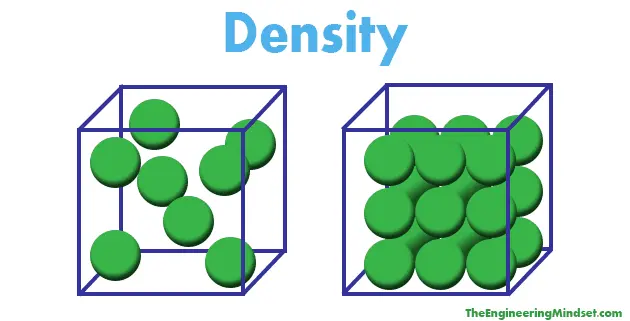
Density is a physical property defined as the mass of a substance per unit of its volume. It measures how tightly packed the matter within an object is. Expressed mathematically as mass divided by volume, it explains why objects of the same size can have vastly different weights depending on their composition.
On this page
How to calculate density
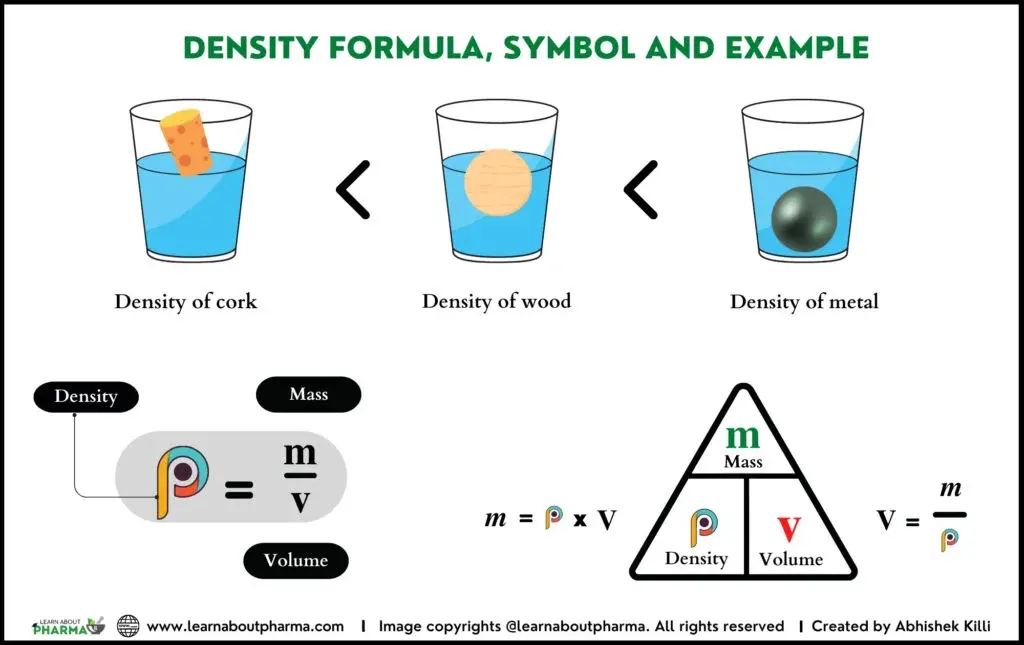
To determine the density of an object, you must measure two specific variables: its mass and its volume. Mass is typically measured in grams using a digital scale, while volume is measured in cubic centimeters or milliliters. The standard formula used by scientists is D = m/v, where D represents density, m represents mass, and v represents volume.
If you are calculating the density of a regular solid, such as a cube, you can find the volume by multiplying length by width by height. For irregular objects, scientists use the displacement method. This involves submerging the object in a graduated cylinder filled with water and measuring how much the water level rises. The difference in water volume is equal to the volume of the object.
- Measure the mass of the object using a precision scale.
- Determine the volume of the object using geometric formulas or liquid displacement.
- Divide the mass by the volume to arrive at the density value.
- Record your answer in units such as grams per cubic centimeter (g/cm³).
Why things float or sink
Density is the primary reason why some objects float in water while others sink immediately. An object will float if its density is lower than the density of the fluid it is placed in, which is known as buoyancy. If an object is denser than the surrounding fluid, the force of gravity pulling it down exceeds the upward buoyant force, causing it to sink.
Water has a density of approximately 1.0 gram per cubic centimeter. Objects like wood, which typically have a density of 0.5 to 0.7 g/cm³, will float because they are less dense than water. Conversely, a rock or a metal coin has a density much higher than 1.0 g/cm³, causing them to sink. This principle is vital in engineering, particularly in shipbuilding, where designers must ensure the total density of a vessel is low enough to stay afloat despite the heavy materials used.
- Ice is less dense than liquid water, which is why icebergs float.
- Steel ships float because their internal structure contains large amounts of air, lowering their average density.
- Helium balloons rise because the gas inside is less dense than the surrounding air.
How temperature affects density
Most substances change their density when their temperature shifts. As a material is heated, its molecules generally gain kinetic energy and move further apart, causing the substance to expand. Because the volume increases while the mass remains the same, the overall density of the substance decreases. This is why hot air rises—it is less dense than the cooler air surrounding it.
Water is a notable exception to this rule. While most liquids become denser as they cool, water reaches its maximum density at 4 degrees Celsius (39.2 degrees Fahrenheit). As it cools further toward freezing, the molecules arrange themselves into a rigid crystalline structure that takes up more space than liquid water. This unique property explains why ice is less dense than liquid water, allowing it to form a layer on the surface of lakes rather than sinking to the bottom.
Common mistakes when measuring density
A frequent error when calculating density is failing to account for the mass of the container holding a liquid or powder. To get an accurate reading, you must first measure the empty container, then measure the container with the substance, and subtract the weight of the container from the total. This process, known as taring, ensures that only the mass of the substance itself is included in your calculation.
Another common mistake involves using inconsistent units of measurement. If you measure the mass in kilograms but the volume in cubic centimeters, your final density value will be incorrect unless you convert the units first. Always ensure your mass is in grams and your volume is in milliliters or cubic centimeters to maintain the standard g/cm³ format. Additionally, ensure that your volume measurement is precise; even a small error in reading a graduated cylinder can lead to a significant deviation in your final density result.
Practical applications of density
Density is a critical concept in various industries, ranging from manufacturing to medicine. In the automotive industry, engineers select materials based on their density to balance vehicle weight, fuel efficiency, and structural integrity. Using high-strength, low-density materials like aluminum or carbon fiber allows cars to be both sturdy and lightweight, which directly improves performance and reduces environmental impact.
In the medical field, doctors use bone density scans to diagnose conditions like osteoporosis. By measuring how much mineral matter is packed into a specific volume of bone, healthcare providers can assess the strength and fracture risk of a patient's skeletal system. Furthermore, in the food industry, density is used to determine the quality and purity of products. For example, the density of milk is measured to ensure that it has not been diluted with water. These practical applications demonstrate that density is not just a theoretical concept but a fundamental tool for understanding the physical world around us.
Key facts
- Density is defined as the mass of an object divided by its volume, typically expressed as grams per cubic centimeter (g/cm³).
- Water has a standard density of 1.0 g/cm³ at 4 degrees Celsius, which serves as the benchmark for measuring specific gravity.
- Objects with a density lower than 1.0 g/cm³ will float in water, while those with a higher density will sink.
- To calculate density, weigh your object on a scale, measure its volume using water displacement, and divide the mass by the volume.
- A common mistake is confusing density with weight; a large block of foam may weigh less than a small lead sinker despite the foam's larger size.
- Temperature affects density; most substances expand when heated, which decreases their density because the same mass occupies a larger volume.
The bottom line
Density is a fundamental physical property that describes how tightly packed the matter within an object is. By understanding the relationship between mass and volume, you can predict whether materials will sink or float and how they will behave under different conditions. Mastering this measurement allows for accurate material identification and is essential for success in fields ranging from basic chemistry experiments to complex engineering and construction projects.
People also ask
Why do some objects float while others sink?
An object floats if it is less dense than the liquid it is placed in because the buoyant force pushing it up is greater than its weight. Conversely, an object sinks if its density is greater than the surrounding fluid.
How does pressure affect the density of gases?
Unlike solids and liquids, gases are highly compressible, meaning their density increases significantly under higher pressure. As gas molecules are forced closer together into a smaller volume, the mass per unit volume rises.
Is density the same thing as heaviness?
No, density is a ratio of mass to volume, whereas heaviness usually refers to the total weight of an object. A very large object can be light in weight but have a low density, while a tiny object can be very heavy and dense.
How can I measure the density of an irregularly shaped object?
You can use the water displacement method by submerging the object in a graduated cylinder filled with water. The volume of the object is equal to the amount of water displaced, which you then divide into the object's mass.
Does the density of an object change if you cut it in half?
No, the density remains the same because you are removing both mass and volume in equal proportions. Density is an intrinsic property of a material, meaning it does not depend on the size or shape of the sample.
Why is ice less dense than liquid water?
When water freezes, its molecules arrange into a crystalline lattice structure that holds them further apart than in their liquid state. This expansion increases the volume, which results in a lower density, allowing ice to float.
This answer was created with the help of AI research tools and reference sources. Spotted an error? Let us know — we correct mistakes quickly. See our editorial policy.