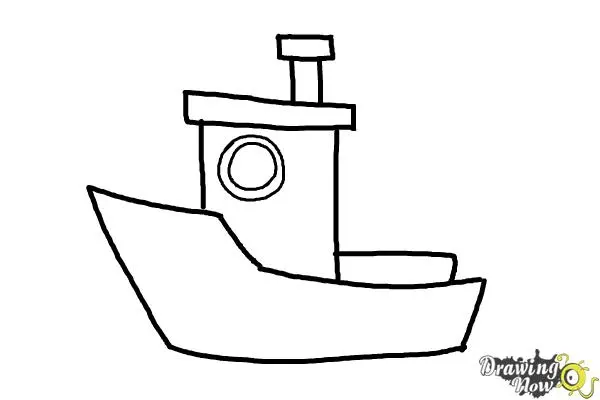
How does a boat float?
Short answer
A boat floats because of buoyancy, an upward force exerted by water that counters the vessel's weight. According to Archimedes' principle, an object floats if it displaces a volume of water weighing as much as the object itself. As long as the boat is less dense than water, it will remain buoyant.

On this page
Why does a boat float?
The fundamental reason a boat floats is the displacement of water. When you place a boat into a body of water, it pushes aside a certain volume of liquid. Because water is heavy, this displaced volume exerts an upward force known as buoyant force. If the weight of the boat is less than or equal to the weight of the water it displaces, the boat stays on the surface.
This concept was formalized by the Greek mathematician Archimedes around 250 BCE. He discovered that any object submerged in a fluid is buoyed up by a force equal to the weight of the fluid displaced by the object. Even heavy materials like steel can float if they are shaped into a hull that displaces enough water to compensate for the weight of the metal.
How does density affect buoyancy?
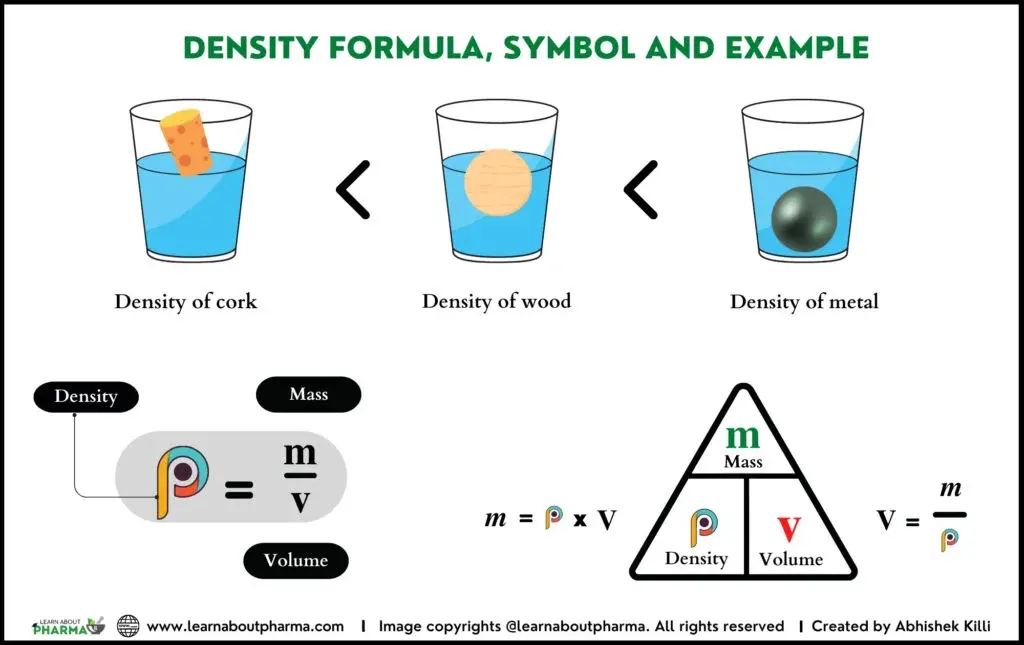
Density is defined as mass per unit volume. For an object to float, its overall density must be lower than the density of the liquid it is in. A solid block of steel sinks because its density is much higher than water. However, if you shape that same steel into a hollow, bowl-like structure, the "average density" of the boat—including the air inside the hull—becomes significantly lower than the density of water.
Air is much less dense than water, which is why hollow shapes are so effective for flotation. By increasing the volume of the boat without increasing its mass, you decrease the overall density of the vessel. This allows massive cruise ships and cargo vessels to stay afloat while carrying thousands of tons of weight across the ocean.
- Calculate the volume of the boat's hull below the waterline.
- Determine the weight of the water that would occupy that same volume.
- Ensure the total weight of the boat and its cargo is less than that water weight.

What is the role of the hull shape?
The design of a boat's hull is critical for both buoyancy and stability. A hull must be shaped to displace enough water to support the boat's weight while also ensuring the center of gravity remains low. If the center of gravity is too high, the boat becomes unstable and prone to tipping over when it encounters waves or shifts in weight.
Engineers use specific hull forms to manage these forces. A displacement hull, common on sailboats and heavy ships, pushes water aside to move through it. A planing hull, found on speedboats, is designed to lift the boat out of the water at higher speeds, reducing drag. Regardless of the type, the hull must be watertight to prevent water from entering and increasing the boat's total mass.
- Deep-V hulls: Excellent for cutting through choppy water and maintaining stability.
- Flat-bottom hulls: Provide high initial stability in calm, shallow water.
- Round-bottom hulls: Offer minimal resistance, making them very efficient for rowing or sailing.

How do you maintain a boat's buoyancy?
Maintaining a boat requires constant attention to its structural integrity. The most critical factor is preventing water from entering the hull, which adds weight and reduces the amount of displaced water available to support the vessel. If a boat takes on too much water, it loses its buoyancy and will sink.
Regular maintenance checks are essential to ensure the boat remains seaworthy. You should inspect the hull for cracks, loose rivets, or damaged seals that could allow water ingress. Additionally, ensure that drainage systems and bilge pumps are fully functional. These systems are designed to remove any small amounts of water that may accumulate during normal operation, keeping the boat’s overall mass within safe limits.
- Check the hull for signs of corrosion or electrolysis.
- Test bilge pumps regularly to ensure they activate automatically.
- Inspect through-hull fittings and hoses for signs of cracking or aging.
- Keep the deck clear of heavy, unnecessary equipment that could shift during travel.
Common mistakes when loading a boat
One of the most frequent errors in boating is overloading the vessel. Every boat has a maximum weight capacity, which is the total weight of the engine, fuel, passengers, and gear it can safely support. Exceeding this limit reduces the freeboard—the distance between the waterline and the top of the hull—making the boat susceptible to swamping from waves.
Another common mistake is uneven weight distribution. If all passengers or heavy cargo are placed on one side or at the stern, the boat will list, or tilt, significantly. This creates an imbalance that can lead to capsizing. Always distribute weight evenly across the centerline and keep the heaviest items low in the boat to maintain a stable center of gravity. Proper loading is the simplest way to ensure that your boat retains the buoyancy it needs to remain safe on the water.
Key facts
- An object floats if it displaces a weight of water equal to its own weight, a principle discovered by Archimedes around 250 BCE.
- Density is the key factor; a boat floats because its overall density, including the air inside its hull, is less than the density of water.
- If a boat’s weight exceeds the weight of the water it displaces, it will sink, which is why overloading a vessel is dangerous.
- The shape of a boat’s hull is designed to push water aside, creating an upward force called buoyancy that counters gravity.
- To maintain stability, keep heavy cargo as low as possible in the boat to lower the center of gravity.
- A common mistake is failing to account for the weight of water entering the boat, which reduces the volume of air and causes the vessel to lose buoyancy.
The bottom line
Floating is a matter of physics defined by displacement and density. By shaping a hull to trap air and displace a volume of water equal to its own weight, a boat generates enough buoyant force to stay afloat. To ensure safety, always distribute weight evenly, keep the center of gravity low, and ensure your vessel remains watertight to maintain the buoyancy required for safe navigation.
People also ask
Why do heavy steel ships float while a small pebble sinks?
A steel ship floats because it is shaped to displace a large volume of water, making its average density lower than that of the surrounding liquid. A pebble is solid and dense, meaning it cannot displace enough water to create an upward buoyant force greater than its own weight.
Does salt water make a boat float better than fresh water?
Yes, salt water is denser than fresh water, which means it provides more buoyant force for the same volume of water displaced. Boats will sit slightly higher in the ocean than they do in a lake or river.
What happens if the water level inside a boat reaches the top of the hull?
When water fills the hull, the boat loses the trapped air that provides the necessary buoyancy. Once the total weight of the boat and the water inside exceeds the weight of the displaced water, the vessel will sink.
How does the shape of a boat affect its ability to stay upright?
The hull design determines the center of buoyancy and the center of gravity, which work together to keep the boat stable. A wider hull generally provides more stability, while a narrow hull is often faster but more prone to tipping.
Can a boat float if it has a hole in the bottom?
A boat can only float with a hole if it has watertight compartments that prevent water from filling the entire hull. If the water enters faster than it can be pumped out, the boat will eventually lose its buoyancy and sink.
Why do some boats have a keel at the bottom?
A keel is a heavy, deep fin that serves two purposes: it prevents the boat from drifting sideways in the wind and acts as a counterweight to keep the boat from capsizing. It lowers the center of gravity, making the vessel much harder to tip over.
This answer was created with the help of AI research tools and reference sources. Spotted an error? Let us know — we correct mistakes quickly. See our editorial policy.