What is a galaxy?
Short answer
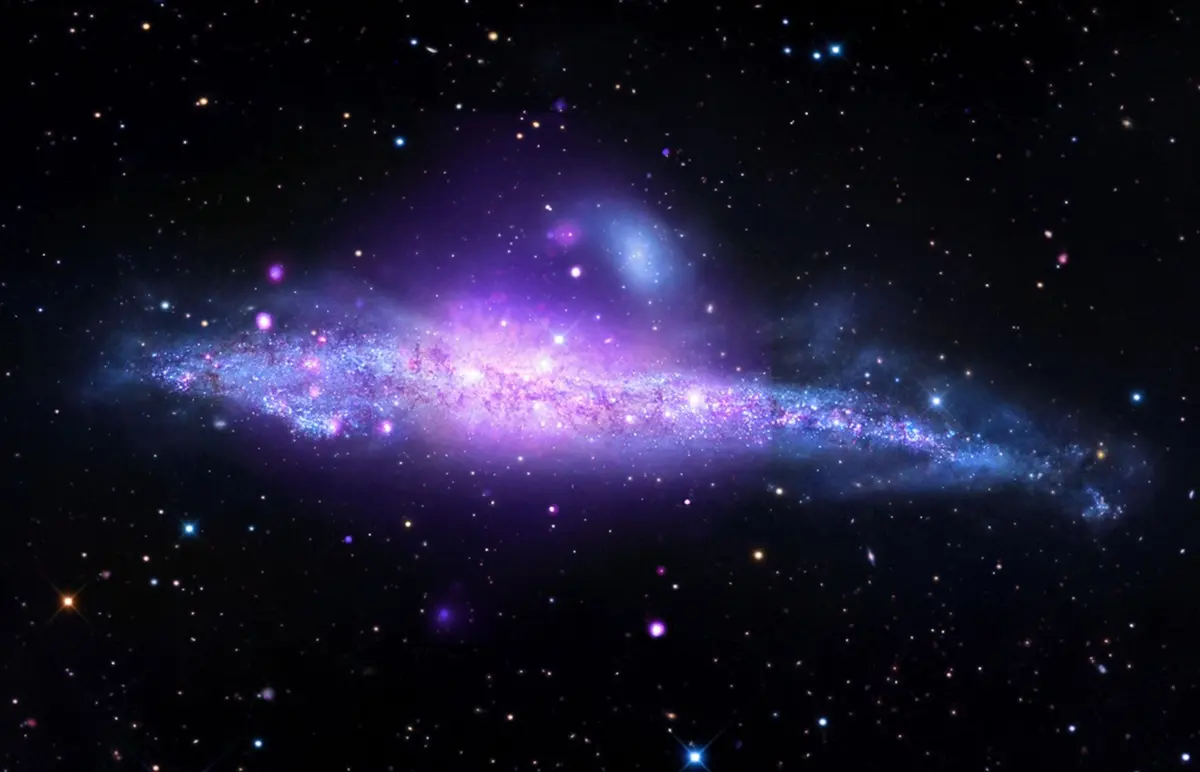
A galaxy is a vast, gravitationally bound system consisting of stars, stellar remnants, interstellar gas, dust, and dark matter. Ranging from dwarfs with a few hundred million stars to giants with a hundred trillion, these structures serve as the fundamental building blocks of the observable universe, held together by immense gravitational forces.
On this page
What are the different types of galaxies?
Astronomers classify galaxies primarily by their visual morphology, a system pioneered by Edwin Hubble in 1926. The most common types include spirals, ellipticals, and irregulars. Spiral galaxies, such as our own Milky Way, feature a flat, rotating disk with stars, gas, and dust organized into prominent "arms" that spiral outward from a central bulge. These galaxies are typically rich in young, blue stars and active star-forming regions.
Elliptical galaxies, by contrast, appear as smooth, featureless spheres or elongated ellipsoids. They contain very little interstellar gas or dust, meaning they have low rates of new star formation and are populated mostly by older, redder stars. Irregular galaxies lack a distinct shape or symmetry, often appearing chaotic due to gravitational interactions with larger neighbors. Understanding these shapes helps scientists determine the evolutionary history and age of a galaxy.
- Spiral: Characterized by a central bulge and rotating arms.
- Elliptical: Ranging from nearly spherical to highly elongated shapes.
- Irregular: Lacking a defined structure, often resulting from galactic collisions.
- Lenticular: A transitional form between spiral and elliptical galaxies.
How do galaxies form and evolve?
Galaxies began forming roughly 13 billion years ago, shortly after the Big Bang. Small fluctuations in the density of early matter allowed gravity to pull gas and dark matter together into "protogalactic" clouds. As these clouds collapsed, the first stars ignited, creating the cores of what would eventually become mature galaxies. Over billions of years, these smaller systems merged through gravitational attraction to form the massive, complex structures we observe today.
Evolution is not a static process; galaxies are constantly changing through star formation and interaction. When two galaxies pass close to one another, tidal forces can strip stars away or trigger massive bursts of star birth. Eventually, these interactions may lead to a complete merger, resulting in a new, larger galaxy. This process is inevitable; for instance, the Milky Way and the Andromeda Galaxy are currently on a collision course and are expected to merge in approximately 4.5 billion years.
How can I observe galaxies from home?
Observing galaxies requires patience, dark skies, and the right equipment. While some galaxies, like the Andromeda Galaxy (M31), are visible to the naked eye under perfect conditions, most require optical aid to see clearly. Beginners should start with a pair of high-quality binoculars or a small telescope with an aperture of at least 4 to 6 inches. These tools gather enough light to resolve the faint glow of distant galactic cores.
To successfully spot a galaxy, follow these steps:
- Find a location far from city light pollution, preferably during a New Moon phase.
- Allow your eyes to adjust to the darkness for at least 20 minutes.
- Use a star map or mobile astronomy application to locate the coordinates of your target.
- Aim your telescope at the coordinates and use averted vision—looking slightly to the side of the object—to detect faint light.
What are the common mistakes when viewing galaxies?
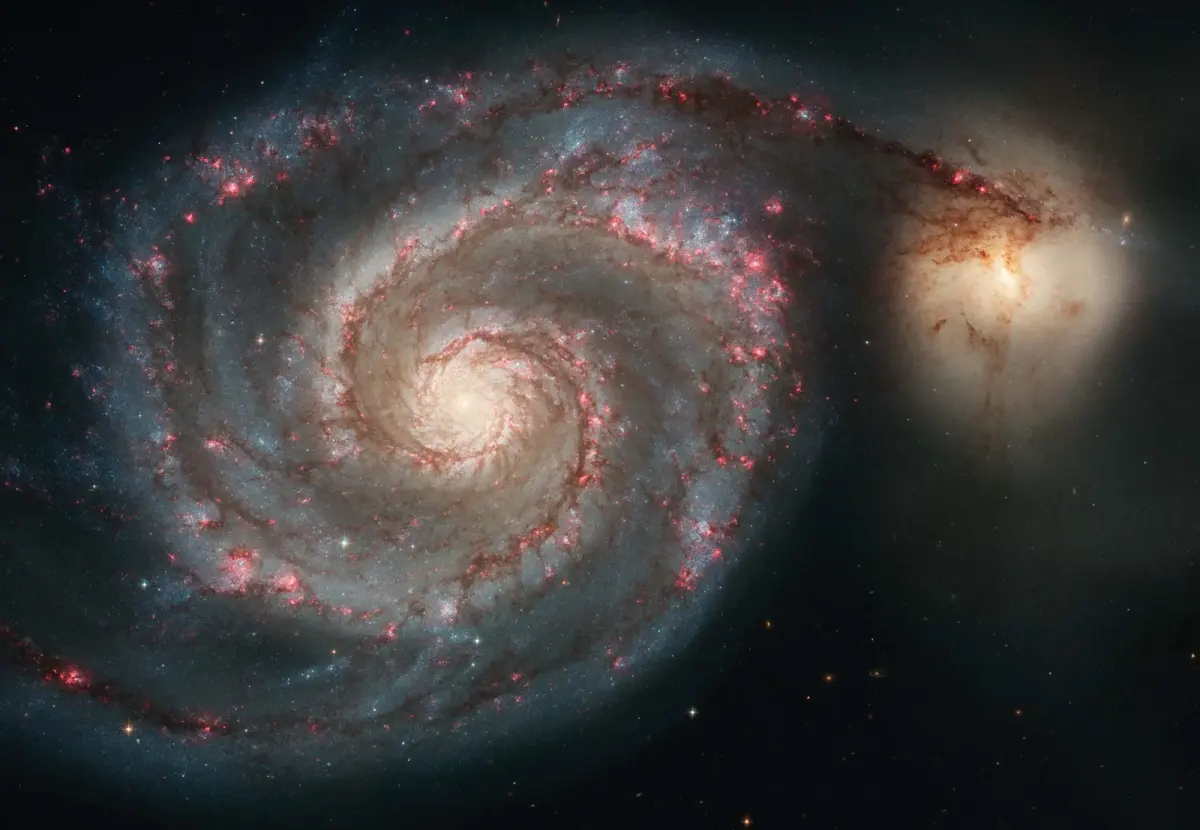
The most frequent mistake beginners make is expecting to see vibrant, colorful images similar to those captured by the Hubble or James Webb space telescopes. In reality, galaxies appear as faint, gray, fuzzy patches through an eyepiece because the human eye is not sensitive enough to detect the low-light colors of deep-space objects. Managing expectations is crucial to enjoying the hobby of amateur astronomy.
Another common error is failing to account for light pollution or atmospheric turbulence. Even a small amount of ambient light from streetlamps or neighboring houses can wash out the delicate light of a distant galaxy. Additionally, observers often try to use too much magnification. High magnification narrows the field of view and dims the image significantly, making it harder to spot extended objects. Using a lower-power eyepiece provides a wider, brighter view, which is far more effective for identifying galaxies against the black backdrop of space.
Why are galaxies important to the universe?
Galaxies act as the cosmic laboratories where the chemical evolution of the universe occurs. Inside the hearts of stars, nuclear fusion creates heavy elements like carbon, oxygen, and iron. When these stars reach the end of their lives and explode as supernovae, they scatter these elements throughout the galaxy. This recycled material eventually becomes the building blocks for new stars, planets, and, ultimately, the biological life found on Earth.
Beyond their chemical contribution, galaxies provide the framework for understanding the large-scale structure of the cosmos. By studying how galaxies cluster together, scientists have discovered the existence of dark matter—an invisible substance that provides the extra gravity needed to hold galaxies together. Without dark matter, galaxies would fly apart due to their rapid rotation. By observing these massive systems, we gain insight into the fundamental laws of physics and the ultimate fate of the universe itself.
Key facts
- The Milky Way, our home galaxy, contains an estimated 100 to 400 billion stars.
- Galaxies are categorized into three main shapes: spiral, elliptical, and irregular.
- The Andromeda Galaxy is the nearest large spiral galaxy to the Milky Way, located about 2.5 million light-years away.
- Dark matter makes up about 85 percent of the total matter in most galaxies, providing the gravity needed to hold them together.
- To observe a galaxy, use a telescope with a wide aperture to gather enough light from faint, distant objects.
- Avoid light pollution by traveling to a dark-sky site, as city lights easily wash out the faint glow of galactic structures.
The bottom line
Galaxies serve as the fundamental building blocks of the universe, acting as massive containers for stars, gas, and dark matter. By understanding their diverse shapes, gravitational interactions, and central black holes, we gain insight into the evolution of the cosmos itself. Whether observing them through a telescope or studying their light, these structures reveal the vast, interconnected nature of space and our unique place within it.
People also ask
How many galaxies are in the observable universe?
Astronomers estimate there are roughly two trillion galaxies in the observable universe. This number is based on deep-field observations from space telescopes like the Hubble and James Webb.
What happens when two galaxies collide?
When galaxies collide, their stars rarely hit each other because the space between them is so vast. Instead, the galaxies distort each other's shapes through gravity, often triggering intense bursts of new star formation.
What is at the center of most galaxies?
Most large galaxies host a supermassive black hole at their center. These objects contain millions to billions of times the mass of our Sun and influence the motion of surrounding stars.
Can you see galaxies with the naked eye?
Only a few galaxies are visible to the naked eye from Earth under perfect conditions. The Andromeda Galaxy and the Magellanic Clouds are the most prominent examples for observers in the Northern and Southern Hemispheres.
How do galaxies get their shapes?
A galaxy's shape is determined by its history of star formation, gas content, and past interactions with other galaxies. Spiral galaxies typically have rotating disks of gas, while elliptical galaxies are older systems that have exhausted their star-forming material.
Are all galaxies the same age?
Galaxies vary significantly in age, with many forming shortly after the Big Bang over 13 billion years ago. New galaxies continue to evolve and merge, meaning the galactic population is constantly changing over cosmic time.
This answer was created with the help of AI research tools and reference sources. Spotted an error? Let us know — we correct mistakes quickly. See our editorial policy.