How do snowflakes form?
Short answer
Snowflakes form when water vapor in clouds deposits directly onto microscopic dust particles, bypassing the liquid phase. As these ice crystals grow, they develop complex hexagonal patterns based on temperature and humidity. They eventually fall to Earth as individual crystals or clumped aggregates once they become heavy enough to overcome air currents.
On this page
How do snowflakes start forming?
The process begins high in the atmosphere when water vapor molecules transition directly into solid ice. This phenomenon, known as deposition, requires a tiny nucleus—usually a speck of dust, pollen, or soot—to provide a surface for the water molecules to latch onto. Without these impurities, water vapor would struggle to freeze even at temperatures well below the freezing point of 32 degrees Fahrenheit (0 degrees Celsius).
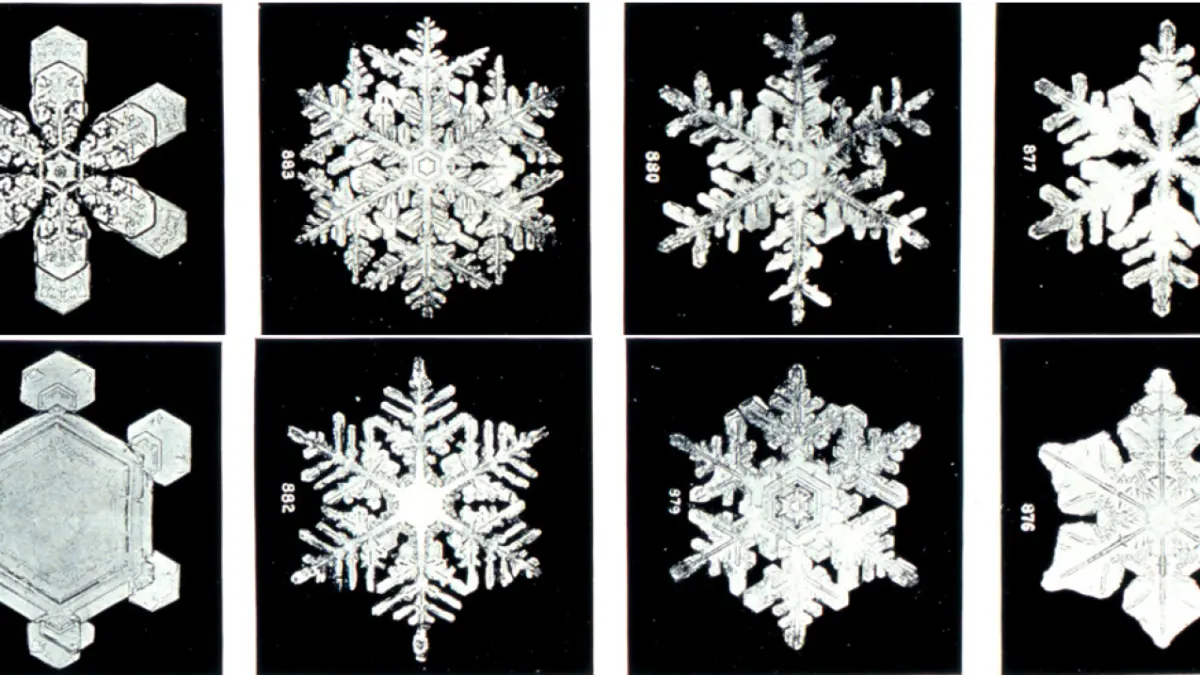
Once the initial ice crystal forms, it adopts a hexagonal structure because of the way water molecules bond together. Oxygen and hydrogen atoms align in a six-sided lattice, which dictates the fundamental shape of the future snowflake. As more water vapor molecules collide with this tiny seed, they add onto the corners of the hexagon, beginning the growth of the crystal's six arms.
Why do snowflakes have different shapes?
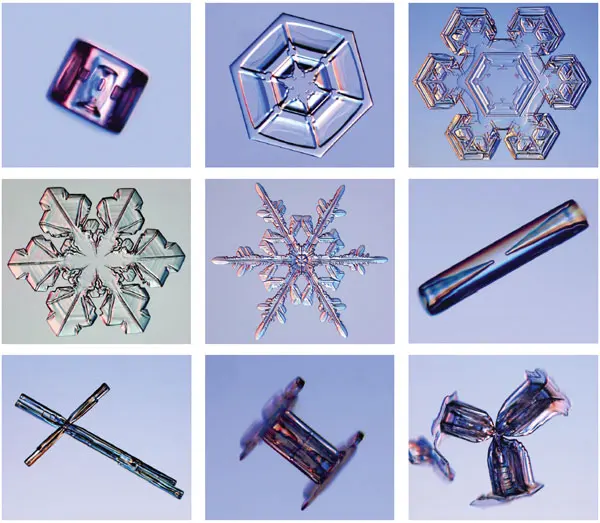
The specific shape of a snowflake depends entirely on the environmental conditions it encounters while falling. Temperature and humidity levels dictate whether a crystal grows into a flat plate, a long needle, or a complex, branching dendrite. Scientists have identified several distinct growth regimes based on these variables:
- Thin plates form at temperatures near 28 degrees Fahrenheit.
- Long needles develop between 23 and 25 degrees Fahrenheit.
- Hollow columns occur near 18 degrees Fahrenheit.
- Elaborate stellar dendrites grow best at 5 degrees Fahrenheit.
Humidity also plays a critical role in determining the complexity of the crystal. Higher moisture levels allow for faster growth and more intricate branching patterns, while drier air results in simpler, more compact shapes. Because a snowflake travels through varying layers of the atmosphere, it constantly experiences shifting conditions, which explains why no two crystals follow the exact same growth trajectory.
How long does it take for a snowflake to grow?
A snowflake typically takes between 15 and 45 minutes to grow from a microscopic seed into a full-sized crystal. During this time, the crystal may travel several thousand feet through the cloud layer. The total size is limited by the amount of available water vapor in the surrounding air and the duration of the crystal's suspension in the atmosphere before gravity pulls it to the ground.
If the air remains calm and the crystal stays within a moisture-rich environment, it can grow quite large. However, if the snowflake enters a region of dry air or intense turbulence, growth may stop or the crystal may fracture. Most snowflakes that reach the ground measure between 0.05 and 0.2 inches in diameter, though they can occasionally clump together to form much larger flakes.
How to observe snowflakes at home
Observing the intricate details of snowflakes requires patience and the right equipment. Because the crystals are delicate and melt quickly, you must keep them at temperatures well below freezing throughout the entire observation process. Follow these steps to get the best view:
- Chill a piece of black velvet or dark construction paper in your freezer for at least an hour.
- Place the cold material outside during a light snowfall, ensuring it stays out of direct wind.
- Use a magnifying glass or a macro lens on your camera to inspect the crystals as they land.
- Keep your breath away from the collection surface to prevent the flakes from melting instantly.
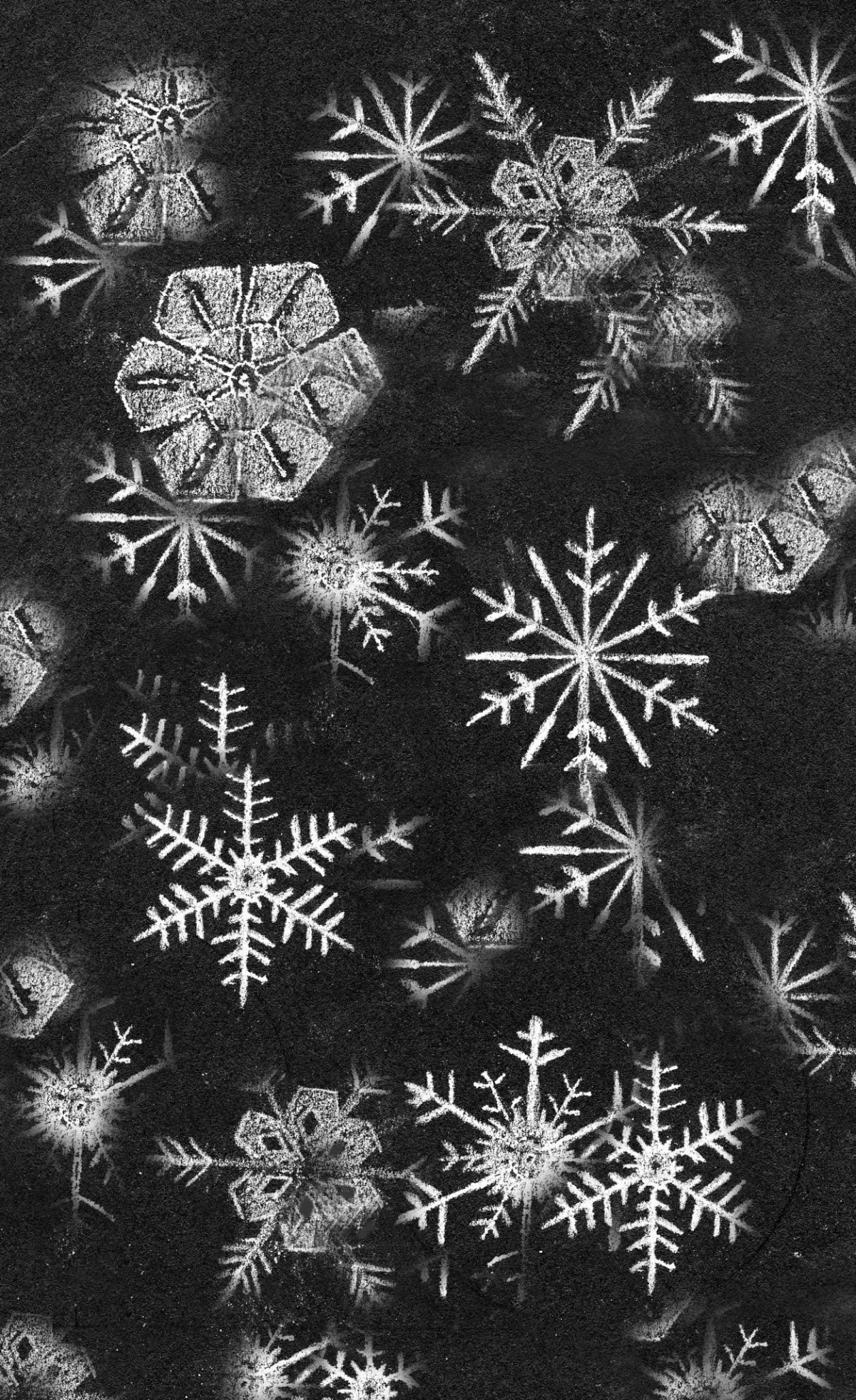
By using a dark background, the white ice crystals stand out clearly, allowing you to see the symmetry of the arms. If you want to photograph them, ensure your camera is also cold to prevent condensation from fogging the lens.
Common mistakes when studying snowflakes
One of the most frequent errors is attempting to observe snowflakes in temperatures too close to the freezing point. When the air is near 32 degrees Fahrenheit, the edges of the crystals begin to round off and lose their sharp, geometric definition. This makes it difficult to see the unique branching patterns that characterize a healthy, well-formed snowflake.
Another common mistake is handling the crystals directly with your fingers. The heat from your skin will destroy the delicate structure within milliseconds, turning the intricate ice sculpture into a tiny, shapeless drop of water. Always use a cold, non-conductive tool like a thin needle or a small brush if you need to move a crystal for better positioning. By maintaining a cold environment and avoiding direct contact, you can appreciate the fleeting beauty of these natural structures before they vanish into the landscape.
Key facts
- Snowflakes begin as microscopic dust particles in clouds that attract water vapor.
- Water molecules freeze onto these particles, forming a tiny hexagonal ice crystal.
- As the crystal falls through clouds, it grows into complex branches based on temperature and humidity.
- No two snowflakes are identical because each follows a unique path through varying atmospheric conditions.
- The six-sided shape occurs because water molecules naturally bond in a hexagonal lattice structure.
- To photograph snowflakes, keep your camera and lens cold to prevent melting upon contact.
The bottom line
Snowflakes form when water vapor deposits directly onto dust particles within freezing clouds, creating unique hexagonal crystals. As these structures drift toward the ground, their shape evolves based on the specific temperature and humidity levels they encounter. By understanding these atmospheric processes, we gain a deeper appreciation for the complex, fleeting beauty of winter weather and the intricate physical laws that govern our natural world.
People also ask
Why are snowflakes always six-sided?
Water molecules arrange themselves into a hexagonal lattice when they freeze, which dictates the six-fold symmetry of the crystal. This geometric pattern is a fundamental property of how hydrogen and oxygen atoms bond at freezing temperatures.
Can it be too cold to snow?
It is never technically too cold for snow, but extremely low temperatures reduce the amount of moisture the air can hold. When the air is very dry and cold, snowfall becomes light and powdery rather than heavy or wet.
Do all snowflakes have the same internal structure?
While they all share a hexagonal base, the internal growth patterns vary wildly depending on the specific temperature and humidity levels encountered during descent. These fluctuations create the vast diversity of shapes observed in nature.
How large can a single snowflake get?
Most individual snowflakes are about 0.5 inches in diameter, but they can clump together to form much larger aggregates. In rare conditions, these clusters can reach several inches across during heavy, wet snow events.
What is the difference between a snowflake and a grain of ice?
A snowflake is a complex, branched crystal that forms in the atmosphere, while ice grains are typically frozen raindrops. Grains lack the intricate, symmetrical architecture found in true snow crystals.
Why do snowflakes appear white if they are made of clear ice?
Snowflakes are composed of many surfaces that reflect and scatter all wavelengths of visible light. This scattering effect causes them to appear white to the human eye, despite the individual ice crystals being transparent.
This answer was created with the help of AI research tools and reference sources. Spotted an error? Let us know — we correct mistakes quickly. See our editorial policy.