What is form in art?
Short answer
Form refers to the physical or visual configuration of an artwork, encompassing its three-dimensional volume or the illusion of depth created on a two-dimensional surface. It includes the shape, structure, and mass of an object. In art theory, form is distinct from content, which represents the work’s meaning, narrative, or emotional intent.
On this page
What is the difference between shape and form?
In the visual arts, shape and form are often confused, yet they occupy different dimensions. A shape is strictly two-dimensional, defined by height and width, such as a circle drawn on a piece of paper. Form, conversely, implies three-dimensionality, adding depth to the equation. A sphere is the three-dimensional form of a circle, possessing volume that occupies actual or perceived space.
Artists manipulate these elements to guide how a viewer perceives an object’s weight and presence. While a painting is technically a flat surface, painters use techniques like shading, perspective, and color contrast to create the illusion of form. Sculptors work with actual form, manipulating materials like marble, clay, or metal to exist in physical space. Understanding this distinction is essential for any artist, as it dictates how light interacts with the work and how the viewer moves around or perceives the composition.
How do artists create the illusion of form?
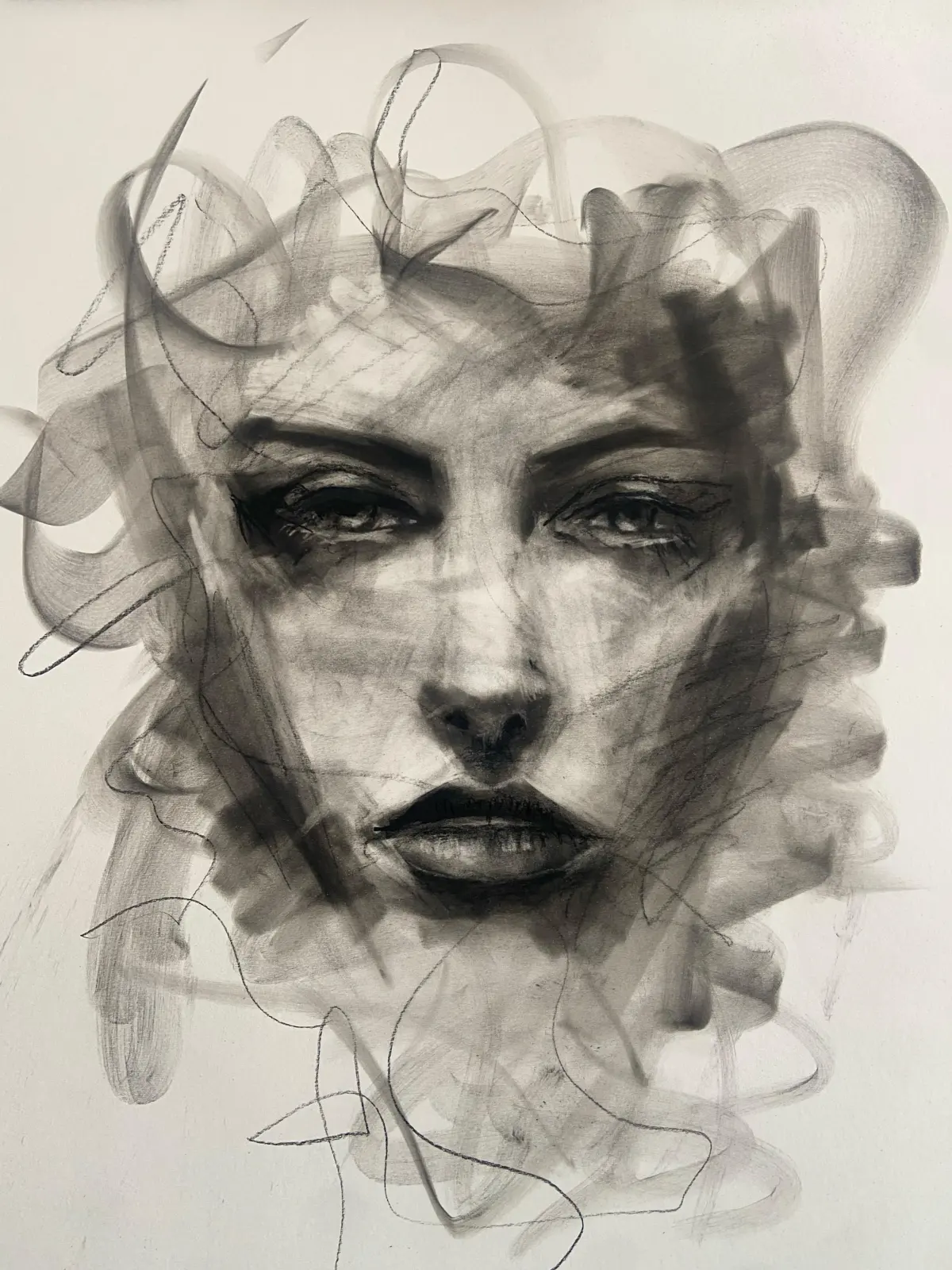
Creating the appearance of three-dimensional depth on a flat canvas requires a mastery of light and shadow, a practice known as chiaroscuro. By carefully mapping where light hits an object and where shadows fall, an artist can suggest the curvature and mass of a subject. This technique was perfected during the Renaissance by masters like Leonardo da Vinci, who used subtle gradations of tone to give figures a lifelike, rounded appearance.
Beyond shading, artists employ several technical strategies to build convincing forms:
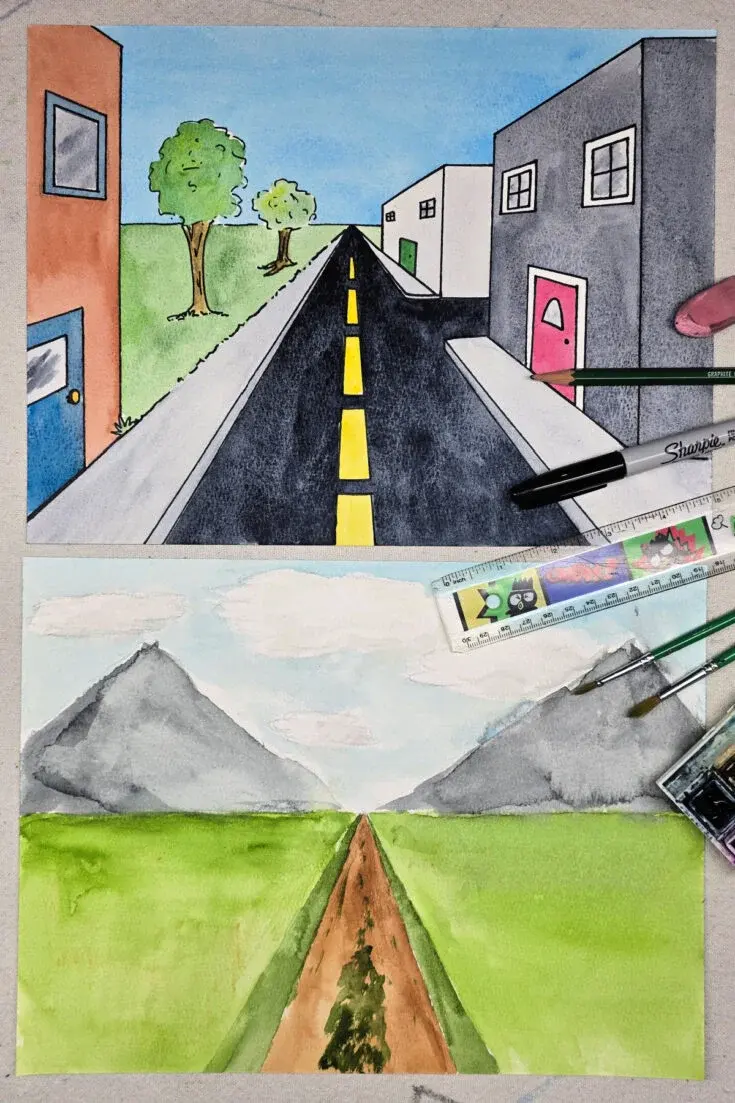
- Linear perspective: Using vanishing points to create the illusion of distance and depth.
- Atmospheric perspective: Softening edges and shifting colors toward blue as objects recede into the background.
- Overlapping: Placing one form in front of another to establish spatial hierarchy.
- Foreshortening: Distorting an object to create the illusion that it is extending toward or away from the viewer.
These tools allow the artist to transform a blank, flat surface into a window that mimics the complexities of the physical world.
Why is form important in art composition?
Form serves as the structural foundation of any visual work, dictating how elements are organized and how the viewer’s eye travels across the piece. Strong form provides a sense of stability and realism, grounding the subject matter in a believable environment. When an artist successfully executes form, the work feels tangible, allowing the viewer to intuitively understand the scale and weight of the objects depicted.
The strategic use of form also influences the emotional impact of an artwork. Geometric forms, such as cubes and pyramids, often convey a sense of order, permanence, and mathematical precision. Organic forms, which mimic the irregular, flowing shapes found in nature, tend to evoke movement, life, and fluidity. By choosing between these categories, an artist can manipulate the psychological response of the audience, creating works that feel either rigid and architectural or soft and biological.
Common mistakes when rendering form
Many beginners struggle with the transition from two-dimensional thinking to three-dimensional representation. A frequent error is the use of "symbolic drawing," where an artist draws what they think an object looks like rather than what they actually see. This often leads to flat, cartoonish representations that lack the subtle tonal transitions necessary to suggest volume. Another common pitfall is the use of harsh, uniform outlines, which can flatten an image by trapping the form within a rigid boundary.
To improve your ability to render form, follow these steps:
- Observe the light source: Identify exactly where the light originates to determine the highlight and shadow patterns.
- Map the core shadow: Locate the darkest area on the object itself, usually found on the side turned away from the light.
- Use a full range of values: Ensure your drawing includes deep blacks, bright whites, and a wide spectrum of grays.
- Soften your edges: Avoid outlining every edge; instead, use changes in value to define where one form ends and another begins.
How to practice drawing form basics
Developing a strong grasp of form requires consistent practice with simple, geometric primitives. By mastering the sphere, the cube, the cylinder, and the cone, you build a visual vocabulary that can be applied to complex subjects like the human figure or architectural landscapes. These four shapes act as the building blocks for almost everything in the visible world, allowing artists to break down complicated scenes into manageable, structural components.
Start your practice by setting up a single white sphere under a strong, directional lamp. Observe how the light creates a highlight, a mid-tone, a core shadow, and a reflected light on the underside of the sphere. Sketch this repeatedly until you can replicate the effect without referring to the object. Once you are comfortable with the sphere, move to the cylinder and cube, focusing on how light changes across different planes. Consistent repetition of these exercises will eventually make the process of constructing convincing, three-dimensional forms an intuitive part of your creative workflow.
Key facts
- Form refers to the physical or visual shape, structure, and configuration of an artwork, encompassing its three-dimensional volume or two-dimensional arrangement.
- Unlike content, which is the meaning or subject matter, form focuses on the elements like line, color, mass, texture, and composition.
- In sculpture, form is actual and occupies space, while in painting, form is often implied through shading, perspective, and color contrast.
- Geometric forms are precise and regular, such as cubes or spheres, whereas organic forms are irregular and resemble living shapes found in nature.
- Master artists like Michelangelo used "chiaroscuro"—the contrast of light and dark—to create the illusion of three-dimensional form on flat surfaces.
- To analyze form, observe how the artist organizes space and mass; a common mistake is ignoring the negative space, which defines the boundaries of the form itself.
The bottom line
Form is the structural backbone of any artistic creation, defining how an object occupies space and interacts with its environment. Whether you are sculpting physical clay or painting an illusion on canvas, understanding the interplay of light, shadow, and volume is essential. By mastering these formal elements, you move beyond simple decoration, gaining the technical ability to build compelling, coherent, and visually powerful works of art.
People also ask
What is the difference between form and shape in art?
Shape is two-dimensional, defined by height and width, such as a circle or square. Form is three-dimensional, possessing depth, volume, and mass, like a sphere or a cube.
How do artists create the illusion of form on a flat canvas?
Artists use techniques like linear perspective, overlapping, and shading to suggest depth. By applying highlights and shadows, they trick the eye into perceiving a flat surface as having physical volume.
Why is understanding form important for an artist?
Mastering form allows an artist to create convincing, realistic representations of the world. It provides the structural foundation that holds the composition together and directs the viewer's focus.
Can an artwork have form without content?
Yes, non-representational or abstract art often focuses entirely on the formal qualities of the work. In these cases, the arrangement of colors, lines, and shapes becomes the primary subject.
How does lighting affect the perception of form?
Lighting reveals the topography of an object by creating highlights, mid-tones, and cast shadows. Without consistent light, the viewer struggles to identify the volume and spatial orientation of the subject.
What is the role of negative space in defining form?
Negative space is the area surrounding the subject of an image. It acts as a boundary that helps the viewer distinguish the edges of the form, making the primary subject more distinct.
This answer was created with the help of AI research tools and reference sources. Spotted an error? Let us know — we correct mistakes quickly. See our editorial policy.