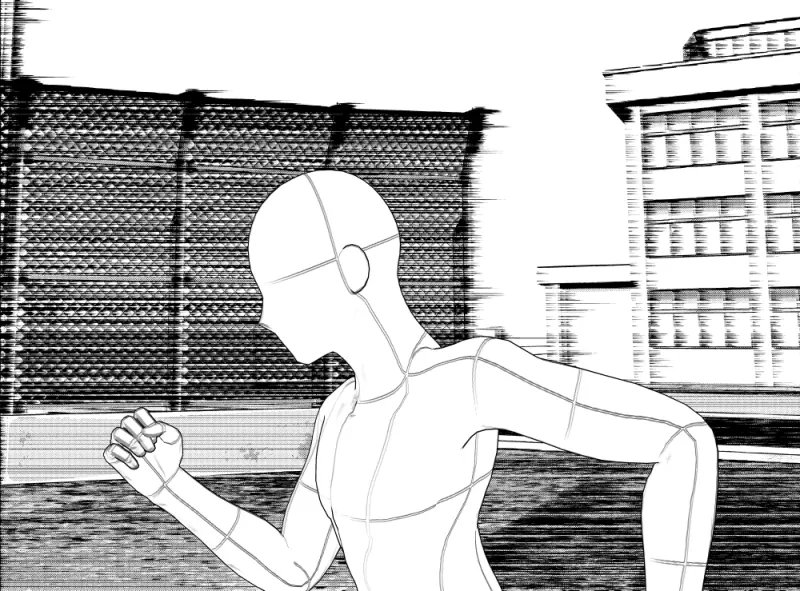
What is kinetic energy?
Short answer
Kinetic energy is the energy an object possesses due to its motion. It is defined as the work needed to accelerate a body of a given mass from rest to its stated velocity. Once gained, this energy remains constant unless the object’s speed changes, representing the capacity to perform physical work.
On this page
How is kinetic energy calculated?
The mathematical foundation for kinetic energy was formalized by scientists like Gottfried Wilhelm Leibniz and Émilie du Châtelet in the early 18th century. To calculate the kinetic energy of an object, you must know its mass and its velocity. The standard formula used in physics is $KE = ½mv^2$, where $m$ represents mass in kilograms and $v$ represents velocity in meters per second.
Because the velocity is squared in this equation, small increases in speed result in significant increases in kinetic energy. For example, if you double the speed of a car, its kinetic energy increases by a factor of four. This relationship explains why high-speed collisions are exponentially more destructive than low-speed impacts. Understanding this quadratic relationship is essential for engineers designing safety systems like crumple zones or braking mechanisms in modern vehicles.
Why does kinetic energy change?
Kinetic energy is not a static property; it changes whenever an object speeds up or slows down. According to the work-energy theorem, the net work done on an object equals the change in its kinetic energy. When you apply a force to an object over a distance, you are transferring energy to it, which manifests as an increase in motion. Conversely, friction or air resistance acts as a negative force, removing kinetic energy from the system and converting it into thermal energy or heat.
Several factors influence these transitions in energy:
- Applied forces: Pushing an object increases its velocity and kinetic energy.
- Friction: Opposing surfaces convert kinetic energy into heat.
- Gravity: Falling objects gain kinetic energy as potential energy is converted during descent.
- Air resistance: Drag forces dissipate energy from moving objects, particularly at high speeds.
How to measure kinetic energy in practice
Calculating kinetic energy for moving objects requires precise measurements of mass and speed. Follow these steps to determine the energy of a moving object in a laboratory or practical setting:
- Measure the mass of the object in kilograms using a calibrated scale.
- Determine the velocity of the object by measuring the time it takes to travel a known distance.
- Square the velocity value.
- Multiply the squared velocity by the mass.
- Divide the resulting product by two to obtain the kinetic energy in Joules.
When performing these calculations, always ensure units are consistent. If you use grams instead of kilograms, your final result will be off by a factor of 1,000. Using a stopwatch for velocity measurements can introduce human error, so automated sensors or high-speed cameras are preferred for professional scientific research.
Common mistakes when calculating kinetic energy
One of the most frequent errors beginners make is failing to convert units before starting the calculation. Physics formulas rely on the International System of Units (SI), which requires mass to be in kilograms and velocity in meters per second. Using miles per hour or grams will lead to incorrect results that do not represent the physical reality of the motion. Always perform unit conversions as your very first step to ensure accuracy.
Another common pitfall is confusing kinetic energy with momentum. While both depend on mass and velocity, momentum is a vector quantity defined as $p = mv$, while kinetic energy is a scalar quantity. Beginners often assume that if two objects have the same momentum, they must have the same kinetic energy, which is rarely true. Distinguishing between these two concepts is vital for understanding how objects behave during collisions, as momentum is conserved in all interactions, whereas kinetic energy is often lost to sound or heat.
What are real-world examples of kinetic energy?
Kinetic energy is present in almost every aspect of our daily lives, from the microscopic movement of molecules to the rotation of massive turbines. In a hydroelectric power plant, the kinetic energy of flowing water is captured by spinning blades, which then turn a generator to produce electricity. Similarly, a wind turbine converts the kinetic energy of moving air into rotational motion, demonstrating the practical utility of capturing energy that would otherwise dissipate into the environment.
Common manifestations of kinetic energy include:
- A baseball in flight: The energy imparted by the pitcher’s arm is stored as motion.
- A rolling bowling ball: The mass and speed create enough energy to displace heavy pins.
- A sprinting athlete: Chemical energy from food is converted into the kinetic energy of the body.
- A satellite in orbit: Despite the lack of an engine, it maintains high kinetic energy due to its immense orbital velocity.
By observing these examples, it becomes clear that kinetic energy is the primary driver of change in the physical world. Whether it is the destructive force of a storm or the controlled motion of a vehicle, this form of energy remains a fundamental pillar of classical mechanics.
Key facts
- Kinetic energy is the energy an object possesses due to its motion, defined by the formula KE = 0.5 × mass × velocity squared.
- If you double the speed of a moving object, its kinetic energy increases by a factor of four, making high-speed collisions significantly more destructive.
- An object at rest has zero kinetic energy, regardless of how much mass it contains.
- Kinetic energy is a scalar quantity, meaning it has magnitude but no specific direction.
- In a closed system, kinetic energy can be transferred between objects or converted into other forms, such as thermal or potential energy.
- When calculating kinetic energy, always convert mass to kilograms and velocity to meters per second to ensure the result is in joules.
The bottom line
Kinetic energy represents the capacity of a moving object to perform work based on its mass and speed. Because velocity is squared in the governing equation, small increases in speed result in disproportionately large increases in energy. Understanding this principle is essential for physics, engineering, and everyday safety, as it explains why higher speeds drastically increase the severity of impacts and the requirements for braking systems.
People also ask
How does kinetic energy differ from potential energy?
Potential energy is stored energy based on an object's position or configuration, such as a rock held above the ground. Kinetic energy is the energy of motion that is released when that potential energy is converted.
Can kinetic energy be negative?
No, kinetic energy cannot be negative because mass is always positive and velocity is squared in the formula. Squaring any real number, whether positive or negative, results in a positive value.
Does an object's shape affect its kinetic energy?
The shape does not directly change the kinetic energy calculation, but it affects how an object moves through a fluid like air or water. Aerodynamic shapes reduce drag, allowing an object to maintain velocity and kinetic energy more efficiently.
What happens to kinetic energy during a collision?
In an elastic collision, total kinetic energy is conserved and transferred between objects. In an inelastic collision, some kinetic energy is converted into other forms like sound, heat, or permanent deformation of the objects.
Is kinetic energy the same as momentum?
No, momentum is the product of mass and velocity, while kinetic energy depends on the square of the velocity. Momentum is a vector with direction, whereas kinetic energy is a scalar value.
Why is kinetic energy important in car safety?
Engineers use kinetic energy calculations to design crumple zones that absorb energy during a crash. By increasing the time it takes for a vehicle to stop, these zones reduce the force exerted on passengers.
This answer was created with the help of AI research tools and reference sources. Spotted an error? Let us know — we correct mistakes quickly. See our editorial policy.