Who was Alexander the Great?
Short answer
Alexander the Great was the king of Macedon who created one of the largest empires in history by age 30. Through brilliant military strategy, he conquered lands from Greece to Egypt and India. His reign fundamentally reshaped the ancient world, spreading Greek culture and language across three continents before his early death.
On this page
Who was Alexander the Great?
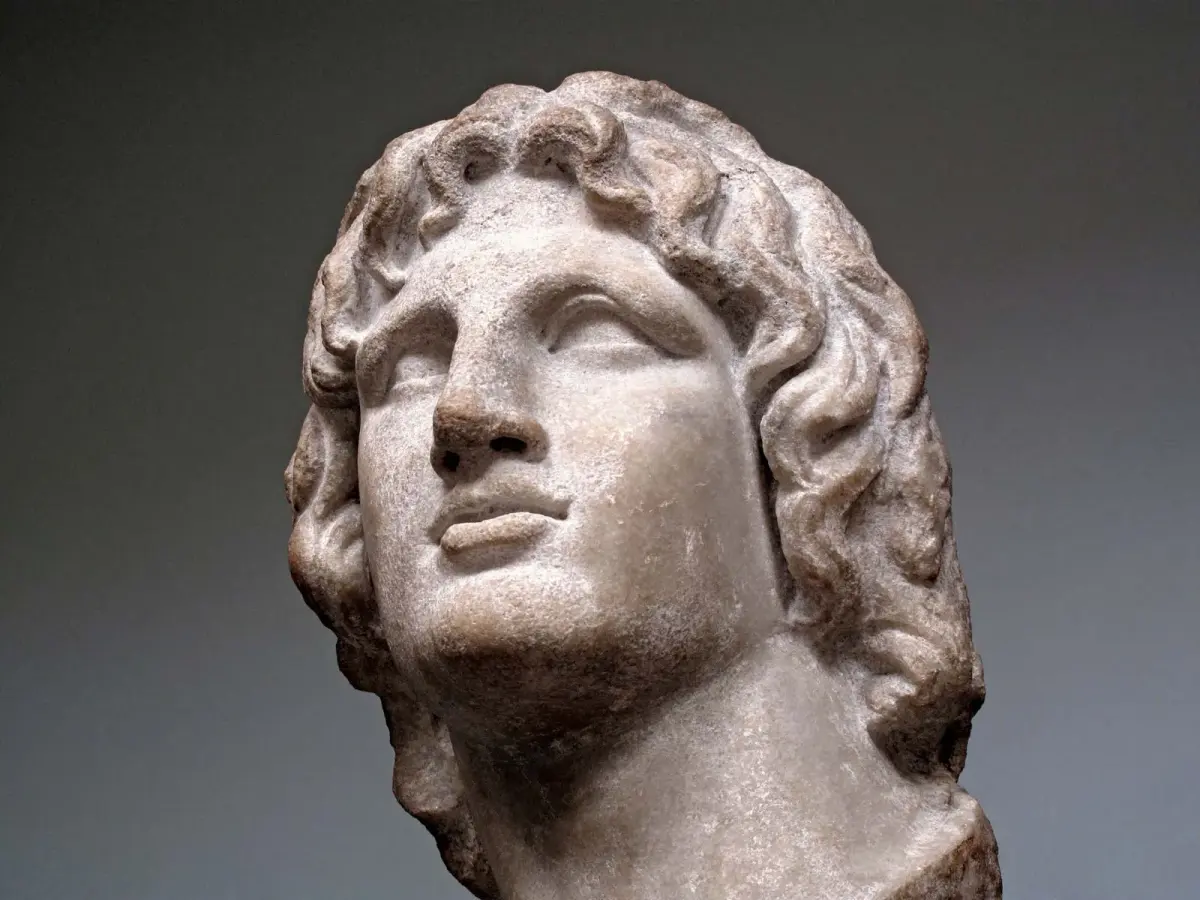
Alexander III of Macedon was born in 356 BCE to King Philip II and Queen Olympias. Tutored by the philosopher Aristotle, he received an elite education in science, medicine, and literature, which deeply influenced his worldview. When his father was assassinated in 336 BCE, the 20-year-old Alexander ascended the throne and immediately moved to solidify his control over the Greek city-states.
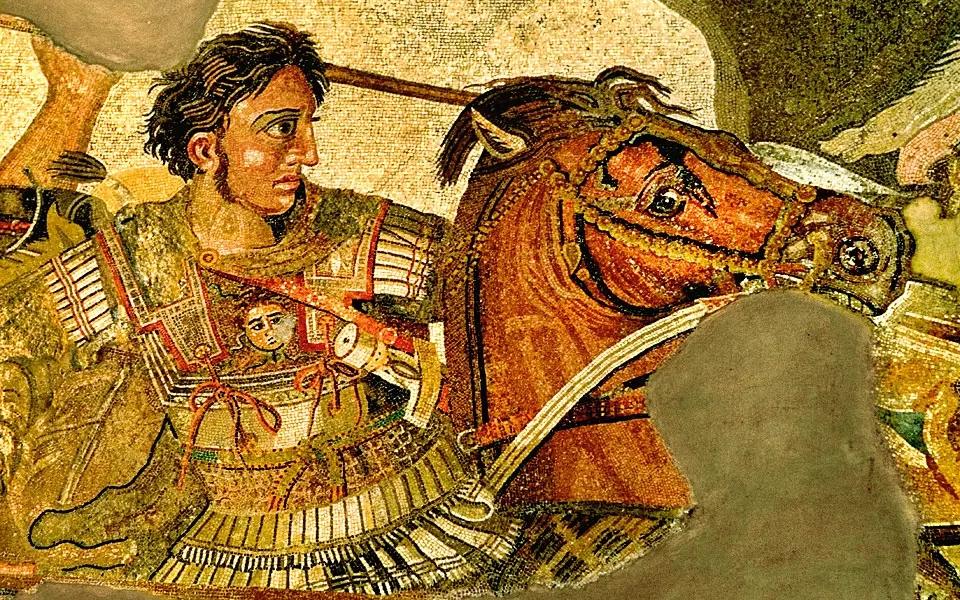
His military career is defined by his undefeated record on the battlefield. He possessed a rare ability to adapt his tactics to the terrain and the enemy, often leading his cavalry charges personally. By integrating the phalanx formation with heavy cavalry, he dismantled the vast Persian Empire, which had long been the dominant power in the region. His life remains a subject of intense study due to his rapid rise and the profound cultural legacy he left behind.
How did Alexander build his empire?
Alexander’s campaign against the Persian Empire began in 334 BCE. He crossed the Hellespont with an army of approximately 40,000 men, aiming to liberate the Greek cities of Asia Minor and punish the Persians for their past invasions of Greece. His strategic brilliance was evident at the Battle of Issus and the Battle of Gaugamela, where he successfully exploited gaps in the Persian lines to defeat King Darius III.
The expansion of his empire followed a logical progression of securing key territories:
- Asia Minor: Captured to secure supply lines and naval ports.
- Egypt: Conquered in 332 BCE, where he was welcomed as a liberator and crowned pharaoh.
- Mesopotamia: The decisive victory at Gaugamela allowed him to seize Babylon and Susa.
- Central Asia: He spent years pacifying the provinces of Bactria and Sogdiana.
- India: He pushed into the Indus Valley before his exhausted troops demanded a return home.
What was the Hellenistic Age?
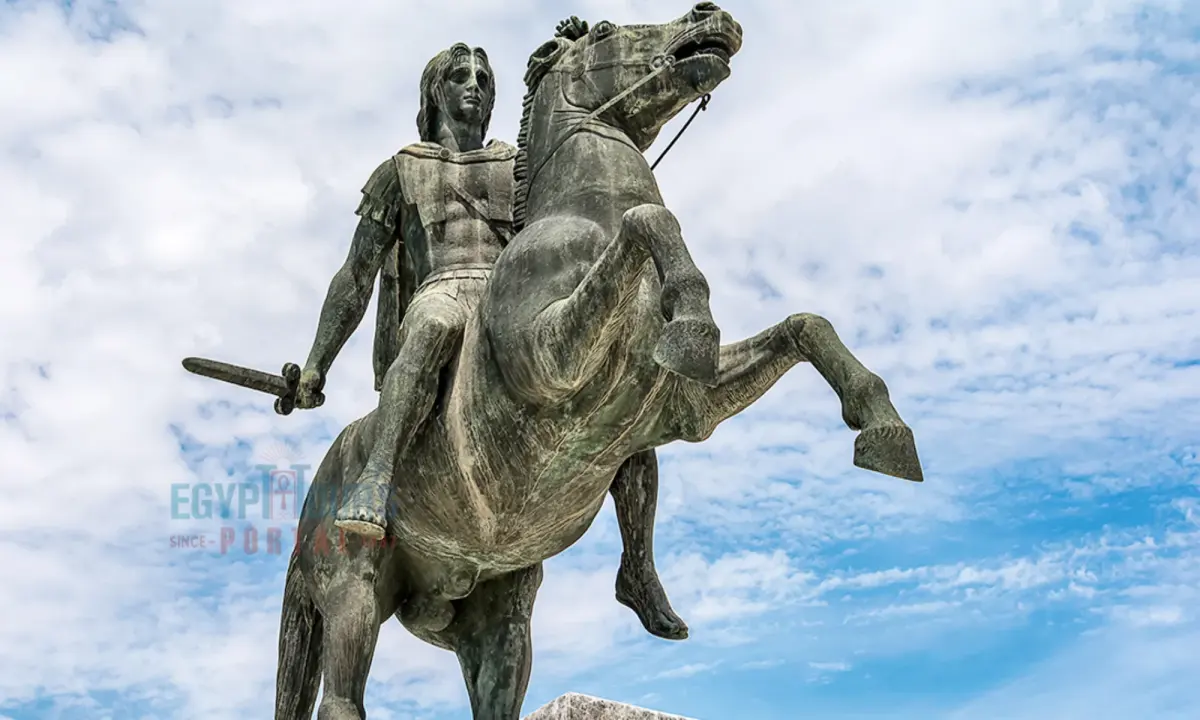
The Hellenistic Age refers to the period of Mediterranean history between the death of Alexander in 323 BCE and the emergence of the Roman Empire. Alexander’s conquests facilitated a massive exchange of culture, art, and language known as Hellenization. He founded dozens of cities, many named Alexandria, which served as administrative hubs and centers for Greek education and commerce.
This era saw a synthesis of Greek and Eastern traditions. While the Greek language became the lingua franca of the region, local customs and religious practices were often preserved or integrated. The legacy of this period includes:
- The spread of Greek scientific and philosophical thought.
- The development of cosmopolitan urban centers like Alexandria in Egypt.
- Increased trade networks connecting the Mediterranean with the Far East.
- The standardization of currency and administrative practices across vast territories.
Common mistakes when studying Alexander
Many people incorrectly assume that Alexander’s primary goal was the destruction of Persian culture. In reality, he often adopted local customs, such as wearing Persian royal robes and encouraging his soldiers to marry local women. This was a calculated political move to maintain stability in a diverse empire, though it caused significant friction among his traditionalist Macedonian officers.
Another common error is viewing his empire as a long-lasting political entity. In truth, the empire was remarkably fragile and lacked a clear administrative structure to survive his sudden death. When he died in Babylon at age 32, his generals immediately fought for control, leading to the empire's fragmentation into several successor kingdoms. Avoid thinking of him as a mere conqueror; he was also an explorer and a patron of the sciences who brought scholars and cartographers on his military expeditions.
Why did his empire collapse so quickly?
The collapse of Alexander’s empire was primarily due to the lack of a designated heir and the intense rivalry among his top generals, known as the Diadochi. Because Alexander had not established a stable succession plan, his death triggered decades of civil war. His generals, such as Ptolemy, Seleucus, and Antigonus, carved the vast territory into their own independent kingdoms, effectively ending the dream of a unified global empire.
Furthermore, the sheer geographic size of the empire made it nearly impossible to govern from a single center. The infrastructure of the time could not support rapid communication or the movement of troops across such vast distances. While the political unity vanished, the cultural impact of his conquests persisted for centuries. His influence ensured that Greek ideas remained the foundation of Western civilization, shaping the development of science, law, and government long after his armies had disbanded and his borders had dissolved into history.
Key facts
- Alexander III of Macedon was born in 356 BCE and died in 323 BCE at age 32.
- He created one of the largest empires in history, stretching from Greece to northwestern India.
- He was a student of the philosopher Aristotle, who tutored him from age 13 to 16.
- Alexander remained undefeated in battle throughout his entire military career.
- He founded over 20 cities bearing his name, the most famous being Alexandria in Egypt.
- To study his strategy, focus on his use of the "hammer and anvil" tactic, which utilized heavy cavalry to strike while infantry held the line.
The bottom line
Alexander the Great remains a defining figure of antiquity, remembered for his unparalleled military genius and the rapid expansion of his empire. By blending Greek culture with Eastern traditions, he fundamentally altered the trajectory of Western civilization. His life serves as a profound case study in leadership, ambition, and the lasting influence one individual can exert on the global stage, even within a remarkably short lifespan.
People also ask
How did Alexander the Great die?
Alexander died in Babylon at age 32. While the exact cause remains debated, historians suggest he likely succumbed to malaria, typhoid fever, or poisoning after a period of heavy drinking and illness.
Who were Alexander’s parents?
His father was King Philip II of Macedon, who unified Greece, and his mother was Queen Olympias. Olympias played a significant role in his upbringing and reportedly told him he was descended from the hero Achilles.
Did Alexander the Great ever lose a battle?
No, Alexander is famous for never losing a battle. His tactical genius allowed him to overcome numerically superior forces, such as the massive Persian army led by King Darius III.
What happened to his empire after he died?
Because he left no clear heir, his generals, known as the Diadochi, fought a series of brutal wars for control. The empire eventually fractured into several independent kingdoms, including the Ptolemaic Kingdom in Egypt.
What was the significance of the Hellenistic Age?
This era began with Alexander’s conquests and saw the spread of Greek culture, language, and art across the Middle East and Asia. It created a cultural synthesis that influenced science, philosophy, and trade for centuries.
How can one learn more about his military tactics?
To understand his success, study the Battle of Gaugamela, where he used terrain and timing to break the Persian lines. Avoid the common mistake of thinking he relied solely on brute force; his success relied on precise coordination between infantry and cavalry.
This answer was created with the help of AI research tools and reference sources. Spotted an error? Let us know — we correct mistakes quickly. See our editorial policy.