What is Charles Schulz known for?
Short answer
Charles Schulz is best known for creating Peanuts, the most influential comic strip in history. Debuting in 1950, the strip introduced iconic characters like Charlie Brown and Snoopy. Schulz revolutionized the medium by introducing introspective, melancholic themes and philosophical depth, forever changing how comic strips were written, illustrated, and syndicated globally.
On this page
What is the history of Peanuts?
Charles Schulz launched Peanuts on October 2, 1950, in seven newspapers. The strip quickly grew to become a global phenomenon, eventually appearing in over 2,600 newspapers across 75 countries at its peak. Unlike the slapstick humor common in mid-century comics, Schulz focused on the inner lives of children, capturing feelings of anxiety, loneliness, and unrequited love.
The characters evolved significantly over the strip's 50-year run. Charlie Brown began as a relatively confident child but gradually transformed into the quintessential underdog, defined by his resilience in the face of constant failure. Snoopy, originally a normal dog, developed a complex fantasy life, imagining himself as a World War I flying ace or a famous novelist. This blend of grounded reality and surreal imagination kept the strip fresh for decades.
How to understand the characters of Peanuts?
The ensemble cast of Peanuts serves as a mirror for human personality traits and social dynamics. Each character represents a specific archetype, allowing Schulz to explore complex emotional landscapes through simple interactions. Understanding these roles is key to appreciating the strip's enduring psychological resonance.
- Charlie Brown: The eternal optimist who faces constant disappointment but never gives up.
- Snoopy: The imaginative beagle who provides a whimsical escape from reality.
- Lucy van Pelt: The blunt, often cynical character who offers "psychiatric" advice for five cents.
- Linus van Pelt: The philosophical intellectual who clings to his security blanket for comfort.
- Schroeder: The dedicated artist who finds solace and meaning in the music of Beethoven.
These characters interact within a world devoid of adults, which forces them to navigate existential questions on their own. By stripping away parental authority, Schulz allowed his child characters to grapple with adult problems, making the strip relatable to readers of all ages.
Why did Peanuts become so popular?
The immense popularity of Peanuts stemmed from Schulz’s refusal to talk down to his audience. He treated his characters' problems with genuine gravity, validating the anxieties of children and adults alike. This emotional honesty created a deep, personal connection between the strip and its readers, who saw their own struggles reflected in Charlie Brown’s daily defeats.
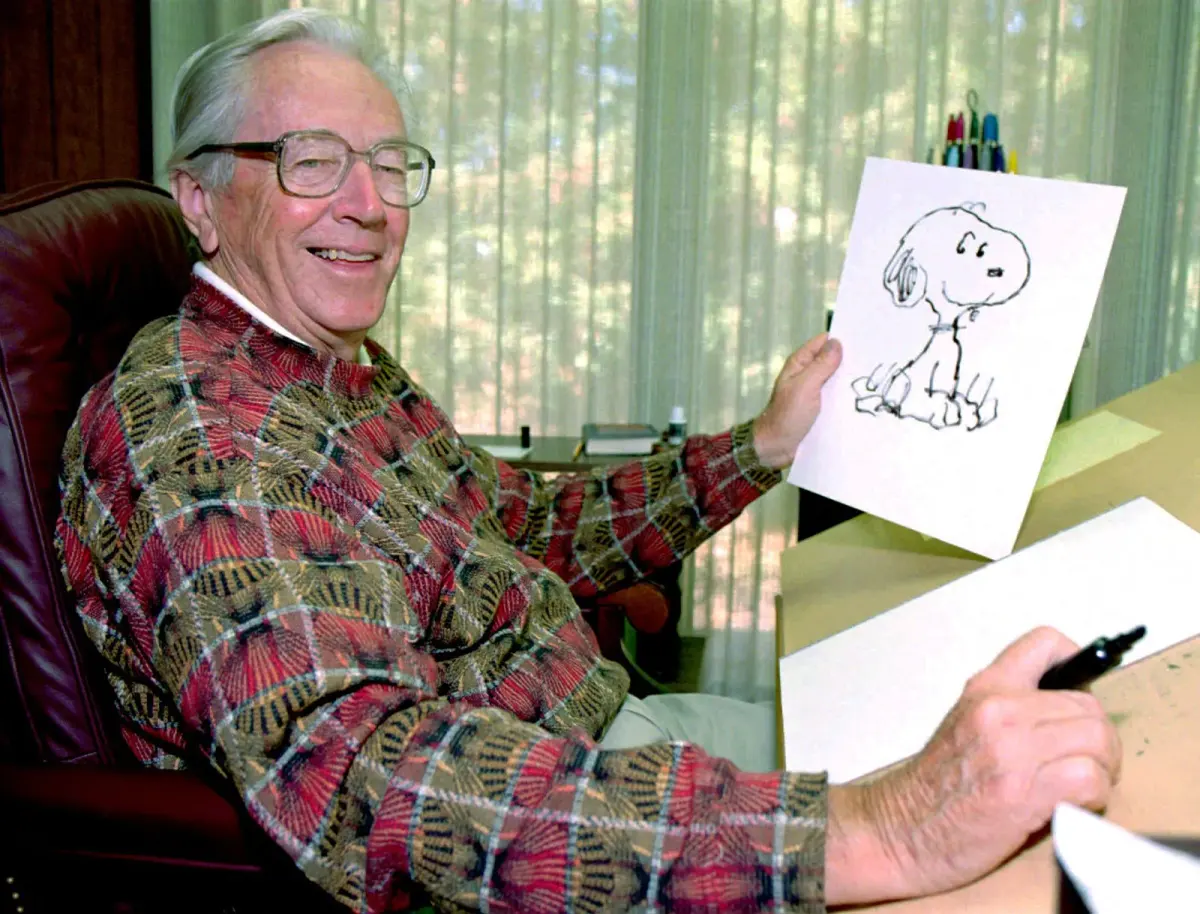
Additionally, the minimalist art style allowed the focus to remain entirely on the dialogue and emotional content. Schulz utilized clean, expressive lines that made the characters instantly recognizable and iconic. This visual simplicity, paired with sophisticated writing, allowed the strip to transcend cultural and linguistic barriers. The franchise eventually expanded into television specials, Broadway musicals, and extensive merchandise, cementing its status as a cornerstone of 20th-century American popular culture.
Common mistakes when analyzing Peanuts?
Many readers make the mistake of viewing Peanuts as a simple children’s comic. While the characters are children, the themes are distinctly adult, dealing with depression, religious doubt, and the search for purpose. Dismissing the strip as lighthearted entertainment ignores the profound existential depth that Schulz meticulously crafted over five decades.
Another common error is failing to recognize the strip's evolution. Readers often assume the characters were static, but they underwent significant changes in appearance and temperament. For example, Snoopy’s transition from a four-legged dog to a bipedal, highly imaginative character was a gradual process that took years to fully realize. To truly appreciate the work, one must look at the progression of the strip rather than viewing it as a singular, unchanging entity.
How to appreciate the legacy of Charles Schulz?
To fully appreciate Schulz’s impact, one should examine the transition of the comic strip from a gag-a-day format to a narrative-driven medium. Schulz proved that a comic strip could be a vehicle for serious social commentary and personal expression. His work paved the way for later generations of cartoonists to explore darker, more complex subject matter in their own strips.
- Read the early strips from the 1950s to see the initial character designs.
- Watch the animated specials to understand how the visual style translated to television.
- Visit the Charles M. Schulz Museum in Santa Rosa, California, to view original sketches.
- Study the influence of his minimalist aesthetic on modern graphic novels and independent comics.
By engaging with these resources, you can better understand why Peanuts remains a vital part of global culture. Schulz’s legacy is not just in the characters he created, but in the way he taught the world that vulnerability and persistence are essential parts of the human experience.
Key facts
- Charles Schulz created Peanuts, one of the most popular and influential comic strips in history.
- The strip debuted on October 2, 1950, and ran for nearly 50 years until his retirement in 2000.
- At its peak, Peanuts appeared in more than 2,600 newspapers across 75 countries.
- Schulz drew every single panel of the strip himself, refusing to employ assistants for the artwork or lettering.
- He introduced iconic characters including Charlie Brown, Snoopy, Lucy, Linus, and Schroeder.
- To study his style, focus on his minimalist line work and the way he used negative space to emphasize emotional expressions.
The bottom line
Charles Schulz changed the landscape of American culture through his masterful storytelling and relatable characters. By focusing on the inner lives and vulnerabilities of children, he created a universal language that resonated with millions of readers globally. His dedication to his craft and his refusal to rely on outside help ensured that Peanuts remained a deeply personal, authentic, and enduring artistic achievement for five decades.
People also ask
Did Charles Schulz write the dialogue for all his characters?
Yes, Schulz wrote every word of the Peanuts comic strip himself. He drew inspiration from his own childhood experiences, anxieties, and observations of human nature to create the distinct voices of his characters.
Why is the comic strip titled Peanuts?
The name was imposed by the United Feature Syndicate, which disliked Schulz’s original title, Li'l Folks. Schulz reportedly disliked the name Peanuts because he felt it sounded insignificant and unprofessional.
Was Charlie Brown based on a real person?
Charlie Brown was largely a reflection of Schulz himself, embodying his feelings of insecurity and social awkwardness. The character's name was taken from a coworker at the art school where Schulz once worked.
How did Snoopy become so popular?
Snoopy evolved from a simple dog into a complex character with a rich fantasy life, including his "World War I Flying Ace" persona. This imaginative depth allowed readers to project their own dreams and frustrations onto the character.
When did the Peanuts television specials begin?
The first animated special, A Charlie Brown Christmas, aired on CBS on December 9, 1965. It became an annual tradition and remains one of the most enduring holiday programs in television history.
What is the significance of the "Red-Haired Girl"?
She represents the unattainable romantic interest in Charlie Brown’s life, a recurring theme of unrequited longing. She is rarely seen directly, serving instead as a symbol of Charlie Brown's persistent hope and inevitable disappointment.
This answer was created with the help of AI research tools and reference sources. Spotted an error? Let us know — we correct mistakes quickly. See our editorial policy.