What is a history painting?
Short answer
History painting is a genre of fine art that depicts significant narrative scenes from religious, mythological, or historical accounts. Traditionally considered the highest form of Western art, these large-scale works emphasize human figures in action to convey moral, intellectual, or political messages rather than focusing on landscapes, portraits, or still-life subjects.
On this page
What defines a history painting?
History painting is defined by its subject matter rather than its chronological accuracy. While the term implies historical events, it historically encompasses scenes from the Bible, classical mythology, literature, and allegorical representations of virtue. The primary goal is to tell a story that elevates the viewer's moral standing or intellectual understanding.
To qualify as a history painting, a work typically requires multiple figures interacting in a dramatic, meaningful way. Artists use complex compositions to guide the viewer’s eye through the narrative. Because these paintings were intended to instruct and inspire, they were traditionally executed on a grand scale, often covering entire walls in public buildings, palaces, or cathedrals.
Why is it considered the highest form of art?
In the 17th-century hierarchy established by the French Royal Academy of Painting and Sculpture, history painting held the top position. This ranking was based on the belief that depicting human action and emotion required the greatest artistic skill. It demanded mastery of anatomy, perspective, composition, and the ability to convey complex psychological narratives through gesture and expression.
Lower-ranked genres, such as portraiture, landscape, and still life, were viewed as mere imitations of nature. History painting, by contrast, was seen as an intellectual pursuit that required the artist to be a philosopher and a poet. This tradition persisted for centuries, influencing how art was taught, collected, and valued by the European elite.
- History painting: Focuses on narrative, morality, and human emotion.
- Portraiture: Focuses on the likeness and status of an individual.
- Genre painting: Focuses on everyday scenes of common life.
- Landscape: Focuses on the natural environment.
- Still life: Focuses on inanimate objects.
Famous examples of history painting
Several iconic works demonstrate the power and scale of the genre. Jacques-Louis David’s "The Oath of the Horatii" (1784) is a quintessential example, using a Roman legend to promote themes of patriotism and self-sacrifice. The composition is stark and theatrical, emphasizing the moral weight of the brothers' commitment to the state.
Another landmark work is Theodore Géricault’s "The Raft of the Medusa" (1819). While it depicts a contemporary news event rather than an ancient myth, it follows the grand traditions of history painting. Géricault used monumental scale and dramatic lighting to turn a tragic shipwreck into a universal statement about human suffering and political corruption.
- "The Death of General Wolfe" (1770) by Benjamin West: A pivotal work that modernized history painting by using contemporary clothing.
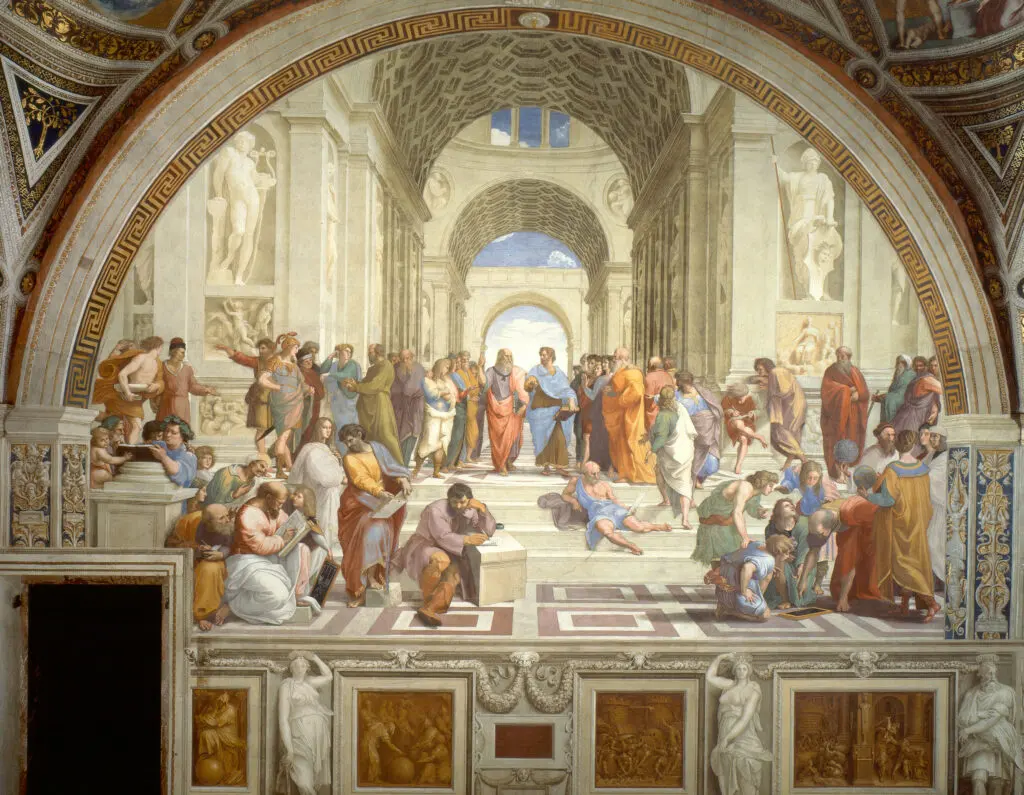
- "The School of Athens" (1511) by Raphael: A masterpiece of the High Renaissance representing philosophy and intellectual history.
- "Guernica" (1937) by Pablo Picasso: A modern interpretation that uses the scale and gravity of history painting to protest war.
How to analyze a history painting
When viewing a history painting, start by identifying the source of the narrative. Ask yourself if the scene comes from a religious text, a historical battle, or a mythological poem. Understanding the original story is essential to grasping the artist’s intended message and the cultural context in which the work was created.
Next, examine the gestures and expressions of the figures. In history painting, body language is a deliberate tool used to communicate character and intent. Look for the "hero" of the piece and consider how the artist uses lighting and placement to draw your attention to the most significant action in the frame.
- Identify the central action or climax of the narrative.
- Note the emotional states of the figures involved.
- Observe how the background architecture or landscape reinforces the story.
- Assess the use of color and light to create a dramatic, theatrical atmosphere.
Common mistakes when interpreting history painting
A common mistake is assuming that history paintings are accurate visual records of the past. Artists frequently altered facts, costumes, and settings to emphasize a specific moral or political point. For example, painters often depicted biblical figures in the clothing of their own era to make the story feel more relevant and immediate to their contemporary audience.
Another error is ignoring the allegorical elements present in many works. Symbols, such as a broken sword representing defeat or a laurel wreath signifying victory, are vital to decoding the painting's meaning. If you focus only on the realistic depiction of the figures, you may miss the deeper philosophical argument the artist is making about human nature, governance, or spiritual truth.
Key facts
- History painting is a genre in Western art defined by its subject matter rather than its artistic style.
- It traditionally depicts moments from religious, mythological, or historical narratives rather than portraits or landscapes.
- The French Royal Academy of Painting and Sculpture ranked history painting as the highest, most prestigious genre in 1669.
- These works are typically large-scale, featuring multiple figures arranged in complex, dramatic compositions.
- Artists use history painting to convey moral, philosophical, or political messages to the viewer.
- To succeed in this genre, study the "grand manner," which emphasizes idealized forms and clear, heroic gestures.
The bottom line
History painting represents the pinnacle of traditional Western art, serving as a visual medium for storytelling, morality, and cultural identity. By focusing on grand narratives from religion and antiquity, artists created complex works designed to inspire and educate. While the genre’s rigid hierarchy has faded, its legacy remains in the way we use large-scale imagery to capture the significance of human experience and historical memory.
People also ask
Is history painting only about real historical events?
No, the genre includes scenes from the Bible, classical mythology, and literature. It focuses on the importance of the narrative and the moral lesson conveyed rather than strict historical accuracy.
Why were history paintings considered more important than still lifes?
Academies believed that painting human figures in action required more intellectual effort and skill than depicting inanimate objects. This hierarchy reflected the belief that art should educate the public on virtue and history.
What is the "grand manner" in art?
It is a style of painting that uses large scales, heroic subjects, and classical references to inspire awe. Artists like Nicolas Poussin used this technique to elevate their subjects to a level of nobility.
How do I distinguish a history painting from a genre painting?
Genre painting depicts everyday life, such as peasants eating or street scenes, while history painting focuses on epic, significant events. If the subject is a common person in a mundane setting, it is likely a genre painting.
Did history painting decline over time?
Yes, the genre began to lose its dominance in the 19th century as artists turned toward realism and impressionism. Modern art movements prioritized individual expression and light over the rigid, didactic themes of traditional history painting.
Can a portrait be a history painting?
A portrait can be considered a history painting if the subject is depicted acting out a significant historical or mythological event. This is often called a "history portrait," where the individual is elevated through the context of the scene.
This answer was created with the help of AI research tools and reference sources. Spotted an error? Let us know — we correct mistakes quickly. See our editorial policy.