What is Henri Matisse's most famous painting?
Short answer
The Dance (II), painted in 1910, is widely considered Henri Matisse’s most famous work. This monumental oil painting depicts five red figures dancing in a rhythmic circle against a deep blue sky and green landscape. It epitomizes his revolutionary use of simplified forms and expressive, non-naturalistic color, defining the Fauvist movement.
On this page
Why is The Dance (II) so famous?
The Dance (II) stands as a landmark of 20th-century modernism because it stripped away the traditional constraints of perspective and realistic detail. Commissioned by the Russian collector Sergei Shchukin for his Moscow mansion, the piece captures a primal, universal energy. By using only three colors—red, blue, and green—Matisse focused the viewer's attention entirely on the movement and rhythm of the figures.
The painting’s fame stems from its radical departure from the academic art styles of the era. Instead of mimicking nature, Matisse used color to evoke a specific emotional state. This approach influenced generations of abstract painters who followed. Today, it remains a centerpiece of the Hermitage Museum in Saint Petersburg, serving as the ultimate example of how simplicity can convey profound human experience.
What are the key features of the painting?
To understand why this work resonates with viewers, one must look at the deliberate choices Matisse made regarding composition and form. The figures are not meant to be realistic portraits but rather symbols of vitality. Their circular arrangement creates a sense of continuous motion, drawing the eye around the canvas in an endless loop.
Several technical elements define the visual impact of the composition:
- The use of a flat, saturated red for the figures creates a stark contrast against the background.
- The omission of facial features and anatomical detail emphasizes the universal nature of the dance.
- The curved line of the horizon suggests the curvature of the earth, grounding the figures in a cosmic space.
- The tension between the figures, particularly the gap between the two reaching hands, creates a palpable sense of energy.
How to analyze a Matisse painting
When viewing Matisse’s work, it is helpful to look past the subject matter and focus on the artist's intent. Matisse was interested in the "decorative" quality of art, meaning he wanted his paintings to provide a sense of comfort and balance. Rather than searching for a hidden narrative, consider how the colors interact with one another to create a mood.
Follow these steps to analyze his style effectively:
- Identify the primary colors used and note how they relate to each other.
- Observe the brushwork; look for areas where the paint is applied thinly or where the canvas remains visible.
- Consider the relationship between the foreground figures and the background space.
- Ask yourself what emotion the combination of color and shape is intended to evoke.
Where can you see Matisse’s masterpieces?
While The Dance (II) is in Russia, many of Matisse’s other iconic works are housed in major museums worldwide. His later career, which involved his famous paper cut-outs, is well-represented in institutions that celebrate his transition from traditional painting to graphic design. If you plan a trip to see his work, check museum websites in advance, as major pieces are frequently loaned for international exhibitions.
Top locations to view his collection include:
- The Museum of Modern Art (MoMA) in New York City, which holds several of his seminal works.
- The Centre Pompidou in Paris, offering a deep dive into his Fauvist period.
- The Musée Matisse in Nice, France, located in the city where he spent his final years.
- The Barnes Foundation in Philadelphia, which houses one of the largest collections of his paintings, including a different version of The Dance.
Common mistakes when studying Matisse
A frequent error when studying Matisse is assuming that his simplified style was the result of a lack of technical skill. In reality, Matisse was a highly trained academic painter who spent years mastering traditional techniques before choosing to abandon them. Believing that his work is "easy" to replicate ignores the immense discipline required to balance color and composition so precisely.
Another mistake is focusing solely on his early paintings while ignoring his later paper cut-outs. Critics often view his final period as a decline, but art historians argue it was the culmination of his life's work. By ignoring these later pieces, viewers miss the evolution of his aesthetic toward pure abstraction. Always consider his entire career trajectory to gain a complete understanding of his artistic legacy and his lasting impact on the world of modern art.
Key facts
- Henri Matisse’s most famous painting is widely considered to be The Dance (II), completed in 1910.
- The painting measures approximately 8.5 feet by 12.9 feet and is currently housed in the Hermitage Museum in St. Petersburg.
- It features five red figures dancing in a circle against a simplified blue sky and green landscape.
- Matisse used the Fauvist style, characterized by bold, non-naturalistic colors and expressive brushwork, to convey rhythmic movement.
- When viewing large-scale works, stand back at least 10 feet to grasp the composition's balance rather than focusing on individual brushstrokes.
- Avoid interpreting the figures as realistic portraits; they are symbolic representations intended to evoke primal human emotion and joy.
The bottom line
Henri Matisse’s The Dance (II) stands as the definitive masterpiece of his Fauvist period, capturing the essence of human movement through bold color and simplified form. By rejecting realistic detail in favor of rhythmic, symbolic expression, Matisse revolutionized 20th-century art. Understanding this work requires looking beyond literal representation to appreciate how the interplay of color and composition creates a lasting sense of vitality and joy.
People also ask
Was The Dance Matisse's first attempt at this composition?
No, Matisse painted an earlier, slightly smaller version in 1909, now known as The Dance (I), which features paler colors and less detail. The 1910 version is the definitive, more intense iteration commissioned by Russian collector Sergei Shchukin.
What does the color red signify in The Dance?
Matisse used red to create a stark, vibrant contrast against the blue and green background, emphasizing the energy of the figures. The color choice was intended to be visceral and immediate, stripping away unnecessary detail to focus on the act of movement itself.
Did Matisse paint other famous works?
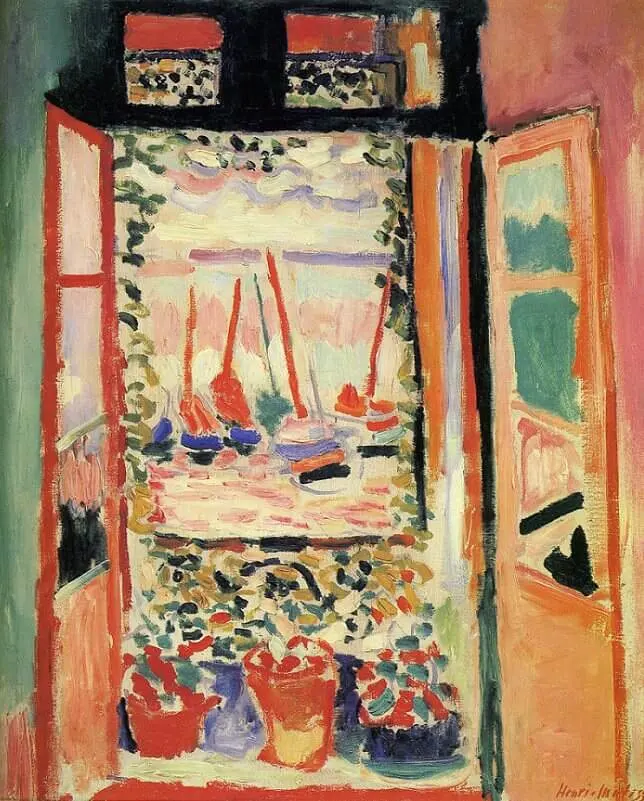
Yes, his other iconic pieces include Woman with a Hat (1905), which shocked critics and helped define the Fauvism movement, and The Open Window (1905). Later in his career, he became equally famous for his paper cut-outs, such as The Snail (1953).
How did the public react to The Dance when it was first shown?
The painting initially received harsh criticism for its simplicity and radical departure from traditional academic art. Many viewers found the figures distorted and the colors garish, though it eventually became a cornerstone of modern art history.
Can I see The Dance in person?
Yes, the painting is part of the permanent collection at the State Hermitage Museum in St. Petersburg, Russia. It is displayed in a dedicated room that allows viewers to experience the massive scale of the canvas as the artist intended.
Is The Dance considered an Impressionist painting?
No, it belongs to the Fauvism movement, which prioritized subjective expression over the light-capture techniques of Impressionism. While Impressionists focused on natural light, Matisse used color to express his internal emotional response to the subject.
This answer was created with the help of AI research tools and reference sources. Spotted an error? Let us know — we correct mistakes quickly. See our editorial policy.