How do you paint a sunset in oil?
Short answer
Painting a sunset in oil requires a structured approach focusing on light, color temperature, and atmospheric perspective. By layering warm hues from the horizon upward into cooler tones and managing paint consistency, you can capture the fleeting brilliance of the sky. Precision in blending and color mixing is essential for realistic results.
On this page
How to mix colors for a sunset
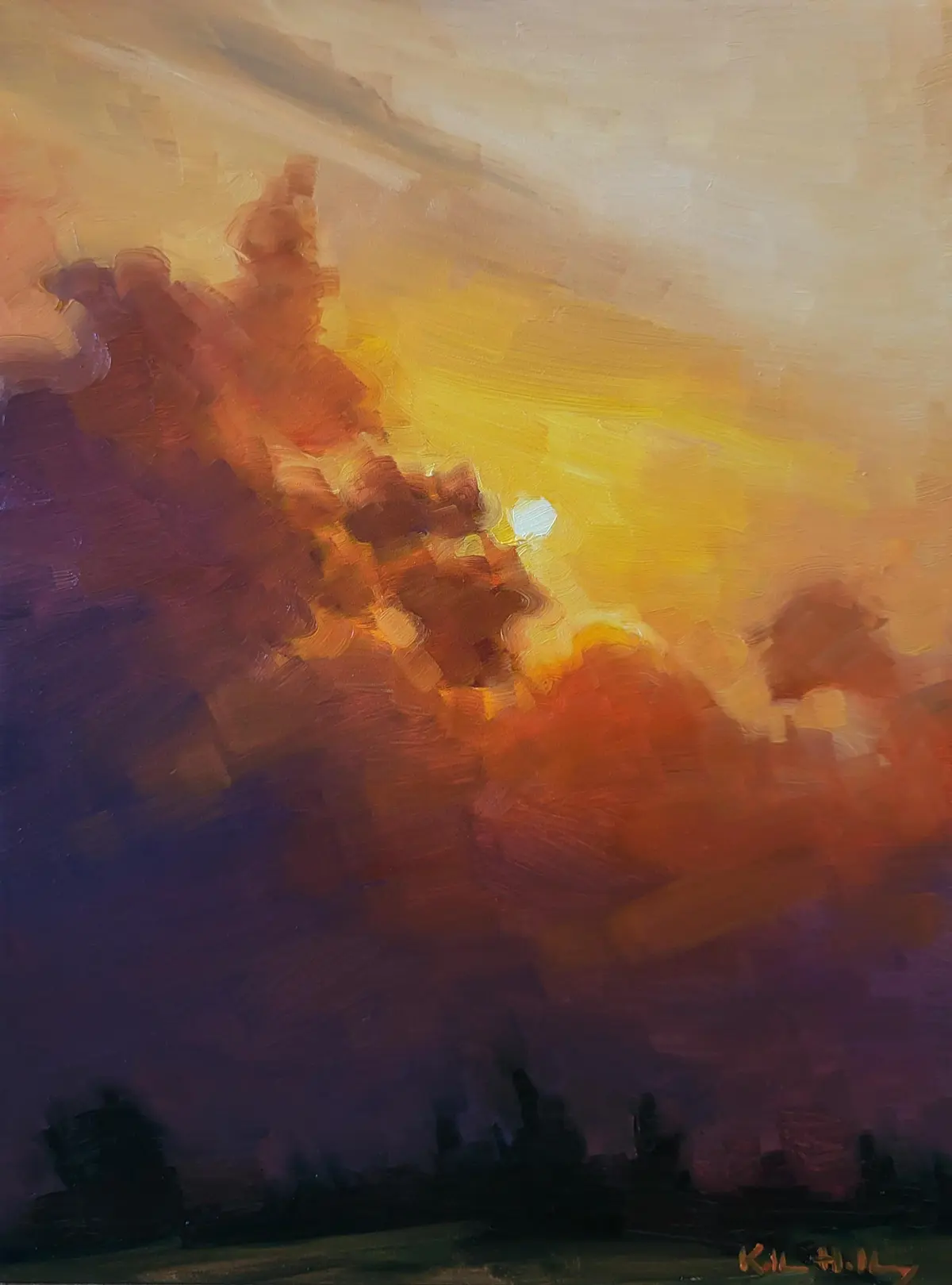
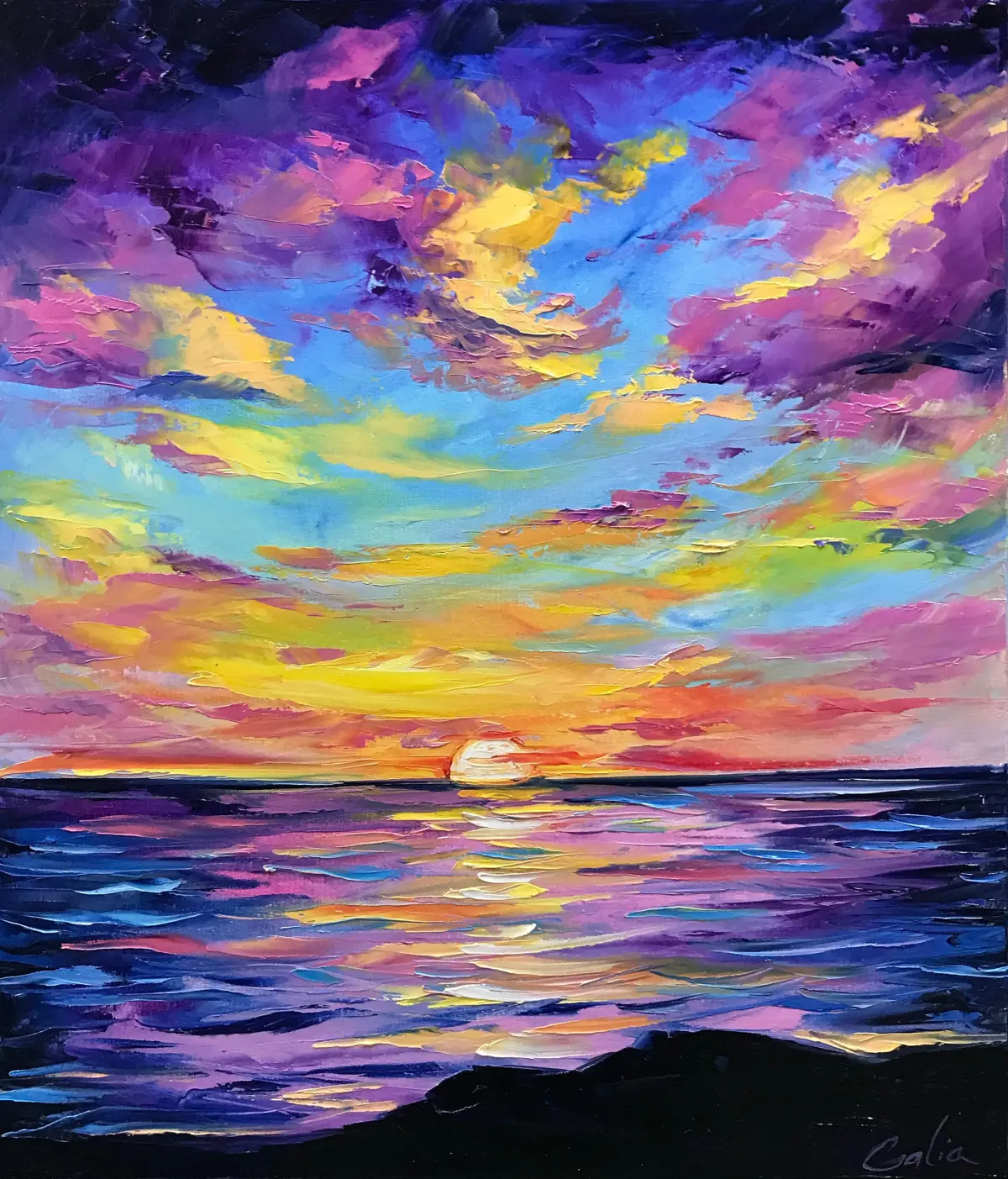
Achieving a realistic sunset requires a strategic palette that emphasizes warm, vibrant tones. Start by laying out a selection of warm and cool yellows, oranges, reds, and deep purples. Cadmium yellow light, cadmium orange, and alizarin crimson are staples for the core of the sun and the surrounding sky. To create depth, mix these with small amounts of ultramarine blue or dioxazine purple to create the transition into the darker upper atmosphere.
When mixing, avoid over-blending on the palette, as keeping slight variations in the paint creates a more natural, luminous effect on the canvas. Always keep a clean brush or a palette knife nearby to prevent muddying your colors. Remember that sunset colors are highly saturated; adding too much white too early can turn your vibrant oranges into chalky, dull peaches. Use white sparingly to adjust the value of your colors while maintaining their intensity.
Best oil painting techniques for beginners
For those new to the medium, the "fat over lean" rule is the most important technical guideline to follow. This means each successive layer of paint should contain more oil than the one beneath it to prevent cracking as the painting dries. Start with a thin, turpentine-thinned wash for your underpainting to map out the horizon line and the placement of the sun.
- Establish your horizon line first, ensuring it is perfectly level to anchor the composition.
- Apply a thin wash of burnt sienna or yellow ochre to create a warm glow across the entire canvas.
- Block in the darkest colors at the top of the sky, gradually working toward the lighter colors near the horizon.
- Use a soft, clean dry brush to gently blend the edges where different color zones meet.
- Add the sun last, using the thickest, most opaque paint to make it appear as the brightest point.
How to create atmospheric depth
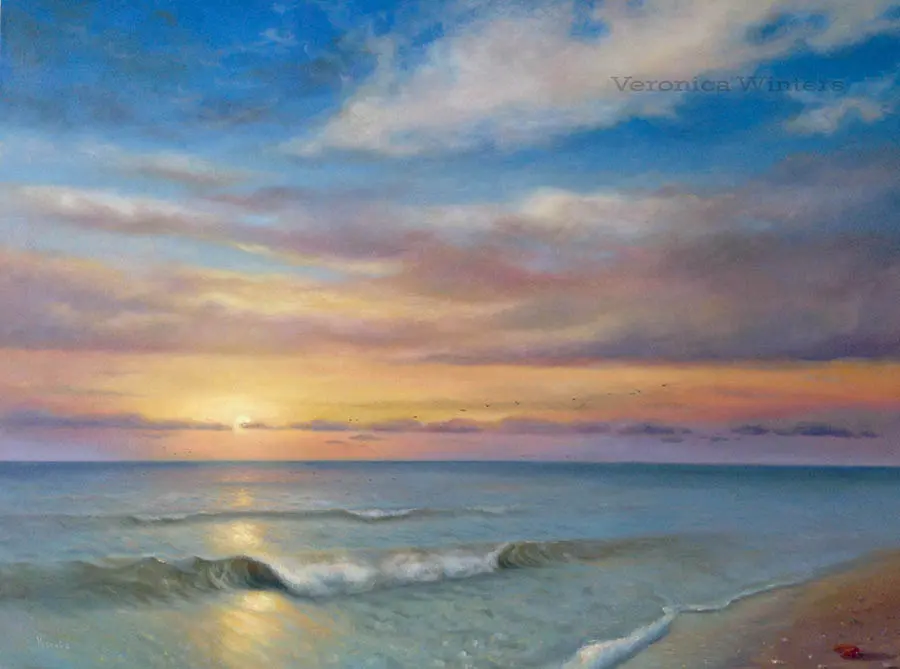
Capturing the vastness of a sunset relies on the concept of atmospheric perspective. As the sky recedes from the horizon toward the top of the canvas, the colors should shift from warm, light-filled yellows and oranges to cooler, darker blues and violets. This transition mimics the way light scatters through the Earth's atmosphere, creating a sense of distance and space that draws the viewer into the scene.
Focus on the edges of clouds and light rays to enhance this effect. Hard, crisp edges should generally be reserved for objects in the foreground, such as trees or buildings silhouetted against the light. In the sky, use soft, feathered edges to suggest the diffuse nature of clouds. By keeping the transitions between colors subtle and smooth, you create an illusion of depth that makes the sunset feel expansive rather than flat or static.
Common mistakes when painting sunsets
One of the most frequent errors is creating a "banded" look, where the sky appears as distinct, horizontal stripes of color. This happens when the artist fails to blend the transitions between color zones sufficiently. To avoid this, use a large, soft-bristled brush to lightly cross-hatch or sweep across the borders where your colors overlap. Another mistake is using too much black to darken colors, which inevitably kills the vibrancy of the sunset.
- Avoid using black to darken reds or oranges; use deep blues or purples instead to maintain color harmony.
- Do not ignore the reflection of the sky in the water or landscape below, as this grounds the entire image.
- Avoid placing the sun exactly in the center of the canvas, as this creates a static, symmetrical composition that lacks visual interest.
- Refrain from working on the same area for too long, as the paint will become overworked and lose its luminosity.
How long does it take to dry
Oil paint dries through a process of oxidation rather than evaporation, meaning it can take several days to weeks to become touch-dry. A sunset painting, which often involves thick, impasto applications for the sun or clouds, will take significantly longer to cure than a thin landscape wash. Ambient temperature and humidity play a major role in this timeline; a warm, dry room will accelerate the drying process, while a damp, cool environment will slow it down considerably.
If you are working in layers, you may need to wait until the surface is dry to the touch before adding final details or highlights. Using a fast-drying medium like alkyd can reduce wait times, but be cautious, as these mediums can alter the consistency of your paint. Patience is a vital part of the oil painting process, allowing each layer to stabilize before you apply the final, brilliant highlights that give a sunset its characteristic, shimmering glow.
Key facts
- Use a "fat-over-lean" approach by adding more oil to your upper paint layers to prevent cracking as they dry.
- Start with a thin, neutral-toned underpainting, often called an imprimatura, to eliminate white canvas glare.
- Mix your colors on the palette before applying them to the canvas to ensure you achieve the desired luminosity.
- Use a clean, dry fan brush or a soft blender brush to soften the edges where the sky meets the horizon.
- Remember that the sun is the lightest point in the painting, so reserve your purest white or yellow for that specific spot.
- Clean your brushes thoroughly with an odorless mineral spirit or a brush soap to maintain the integrity of your bristles.
The bottom line
Painting a sunset in oil requires a balance of vibrant color mixing and careful edge control. By layering paint from thin to thick and focusing on the transition of light from the horizon to the zenith, you can capture the dramatic atmosphere of dusk. Patience is essential, as allowing layers to set properly ensures your work remains durable and visually striking for many years to come.
People also ask
Should I use a palette knife or a brush for sunset clouds?
A palette knife is excellent for creating thick, textured clouds with sharp edges, while brushes are better for soft, blended transitions. Many artists use a combination of both to create depth and variety in the sky.
How do I prevent my sunset colors from turning into mud?
Mud occurs when you over-blend complementary colors, such as orange and blue, directly on the canvas. To avoid this, apply your colors with deliberate, clean strokes and clean your brush frequently between color changes.
What is the best way to paint the reflection of a sunset on water?
Paint the reflection using vertical strokes that mirror the colors of the sky above, but slightly darker and less saturated. A horizontal stroke across the water can help establish the surface plane before adding the vertical reflections.
How long does it take for an oil sunset painting to dry?
Oil paint dries through oxidation, which can take several days to several weeks depending on the thickness of the application. Using a fast-drying medium or a thin application of paint can significantly reduce the drying time.
Can I paint over a mistake in an oil sunset?
Yes, oil paint’s slow drying time is its greatest advantage for corrections. You can easily wipe away wet paint with a rag or scrape it off with a palette knife to start that section over.
Do I need to varnish my sunset painting?
You should apply a final varnish once the painting is completely cured, which usually takes six months to a year. Varnish protects the surface from dust, UV light, and environmental pollutants while evening out the sheen.
This answer was created with the help of AI research tools and reference sources. Spotted an error? Let us know — we correct mistakes quickly. See our editorial policy.