How did dinosaurs go extinct?
Short answer
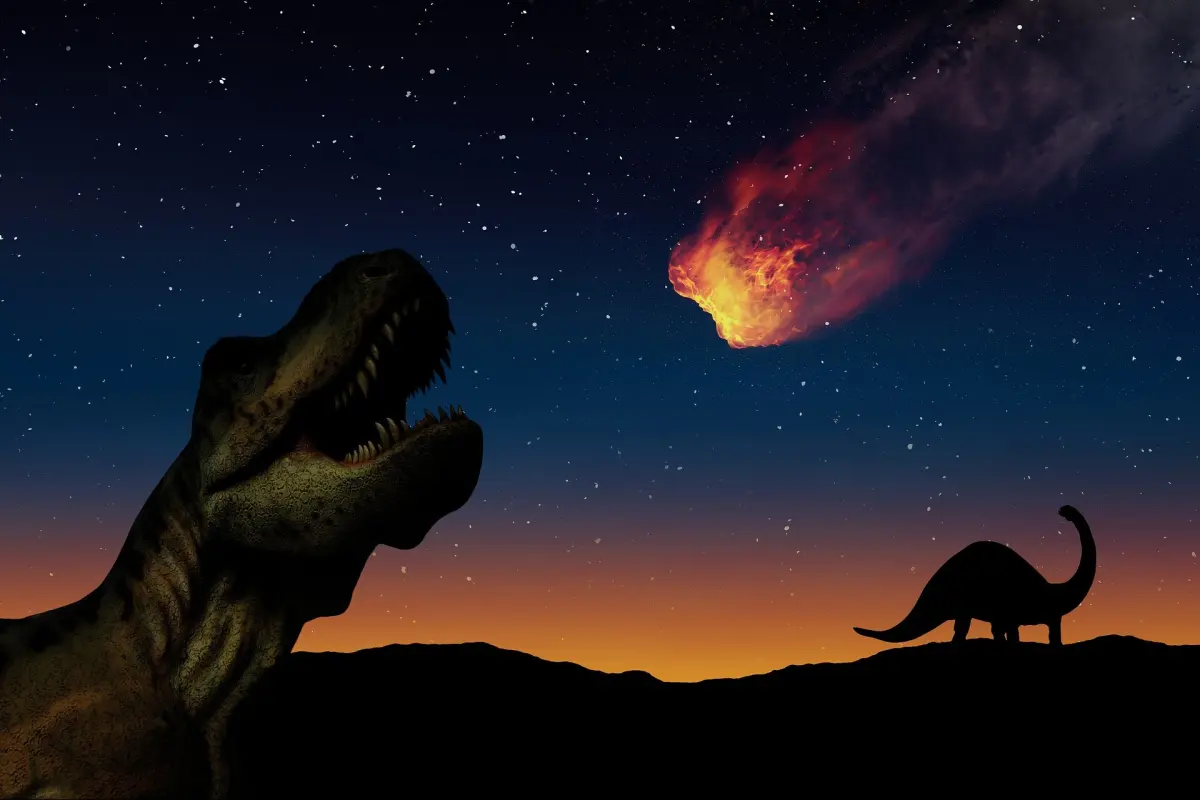
Dinosaurs, excluding birds, went extinct approximately 66 million years ago due to the Cretaceous-Paleogene (K-Pg) extinction event. A massive asteroid impact in the Yucatán Peninsula triggered catastrophic environmental changes, including global wildfires, tsunamis, and a prolonged "impact winter" that collapsed food chains, leading to the demise of non-avian dinosaur species.
On this page
Why did the dinosaurs go extinct?
The primary cause of the mass extinction was the Chicxulub asteroid, which measured approximately 10 kilometers (6 miles) in diameter. When it struck what is now Mexico, it released energy equivalent to billions of atomic bombs. This impact ejected massive amounts of debris, sulfur, and soot into the atmosphere, effectively blocking sunlight across the entire planet for several years.
Without sunlight, photosynthesis stalled, causing primary producers like phytoplankton and land plants to die off. This collapse rippled up the food chain, starving herbivores and subsequently the carnivores that relied on them. While smaller mammals and some reptiles survived by scavenging or burrowing, the large-bodied non-avian dinosaurs could not adapt to the sudden, extreme environmental shifts.
How did the asteroid impact change the climate?
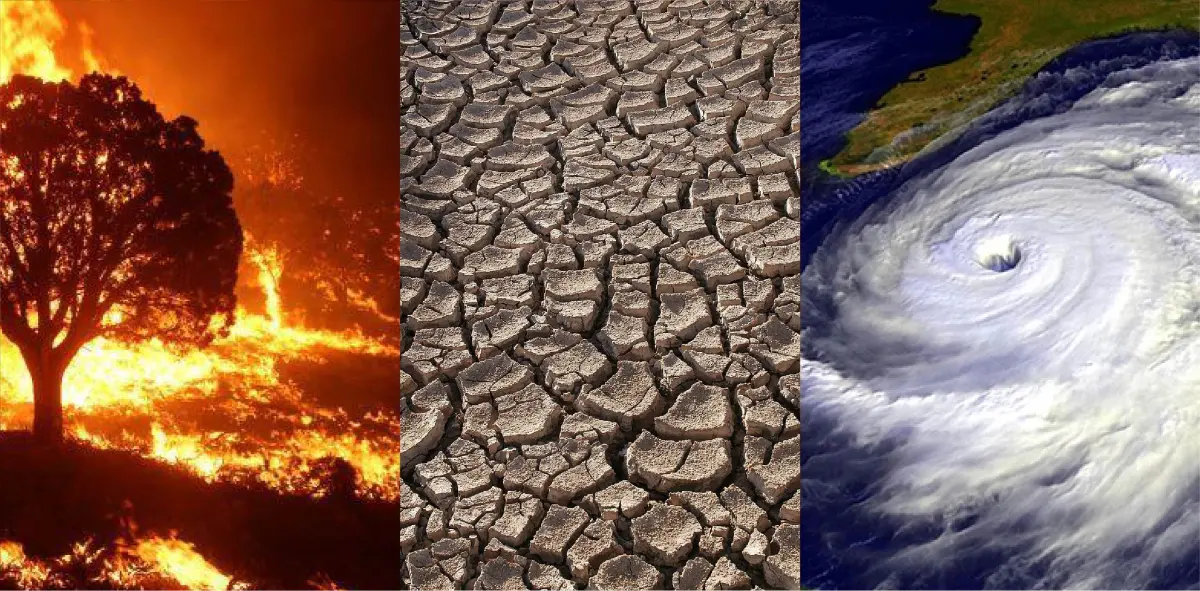
The immediate aftermath of the impact involved intense heat radiation that ignited global wildfires. As the dust and sulfur aerosols settled into the upper atmosphere, they created a thick shroud that prevented solar radiation from reaching the surface. This phenomenon, known as an impact winter, caused global temperatures to plummet rapidly, making it impossible for many tropical-dwelling species to survive.
The environmental transformation was multifaceted and brutal. Researchers have identified several key factors that contributed to the death toll:
- Massive tsunamis triggered by the impact devastated coastal ecosystems.
- Acid rain caused by vaporized rocks altered the chemistry of oceans and soil.
- Global temperature swings fluctuated between extreme heat and prolonged freezing.
- Greenhouse gases released by the impact eventually caused long-term warming once the dust settled.
What role did volcanic activity play?
Before the asteroid struck, the Earth was already experiencing significant geological upheaval. The Deccan Traps in modern-day India were the site of massive, long-term volcanic eruptions that lasted for hundreds of thousands of years. These eruptions released enormous quantities of carbon dioxide and sulfur dioxide into the atmosphere, which likely stressed global ecosystems long before the asteroid arrived.
While scientists once debated whether the volcanoes or the asteroid were the sole cause, current consensus suggests a "press-pulse" model. The volcanic activity acted as a "press," putting long-term stress on the environment and weakening biodiversity. The asteroid acted as the "pulse," a sudden, catastrophic event that pushed already vulnerable populations over the edge. This combination of stressors made recovery impossible for the dominant dinosaur species.
How do scientists know what happened?
Paleontologists and geologists rely on the "K-Pg boundary," a thin layer of sediment found globally that marks the end of the Cretaceous period. This layer is rich in iridium, an element that is rare on Earth's surface but abundant in asteroids. Finding this specific chemical signature in rock layers worldwide provided the first concrete evidence that an extraterrestrial impact was the culprit.
To reconstruct the timeline, researchers follow these investigative steps:
- Identify the K-Pg boundary in geological strata, often marked by high iridium concentrations.
- Analyze microfossils within the layers to determine which species disappeared suddenly versus those that vanished gradually.
- Map the Chicxulub crater using gravity and magnetic surveys to confirm its size and age.
- Use computer modeling to simulate the atmospheric and oceanic effects of the impact.
- Compare these findings with climate data from the Deccan Traps to understand the environmental context.
Common mistakes when studying extinction
A frequent error is assuming that all dinosaurs died instantly upon impact. In reality, the extinction was a process that unfolded over years or even centuries as ecosystems collapsed. Another common misconception is that the impact was the only factor; ignoring the pre-existing stress caused by volcanic activity and shifting sea levels leads to an incomplete understanding of the event.
When researching this topic, avoid these pitfalls:
- Thinking that birds are not dinosaurs; they are the only surviving lineage of the theropod group.
- Assuming that mammals were the primary cause of dinosaur decline; mammals were small and mostly nocturnal, playing a minor role in the extinction.
- Believing that the extinction was a localized event; the evidence confirms it was a truly global catastrophe.
- Overlooking the role of ocean acidification, which decimated marine life and contributed significantly to the total loss of biodiversity during this period.
Key facts
- The Cretaceous-Paleogene (K-Pg) extinction event occurred approximately 66 million years ago.
- An asteroid roughly 10 kilometers wide struck the Yucatán Peninsula, creating the 150-kilometer-wide Chicxulub crater.
- The impact released energy equivalent to billions of atomic bombs, triggering massive tsunamis and global wildfires.
- Dust, sulfur, and debris ejected into the atmosphere blocked sunlight for years, causing a "nuclear winter" that collapsed food chains.
- Volcanic activity in the Deccan Traps of modern-day India likely contributed to climate instability prior to the asteroid strike.
- Roughly 75 percent of all plant and animal species, including all non-avian dinosaurs, perished during this mass extinction.
The bottom line
The extinction of the dinosaurs was a complex event triggered by a massive asteroid collision 66 million years ago. This impact, combined with existing volcanic instability, fundamentally altered the Earth’s climate and food chains. While the event wiped out the dominant reptilian megafauna, it cleared the ecological path for the rise of mammals and the eventual evolution of human beings on a transformed planet.
People also ask
Did all dinosaurs die out during the extinction event?
No, modern birds are the direct descendants of small, feathered theropod dinosaurs. While all giant, non-avian dinosaurs went extinct, these avian lineages survived and evolved into the birds we see today.
How do scientists know an asteroid caused the extinction?
Geologists discovered a thin layer of iridium—an element rare on Earth but common in asteroids—in rock strata dating to 66 million years ago. This layer, known as the K-Pg boundary, is found globally and serves as a physical record of the impact.
Could humans have survived the asteroid impact?
It is highly unlikely that humans could have survived the immediate aftermath, which included extreme heat, acid rain, and a total collapse of global ecosystems. Our early mammalian ancestors survived primarily because they were small, burrowing, and able to scavenge diverse food sources.
Did the extinction happen instantly?
The initial impact caused immediate local destruction, but the global extinction of species occurred over a period ranging from a few years to several millennia. The collapse of photosynthesis due to blocked sunlight led to a gradual, catastrophic failure of the entire food web.
Was the asteroid the only cause of the extinction?
While the asteroid impact was the primary driver, many scientists believe the Earth’s ecosystems were already under stress. Massive volcanic eruptions in the Deccan Traps were releasing greenhouse gases and altering the global climate for hundreds of thousands of years before the impact.
Are we currently in another mass extinction event?
Many biologists argue that we are currently in the sixth mass extinction, driven by human activity rather than geological or cosmic events. Habitat loss, climate change, and pollution are causing species extinction rates to accelerate far beyond natural historical baselines.
This answer was created with the help of AI research tools and reference sources. Spotted an error? Let us know — we correct mistakes quickly. See our editorial policy.