Why is Ottawa the capital of Canada?
Short answer
Ottawa was chosen as Canada’s capital in 1857 by Queen Victoria to resolve intense political rivalry between Montreal, Quebec City, Toronto, and Kingston. Its strategic location on the border of Ontario and Quebec, combined with its distance from the American border, provided a secure and neutral site for the new government.
On this page
Why was Ottawa chosen as the capital?
Before 1857, the Province of Canada—which included modern-day Ontario and Quebec—rotated its capital city among Montreal, Toronto, Kingston, and Quebec City. This arrangement proved highly inefficient, as government records, furniture, and personnel had to be packed and moved every few years. Furthermore, the political tensions between the English-speaking and French-speaking populations made it impossible for any of these major urban centers to be accepted as a permanent seat of power by all factions.
Queen Victoria was eventually asked to settle the dispute, as the colonial legislature could not reach a consensus. She selected Bytown, which was later renamed Ottawa, for several strategic reasons:
- It sat directly on the border between Canada West (Ontario) and Canada East (Quebec).
- The town was situated far enough inland from the St. Lawrence River to be protected from potential American military incursions.
- It was already a thriving timber town with existing infrastructure and a defensible position on high bluffs overlooking the Ottawa River.
How did the location influence national unity?
The selection of Ottawa was a compromise intended to balance regional interests. By choosing a site that was not already a dominant economic or political powerhouse, the government avoided favoring one major city over another. This decision was crucial for maintaining the fragile alliance between the two halves of the province. It signaled that the new capital would be a neutral ground where both cultures could coexist and govern together.
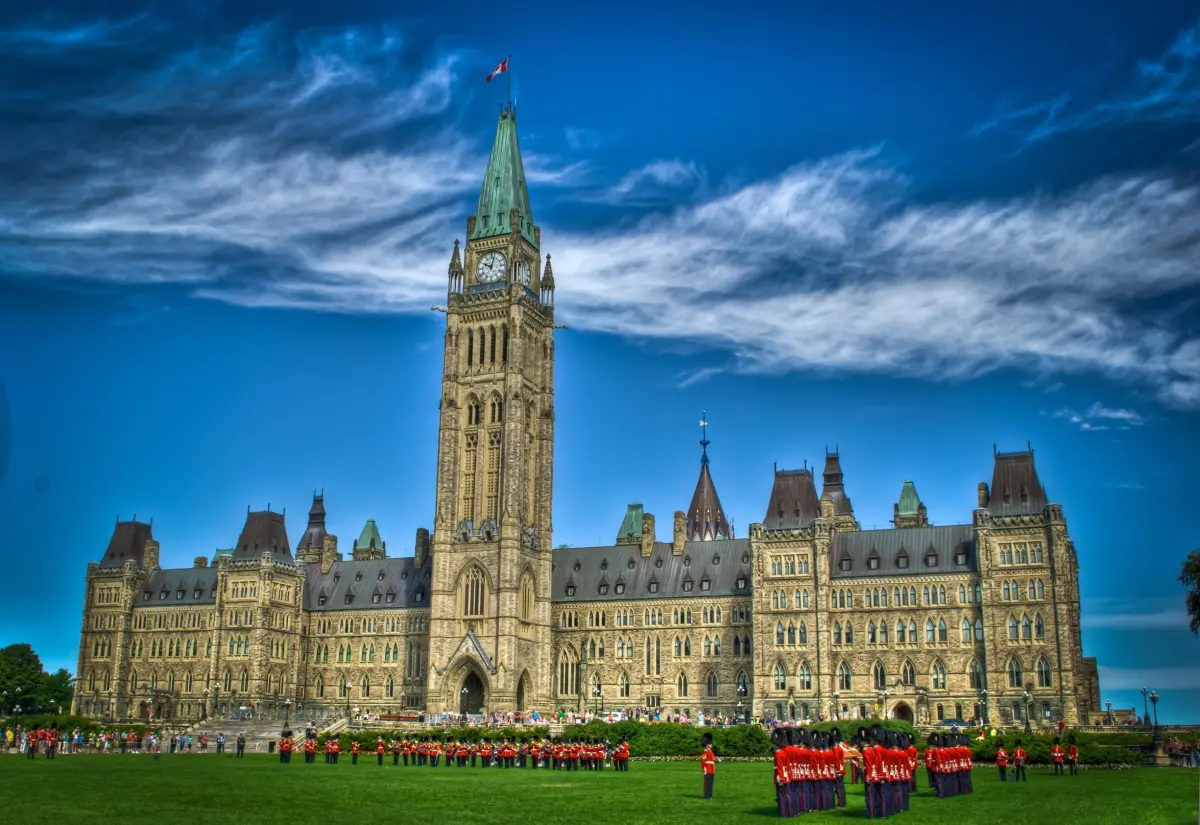
However, the choice was not universally popular at the time. Critics in larger cities argued that Ottawa was a remote "lumber town" lacking the sophistication and amenities required for a national capital. Despite these complaints, the government proceeded with the construction of the Parliament Buildings on Parliament Hill. This architectural project served as a physical manifestation of the country’s aspirations. By building a grand, gothic-style center of government, officials aimed to project stability, permanence, and a shared national identity that transcended local provincial loyalties.
What role did the Ottawa River play?
The Ottawa River was the primary economic engine of the region in the mid-19th century. As the center of the massive timber trade, the river provided the necessary transportation routes to move supplies and materials required to build a capital city from scratch. The river also served as a natural boundary between the two linguistic groups, making the city a symbolic bridge between the English and French-speaking populations of the colony.
Today, the river remains central to the capital's identity, though its role has shifted from industrial to recreational and symbolic. When visiting the capital, travelers can observe how the geography shaped the city:
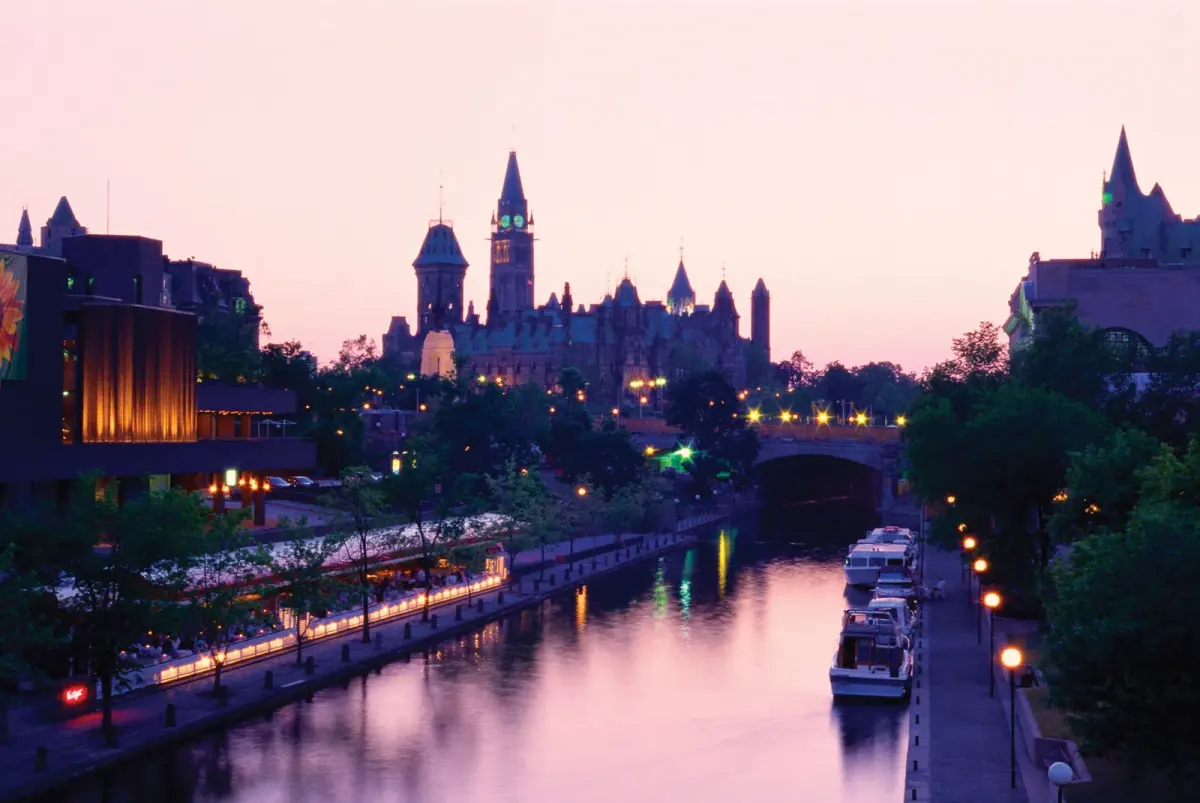
- Walk along the Rideau Canal, a UNESCO World Heritage site that connects the Ottawa River to the Rideau River.
- View the Parliament Buildings from the Gatineau side of the river to understand the city's defensive positioning.
- Explore the various bridges that connect the city to Quebec, highlighting how the capital serves as a cross-provincial hub.
Common mistakes when learning about Canadian history
Many people mistakenly assume that Ottawa was always the capital since the country was founded in 1867. In reality, the site was chosen a full decade before Confederation, when the Province of Canada was still a British colony. Another frequent error is believing that Ottawa was the largest city in the region at the time of its selection. In fact, it was a relatively small, rough-and-tumble settlement compared to the established urban centers of Montreal or Toronto.
When researching the history of the capital, avoid these common pitfalls:
- Assuming the decision was based on a popular vote; it was an executive decision made by the British monarch.
- Overlooking the influence of the Rideau Canal, which was originally built for military purposes rather than commerce.
- Ignoring the intense regional lobbying that occurred in the 1850s, which nearly paralyzed the colonial government.
- Misinterpreting the "rotating capital" system as a sign of prosperity, when it was actually a source of significant administrative chaos and financial waste.
How to explore the capital's heritage today
Visiting Ottawa provides a practical way to understand why it was selected as the seat of government. The city is designed to showcase the history of the nation, with numerous national museums and monuments concentrated within the downtown core. The architecture of the Parliament Buildings, particularly the Peace Tower, remains the most iconic symbol of the country’s political history and its transition from a British colony to an independent nation.
For those planning a visit, focus on the following areas to gain a better appreciation of the capital's origins:
- The Library of Parliament, which is one of the few original structures to survive the 1916 fire.
- The National Gallery of Canada, which sits near the river and offers a clear view of the historic landscape.
- The Bytown Museum, located at the locks of the Rideau Canal, which provides deep insight into the city's early development as a frontier town.
- The various plaques and statues surrounding Parliament Hill that commemorate the political figures who navigated the complex transition to a permanent capital.
Key facts
- Queen Victoria officially chose Ottawa as the capital of the Province of Canada on December 31, 1857.
- Ottawa was selected primarily because its location on the border of Ontario and Quebec helped bridge the divide between English and French populations.
- The city’s inland position, far from the American border, offered a strategic military advantage against potential invasions.
- Ottawa was originally a rough lumber town known as Bytown before it was renamed and elevated to capital status.
- When choosing a capital, avoid assuming the largest city is always the best choice; historical, political, and defensive factors often outweigh population size.
- To understand the capital's history, visit Parliament Hill to see the original site chosen for the government buildings overlooking the Ottawa River.
The bottom line
Ottawa’s selection as Canada’s capital was a calculated political compromise designed to unify a divided nation. By selecting a neutral, defensible site located between the influential cities of Montreal and Toronto, Queen Victoria resolved long-standing regional rivalries. Today, Ottawa stands as a testament to this historical strategy, serving as the administrative heart of the country while balancing the diverse cultural interests of its various provinces.
People also ask
Why was Montreal not chosen as the capital?
Montreal was considered a strong candidate, but it was viewed as too politically volatile and prone to civil unrest. By choosing a smaller, neutral site, the government aimed to minimize regional favoritism between competing urban centers.
Did the capital move between cities before Ottawa?
Yes, the capital of the Province of Canada rotated between Kingston, Montreal, Toronto, and Quebec City. This system proved inefficient, leading to the search for a permanent, centralized location.
What was the significance of the "Bytown" name?
Bytown was named after Colonel John By, the British engineer who supervised the construction of the Rideau Canal. The name was changed to Ottawa in 1855 to reflect a more sophisticated identity for the growing capital.
Why was the location considered safer than Toronto?
Toronto was located directly on the shores of Lake Ontario, making it highly vulnerable to naval attacks from the United States. Ottawa’s inland position hidden by dense forests provided a natural defensive barrier.
How did the geography of the Ottawa River influence the decision?
The river served as a vital transportation route for the timber trade and acted as a natural boundary between Canada West and Canada East. This central position made it a symbolic meeting point for the two colonies.
Is Ottawa the capital of all of Canada?
Yes, Ottawa became the capital of the Dominion of Canada upon Confederation in 1867. It has remained the seat of the federal government and the home of Parliament ever since.
This answer was created with the help of AI research tools and reference sources. Spotted an error? Let us know — we correct mistakes quickly. See our editorial policy.