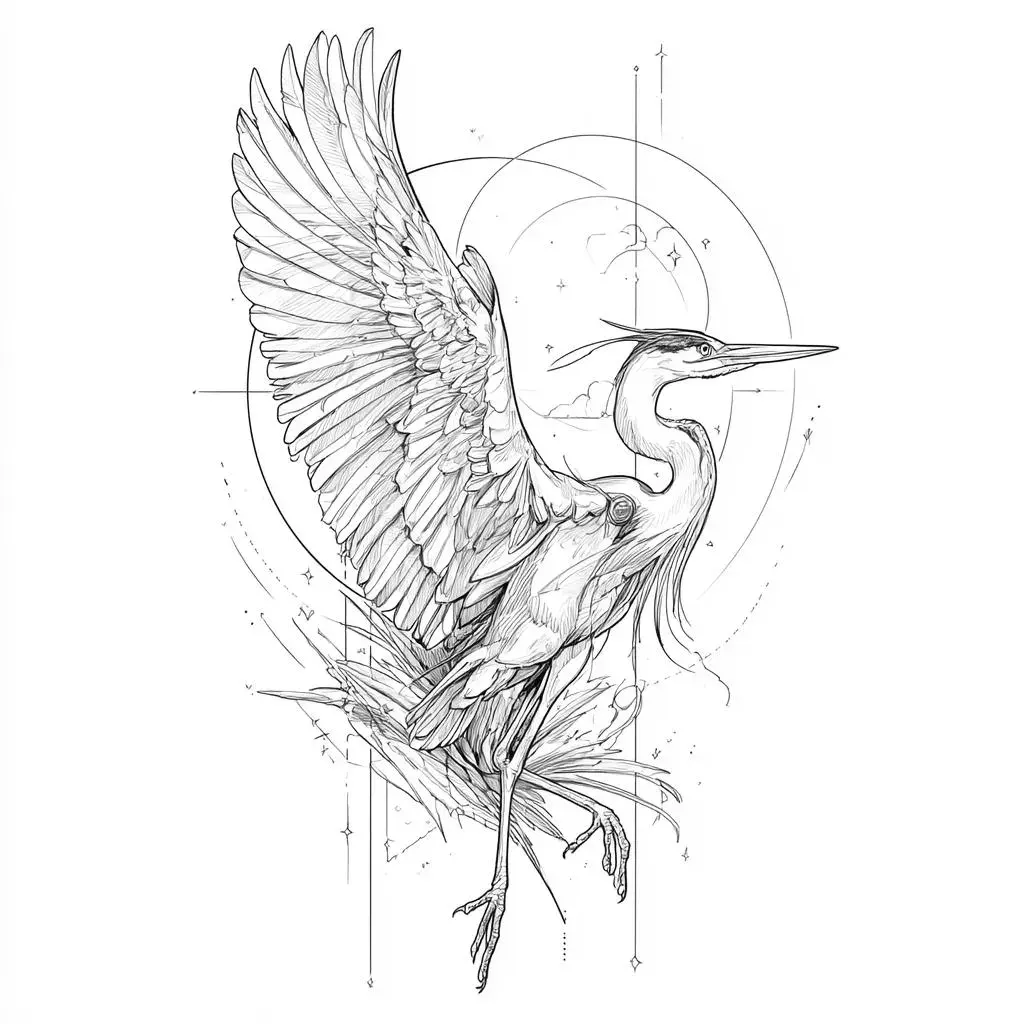
How big do herons get?
Short answer
Herons vary significantly in size depending on the species, ranging from the small green heron to the massive great blue heron. Most species stand between 15 and 50 inches tall. Their wingspans are equally diverse, stretching from 20 inches in smaller varieties to over 7 feet in the largest North American species.

On this page
How big do different heron species get?
The size of a heron is primarily determined by its specific species, as the family Ardeidae includes a wide array of birds with distinct physical profiles. The great blue heron is the largest and most recognizable member of this family in North America, often standing up to 4 feet tall. In contrast, the green heron is one of the smallest species, typically measuring only 16 to 18 inches in height.
Because these birds are adapted to different environments, their dimensions reflect their hunting strategies. Smaller herons often inhabit dense vegetation where agility is more important than reach, while larger species occupy open wetlands where a long neck and legs provide a tactical advantage for spotting prey. When identifying a heron, observers should look at the following size categories:
- Small (15–20 inches): Green heron, least bittern.
- Medium (25–35 inches): Snowy egret, little blue heron.
- Large (40–50+ inches): Great blue heron, great egret, grey heron.
How to measure a heron's wingspan
A heron’s wingspan is often much more impressive than its standing height, as these birds require massive surface areas to lift their heavy bodies during flight. The great blue heron, for instance, can boast a wingspan reaching up to 7 feet across. This broad span allows them to glide efficiently over water and navigate long distances between nesting sites and hunting grounds.
Measuring a heron in the wild is difficult, so ornithologists rely on standardized measurements taken from specimens. If you are observing a bird in flight, you can estimate its wingspan by comparing it to the length of its body. A general rule of thumb is that a heron's wingspan is typically 1.5 to 2 times the length of its total body from bill to tail. Keep these factors in mind when estimating size:
- Distance: Objects appear smaller the further away they are, which can lead to underestimating wingspan.
- Posture: A heron with its neck retracted in flight looks significantly more compact than one standing still.
- Wind conditions: Birds may hold their wings in different positions depending on air currents.

Why do herons have such long legs?
The extreme length of a heron's legs is an evolutionary adaptation that allows them to hunt in deeper water than other wading birds. By standing on long, stilt-like legs, a heron can wade into a pond or marsh without submerging its feathers, which helps keep the bird dry and warm. This reach also allows them to scan a larger area for fish and amphibians while remaining perfectly still.
The structure of the leg is equally important, as it provides the stability needed to stand in moving water or mud. Their toes are long and spread out, which prevents them from sinking into soft sediment. These legs are not just for standing; they are also powerful tools for sudden, explosive strikes at prey. When a heron detects movement, it uses its legs to anchor itself before thrusting its head forward with incredible speed and precision.

Common mistakes when estimating heron size
One of the most frequent errors people make when identifying herons is confusing them with other long-legged birds like cranes or egrets. While they may look similar from a distance, cranes typically fly with their necks stretched straight out, whereas herons tuck their necks into an "S" shape. Misidentifying the species often leads to incorrect assumptions about the bird's actual size.
Another common mistake is judging size based on the bird's silhouette against a bright sky, which can cause the bird to appear smaller or larger than it truly is. To avoid these errors, try to use environmental markers for scale. If a heron is standing near a known object, such as a fence post, a rock, or a piece of driftwood, use that object to gauge the bird's height. Following these steps will improve your accuracy:
- Observe the bird’s posture before it moves.
- Identify the bird’s neck shape during flight to confirm the species.
- Compare the bird’s height to nearby stationary objects.
- Note the color of the legs and bill to differentiate between similar-looking species.
How to safely observe herons in nature
When you are trying to get a good look at a heron, it is vital to keep a respectful distance to avoid startling the bird. Herons are wary creatures and will fly away if they feel threatened, which prevents you from getting an accurate sense of their scale. Use binoculars or a spotting scope to observe them from at least 50 to 100 feet away.
Providing the bird with space is not just for your benefit; it is essential for their survival. If a heron is forced to fly away, it wastes valuable energy that it needs for hunting and maintaining its territory. By staying quiet and moving slowly, you can witness the bird’s natural behavior, including how it uses its massive wings to take off or how it balances on one leg. Remember that the best observation is one where the bird continues its daily routine undisturbed by your presence.
Key facts
- The Great Blue Heron is the largest heron in North America, standing up to 4.5 feet tall.
- Most herons have a wingspan between 5 and 7 feet, allowing them to glide efficiently over water.
- Despite their large stature, these birds are surprisingly light, typically weighing between 4 and 8 pounds.
- When observing herons, keep a distance of at least 50 feet to avoid startling them from their hunting grounds.
- A common mistake is assuming all herons are the same size; smaller species like the Green Heron are only about 18 inches tall.
- You can estimate a heron's height by comparing it to nearby fence posts or known landmarks while it stands still.
The bottom line
Herons vary significantly in size, ranging from the petite 18-inch Green Heron to the imposing 4.5-foot Great Blue Heron. Despite their tall frames, these birds maintain a lightweight build that facilitates graceful flight and precise hunting. When observing these majestic creatures, maintain a respectful distance to ensure their safety and your own. Understanding these physical traits helps birdwatchers accurately identify species in their natural habitats.
People also ask
Do herons live in groups or alone?
While they often hunt alone, many heron species nest in large colonies known as rookeries. These communal nesting sites can contain dozens or even hundreds of nests in the tops of tall trees.
What do herons eat in the wild?
Herons are carnivores that primarily consume fish, amphibians, reptiles, and small mammals. They use their sharp, dagger-like bills to strike quickly at prey in shallow water.
How can I tell the difference between a heron and an egret?
Egrets are technically a type of heron, but they are generally smaller and feature white plumage. Herons are typically larger and possess more varied, muted color patterns like gray, brown, or blue.
Are herons dangerous to humans?
Herons are generally shy and will fly away if approached. However, they can deliver a painful jab with their bill if cornered or handled, so you should never attempt to touch one.
How long do herons live in the wild?
Most herons live for about 15 years in the wild. Some individuals in protected environments have been known to survive into their early twenties.
Why do herons stand on one leg?
Standing on one leg helps the heron conserve body heat in cool water. By tucking one leg into its feathers, the bird reduces the amount of heat lost through its unfeathered limbs.
This answer was created with the help of AI research tools and reference sources. Spotted an error? Let us know — we correct mistakes quickly. See our editorial policy.