How big do crows get?
Short answer
Common crows, such as the American crow, typically measure between 17 and 21 inches in length with a wingspan of 33 to 39 inches. They generally weigh between 11 and 22 ounces. Size varies significantly by species, with the common raven being substantially larger than the average crow in both mass and wingspan.
On this page
How big are different crow species?
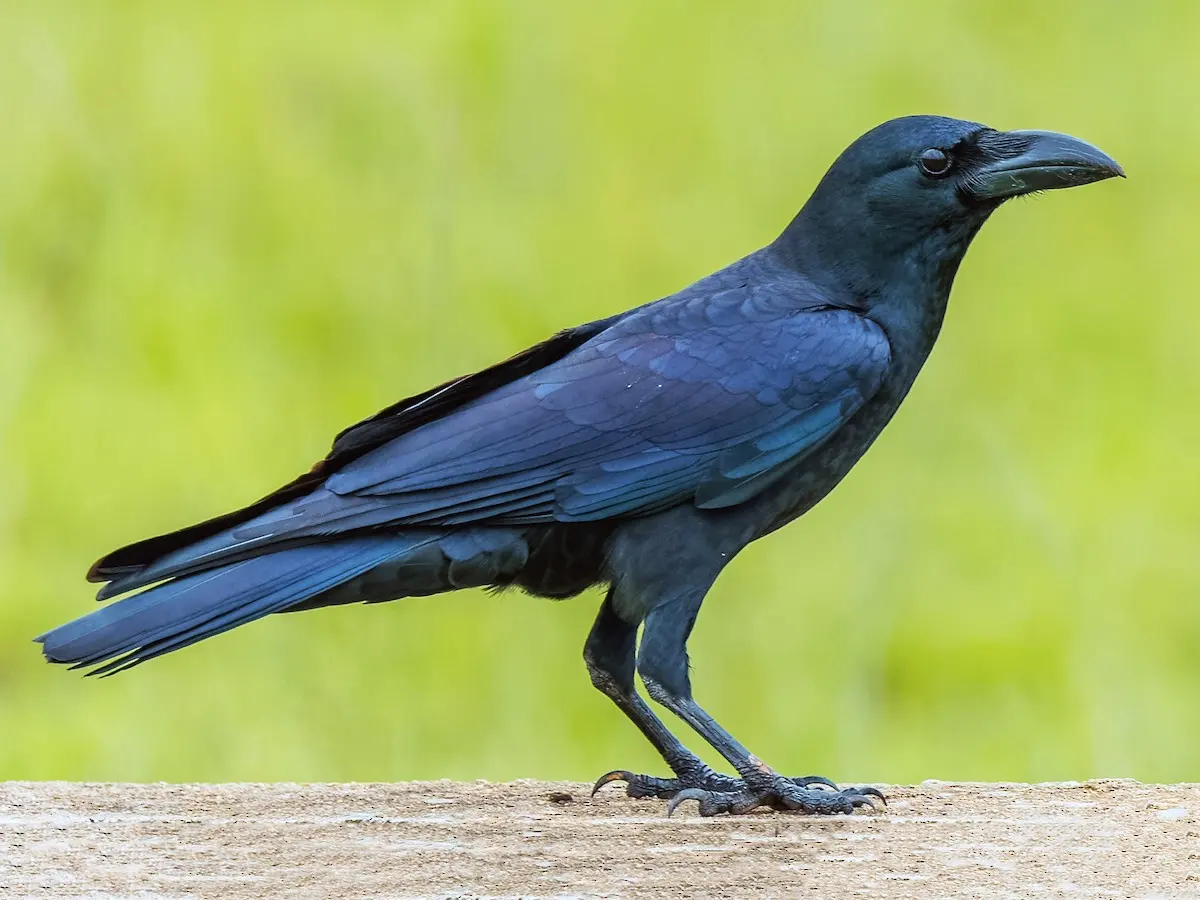
While many people use the term "crow" to describe any large black bird, there are several distinct species with different physical dimensions. The American crow (Corvus brachyrhynchos) is the most familiar species in North America, falling within the standard size range of 17 to 21 inches. In contrast, the Northwestern crow is slightly smaller, often appearing more compact, while the fish crow is smaller still, usually measuring 14 to 16 inches in length.
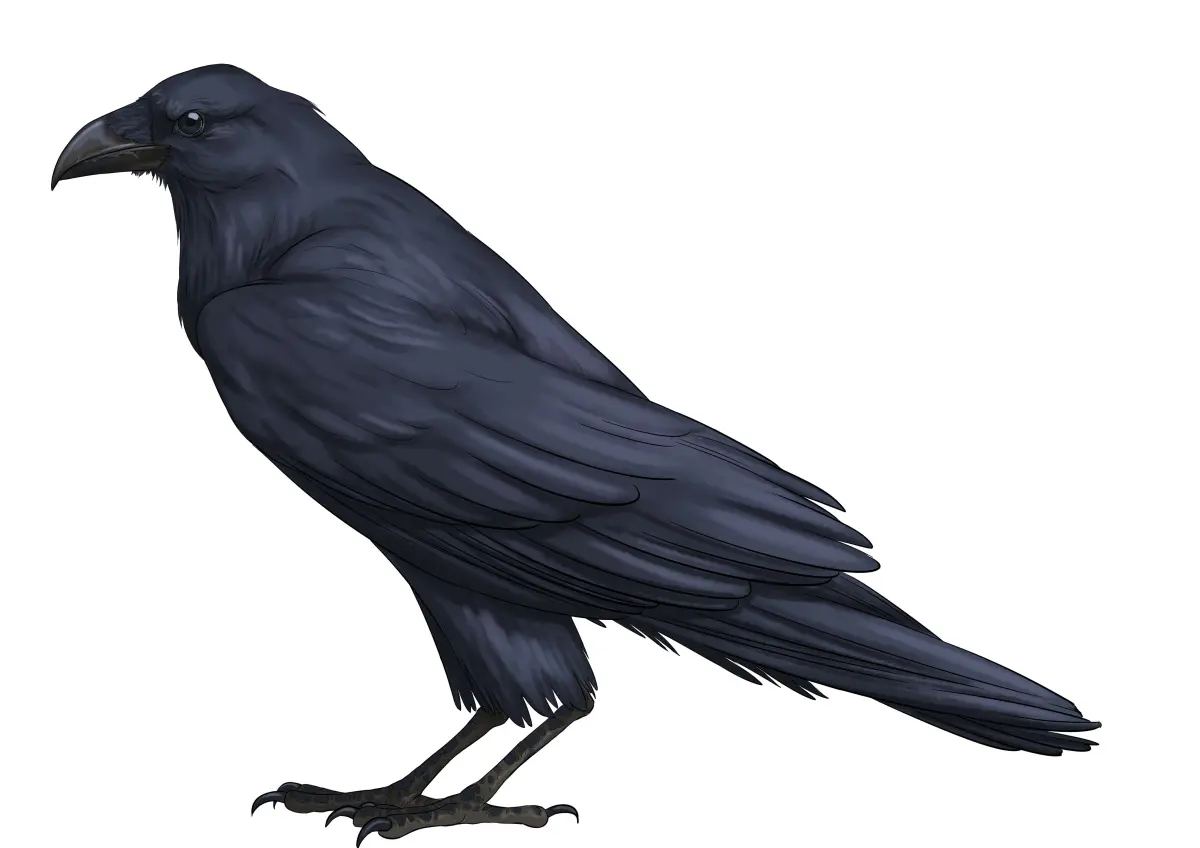
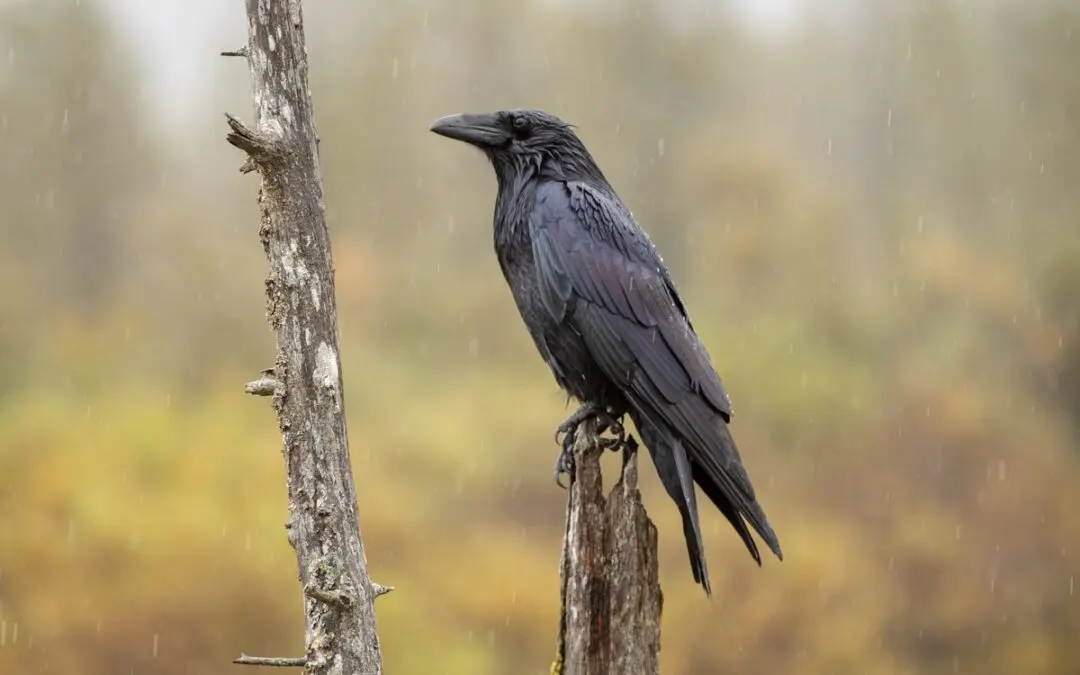
It is important to distinguish these birds from the common raven (Corvus corax), which is frequently mistaken for a crow. Ravens are significantly larger, often reaching 24 to 27 inches in length with a wingspan that can exceed 4 feet. If you are observing a bird that looks like a crow but appears the size of a red-tailed hawk, you are almost certainly looking at a raven.
- American crow: 17–21 inches long; 33–39 inch wingspan.
- Fish crow: 14–16 inches long; 28–33 inch wingspan.
- Common raven: 24–27 inches long; 46–50 inch wingspan.
How to identify a crow by size and shape
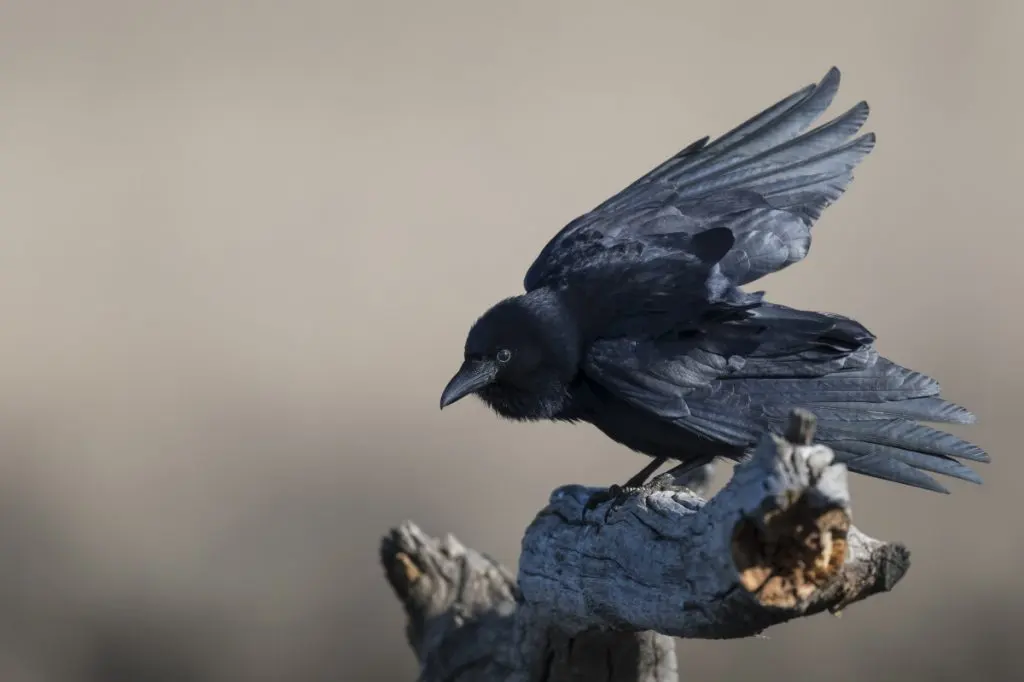
Identifying a crow in the wild requires looking at more than just the total length of the bird. Because crows are often seen at a distance or while in flight, their proportions provide better clues than absolute measurements. A crow typically has a straight, sturdy bill and a tail that appears squared off or slightly rounded at the end when fanned during flight.
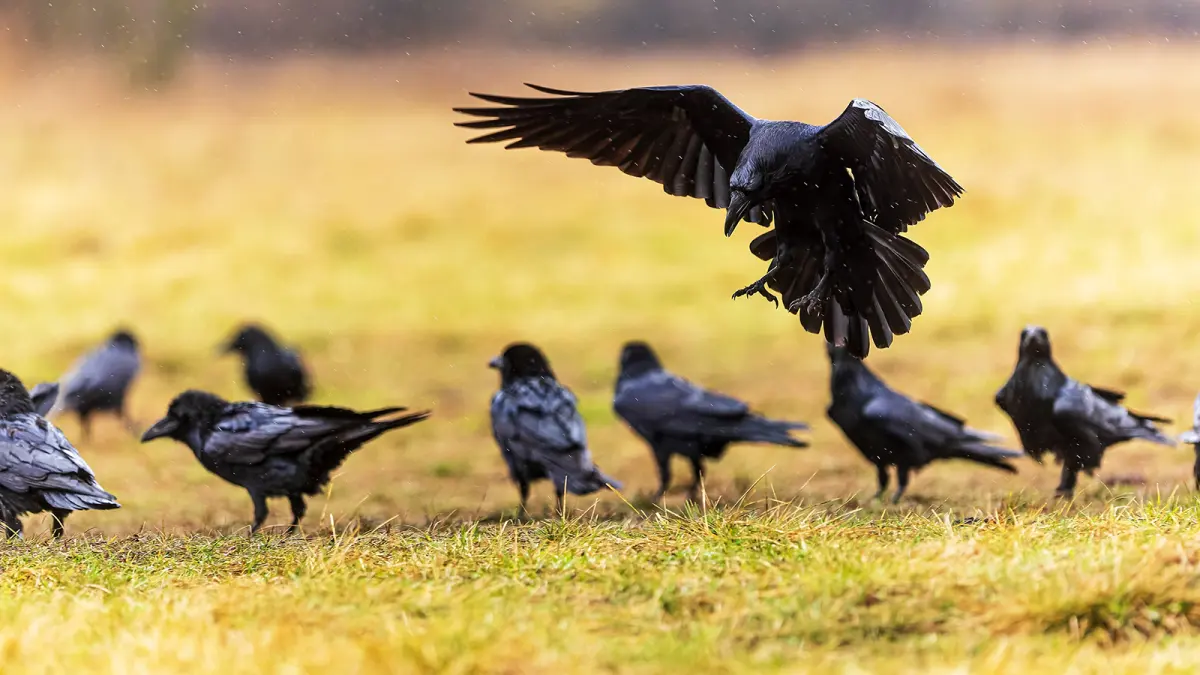
When observing them on the ground, notice their posture and gait. Crows possess a confident, strutting walk and maintain a horizontal body posture. If you see a bird that seems to have a shaggier throat or a more wedge-shaped tail during flight, you are likely observing a raven rather than a crow. Size perception can be tricky, so try to compare the bird to nearby objects like fence posts or other common birds like pigeons or gulls.
- Observe the tail shape while the bird is in flight.
- Note the thickness of the bill relative to the head.
- Compare the bird's size to known objects in the environment.
- Listen for the call, as crows produce a nasal "caw" while ravens emit a deep, guttural croak.
Why crow size varies by region
Environmental factors play a significant role in the physical development of crows across different geographic ranges. According to Bergmann's Rule, birds of the same species often grow larger in colder climates to better conserve body heat. Consequently, American crows living in the northern reaches of Canada may be slightly larger and heavier than those found in the southern United States.
Resource availability also dictates size, as populations with consistent access to high-quality food sources often reach their full genetic growth potential. Urban crows, which frequently scavenge human food, may appear larger or more robust than rural counterparts that rely on seasonal foraging. However, these differences are usually subtle and require precise measurement to detect, as the overall species size remains constrained by their evolutionary biology.
Common mistakes when estimating bird size
One of the most frequent errors observers make is failing to account for optical illusions caused by distance and perspective. A bird perched high in a tree often looks smaller than one on the ground, even if they are the same size. Furthermore, crows often puff out their feathers during cold weather to trap air for insulation, which can make them appear significantly larger and rounder than they actually are.
Another mistake is relying solely on the wingspan to judge size. While a crow’s wingspan is impressive, it is not the only indicator of its physical stature. Beginners often overestimate the size of crows because they associate the bird's loud, assertive personality with a larger physical presence. Always try to look for a reference point, such as a nearby branch or a street sign, to provide a sense of scale.
- Judging size based on the bird's behavior or volume of calls.
- Ignoring the effect of puffed feathers during winter months.
- Failing to use nearby stationary objects for visual calibration.
- Confusing a juvenile crow with a smaller species due to lack of experience.
How to measure a crow safely
If you find an injured or deceased crow and need to determine its size for reporting purposes, you must prioritize safety and hygiene. Never handle wildlife with bare hands, as birds can carry parasites or diseases. If you must move the bird, use heavy-duty gloves and place it in a secure container. To measure length, lay the bird on a flat surface and use a flexible measuring tape from the tip of the bill to the end of the tail feathers.
When measuring wingspan, gently extend one wing fully while keeping the bird in a natural position, measuring from the center of the back to the tip of the longest primary feather, then doubling that number. Avoid forcing the wings or joints, as this can cause damage. If you are documenting this for scientific or wildlife rehabilitation records, take a clear photograph next to a ruler to ensure your data remains accurate for experts.
Key facts
- The American crow typically measures between 17 and 21 inches in length.
- Adult crows generally weigh between 11 and 21 ounces.
- Their wingspan ranges from 33 to 39 inches, allowing for efficient soaring.
- Crows are sexually monomorphic, meaning males and females look identical in size.
- A common mistake is confusing the American crow with the larger common raven.
- Ravens are significantly heavier, often weighing up to 45 ounces with a much larger beak.
The bottom line
The American crow is a medium-sized bird, typically reaching up to 21 inches in length with a wingspan nearing 40 inches. While they are highly intelligent and adaptable, they remain smaller than their close relative, the common raven. Understanding these size differences helps observers distinguish between the two species in the wild, ensuring accurate identification based on physical proportions, tail shape, and overall bulk during flight.
People also ask
How can you tell the difference between a crow and a raven?
Ravens are larger, have thicker bills, and feature shaggier throat feathers. In flight, ravens show a wedge-shaped tail, whereas crows have a fan-shaped tail.
Do crows grow larger in colder climates?
Yes, this follows Bergmann’s rule, where birds in northern regions tend to be slightly larger than those in southern populations. The extra body mass helps them retain heat during harsh winters.
How long does it take for a crow to reach full size?
Crow nestlings grow rapidly and reach adult size within about 30 to 35 days. They typically leave the nest at this stage, though they remain dependent on parents for food.
Do male crows grow larger than females?
While they are the same species, males are often slightly larger on average than females. However, this difference is usually too subtle to identify without professional measurement equipment.
What is the largest species of crow in the world?
The common raven is the largest member of the crow family, often reaching 24 to 27 inches in length. Other species like the thick-billed raven are also significantly larger than the common American crow.
Is it possible to accurately weigh a wild crow?
It is difficult to weigh wild birds without capturing them, which requires specialized permits. Most reliable weight data comes from banding programs or rehabilitation centers.
This answer was created with the help of AI research tools and reference sources. Spotted an error? Let us know — we correct mistakes quickly. See our editorial policy.