What languages are spoken in Canada?
Short answer
Canada is officially a bilingual country with English and French as its two federal languages. While English is the primary language for the majority of the population, French is the dominant language in Quebec. Additionally, Canada is home to a diverse array of Indigenous languages and numerous immigrant languages spoken across the country.
On this page
What are the official languages of Canada?
The Official Languages Act, passed in 1969, established English and French as the official languages of Canada at the federal level. This legislation ensures that all federal institutions provide services in both languages, allowing citizens to interact with the government in their preferred official tongue. While the act applies to federal services, individual provinces and territories have their own specific language policies that reflect their local demographics and historical context.
New Brunswick is the only province in Canada that is constitutionally bilingual, meaning both English and French have equal status in all provincial government services. In contrast, Quebec has designated French as its sole official language, emphasizing the protection and promotion of the French language within its borders. Other provinces and territories primarily operate in English, though they often provide varying degrees of French-language services to accommodate their francophone populations.
Which languages are spoken in Quebec?
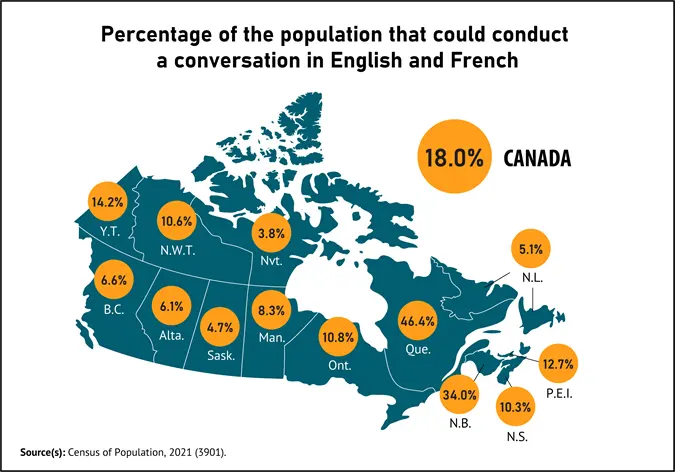
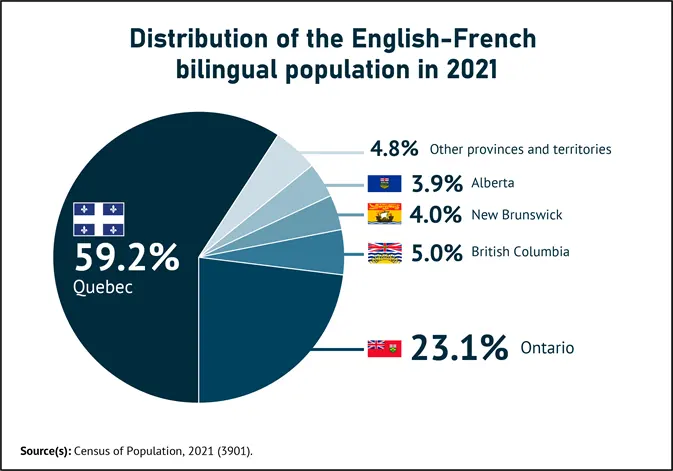
French is the heart of Quebec’s cultural and social life, serving as the primary language for education, government, and daily commerce. According to the most recent census data, over 80 percent of Quebec’s population reports being able to conduct a conversation in French. The province employs strict language laws, such as the Charter of the French Language, to ensure that French remains the standard language of work and public signage.
Despite the dominance of French, Quebec remains a multilingual society with a significant English-speaking minority, particularly in Montreal. Many residents are bilingual, switching fluidly between French and English depending on the social setting. The linguistic landscape of the province is further enriched by:
- A growing number of immigrants who speak languages such as Arabic, Spanish, Mandarin, and Italian.
- Indigenous communities that continue to speak ancestral languages like Inuktitut and Cree.
- A strong emphasis on language preservation through community-based education and cultural programming.
What are the Indigenous languages of Canada?
Canada is home to more than 70 distinct Indigenous languages, which are categorized into 12 language families. These languages are deeply rooted in the history of the land and are essential to the cultural identity of First Nations, Inuit, and Métis peoples. Despite the historical impact of residential schools, which severely suppressed these languages, there is currently a significant movement toward language revitalization and reclamation across the country.
The federal government and various Indigenous organizations are actively working to support these initiatives. Some of the most widely spoken Indigenous languages include:
- Cree, which has the largest number of speakers and several distinct dialects.
- Inuktitut, the primary language of the Inuit in the northern regions of Canada.
- Ojibwe, which is spoken across a wide geographic area in Ontario and the Prairies.
- Dene, which is spoken by various groups in the Northwest Territories and northern provinces.
How do immigrant languages influence Canadian society?
Canada’s multicultural policy has resulted in a vast array of languages spoken in homes and communities across the nation. As a country built on immigration, Canada sees a significant portion of its population speaking a mother tongue other than English or French. In major urban centers like Toronto, Vancouver, and Calgary, it is common to hear dozens of different languages spoken in public spaces, workplaces, and schools.
The most frequently spoken non-official languages in Canada reflect recent migration patterns from Asia, Europe, and the Middle East. These languages contribute to the country’s economic and cultural diversity, often serving as a bridge between Canada and global markets. When navigating these multilingual environments, it is helpful to follow these practical tips:
- Always check if government forms or public notices are available in your preferred language.
- Use community centers or local libraries, which often provide resources for language learning and translation services.
- Be aware that while many people are multilingual, English or French remains the standard for official documentation and legal proceedings.
Common mistakes when navigating language in Canada
One common mistake visitors and new residents make is assuming that French is spoken uniformly across the entire country. While French is vital in Quebec and parts of New Brunswick, Ontario, and Manitoba, it is not the primary language of daily life in the western provinces or the Atlantic region. Relying solely on French in cities like Vancouver or Calgary may lead to communication difficulties, as English is the overwhelming lingua franca in those areas.
Another frequent error is underestimating the importance of regional dialects and linguistic nuances. For example, the French spoken in Quebec differs significantly in pronunciation and vocabulary from the French spoken in France or in other parts of Canada, such as Acadian French. To avoid confusion, consider these strategies:
- Do not assume a person’s language proficiency based on their appearance or cultural background.
- When in doubt, ask politely if someone prefers to speak English or French.
- Remember that in rural areas, English or French might be the only language spoken, whereas urban centers offer much more linguistic diversity.
Key facts
- Canada has two official languages: English and French, established by the Official Languages Act of 1969.
- English is the primary language for about 75% of the population, while French is the primary language for roughly 22%.
- Quebec is the only province where French is the sole official language, though it is widely spoken in parts of New Brunswick, Ontario, and Manitoba.
- More than 20% of Canadians speak a language other than English or French at home, with Mandarin, Cantonese, Punjabi, and Spanish being among the most common.
- Over 70 distinct Indigenous languages are spoken across Canada, categorized into 12 language families, including Cree, Inuktitut, and Ojibway.
- When visiting, avoid assuming everyone is bilingual; while government services are provided in both official languages, many regions are predominantly monolingual.
The bottom line
Canada is a linguistically diverse nation defined by its two official languages, English and French, which serve as the foundation for its federal services and national identity. Beyond these, the country embraces a rich tapestry of immigrant languages and vital Indigenous tongues. Understanding this landscape helps visitors and residents navigate the country effectively, ensuring respectful communication while appreciating the unique cultural heritage of different Canadian regions.
People also ask
Is it mandatory to speak both English and French to live in Canada?
No, it is not mandatory to be bilingual to live in Canada. Most Canadians speak only one of the two official languages, though learning both can be a significant advantage for federal government employment.
Which language is most useful for a tourist to know?
English is the most widely understood language across the country, making it the most practical choice for travelers. However, learning basic French phrases is considered polite and is highly appreciated when visiting Quebec or eastern Ontario.
Are all government documents available in both languages?
Yes, federal government services, websites, and official documents are required by law to be available in both English and French. Provincial services follow their own language policies, which vary significantly by region.
How do I find out which languages are spoken in a specific province?
You can consult the latest census data provided by Statistics Canada, which offers detailed breakdowns of linguistic demographics by province and city. This data is updated every five years to reflect current population trends.
Are Indigenous languages protected by law?
Yes, the Indigenous Languages Act, passed in 2019, supports the reclamation, revitalization, and maintenance of Indigenous languages in Canada. This legislation recognizes these languages as fundamental to the identity and culture of Indigenous peoples.
Can I get by with just Spanish in major Canadian cities?
While many people in large cities like Toronto or Vancouver may speak Spanish, it is not an official language and is not used for government services. You should rely on English for daily interactions and official business.
This answer was created with the help of AI research tools and reference sources. Spotted an error? Let us know — we correct mistakes quickly. See our editorial policy.