How many languages are there in the world?
Short answer
There are approximately 7,168 living languages spoken across the world today. While exact figures fluctuate due to ongoing linguistic research and the gradual extinction of smaller tongues, this number represents the consensus among professional linguists. Most of these languages are concentrated in regions with high biodiversity, such as Asia and Africa.
On this page
How are languages counted?
Linguists define a language based on mutual intelligibility, meaning speakers of the same language can understand one another. However, the distinction between a language and a dialect is often political or social rather than purely linguistic. For example, some varieties of Chinese are as different as French and Spanish, yet they are categorized under one language umbrella for historical and cultural reasons. Conversely, some languages are distinct despite sharing high levels of mutual intelligibility because their speakers identify with different national or ethnic groups.
Determining the total count requires constant field research in remote areas. Researchers use standardized criteria to track whether a language is still being used as a primary means of communication within a community. If a language is only spoken by a few elderly individuals, it is classified as "moribund" or "endangered." Because new documentation frequently reveals previously unknown dialects or confirms the extinction of others, the global total remains a dynamic, shifting estimate rather than a static historical fact.
Why are some languages disappearing?
Language endangerment is a rapid global phenomenon often driven by globalization and the dominance of major world languages. When a community shifts toward a more economically powerful language, such as English, Mandarin, or Spanish, younger generations may stop learning their ancestral tongue. This process, known as language shift, leads to the eventual death of a language when the last fluent speaker passes away. Experts estimate that nearly half of the world's languages could vanish by the end of this century if current trends continue.
Several factors contribute to this decline, including the following:
- Migration and urbanization, which force speakers into environments where their native language is not supported.
- Education systems that mandate instruction exclusively in dominant national languages.
- Economic pressure, where speakers abandon local languages to improve their job prospects in the global market.
- Lack of digital resources, as languages without a strong online presence struggle to remain relevant to younger, tech-savvy generations.
Where are most languages spoken?
Language diversity is not distributed evenly across the globe. While Europe is home to roughly 280 indigenous languages, the Asia-Pacific region and Africa host the vast majority of the world's linguistic variety. Papua New Guinea, for instance, holds the record for the highest density of languages, with over 800 distinct tongues spoken by a relatively small population. This extreme diversity is often found in mountainous or isolated regions where communities have developed independently over thousands of years.
The concentration of languages generally follows a pattern related to geography and historical settlement. Tropical regions with stable climates and complex topographies tend to foster more linguistic fragmentation. In contrast, large flat plains or regions with long histories of centralized imperial rule often see a homogenization of language. Understanding these patterns helps researchers prioritize conservation efforts, as the loss of a language in a highly diverse region represents a significant, irreversible gap in the human historical and cultural record.
How to identify a language versus a dialect
Identifying the difference between a language and a dialect is a common point of confusion for many researchers and casual observers. A helpful rule of thumb is the sociolinguistic concept that "a language is a dialect with an army and a navy." This highlights that political power and national identity often dictate whether a speech variety is granted the status of a language. To determine if a specific form of speech qualifies, consider these steps:
- Assess mutual intelligibility: Can the speakers communicate effectively with those from a neighboring region?
- Examine the literary tradition: Does the group have a standardized written form, dictionaries, or formal education materials?
- Review political status: Is the variety recognized as an official language by a government or international body?
- Analyze cultural identity: Do the speakers view their speech as a distinct marker of their heritage or community belonging?
Common mistakes when discussing language counts
A frequent error is assuming that every language has a written form. In reality, the vast majority of the world's 7,168 languages are primarily oral and lack a standardized writing system. Assuming that a language must be written to be "real" ignores the rich oral traditions and complex grammatical structures found in thousands of indigenous cultures. Another mistake is equating the number of speakers with the importance of a language. A language with only fifty speakers carries as much linguistic value and evolutionary history as a global lingua franca like English.
When researching language statistics, avoid relying on outdated sources, as databases are updated annually to reflect changing demographics. It is also important to avoid conflating language families with individual languages; for example, the Indo-European family contains hundreds of distinct languages, not just one. By recognizing these nuances, you can better appreciate the immense scale of global linguistic variety. Maintaining awareness of these distinctions ensures that your understanding of human communication remains accurate, respectful of cultural diversity, and aligned with the latest findings in the field of linguistics.
Key facts
- Linguists currently estimate there are approximately 7,168 living languages spoken across the globe today.
- Papua New Guinea holds the title for the most linguistically diverse nation, with over 840 distinct languages spoken within its borders.
- About 40 percent of the world's languages are considered endangered, often having fewer than 1,000 speakers remaining.
- Roughly 23 languages account for more than half of the entire global population's native speech.
- Language extinction is accelerating, with experts estimating that one language disappears every two weeks on average.
- When researching language counts, always distinguish between a "language" and a "dialect," as the distinction is often political rather than purely linguistic.
The bottom line
While there are over 7,000 languages currently spoken, the world is experiencing a significant decline in linguistic diversity. A small fraction of these languages dominates global communication, while thousands of smaller, indigenous languages face the threat of extinction. Understanding this landscape requires recognizing both the immense cultural value of these diverse tongues and the practical pressures that lead to the homogenization of global speech.
People also ask
What is the difference between a language and a dialect?
The distinction is often based on mutual intelligibility and political boundaries. If two groups can understand each other, they may be considered speakers of dialects of the same language, but national identity often dictates that they be classified as separate languages.
Which languages have the most native speakers?
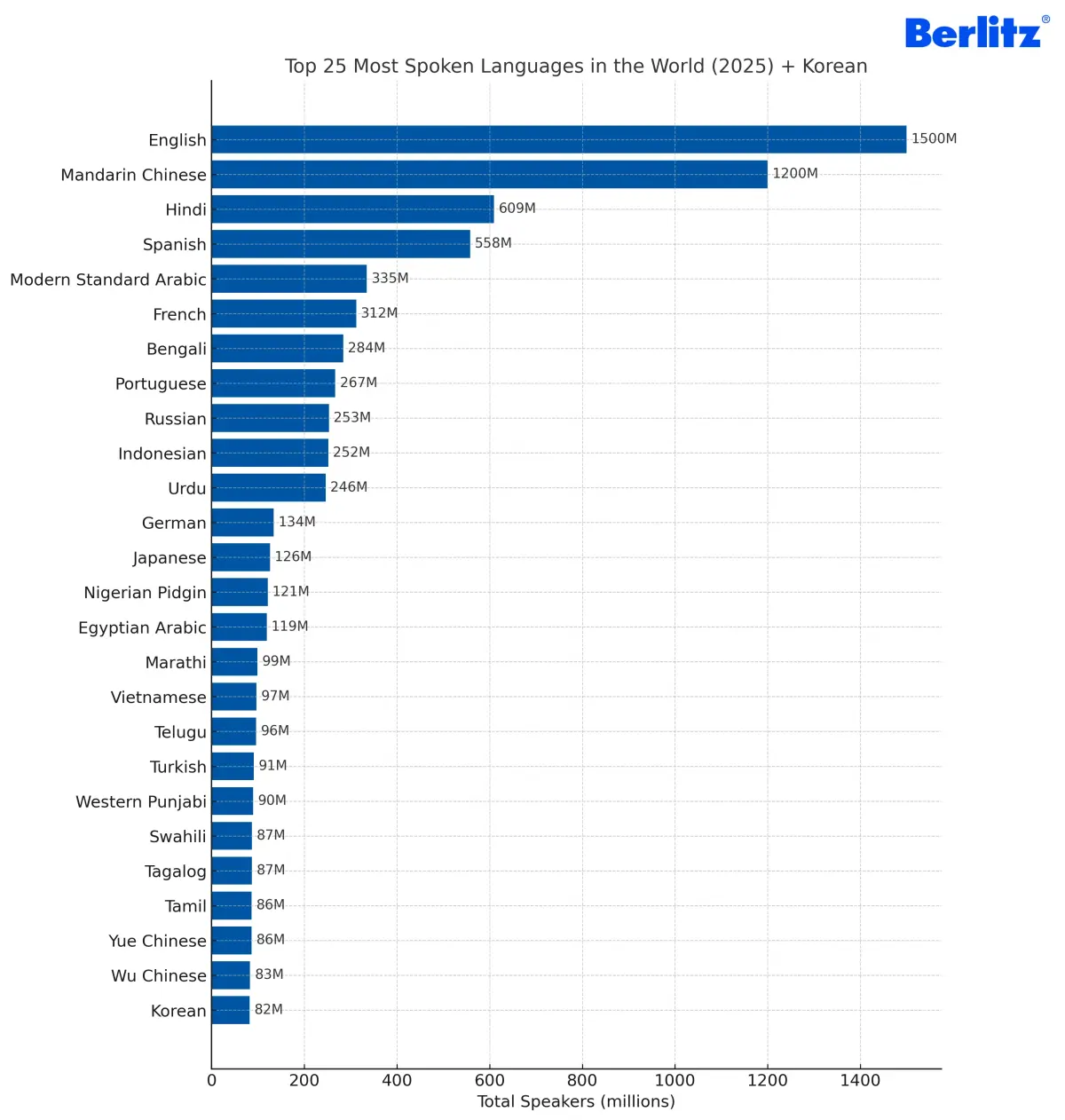
Mandarin Chinese currently holds the top position, followed by Spanish and English. These languages have hundreds of millions of native speakers due to historical colonial expansion and large population bases.
Why are so many languages disappearing?
Globalization, the dominance of major world languages in education and media, and the migration of younger generations to urban centers contribute to language loss. When a language is no longer passed down to children, it faces imminent extinction.
How do linguists count languages?
Linguists use surveys, census data, and field research to document speech communities. They look for distinct grammatical structures, vocabularies, and the self-identification of speakers to determine if a variety qualifies as a unique language.
Is sign language considered a language?
Yes, sign languages are fully developed natural languages with their own complex grammars and syntax. There are estimated to be over 300 different sign languages used by deaf communities worldwide.
Can a dead language be revived?
It is possible, though difficult, as seen with the revival of Modern Hebrew in the 19th and 20th centuries. This process requires a concerted effort to create educational materials and foster a community of speakers who use the language in daily life.
This answer was created with the help of AI research tools and reference sources. Spotted an error? Let us know — we correct mistakes quickly. See our editorial policy.