What is the most spoken language in the world?
Short answer
English is the most spoken language in the world when counting both native and non-native speakers. As of 2026, it boasts over 1.5 billion speakers globally. While Mandarin Chinese has a higher number of native speakers, the widespread use of English as a lingua franca in business, science, and diplomacy secures its top position.
On this page
How is the most spoken language determined?
Linguists and organizations like Ethnologue measure language prevalence using two primary metrics: the total number of speakers and the number of native speakers. Total speakers include anyone who can communicate in the language, regardless of whether it is their first language. This distinction is critical because it explains why English holds the top spot globally despite Mandarin Chinese having a larger base of people who learned it from birth.
To calculate these figures, researchers analyze census data, academic surveys, and digital communication patterns. The rapid growth of English is largely attributed to its status as the primary language of international trade, aviation, and the internet. In contrast, languages like Mandarin or Spanish are geographically concentrated, leading to higher native speaker counts but lower totals for non-native acquisition. Understanding these metrics helps clarify why global rankings often fluctuate based on the specific criteria used by researchers.
Why is English the global lingua franca?
The dominance of English is the result of historical, economic, and technological factors that have unfolded over several centuries. The expansion of the British Empire established English as a primary language of administration and education across multiple continents. Following World War II, the rise of the United States as a global economic and cultural superpower further cemented the language's utility in international markets and diplomatic relations.
The digital age has acted as a final catalyst for English adoption. A significant portion of the world's internet content, software programming languages, and scientific research is published in English. This creates a practical necessity for professionals in non-English speaking countries to achieve fluency to remain competitive in their fields. Consequently, English has evolved into a bridge language, allowing individuals from diverse linguistic backgrounds to collaborate effectively in a globalized society.
Which languages have the most native speakers?
While English leads in total speakers, other languages maintain massive populations of native speakers due to historical demographics and population density. Mandarin Chinese remains the leader in this category, with over 900 million native speakers concentrated primarily in China, Taiwan, and Singapore. Spanish follows closely, driven by its widespread use across Latin America and Spain.
The following list highlights the languages with the highest number of native speakers:
- Mandarin Chinese: Approximately 940 million native speakers.
- Spanish: Approximately 485 million native speakers.
- English: Approximately 380 million native speakers.
- Hindi: Approximately 345 million native speakers.
- Bengali: Approximately 235 million native speakers.
These figures illustrate that native speaker counts are often tied to national population sizes and cultural heritage. While these languages may have fewer non-native learners than English, their internal stability and large speaker bases ensure they remain among the most influential languages on the planet.
How to start learning a new language effectively?
Learning a language with a high number of speakers requires a structured approach to ensure progress and retention. Beginners often struggle with the sheer volume of vocabulary, so focusing on high-frequency words is the most efficient strategy. Research suggests that knowing the 1,000 most common words in a language allows a learner to understand approximately 80% of daily conversations.
Follow these steps to build a solid foundation in any major world language:
- Identify the 500 most frequently used words to build basic sentence structures.
- Practice listening to native audio daily to train your ear for natural cadence and pronunciation.
- Use spaced-repetition software to memorize grammar rules and vocabulary effectively over time.
- Engage in speaking practice early, even if you only know a few phrases.
- Immerse yourself in media, such as films or news broadcasts, to see the language used in context.
Common mistakes when learning a global language
One of the most frequent errors learners make is prioritizing complex grammar rules over practical communication. While understanding syntax is important, focusing too heavily on perfect conjugation can paralyze a speaker and prevent them from engaging in real-world conversations. Fluency is built through trial and error, and it is better to be understood while making minor mistakes than to remain silent while striving for grammatical perfection.
Another common mistake is relying solely on translation tools or textbooks without seeking human interaction. Language is a social tool, and it requires the nuances of tone, body language, and cultural context that only come from speaking with others. Avoid the trap of passive learning; instead, prioritize active output. Whether through language exchange apps, local clubs, or online communities, consistently putting your skills to the test in a social environment is the fastest way to achieve true proficiency in any of the world's most spoken languages.
Key facts
- English is the most spoken language globally when counting both native and non-native speakers, with over 1.5 billion total users.
- Mandarin Chinese holds the record for the highest number of native speakers, totaling approximately 940 million people.
- Hindi ranks third globally, driven by its widespread use as a primary language across India.
- Language popularity is measured by "total speakers," which combines those who speak a language as their first tongue and those who learned it as a second language.
- Spanish is the second most spoken native language, primarily due to its extensive use across Latin America and Spain.
- To learn a new language effectively, prioritize high-frequency vocabulary lists rather than memorizing complex grammar rules immediately.
The bottom line
Determining the "most spoken" language depends on whether you count native speakers or total users. While Mandarin Chinese dominates in native fluency, English remains the world's primary bridge language for global interaction. For most learners, English offers the greatest practical utility, but choosing a language based on your professional goals or personal interests will always yield the most sustainable and rewarding results over time.
People also ask
Why is English the most spoken language if it does not have the most native speakers?
English serves as the global lingua franca for international business, science, aviation, and internet communication. Because it is widely taught as a second language in schools worldwide, the number of non-native speakers far exceeds the native population.
How many languages exist in the world today?
Linguists estimate there are approximately 7,100 living languages currently spoken across the globe. About 40 percent of these are considered endangered, meaning they have fewer than 1,000 speakers remaining.
Is Mandarin Chinese difficult to learn for English speakers?
Mandarin is considered a Category V language by the Foreign Service Institute, meaning it requires significantly more study time than European languages. The primary challenges include mastering the four distinct tones and learning thousands of logographic characters.
Does the number of speakers determine a language's importance?
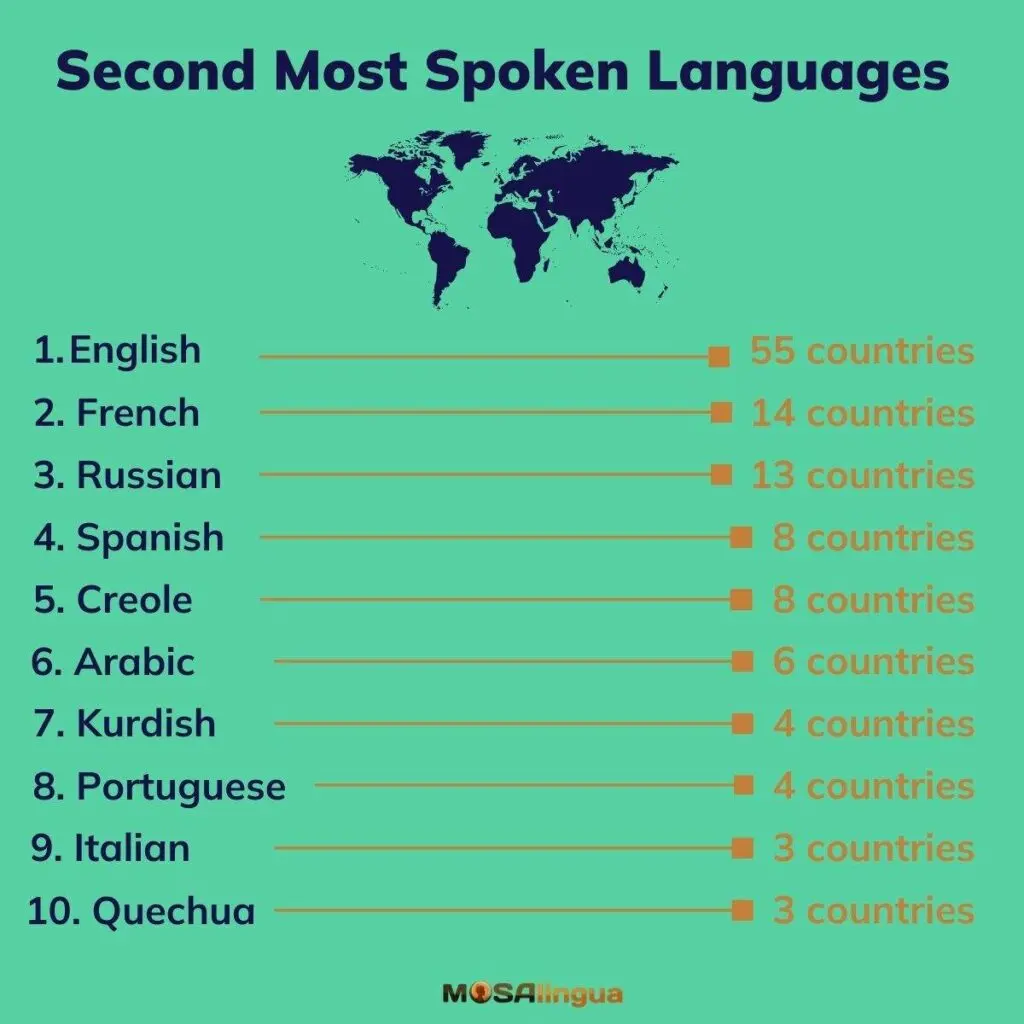
While speaker count indicates reach, "importance" often depends on economic and political influence. Languages like French or Arabic carry significant weight in diplomacy and global trade, even if they have fewer total speakers than English.
What is the difference between a dialect and a language?
The distinction is often political rather than linguistic, summarized by the adage that a language is a dialect with an army and a navy. Generally, dialects are mutually intelligible varieties of a language, while distinct languages are not.
Should I focus on learning the most spoken language?
Learning a widely spoken language provides the most practical utility for travel and career advancement. However, your choice should ultimately depend on your specific goals, such as connecting with family heritage or working in a specific geographic region.
This answer was created with the help of AI research tools and reference sources. Spotted an error? Let us know — we correct mistakes quickly. See our editorial policy.