How old is the oldest tree?
Short answer
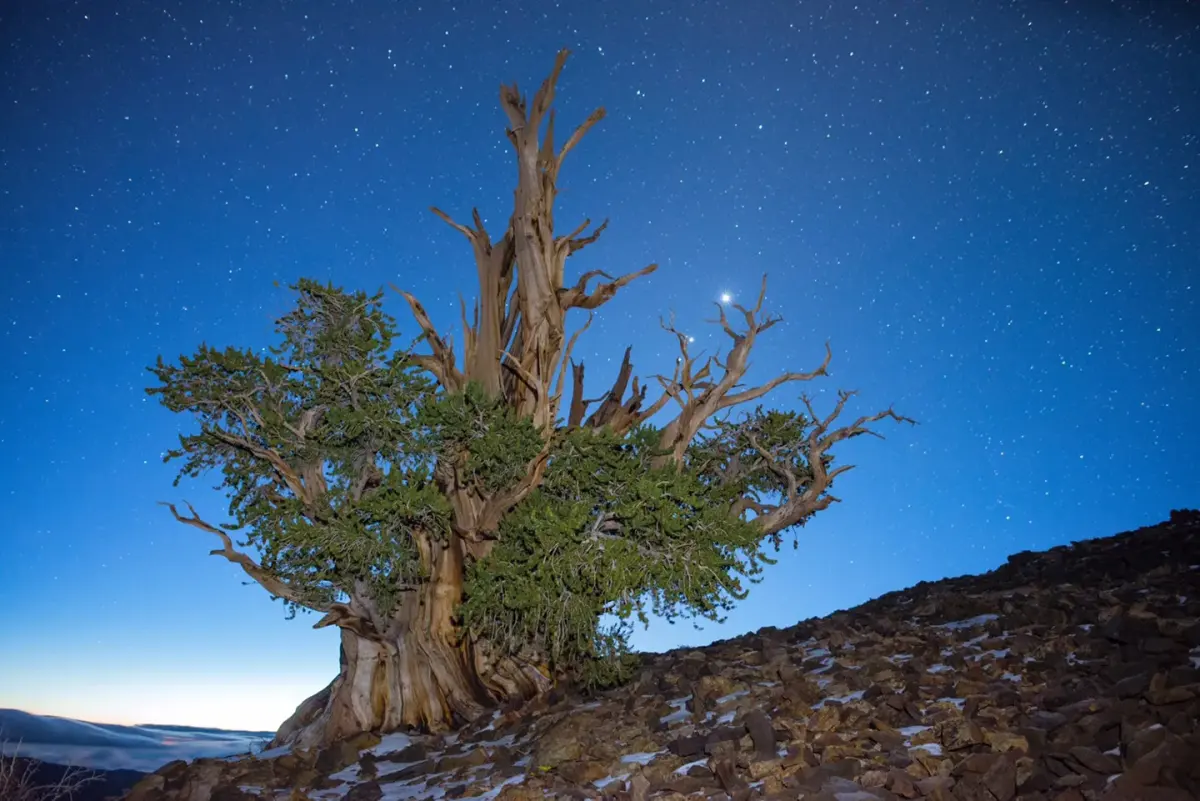
The oldest known living individual tree is a Great Basin bristlecone pine named Methuselah, located in California’s White Mountains. It is approximately 4,856 years old. While some clonal colonies, such as Pando in Utah, are estimated to be tens of thousands of years old, Methuselah remains the oldest verified non-clonal organism.
On this page
How do scientists determine the age of a tree?
Dendrochronology is the primary method used to determine the age of trees. Scientists extract a thin core sample from the trunk using an increment borer, which allows them to count the annual growth rings without harming the tree. Each ring represents one year of growth, with the width and density of the ring providing clues about the climate conditions during that specific year.
For extremely old trees, researchers must account for missing or false rings. In harsh environments like the high-altitude White Mountains, a tree might fail to produce a ring during a particularly severe drought, or it might produce multiple rings if the growing season is interrupted. Experts use cross-dating to compare the ring patterns of living trees with those of dead wood found nearby. This ensures the accuracy of the timeline by matching overlapping patterns across centuries.
- Extract a core sample using a sterilized increment borer.
- Mount the core on a wooden frame for stabilization.
- Sand the surface until the rings are clearly visible under a microscope.
- Compare the pattern against established regional master chronologies.
Why are bristlecone pines so long-lived?
Great Basin bristlecone pines (Pinus longaeva) possess unique biological adaptations that allow them to survive for millennia. These trees grow in extremely nutrient-poor, rocky soil that discourages competition from other plant species. Because they grow at high elevations where temperatures are cold and the air is dry, they grow very slowly, which results in incredibly dense wood.
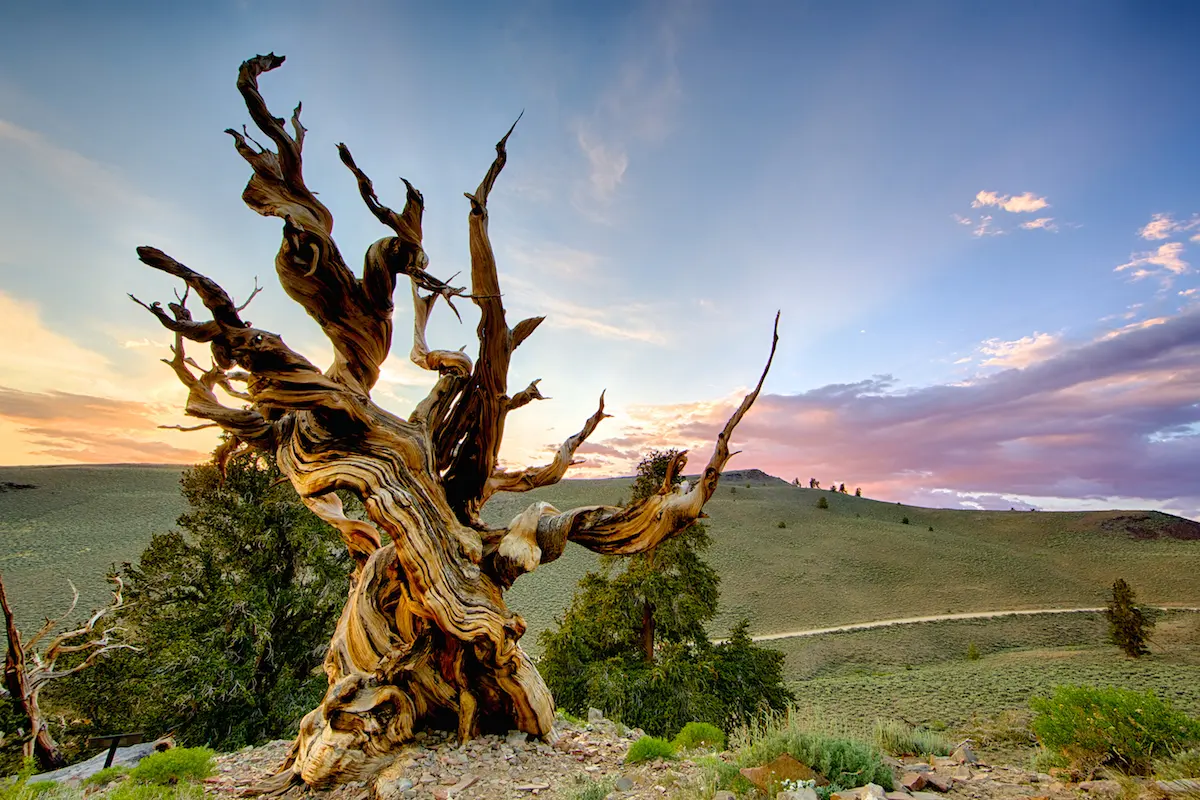
This density makes the wood highly resistant to rot, insects, and fungi. Furthermore, the tree’s strategy of sacrificing parts of its own bark to preserve a single strip of living tissue allows it to survive even if the majority of the trunk has died. By limiting its metabolic activity, the tree avoids the rapid aging processes seen in faster-growing species. This "slow and steady" approach is the secret to their longevity.
- High altitude prevents the spread of many pests.
- Low growth rates produce resinous, rot-resistant wood.
- Limited competition for water and sunlight.
- Ability to survive with only a small portion of living cambium.
What is the difference between clonal and non-clonal trees?
It is vital to distinguish between a single individual tree and a clonal colony. A non-clonal tree, like Methuselah, grows from a single seed and maintains the same root system and trunk structure throughout its life. These individuals are the standard by which we measure the oldest living organisms on Earth.
In contrast, clonal colonies consist of a single root system that produces genetically identical stems, or "ramets," over time. As old stems die, new ones sprout from the original root structure. While the colony itself may be 80,000 years old, as is the case with the Pando aspen grove in Utah, the individual stems are often only a few hundred years old. Scientists categorize these differently because the biological age of the root system is distinct from the age of the visible trunk.
Where can you visit the oldest trees?
The most famous ancient bristlecone pines are located in the Ancient Bristlecone Pine Forest in the White Mountains of eastern California. The U.S. Forest Service manages the area, providing trails that allow visitors to see these remarkable trees in their natural habitat. Because the exact location of Methuselah is kept secret to protect it from vandalism and human interference, visitors should not expect to identify it specifically.
When visiting, it is essential to follow park guidelines to protect the fragile ecosystem. The soil in these high-altitude environments is easily disturbed, and the trees themselves are sensitive to physical contact. Always stay on marked trails and avoid touching the bark or roots. These trees have survived for nearly five millennia; maintaining their environment is a collective responsibility for all who wish to witness their endurance.
- Wear sturdy hiking boots for rocky terrain.
- Bring plenty of water, as the high altitude causes rapid dehydration.
- Keep a respectful distance from all trees to prevent soil compaction.
- Check weather reports, as mountain conditions change rapidly.
Common mistakes when researching tree ages
A frequent error is confusing the age of a tree with the age of a forest or a clonal colony. Many news reports claim that a specific tree is 10,000 years old, but this usually refers to the root system of a clonal organism rather than a single, continuous trunk. Always verify if the source is referring to a "clonal colony" or an "individual tree" to avoid spreading misinformation.
Another mistake is assuming that size equates to age. In many forest ecosystems, a massive tree might be relatively young, while a small, gnarled tree in a harsh environment could be thousands of years old. Environmental stress often stunts growth, leading to the development of the most ancient specimens. When reading about tree ages, look for data derived from peer-reviewed dendrochronological studies rather than anecdotal estimates, as these provide the only scientifically verified proof of a tree's true age.
Key facts
- The oldest known individual non-clonal tree is a Great Basin bristlecone pine named Methuselah, estimated to be over 4,850 years old.
- Methuselah grows in the White Mountains of California at a high elevation, which helps preserve the wood due to cold, dry conditions.
- Clonal colonies, such as Pando, a colony of quaking aspens in Utah, are estimated to be roughly 80,000 years old.
- Scientists determine tree age primarily through dendrochronology, which involves counting annual growth rings in wood samples.
- To avoid damaging ancient trees, researchers often use non-invasive core sampling tools that extract a pencil-thin section of wood.
- Never attempt to carve or climb on ancient trees, as their bark and root systems are extremely fragile and sensitive to human disturbance.
The bottom line
Determining the age of the world's oldest trees requires a careful balance between scientific discovery and environmental preservation. While individual bristlecone pines represent the oldest non-clonal organisms, clonal colonies like Pando demonstrate the immense longevity of shared root systems. Protecting these natural treasures is essential, as their survival offers invaluable insights into the Earth's climatic history and the remarkable resilience of life over millennia.
People also ask
Where can I visit the oldest trees in the world?
Most locations of the oldest trees are kept secret by researchers to protect them from vandalism and soil compaction. You can visit public groves in California's White Mountains or the Ancient Bristlecone Pine Forest, but the specific individuals are rarely marked.
How do scientists confirm the age of a tree without cutting it down?
Experts use an increment borer to extract a thin core from the trunk, allowing them to count rings without harming the tree's health. They then cross-date these rings against known climate patterns to ensure accuracy.
Does being old make a tree more susceptible to disease?
Ancient trees often possess unique chemical defenses and slow growth rates that make them remarkably resilient. However, they are highly vulnerable to rapid environmental changes, such as human-induced climate shifts or invasive pests.
Are there trees older than the pyramids of Egypt?
Yes, many bristlecone pines were already centuries old when the Great Pyramid of Giza was constructed around 2560 BCE. These trees have lived through the rise and fall of multiple ancient civilizations.
What is the difference between a single tree and a clonal colony?
A single tree grows from one seed and maintains one root system for its entire life. A clonal colony consists of many genetically identical stems connected by a single, massive, and ancient underground root network.
Can I determine the age of a tree in my own backyard?
You can estimate a tree’s age by measuring its diameter at breast height and multiplying it by a species-specific growth factor. Keep in mind this is only an approximation, as local soil and water conditions significantly influence growth rates.
This answer was created with the help of AI research tools and reference sources. Spotted an error? Let us know — we correct mistakes quickly. See our editorial policy.