Where do chimpanzees live?
Short answer
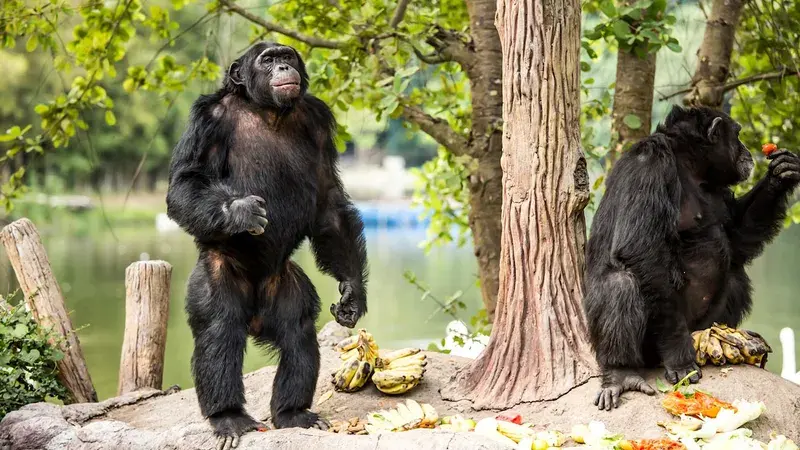
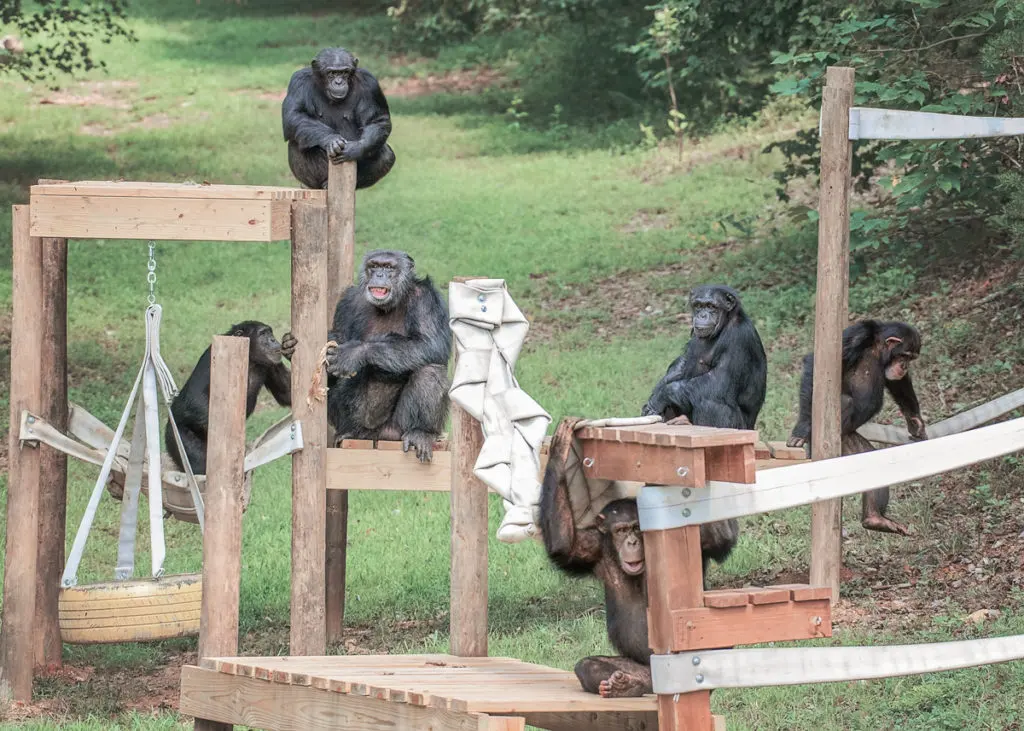
Chimpanzees live exclusively in the tropical regions of equatorial Africa. Their natural habitat spans a belt across the continent, stretching from the Atlantic coast in the west to the shores of Lake Tanganyika in the east. They inhabit diverse environments, including dense rainforests, deciduous woodlands, and mosaic grasslands across 21 countries.
On this page
Where do chimpanzees live in the wild?
Chimpanzees occupy a vast range across equatorial Africa, primarily inhabiting the countries of the Congo Basin and parts of West Africa. Their distribution is not uniform; instead, they live in fragmented populations separated by rivers, mountains, and human development. While they are most famous for living in dense, humid tropical rainforests, they are remarkably adaptable primates.
Research indicates that chimpanzees thrive in a variety of ecological niches. Their primary habitats include:
- Lowland tropical rainforests with high canopy density.
- Montane forests located at higher elevations.
- Gallery forests that line riverbanks in savanna regions.
- Deciduous woodlands that experience seasonal changes.
Because they require large territories to forage for fruit, they generally avoid high-altitude peaks and extremely arid desert regions. Their presence is a strong indicator of ecosystem health, as they play a vital role in seed dispersal across these diverse landscapes.
How to identify chimpanzee habitats
Identifying a potential chimpanzee habitat requires looking for specific environmental markers. Chimpanzees are highly dependent on fruit, particularly figs, which serve as their primary food source. Consequently, you will most often find them in areas where fruit-bearing trees are abundant and diverse. They also require constant access to fresh water sources, such as streams or springs, to sustain their large groups.
If you are tracking their range, look for these environmental indicators:
- Presence of primary forest canopy that provides protection from predators.
- A mix of tree species that fruit at different times of the year.
- Sufficient ground cover that allows for movement between feeding sites.
- Absence of major industrial infrastructure or large-scale agricultural clearing.
Common mistakes when assessing habitats include assuming chimpanzees only live in deep, dark jungles. In reality, they are frequently found in "mosaic" environments where forest patches meet open savanna. Relying on outdated maps is another error, as habitat loss has significantly restricted their range in recent decades.
Why do chimpanzees choose these specific regions?
Chimpanzees inhabit these specific regions primarily because of the availability of year-round food and protective shelter. The equatorial belt provides a consistent climate that supports the growth of trees throughout the year. This stability is crucial for a species that spends much of its life foraging in the canopy. By living in these areas, they avoid the extreme temperature fluctuations found in more temperate latitudes.
Furthermore, the structural complexity of these environments offers protection from larger predators, such as leopards. The ability to climb and nest in trees allows chimpanzees to sleep safely above the forest floor. These regions also provide the necessary resources for social bonding, which is the cornerstone of chimpanzee life. Their reliance on these specific ecosystems makes them highly vulnerable to climate change and deforestation, as they cannot easily migrate to entirely new biomes if their current home becomes inhospitable.
How do humans affect chimpanzee distribution?
Human activity is the most significant factor currently altering where chimpanzees live. As human populations expand, forests are cleared for logging, mining, and agriculture, such as palm oil plantations. This fragmentation creates "islands" of habitat that are too small to support viable chimpanzee populations. When these groups become isolated, they lose genetic diversity and face higher risks of extinction.
Key human-driven changes include:
- Habitat fragmentation caused by road construction through protected areas.
- Increased human-wildlife conflict as chimpanzees forage in local crop fields.
- Exposure to human-borne diseases, which can be devastating to local troops.
- Poaching and the illegal bushmeat trade, which have decimated populations in certain regions.
Conservationists are working to create biological corridors that connect these isolated patches. By allowing chimpanzees to travel safely between forest fragments, these corridors help maintain the health and movement of the species across their historical range.
What are the best places to see chimpanzees?
For those interested in observing chimpanzees in their natural environment, specific protected areas offer the best opportunities. Gombe Stream National Park in Tanzania is perhaps the most famous, as it was the site of Jane Goodall’s groundbreaking research. Kibale National Park in Uganda is another premier location, known for having one of the highest densities of chimpanzees in the world.
When planning a visit, follow these guidelines to ensure safety and ethical conduct:
- Always book through authorized, reputable tour operators who prioritize animal welfare.
- Maintain a strict distance of at least seven to ten meters from the animals.
- Wear neutral-colored clothing to avoid attracting unnecessary attention.
- Follow the instructions of professional trackers who understand chimpanzee behavior.
Common mistakes include trying to feed the animals or using flash photography, both of which can cause extreme stress or aggressive behavior. By respecting their space and following park regulations, visitors can support the local economy while contributing to the long-term conservation of these remarkable primates.
Key facts
- Chimpanzees live exclusively in the tropical forests and wet savannas of equatorial Africa.
- Their natural range spans 21 countries, stretching from Senegal in the west to Tanzania in the east.
- They are primarily arboreal, spending most of their time in the canopy of dense rainforests.
- Chimpanzees avoid high-altitude mountain peaks and extremely arid desert environments.
- They require large home ranges, often covering 5 to 50 square kilometers, to find enough fruit.
- If you visit a sanctuary, never attempt to feed or touch wild chimpanzees, as they can transmit human diseases.
The bottom line
Chimpanzees are highly specialized primates restricted to the equatorial belt of Africa, where they rely on dense, fruit-rich forests. Their survival depends entirely on the preservation of these vast, interconnected ecosystems. As human encroachment continues to shrink their natural habitat, protecting these forest corridors remains the most critical step in preventing the extinction of our closest living relatives in the wild today.
People also ask
Do chimpanzees live in the wild in Asia or South America?
No, chimpanzees are native only to the African continent. Any chimpanzees found in Asia or South America are living in captivity within zoos or research facilities.
Can chimpanzees survive in urban environments?
Chimpanzees cannot survive in urban environments because they require vast, undisturbed forest tracts to forage. Human development fragments their habitat, leading to fatal conflicts and resource depletion.
Do chimpanzees migrate seasonally?
Chimpanzees do not migrate in the traditional sense, but they do shift their movement patterns based on fruit availability. They follow the ripening cycles of various trees throughout their established home range.
How many chimpanzees are left in the wild?
Estimates suggest there are between 170,000 and 300,000 chimpanzees remaining in the wild. Their populations are declining rapidly due to habitat loss, poaching, and infectious diseases.
Do chimpanzees live in groups or alone?
Chimpanzees live in complex, fission-fusion social groups called communities. These communities can range from 15 to over 100 individuals who split into smaller parties to forage during the day.
What is the biggest threat to chimpanzee habitats?
The primary threat is large-scale deforestation caused by logging, mining, and agricultural expansion. These activities destroy the canopy cover necessary for their survival and isolate small, vulnerable populations.
This answer was created with the help of AI research tools and reference sources. Spotted an error? Let us know — we correct mistakes quickly. See our editorial policy.