What is a group of geese called?
Short answer
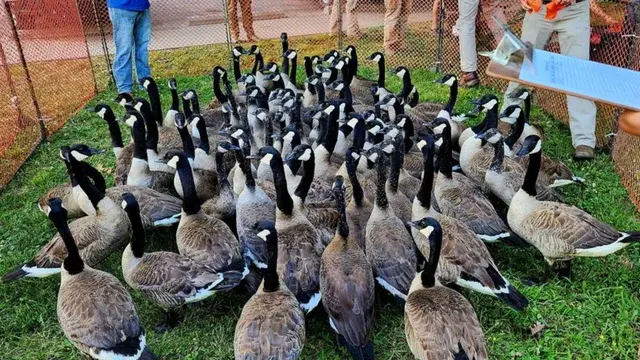
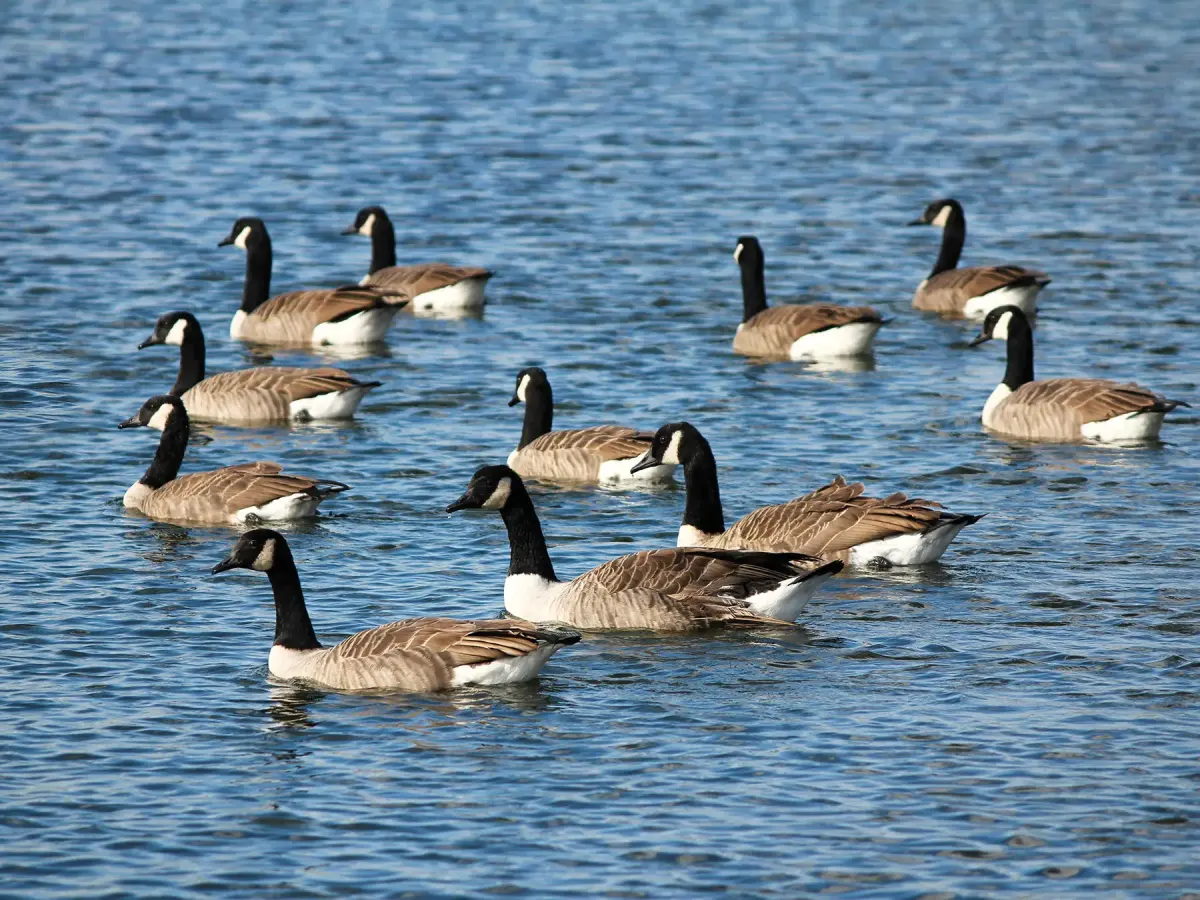
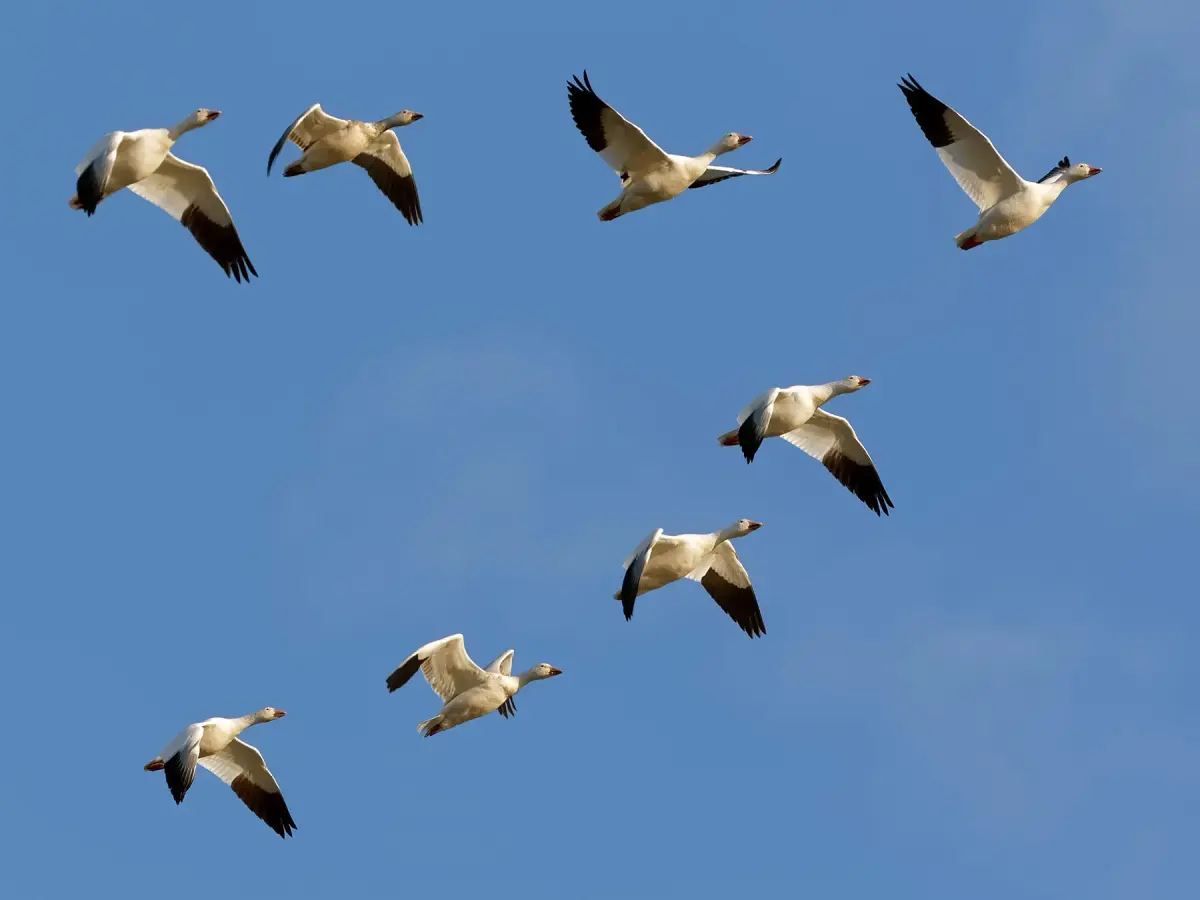
A group of geese is most commonly called a gaggle when they are on the ground. However, when the birds are in flight, they are referred to as a skein or a wedge. These collective nouns distinguish between the birds' stationary behavior and their iconic V-shaped aerial formations during seasonal migration.
On this page
Why are there different names for groups of geese?
The English language features a rich tradition of "terms of venery," which are specific collective nouns for groups of animals. These terms originated in medieval hunting manuals and literature, such as the 15th-century "Book of Saint Albans." While many of these names are whimsical or poetic, they serve to categorize animal behavior in distinct environments. For geese, the distinction between a gaggle and a skein is rooted in practical observation.
When geese are grazing on land or swimming in a pond, they often congregate in noisy, chaotic clusters. The term "gaggle" captures this social, often loud, behavior. Conversely, when geese migrate, they adopt a highly organized, aerodynamic structure to conserve energy. The term "skein," which refers to a length of yarn or thread, describes the long, trailing line of birds moving through the sky. Using these terms correctly helps birdwatchers and naturalists communicate specific behavioral contexts accurately.
How do geese form a skein in flight?
Geese fly in a V-formation to maximize their collective efficiency during long-distance migration. This aerodynamic strategy allows the birds to reduce air resistance by flying in the wake of the bird in front of them. The lead goose breaks the wind, while the others benefit from the updraft created by the wingtips of the bird ahead. This physical arrangement is what observers describe as a skein or a wedge.
- The lead bird encounters the most wind resistance and expends the most energy.
- Geese rotate the lead position frequently to ensure the entire group remains strong.
- The V-shape allows the birds to maintain visual contact with one another.
- The formation helps the flock stay together, preventing individuals from becoming lost during long journeys.
This cooperative behavior is a hallmark of waterfowl migration, allowing species like the Canada goose to travel thousands of miles annually.
What is the difference between a gaggle and a flock?
While "gaggle" and "skein" are specific to geese, the term "flock" is a general descriptor used for any large group of birds. You can safely refer to any group of geese as a flock without being technically incorrect. However, using the more specific terms demonstrates a deeper understanding of avian behavior and traditional terminology. A gaggle implies a stationary, social gathering, whereas a flock is a neutral, all-encompassing label.
Commonly confused terms often include:
- Brood: A family of young geese or goslings currently under the care of their parents.
- Colony: A large group of birds nesting in close proximity, though this is less common for geese than for seabirds.
- Raft: A term often used for a group of waterfowl floating together on the surface of the water.
Understanding these nuances allows for more precise descriptions during field observations or scientific reporting.
Common mistakes when identifying goose groups
One frequent error is using the term "gaggle" to describe geese in flight. Because gaggles are defined by their stationary, often noisy nature on the ground, applying this term to a migrating formation is inaccurate. Another mistake is assuming that all geese in a group belong to the same family unit. While geese are highly social, a large flock may consist of multiple families and non-breeding individuals moving together for protection.
Avoiding these common pitfalls improves the quality of your observations:
- Do not call a group of goslings a gaggle; they are properly called a brood.
- Avoid using "skein" for birds that are simply swimming in a line, as the term specifically signifies flight.
- Do not assume that a large group of geese is always a single family, as they often congregate with other flocks.
By refining your vocabulary, you can better distinguish between the social, reproductive, and migratory phases of the geese you encounter in nature.
How to observe geese in the wild
To observe geese effectively, you should maintain a respectful distance to avoid disrupting their natural behaviors. Geese are protective of their territory, especially during the nesting season in the spring. If you approach a gaggle too closely, you may cause them to become agitated, hiss, or flee. Use binoculars or a camera with a telephoto lens to study their formations and social interactions from a safe vantage point.
When watching for a skein, look toward the sky during the spring and autumn migration windows. Geese often follow established flight paths, such as river valleys or coastlines, which makes them easier to spot. Listen for their characteristic honking, which often precedes the visual sighting of the flock. By remaining quiet and observant, you will gain a much better appreciation for the complex social structures and migratory endurance that define these remarkable birds throughout their lives.
Key facts
- A group of geese on the ground is most commonly referred to as a gaggle.
- When geese are in flight, they are referred to as a skein, wedge, or team.
- The term "gaggle" is specifically reserved for geese that are not currently flying.
- Geese often fly in a V-formation to reduce wind resistance and improve energy efficiency.
- A group of goslings, or baby geese, is often called a brood or a plump.
- Using the term "flock" is technically correct for any group of birds, though it lacks the specificity of the traditional terms.
The bottom line
While the term "flock" is universally acceptable for any group of birds, specific collective nouns add precision to your language. Use "gaggle" when observing geese on the ground or water, and switch to "skein" or "wedge" when watching them migrate across the sky. Understanding these distinctions allows you to describe avian behavior with greater accuracy while maintaining the traditional charm of English collective nouns.
People also ask
Why do geese fly in a V-formation?
This aerodynamic shape allows the birds to conserve energy by riding the updraft created by the wings of the bird in front. It also helps the flock maintain visual contact and coordination during long migrations.
How many geese make up a gaggle?
There is no specific numerical requirement to form a gaggle, though it implies a gathering of several birds. The term is descriptive rather than a formal scientific classification.
Are all groups of geese called gaggles?
No, the term gaggle only applies when the geese are on land or water. Once they take flight, the correct collective noun shifts to a skein or wedge.
Do geese always stay in the same group?
Geese are highly social and often mate for life, remaining with their family units throughout the year. These family groups frequently join larger flocks during migration or wintering periods.
What is the difference between a skein and a wedge?
These terms are often used interchangeably to describe geese in flight. A wedge refers to the pointed shape of the formation, while a skein refers to the long, trailing line of birds.
Can I use the term "herd" for geese?
No, "herd" is typically reserved for large land mammals like cattle or deer. Using it for geese is considered incorrect in both biological and common usage.
This answer was created with the help of AI research tools and reference sources. Spotted an error? Let us know — we correct mistakes quickly. See our editorial policy.