What is a group of ducks called?
Short answer
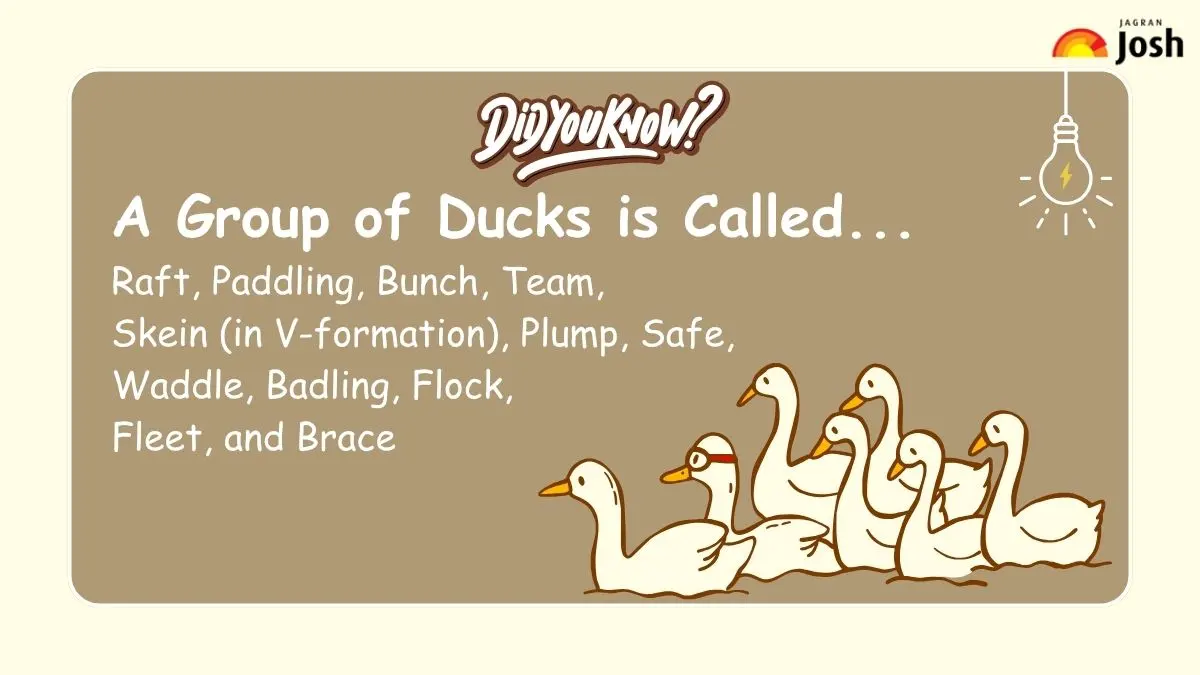
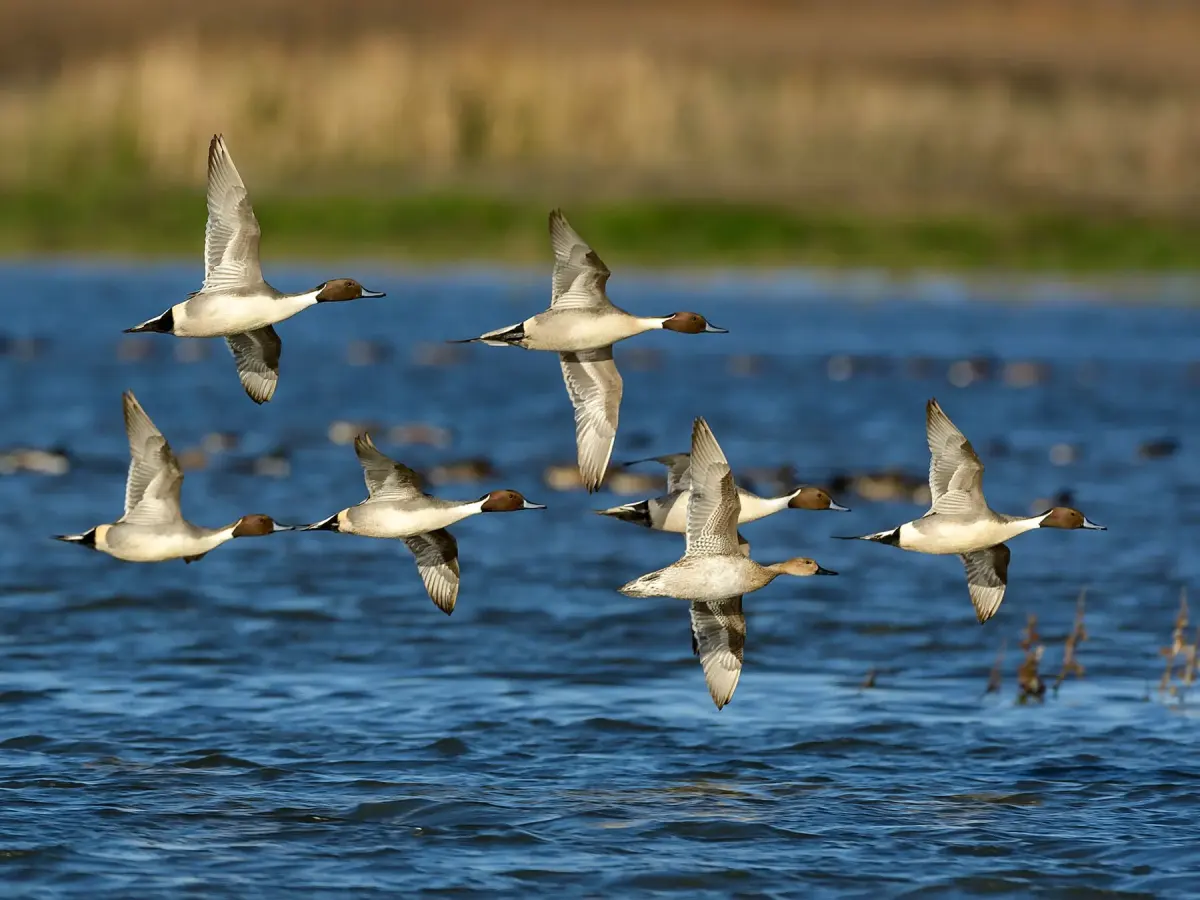
A group of ducks is most commonly called a flock. However, when ducks are swimming on the water, they are frequently referred to as a paddling. When they are in flight, they are often called a team or a skein. These terms vary depending on the specific activity and the species involved.
On this page
What are the different names for groups of ducks?
The terminology used to describe groups of ducks often depends on their environment and behavior. While "flock" is the most universal term, ornithologists and bird enthusiasts utilize specific collective nouns to provide more context. A "paddling" specifically describes ducks when they are gathered on the surface of a pond or lake, emphasizing their rhythmic leg movements.
When ducks take to the air, the terminology shifts to reflect their formation. A group of ducks flying in a V-shaped or linear formation is often called a "team." If the birds are flying in a more tightly packed or organized group, they may be referred to as a "skein." These distinctions are rooted in historical hunting and birding traditions, serving as a shorthand for observers to communicate the state of the birds.
- Flock: The general term for any group of ducks.
- Paddling: Used specifically when ducks are swimming together.
- Team: Used when ducks are in flight.
- Skein: Used when ducks are flying in a formation.
- Raft: Often used for ducks resting on water in large numbers.
Why do ducks gather in groups?
Ducks are highly social animals that rely on group dynamics for survival. By staying in a flock, they increase their chances of detecting predators early, as more eyes are watching for threats. This "many-eyes" hypothesis suggests that the larger the group, the more likely a bird is to notice a hawk or fox, allowing the entire group to react and escape quickly.
Social grouping also facilitates efficient foraging and energy conservation. In many species, such as mallards, following a leader helps individuals find prime feeding grounds more effectively. Furthermore, during migration, flying in a formation reduces air resistance for the birds trailing behind the leader. This cooperative behavior allows the group to travel longer distances with less physical exertion, ensuring that more members of the flock reach their destination safely.
How to identify duck behavior in groups
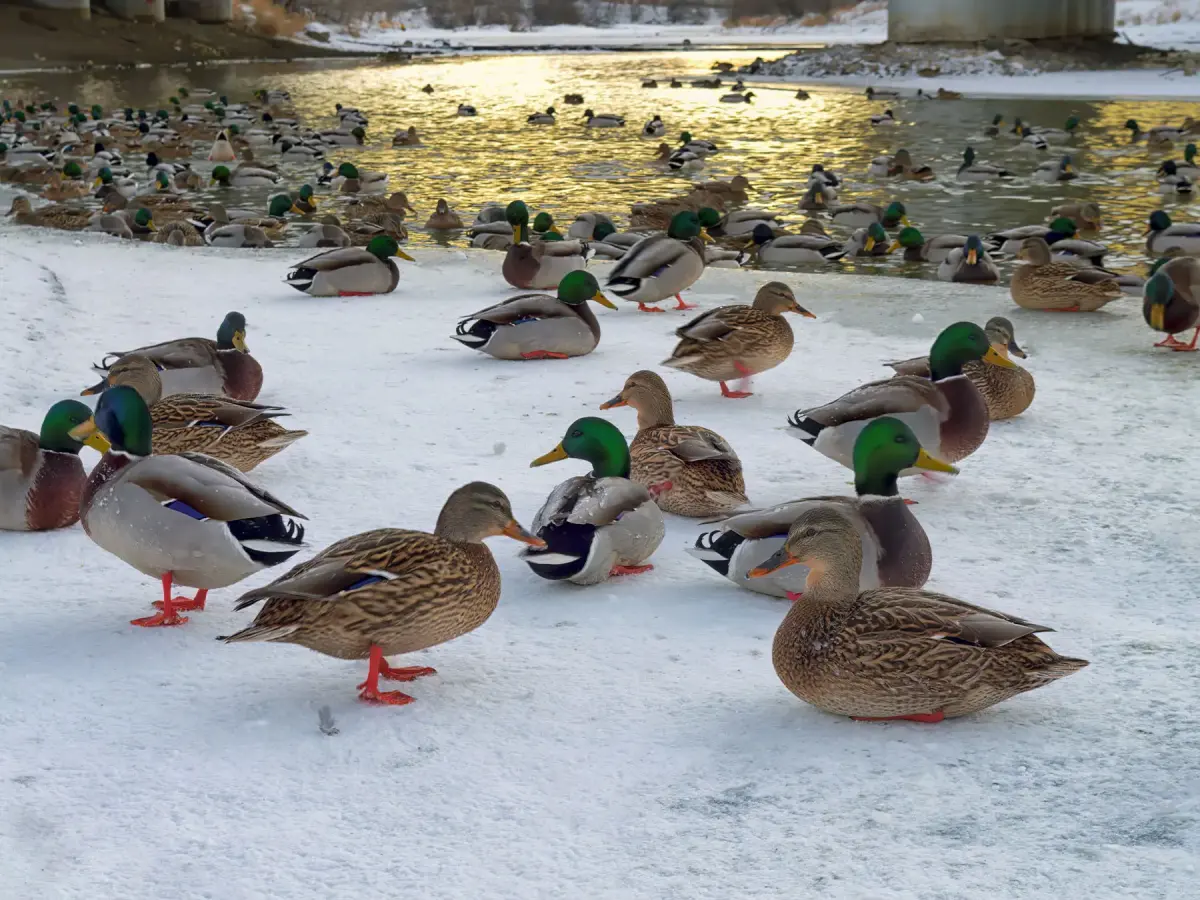
Observing a group of ducks requires attention to their body language and vocalizations. When a flock is feeding, you will often see them "dabbling," where they tip their tails up and heads down to forage in shallow water. If you notice the entire group suddenly becoming alert or swimming toward the center of a body of water, it often indicates they have sensed a disturbance or a potential predator nearby.
To accurately identify and monitor a group, consider these steps:
- Scan the perimeter of the water to see if the group is resting or actively feeding.
- Observe the flight pattern; if they are flying in a straight line or V, they are likely traveling to a new location.
- Listen for vocalizations, as ducks often communicate through quacks and whistles to maintain group cohesion.
- Note the species composition, as different types of ducks, such as wood ducks and mallards, may occasionally intermingle in larger feeding areas.
Common mistakes when identifying duck groups
One common error is assuming that all groups of birds on the water are ducks. People frequently confuse ducks with geese, swans, or coots, which often share the same habitats. While geese are also waterfowl, they belong to a different genus and exhibit different social structures. For instance, geese are generally more territorial and maintain stricter family units compared to the more fluid, shifting groups often seen in duck populations.
Another mistake is misinterpreting the size of a group as a sign of health or abundance. Large groups, or "rafts," can sometimes form simply because a specific body of water provides the best available resources, not necessarily because the population is booming. Additionally, beginners often overlook the presence of "bachelor groups," which consist primarily of males that have finished breeding. Distinguishing between family groups, mixed-species flocks, and bachelor groups is essential for anyone interested in serious birdwatching or ecological monitoring.
How to support local duck populations
If you enjoy watching groups of ducks in your local area, you can take practical steps to ensure their environment remains healthy. One of the most important actions is to avoid feeding them bread, crackers, or popcorn. These items lack the necessary nutrients for ducks and can lead to a condition known as "angel wing," a deformity that prevents birds from flying. Instead, provide healthy alternatives like cracked corn, oats, or frozen peas that have been thawed.
Maintaining a clean habitat is equally vital for the health of a paddling. Avoid using pesticides or fertilizers near ponds, as these chemicals can leach into the water and harm the aquatic life that ducks consume. If you have a property near a pond, consider planting native vegetation along the shoreline to provide natural cover and nesting sites. By preserving the natural integrity of the ecosystem, you help ensure that these groups of ducks can continue to thrive in their natural habitat for years to come.
Key facts
- A group of ducks on the water is most commonly referred to as a "raft."
- When ducks are in flight, they are collectively called a "flock" or a "skein."
- The term "paddling" is used to describe a group of ducks while they are swimming.
- A "brace" is a specific term used by hunters to refer to exactly two ducks.
- You should avoid using "team" or "herd," as these are not standard terminology for waterfowl.
- Context matters; use "raft" for resting ducks and "flock" for those moving through the air.
The bottom line
While the term "flock" is the most versatile word for a group of ducks, specific terminology adds precision to your observations. Use "raft" for ducks resting on water and "paddling" for those actively swimming. Understanding these collective nouns helps distinguish between their behaviors on the ground, in the air, and on the water, providing a clearer picture of how these social birds interact in nature.
People also ask
What is a group of ducklings called?
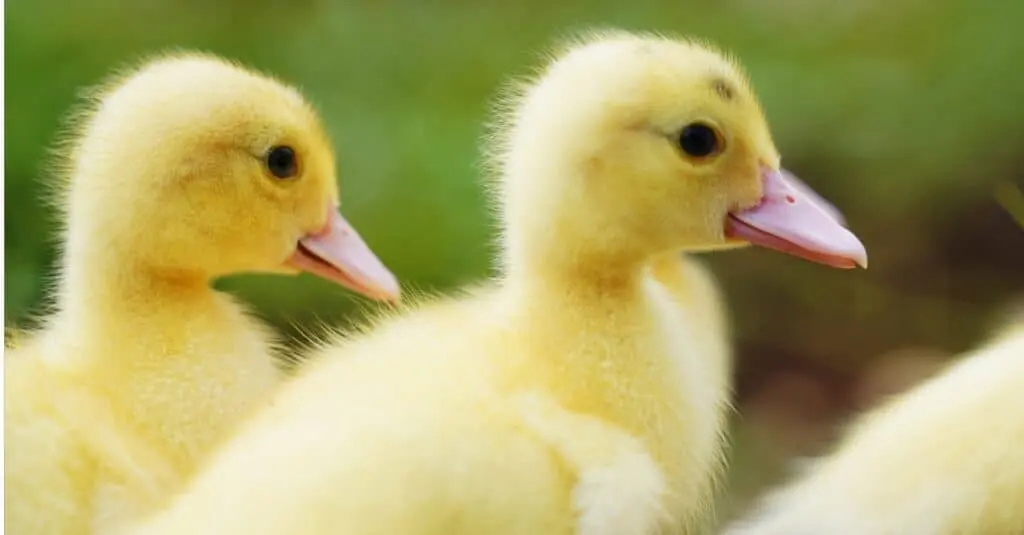
A group of young ducklings is typically referred to as a "brood." This term specifically applies to the offspring hatched by a single mother.
Do all ducks gather in the same size groups?
No, group size varies significantly based on the species, the season, and the availability of food. During migration, thousands of ducks may congregate, while nesting pairs remain solitary.
Why do ducks fly in a V-formation?
Ducks fly in a V-formation to reduce wind resistance and conserve energy. This aerodynamic positioning allows the birds behind the leader to experience less drag.
How can you tell the difference between a male and female duck?
Males, known as drakes, often have brighter, more iridescent plumage to attract mates. Females, or hens, usually have mottled brown or duller feathers to provide camouflage while nesting.
Do ducks migrate in groups?
Yes, most migratory ducks travel in large flocks to ensure safety and navigation efficiency. They often follow established routes known as flyways across continents.
Can ducks live in groups with other bird species?
Yes, ducks often share habitats with geese, swans, and coots. While they may forage in the same areas, they usually maintain distinct social structures within their own species.
This answer was created with the help of AI research tools and reference sources. Spotted an error? Let us know — we correct mistakes quickly. See our editorial policy.