Are axolotls endangered?
Short answer
Yes, axolotls are critically endangered in the wild. Native only to the lake complex of Xochimilco in Mexico City, their population has plummeted due to habitat loss, pollution, and the introduction of invasive species. While millions exist in captivity for research and the pet trade, their natural ecosystem is nearly extinct.
On this page
Why are axolotls critically endangered?
The wild population of the axolotl (Ambystoma mexicanum) has suffered a catastrophic decline over the last century. In 1998, surveys estimated there were approximately 6,000 axolotls per square kilometer in their native habitat. By 2014, researchers struggled to find even a single individual in the wild. This collapse is primarily driven by the urbanization of Mexico City, which has led to the drainage and pollution of the ancient canal systems in Xochimilco.
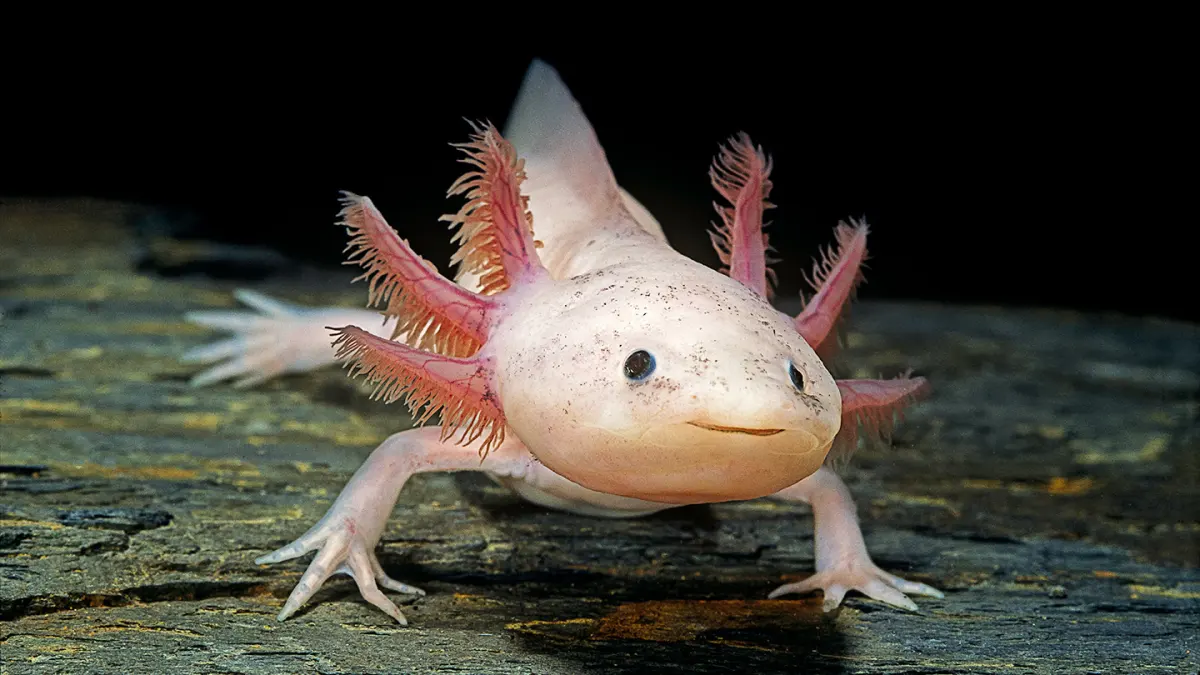
Beyond habitat degradation, the introduction of non-native fish species has proven fatal to the species. Tilapia and carp were introduced to the canals for food production; these fish consume axolotl eggs and compete for the same food sources. Because axolotls are paedomorphic—meaning they retain their larval features like external gills throughout their entire lives—they are particularly vulnerable to these environmental stressors and cannot easily migrate to safer waters.
How do axolotls survive in captivity?
While their wild status is dire, axolotls thrive in laboratories and home aquariums. Because they possess remarkable regenerative capabilities, they are highly valued in medical research for studying limb regrowth and cancer. This scientific interest has ensured that the species will not go extinct entirely, even if the wild population vanishes. Captive breeding programs have created a large, genetically diverse population that is well-adapted to life in human-controlled environments.
However, captive-bred axolotls are often inbred, which can lead to health issues if breeders do not prioritize genetic diversity. Responsible stewardship requires careful tracking of lineages to ensure the health of the species. If you are interested in keeping an axolotl, it is essential to source one from a reputable breeder rather than wild-caught specimens.
- Research the breeder’s history and health guarantees.
- Verify that the animal was captive-bred, not poached from Xochimilco.
- Ensure the breeder provides documentation regarding the animal's age and health status.
What is the best habitat for a pet axolotl?
Creating a suitable home for an axolotl requires attention to specific water parameters and temperature control. Unlike many tropical fish, axolotls prefer cool, stable water temperatures, ideally between 60°F and 68°F (15°C–20°C). If the water becomes too warm, the animal will experience significant stress, leading to a weakened immune system and potential illness.
The aquarium setup must also account for their sensitive skin and gills. Axolotls are prone to swallowing substrate that can cause fatal impactions. To maintain a safe environment, follow these guidelines:
- Use fine, smooth sand as a substrate, or keep the tank bottom bare.
- Avoid all gravel, as it is easily ingested and can cause intestinal blockages.
- Provide plenty of hiding spots, such as caves or dense plants, to reduce stress.
- Use a low-flow filter to prevent strong currents, which irritate their delicate external gills.
Common mistakes when keeping axolotls
Many new owners inadvertently harm their axolotls by using improper water treatment or failing to cycle the tank correctly. One of the most frequent errors is using tap water treated with chemicals like chlorine or chloramine, which are toxic to amphibians. Always use a water conditioner specifically designed for reptiles and amphibians that removes these harmful substances.
Another common mistake is ignoring the nitrogen cycle. An uncycled tank will quickly accumulate ammonia, which is lethal to axolotls. Owners should monitor water quality weekly using a test kit to track ammonia, nitrite, and nitrate levels. If these levels spike, immediate partial water changes are necessary to keep the environment safe. Never rely on "quick start" chemicals alone; a tank must be biologically established before an axolotl is introduced.
How can we help save wild axolotls?
Conservation efforts in Mexico are focused on restoring the "chinampas," or floating gardens, of Xochimilco. By creating "refugia"—protected areas of the canal system that are filtered and cleared of invasive fish—scientists hope to provide a safe haven for wild axolotls to breed. These projects also involve working with local farmers to reduce the use of fertilizers and pesticides that leach into the water.
Public awareness is a powerful tool for conservation. You can support these initiatives by donating to organizations dedicated to Mexican amphibian research or by educating others about the importance of protecting wetland ecosystems. While individual pet ownership does not directly help the wild population, it fosters a deeper appreciation for the species. By understanding the fragility of the axolotl, we can advocate for the environmental policies necessary to preserve their ancestral home for future generations.
Key facts
- Axolotls are classified as Critically Endangered by the IUCN Red List of Threatened Species.
- Their only natural habitat is the Xochimilco lake complex in Mexico City.
- Wild population estimates have plummeted from 6,000 per square kilometer in 1998 to fewer than 35 per square kilometer today.
- Habitat loss caused by urbanization and water pollution is the primary driver of their decline.
- Invasive species, specifically tilapia and carp, prey on axolotl eggs and larvae.
- Never release a pet axolotl into the wild, as it can introduce diseases or disrupt local ecosystems.
The bottom line
The axolotl is a biological marvel currently facing an existential crisis in its native Mexican waters. While captive populations are thriving globally, wild numbers remain dangerously low due to pollution and invasive species. Protecting the Xochimilco lake system is the only way to ensure the long-term survival of this species in its natural environment, highlighting the urgent need for habitat restoration and dedicated environmental stewardship.
People also ask
Can I keep an axolotl as a pet?
Yes, axolotls are popular in the pet trade because they are easy to breed in captivity. However, they require a specialized aquatic setup with cold, clean water and specific filtration to remain healthy.
Why are axolotls used in medical research?
Axolotls possess the unique ability to regenerate entire limbs, hearts, and parts of their brains without scarring. Scientists study them to unlock potential breakthroughs in human tissue repair and organ regeneration.
How long do axolotls live?
In captivity, with proper care and stable water parameters, axolotls typically live between 10 and 15 years. Wild individuals often have shorter lifespans due to environmental pressures and predators.
What do axolotls eat in the wild?
They are carnivorous ambush predators that feed on small fish, insects, worms, and crustaceans. Their diet is essential for maintaining the balance of the Xochimilco ecosystem.
Do axolotls undergo metamorphosis?
Most axolotls are neotenic, meaning they retain their larval features, such as external gills, throughout their entire adult lives. They rarely undergo metamorphosis into terrestrial salamanders unless induced by specific hormonal changes.
How can I help save wild axolotls?
You can support conservation efforts by donating to organizations like the Axolotl Conservation Program at UNAM. Avoiding the use of harmful pesticides and supporting sustainable water management in Mexico City also helps preserve their habitat.
This answer was created with the help of AI research tools and reference sources. Spotted an error? Let us know — we correct mistakes quickly. See our editorial policy.