What is the population of Canada?
Short answer
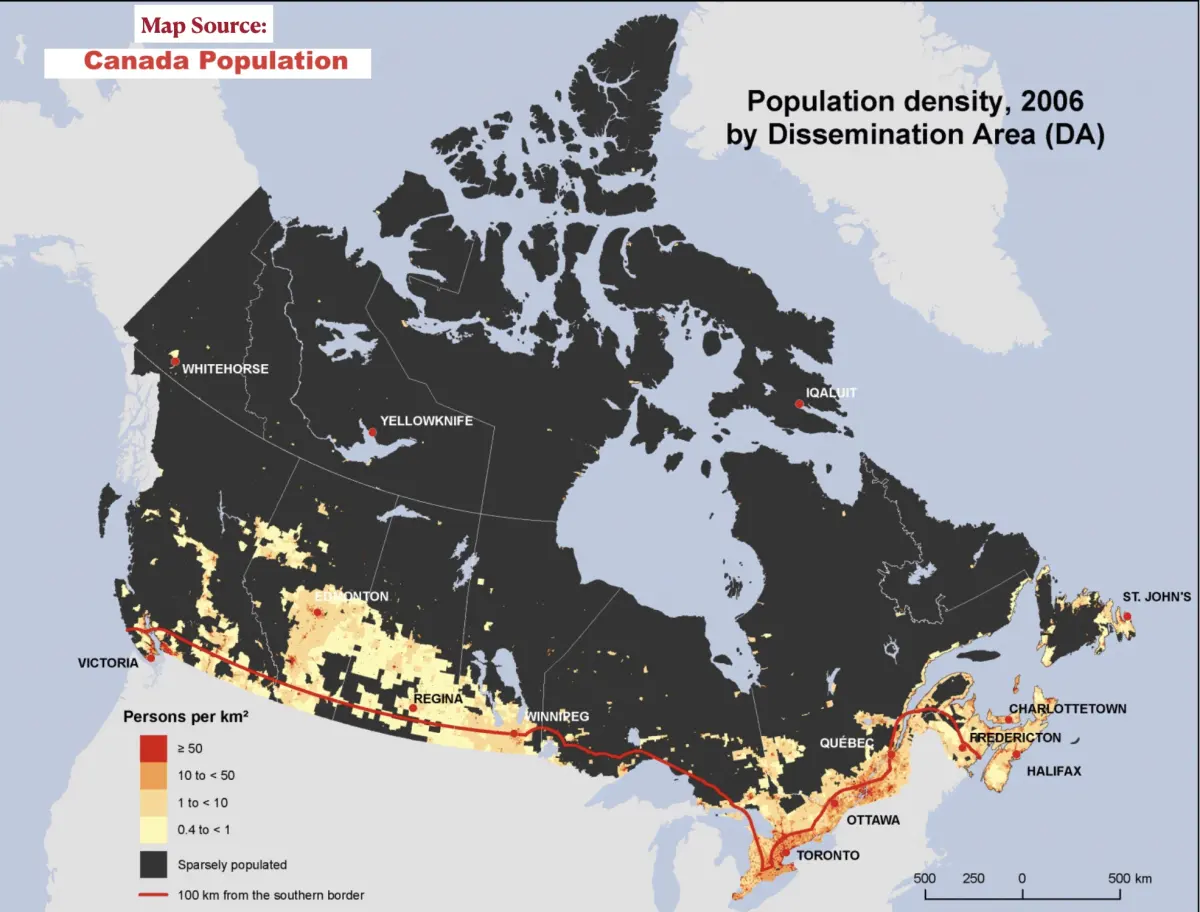
Canada’s population is approximately 41.5 million people as of late 2026. This figure reflects rapid growth driven primarily by international migration. Statistics Canada provides real-time estimates through its population clock, which accounts for births, deaths, and net migration. The country remains one of the fastest-growing nations among the G7 group.
On this page
How is Canada's population calculated?
Statistics Canada maintains a demographic "population clock" that serves as a real-time model for tracking the country's growth. This tool relies on administrative data, including birth and death registrations, alongside immigration and emigration records. Because it is a model rather than a daily physical headcount, it estimates changes on a second-by-second basis to provide a current snapshot.
To ensure accuracy, the agency reconciles these estimates with the decennial census, which is the most comprehensive count of the population. The census requires every household to report the number of residents living at a specific address on a designated date. This process corrects any drift in the model and provides a baseline for future projections.
- Administrative data from provincial health and vital statistics offices.
- Immigration, Refugees and Citizenship Canada (IRCC) records for permanent and temporary residents.
- Census of Population data collected every five years to recalibrate the model.
Why is the population growing so fast?
The primary driver of Canada’s recent population surge is international migration. While natural increase—the difference between births and deaths—has historically contributed to growth, its impact has diminished as the population ages and fertility rates decline. Consequently, the federal government has relied on high levels of immigration to offset labor shortages and support the national economy.
In recent years, the influx has included both permanent residents and a significant number of temporary residents, such as international students and foreign workers. This policy shift is designed to address demographic challenges, specifically the retirement of the "baby boomer" generation. By increasing the working-age population, the government aims to maintain the tax base necessary to fund public services like healthcare and education.
- Increased targets for permanent residency applications.
- Expansion of work permit programs for essential sectors.
- Growth in the international student population at post-secondary institutions.
Where do most Canadians live?
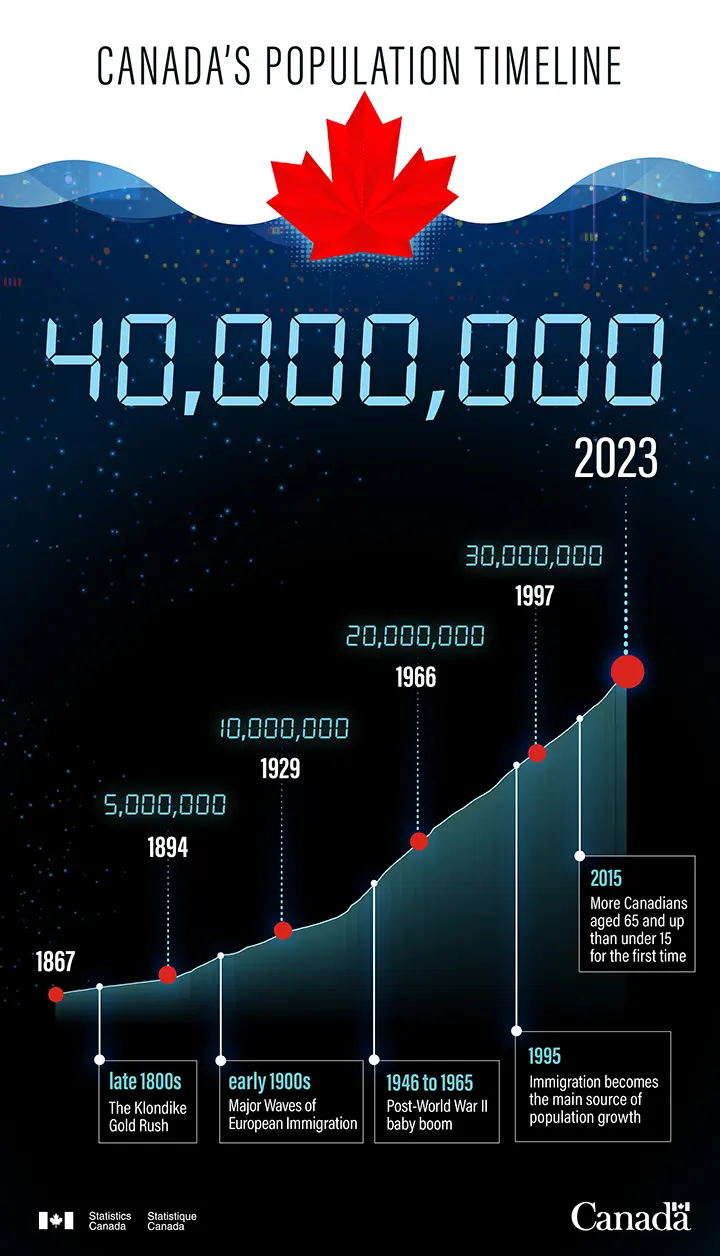
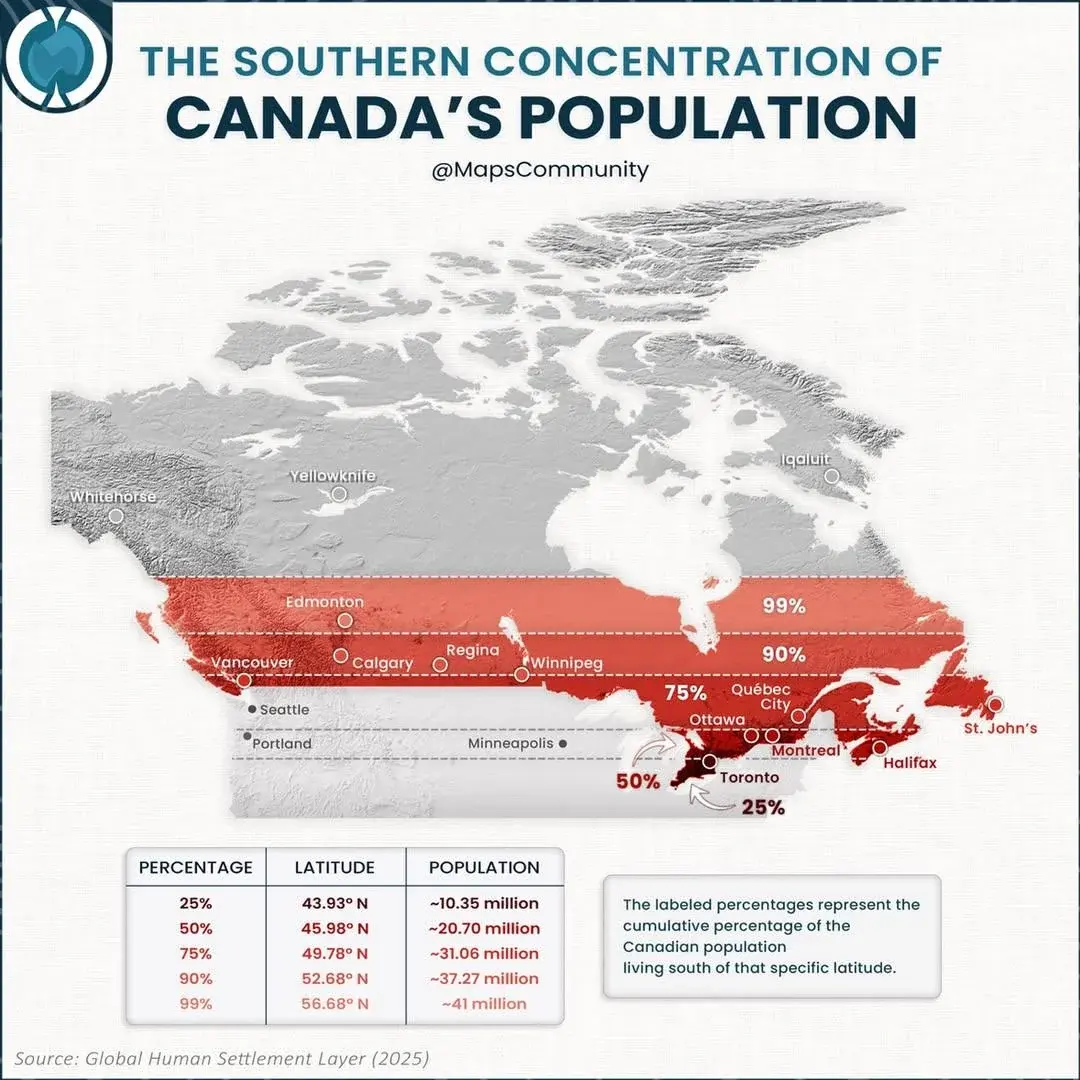
Canada’s geography dictates a highly uneven population distribution, with the vast majority of residents concentrated in a narrow strip along the border with the United States. Over 80 percent of the population resides in urban centers, with the three largest metropolitan areas—Toronto, Montreal, and Vancouver—accounting for a significant portion of the total. This concentration is largely due to historical settlement patterns, climate, and the availability of economic opportunities.
The northern territories, while vast in landmass, remain sparsely populated due to harsh environmental conditions and limited infrastructure. Meanwhile, the provinces of Ontario, Quebec, British Columbia, and Alberta contain the highest density of residents. This urban-centric growth creates distinct challenges, such as housing affordability and the need for robust public transit systems in major metropolitan regions.
Common mistakes when tracking population data
A frequent error is confusing total population figures with labor force participation rates. While the population clock tracks every resident, not everyone is part of the workforce. For example, children, retirees, and students are included in the population count but are excluded from labor market statistics. Relying on total population to gauge economic health can lead to an incomplete understanding of the country's actual workforce capacity.
Another mistake is assuming that population growth is uniform across all provinces. While national growth is high, some provinces experience stagnation or decline, while others see rapid expansion. It is also common to conflate permanent residents with temporary residents. Distinguishing between these categories is essential for understanding social policy, as their rights, access to services, and long-term residency status differ significantly under Canadian law.
How to find official population statistics
For those seeking the most accurate and up-to-date information, the Statistics Canada website is the definitive resource. The agency publishes a variety of reports, including quarterly demographic estimates and detailed census analysis. These documents are free to access and provide context on age, ethnicity, language, and household composition, which are essential for researchers, students, and businesses planning for the future.
When looking for data, always ensure you are using the most recent release. Statistics Canada often revises previous estimates as more complete data becomes available. Using outdated figures can lead to incorrect conclusions, especially when analyzing trends over time. If you need specific regional data, use the "Data" tab on the agency's website to filter by province, territory, or census metropolitan area to get the precise information required for your specific needs.
Key facts
- As of late 2026, Canada’s population has officially surpassed 42 million people.
- Statistics Canada provides real-time population estimates using a dynamic clock based on births, deaths, and migration data.
- Immigration accounts for the vast majority of Canada's annual population growth, currently driving over 90 percent of the increase.
- Ontario remains the most populous province, housing nearly 40 percent of the total national population.
- Over 80 percent of Canadians reside in urban centers, with the largest concentrations found in the Toronto, Montreal, and Vancouver metropolitan areas.
- To find the most current official count, visit the Statistics Canada website and search for the "Population clock."
The bottom line
Canada is currently experiencing a period of rapid demographic expansion, with its population recently exceeding 42 million. This growth is overwhelmingly fueled by international migration, which helps sustain the economy amidst an aging workforce. While urban centers continue to densify, the vast majority of the country's landmass remains sparsely inhabited, highlighting the unique geographical distribution that defines the Canadian experience in the modern era.
People also ask
Which province has the fastest-growing population?
Alberta frequently records the fastest growth rate in Canada due to significant interprovincial migration and international arrivals. Its expanding energy sector and relatively affordable housing compared to coastal cities attract many new residents.
How does Canada's population density compare to other countries?
Canada has one of the lowest population densities in the world, with only about 4 people per square kilometer. This is largely because much of the northern territory is sparsely populated due to harsh climate conditions.
What is the median age of the Canadian population?
The median age in Canada is approximately 41 years old. This figure has been gradually rising as the large baby boomer generation enters retirement age.
How often does Canada conduct a national census?
Statistics Canada conducts a mandatory census every five years. This comprehensive count provides the most accurate data for government planning and resource allocation.
Is the Canadian population shrinking in any regions?
While the national population is growing rapidly, some rural areas in the Atlantic provinces and parts of the Prairies experience population decline. This is often linked to younger residents moving to larger cities for education and employment opportunities.
What is the primary cause of Canada's recent population surge?
The surge is primarily driven by federal immigration policies designed to address labor shortages and offset the effects of an aging workforce. High levels of permanent residency admissions have significantly accelerated growth since 2022.
This answer was created with the help of AI research tools and reference sources. Spotted an error? Let us know — we correct mistakes quickly. See our editorial policy.