How many provinces are in Canada?
Short answer
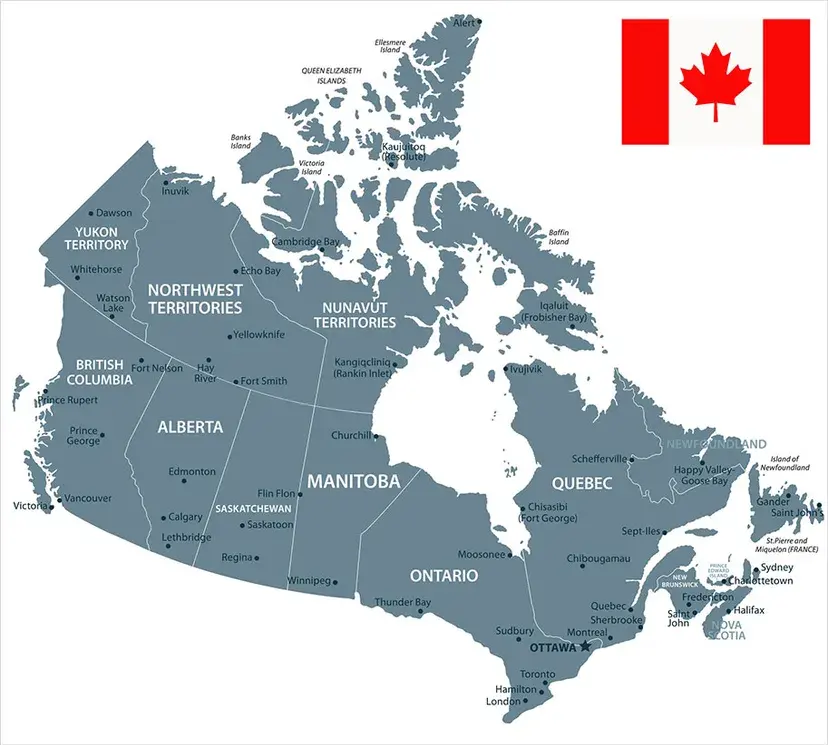
Canada consists of ten provinces and three territories. While often grouped together, these two types of jurisdictions differ in their constitutional origins and levels of autonomy. The provinces receive their power directly from the Constitution Act, 1867, whereas the territories derive their authority through federal legislation passed by the Parliament of Canada.
On this page
What are the provinces of Canada?
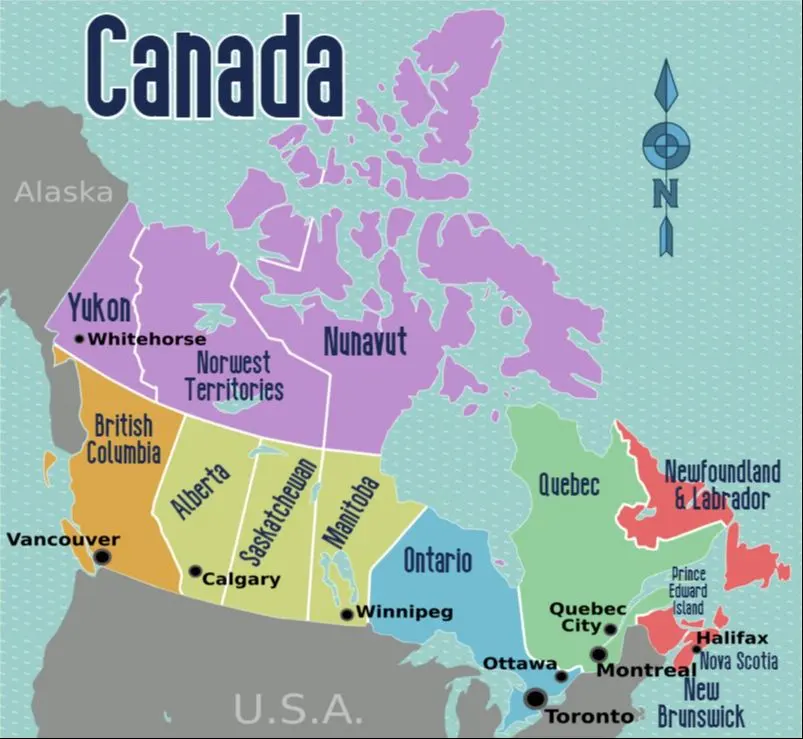
The ten provinces of Canada are the primary subnational divisions of the country. They are responsible for managing significant areas of public life, including education, healthcare, and civil rights. Each province operates under its own provincial legislature and is led by a premier, who serves as the head of government, while the British monarch is represented by a lieutenant governor.
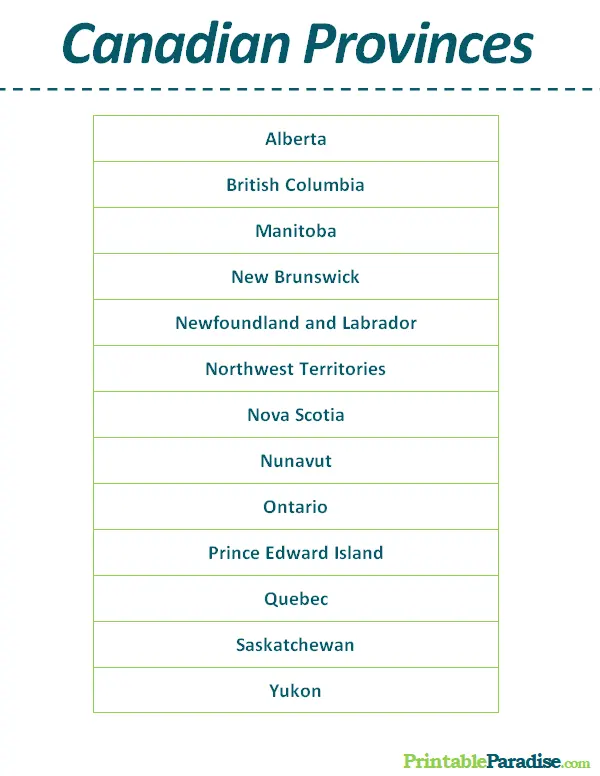
The ten provinces, listed from west to east, are:
- British Columbia
- Alberta
- Saskatchewan
- Manitoba
- Ontario
- Quebec
- New Brunswick
- Nova Scotia
- Prince Edward Island
- Newfoundland and Labrador
These provinces joined the confederation at different times, beginning with the original four in 1867. Newfoundland and Labrador was the final province to join, officially becoming part of Canada in 1949. Each province maintains a unique cultural and economic identity, contributing to the diverse political landscape of the nation.
How do territories differ from provinces?
Canada also includes three territories located in the northern regions of the country. Unlike provinces, which have inherent constitutional authority, territories are created by the federal government. This means that the federal Parliament retains the power to delegate specific authorities to territorial governments, and these powers can theoretically be altered or revoked by federal law.
The three territories are:
- Yukon
- Northwest Territories
- Nunavut
Despite these constitutional differences, the daily operations of territorial governments are quite similar to those of the provinces. They manage their own public services, such as local infrastructure and social programs. However, they generally receive more federal funding per capita because of the high costs associated with providing services in remote, sparsely populated regions. Nunavut is the newest addition, having been separated from the Northwest Territories in 1999 to provide a self-governing region for the Inuit people.
Why is the distinction between provinces and territories important?
The distinction is vital for understanding how Canadian law and federal-provincial relations function. Because provinces hold constitutional status, they have a high degree of sovereignty over their internal affairs. This includes the ability to levy their own taxes and manage natural resources within their borders. Any changes to the constitutional powers of provinces require a complex and rigorous amendment process involving the federal government and the provincial legislatures.
In contrast, the federal government maintains a much more direct role in the administration of the territories. While the territories have elected legislative assemblies and premiers, they do not have the same level of constitutional protection. Understanding this difference helps clarify why federal policies sometimes apply differently across the country. It also explains why provincial governments often act as powerful, independent partners in national negotiations, whereas territorial governments work more closely within the framework established by federal statutes.
Common mistakes when identifying Canadian geography
A frequent error is assuming that all regions of Canada are provinces. Many people mistakenly refer to the territories as provinces, which creates confusion regarding their political status. Another common mistake is misidentifying the capital cities or the number of provinces. For instance, some may assume there are more provinces due to the vast size of the country or the distinct cultural regions within it.
To avoid these errors, it is helpful to keep these facts in mind:
- Always distinguish between the ten provinces and the three territories.
- Remember that the territories are located exclusively in the north.
- Note that the capital of Canada, Ottawa, is located in the province of Ontario.
- Recognize that the provinces were formed through historical acts of union, while territories were formed through federal administrative decisions.
By keeping these distinctions clear, you can more accurately navigate discussions about Canadian governance and regional identity.
How to learn more about Canadian provinces
If you are interested in exploring the unique characteristics of each province, the best approach is to examine their individual histories and current economic drivers. Each province publishes extensive information through its official government websites, which provide details on local laws, tourism, and provincial symbols. These resources are excellent for understanding how the provinces differ in terms of their demographics, industries, and cultural traditions.
If you are planning a research project or a trip, follow these steps to gather accurate information:
- Visit the official website of the specific province or territory you are researching.
- Consult the Statistics Canada website for current demographic and economic data.
- Review the Constitution Act, 1867, to understand the legal division of powers.
- Use reputable educational platforms to compare the regional histories of the provinces.
By utilizing these official and academic sources, you can gain a deeper appreciation for the complex structure of the Canadian federation. Avoiding generalized summaries will ensure you have a precise understanding of how the provinces and territories function together as a unified nation.
Key facts
- Canada is composed of 10 provinces and 3 territories.
- Provinces derive their authority from the Constitution Act, 1867.
- Territories derive their authority from the federal government through acts of Parliament.
- The most recent province to join Canada was Newfoundland and Labrador in 1949.
- Nunavut is the newest territory, created in 1999 from the eastern part of the Northwest Territories.
- A common mistake is confusing provinces with territories; provinces have more constitutional autonomy than territories.
The bottom line
Canada is a vast federation consisting of 10 provinces and 3 territories. While they function similarly in daily life, provinces possess constitutional powers independent of the federal government, whereas territories operate under federal mandates. Understanding this distinction is essential for grasping Canadian politics and geography. Whether you are traveling across the country or studying its history, recognizing these 13 distinct political divisions provides a clear framework for Canada.
People also ask
What is the difference between a province and a territory?
Provinces receive their power and authority from the Constitution Act, whereas territories are delegated their powers by the federal government. Provinces have more control over their own affairs and resources compared to territories.
Which province is the largest by land area?
Quebec is the largest province in Canada by total area. It covers approximately 1.5 million square kilometers, though much of its land is northern wilderness.
Which province has the smallest population?
Prince Edward Island is the smallest province in both land area and population. It is located on the East Coast and is known for its rolling hills and red sand beaches.
Are territories considered part of Canada?
Yes, the three territories—Yukon, Northwest Territories, and Nunavut—are integral parts of Canada. They are represented in the federal Parliament and participate in national programs just like the provinces.
Why are there only 10 provinces?
The number of provinces reflects the historical process of Confederation where various British North American colonies chose to unite. While other regions have considered joining, the current structure has remained stable since 1949.
Can a territory become a province?
Yes, territories can petition the federal government to become provinces. This process requires a constitutional amendment and negotiations between the territorial and federal governments to define the new provincial powers.
This answer was created with the help of AI research tools and reference sources. Spotted an error? Let us know — we correct mistakes quickly. See our editorial policy.