What is Butchart Gardens famous for?
Short answer
The Butchart Gardens, located near Victoria, British Columbia, is world-renowned for its transformation of a depleted limestone quarry into a stunning 55-acre floral display. It is famous for its meticulous year-round landscaping, seasonal color transitions, and the iconic Sunken Garden, which showcases the legacy of Jennie Butchart’s early 20th-century horticultural vision.
On this page
How did the Butchart Gardens begin?
The gardens originated in 1904 when Jennie Butchart began beautifying a limestone quarry that had been exhausted by her husband’s cement business. She imported topsoil by horse and cart to cover the barren rock, gradually introducing ornamental plants and trees. Her vision transformed an industrial eyesore into a lush, sunken landscape that became a private sanctuary for her family and guests.
By the 1920s, the site had gained such a reputation that tens of thousands of visitors arrived annually to witness the transformation. The family eventually expanded the grounds to include the Rose Garden, the Japanese Garden, and the Italian Garden, cementing its status as a premier botanical destination. Today, the site remains family-owned, maintaining the original aesthetic principles established over a century ago.
- Jennie Butchart cleared the quarry floor.
- She imported rich soil to support diverse plantings.
- The family added specialized garden themes over several decades.
- The site was designated a National Historic Site of Canada in 2004.
What is the best time to visit?
The gardens offer a distinct experience depending on the season, making them a year-round attraction. Spring is arguably the most famous period, as hundreds of thousands of tulips, daffodils, and hyacinths bloom in a vibrant display. Summer brings the height of the rose season and evening entertainment, while autumn features spectacular foliage and late-blooming perennials.
Winter is equally popular, though for different reasons. The gardens are illuminated by millions of lights during the holiday season, turning the landscape into a festive display. If you prefer to avoid the largest crowds, consider visiting during the shoulder months of late April or late September. During these times, the weather is generally mild, and the horticultural displays remain impressive without the peak summer congestion.
- Spring: Peak bulb displays and cherry blossoms.
- Summer: Full rose blooms and outdoor concerts.
- Autumn: Vibrant Japanese maples and late-season dahlias.
- Winter: The Magic of Christmas light installations.
How long does it take to tour the gardens?
Visitors typically spend between two and four hours exploring the various paths and themed areas. Because the gardens cover 55 acres, the walking tour requires a moderate level of fitness and comfortable footwear. The paths are mostly paved and accessible, but the terrain includes gentle slopes as you descend into the Sunken Garden.
To make the most of your visit, prioritize the primary sections: the Sunken Garden, the Rose Garden, the Japanese Garden, and the Italian Garden. If you are traveling with children or have limited time, focus on the Sunken Garden first, as it is the most iconic feature. Allow extra time if you plan to enjoy afternoon tea at the dining room or browse the gift shop, which is housed in the original Butchart residence.
- Wear comfortable, supportive walking shoes.
- Check the daily map upon entry to plan your route.
- Allow extra time for dining or shopping.
- Use the provided benches for rest stops along the way.
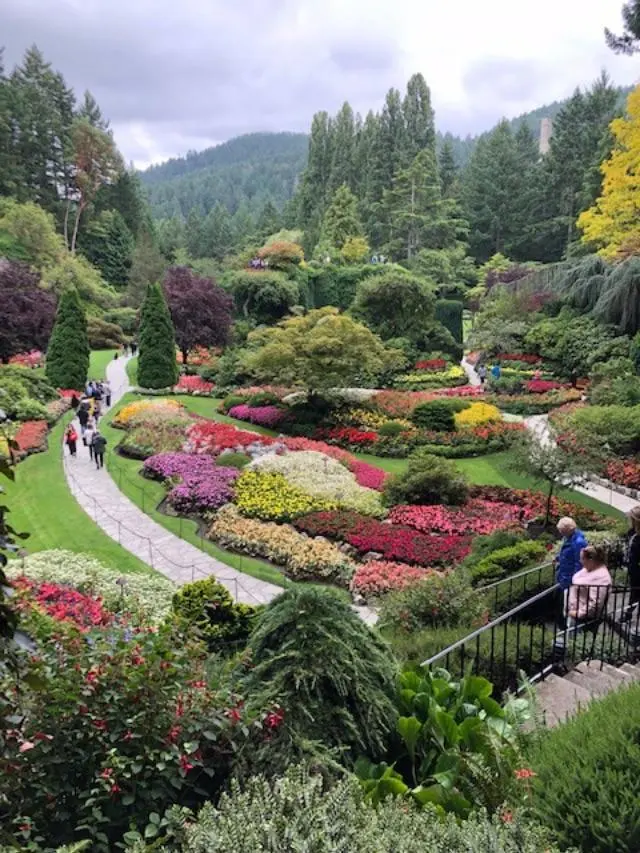
Why is the Sunken Garden so famous?
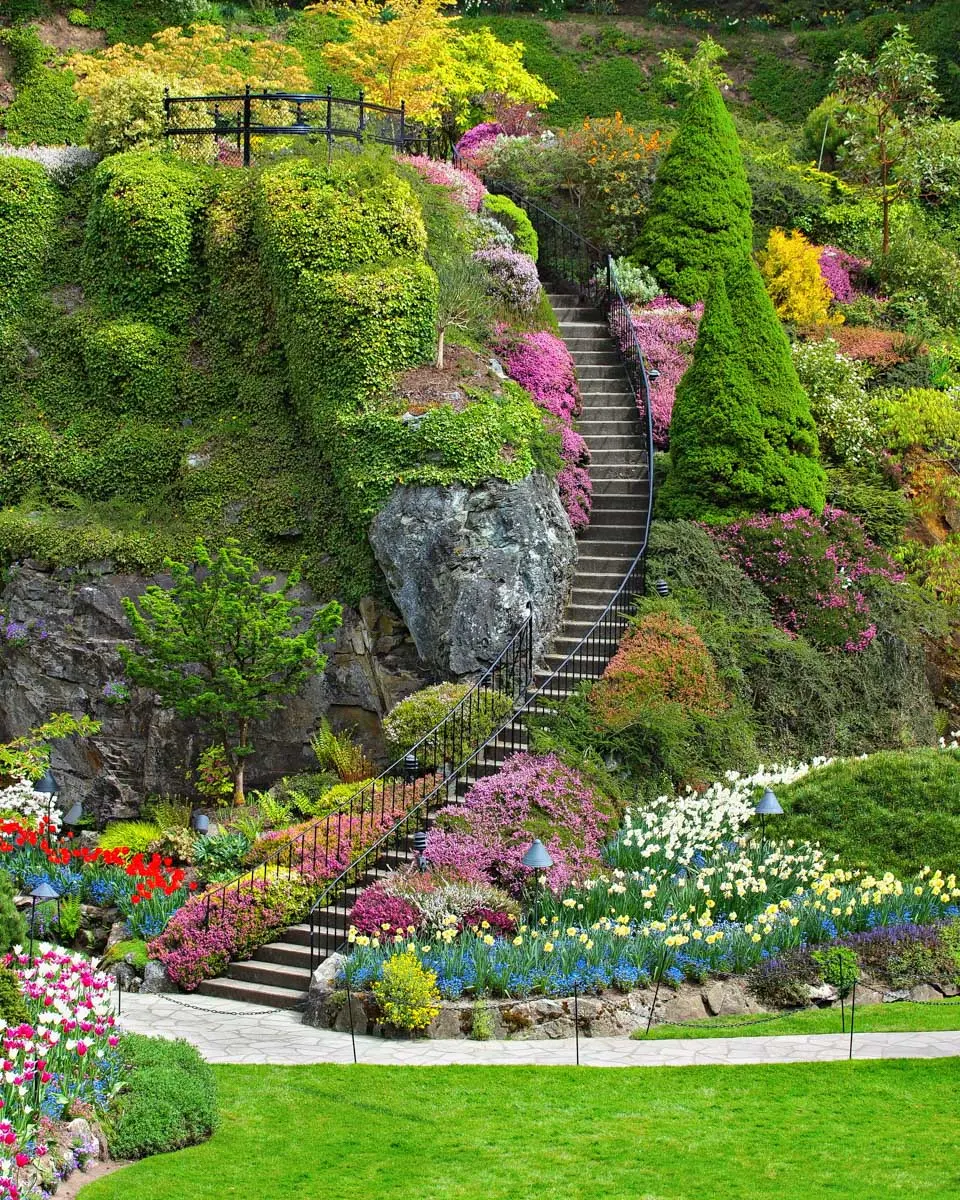
The Sunken Garden is the centerpiece of the estate and represents the most dramatic feat of landscape engineering in the park. It is situated in the deepest part of the old quarry, protected from wind and sheltered by high limestone walls. This unique microclimate allows for a dense, lush collection of trees, shrubs, and flowers that would struggle in more exposed areas.
The design relies on a mix of formal planting beds and naturalistic groupings that draw the eye upward toward the cliff edges. Visitors often describe the experience as entering a hidden, secret world. The interplay of light and shadow against the rugged stone walls creates a dramatic backdrop that has been captured by photographers for generations, making it the most photographed spot on the entire property.
- The limestone walls provide natural shelter.
- The basin holds heat, extending the growing season.
- The design emphasizes verticality and depth.
- It features a signature fountain that anchors the lower level.
Common mistakes when visiting the gardens
A frequent error is failing to check the daily calendar for special events or peak cruise ship arrival times. When multiple cruise ships dock in Victoria, the gardens can become significantly more crowded, which may detract from the peaceful atmosphere. Another common mistake is neglecting to dress in layers; the weather in the Pacific Northwest can change rapidly, even during the summer months.
Additionally, many visitors rush through the various gardens without stopping to appreciate the smaller, more intricate horticultural details. Take the time to read the signage, which provides context about the specific plant species and the history of the site. Finally, avoid arriving near closing time, as you will not have sufficient opportunity to see the entire property before the gates lock for the evening.
- Arriving during peak cruise ship hours without checking the schedule.
- Forgetting to bring a light jacket or umbrella.
- Rushing through the paths instead of observing the details.
- Planning a visit that is too short to cover the 55-acre grounds.
Key facts
- The gardens originated in 1904 when Jennie Butchart began transforming a depleted limestone quarry into a sunken garden.
- The site spans 55 acres of floral displays and receives nearly one million visitors annually.
- It is designated as a National Historic Site of Canada due to its historical significance and horticultural excellence.
- The grounds feature five distinct major gardens: the Sunken, Rose, Japanese, Italian, and Mediterranean gardens.
- Visitors should allocate at least three to four hours to fully explore the extensive walking paths.
- To avoid peak crowds and long queues, visit during the early morning or late afternoon hours.
The bottom line
Butchart Gardens stands as a premier example of landscape reclamation, turning an industrial limestone quarry into a world-renowned horticultural masterpiece. With its diverse themed gardens and seasonal displays, it offers a unique immersive experience for nature lovers. By planning your visit during off-peak hours and wearing comfortable walking shoes, you can fully appreciate the meticulous design and vibrant botanical beauty that define this historic Canadian landmark.
People also ask
When is the best time of year to visit Butchart Gardens?
The gardens are beautiful year-round, but spring offers the most vibrant bulb displays, while summer features the famous Rose Garden in full bloom. Winter is also popular for the "Magic of Christmas" light displays and festive decorations.
Are pets allowed inside the gardens?
Yes, leashed pets are welcome to accompany their owners throughout the outdoor garden areas. Owners must ensure their pets remain on paths and clean up after them at all times.
Is there an admission fee to enter the gardens?
Yes, the gardens require a paid ticket for entry, which varies in price depending on the season and the visitor's age. It is recommended to purchase tickets online in advance to streamline the arrival process.
Can visitors bring their own food into the gardens?
While outside food is permitted, the gardens also feature several on-site dining options, including the Dining Room Restaurant and the Blue Poppy Restaurant. Picnicking is restricted to designated areas to maintain the cleanliness of the floral displays.
How do I get to Butchart Gardens from downtown Victoria?
The gardens are located about 21 kilometers north of downtown Victoria. You can reach them by car in approximately 30 minutes, or by using the public transit bus service that runs directly to the main entrance.
Are the gardens accessible for people with mobility issues?
Most of the main paths are paved and accessible to wheelchairs and strollers, though some areas include steep grades. The garden provides a map highlighting the most accessible routes to ensure a comfortable experience for all guests.
This answer was created with the help of AI research tools and reference sources. Spotted an error? Let us know — we correct mistakes quickly. See our editorial policy.