What is the maple leaf a symbol of?
Short answer
The maple leaf is the primary national symbol of Canada, representing unity, tolerance, and the country’s vast natural heritage. It serves as a unifying emblem for Canadians, appearing on the national flag, currency, and military insignia. Its status reflects a long-standing cultural identity rooted in the landscape and historical tradition.

On this page
Why is the maple leaf a Canadian symbol?
The maple leaf gained prominence as a Canadian emblem long before it appeared on the official national flag in 1965. Indigenous peoples in North America had long recognized the maple tree for its nutritional value, specifically the harvesting of maple syrup. By the 18th century, French-Canadian settlers adopted the leaf as a cultural marker, and it was later embraced by English-speaking Canadians as a way to distinguish their identity from that of the British Empire.
The symbol evolved through various historical milestones, including its inclusion on the coats of arms for Ontario and Quebec in 1868. During the First and Second World Wars, the maple leaf became a standard element on military badges and regimental insignias. This widespread use solidified its role as a patriotic icon that transcended linguistic and regional divides. Today, it remains the most recognizable visual shorthand for Canadian identity, representing a shared history of resilience and peaceful development.
How did the maple leaf become the national flag?
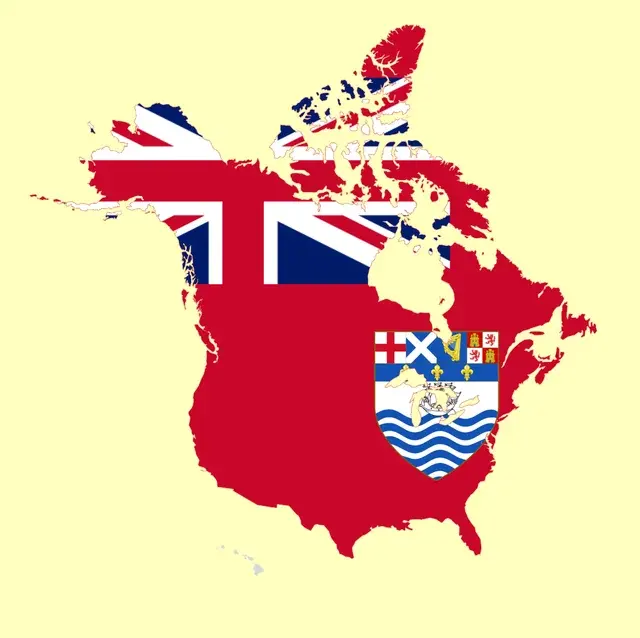
The transition to the current national flag was a contentious political process known as the "Great Flag Debate." For decades, Canada used the Canadian Red Ensign, which featured the British Union Jack. In 1964, Prime Minister Lester B. Pearson initiated a parliamentary committee to select a new, uniquely Canadian design that would foster national unity and move away from colonial imagery.
The committee considered thousands of submissions before settling on the design proposed by Dr. George Stanley. The final design, featuring a stylized 11-point red maple leaf on a white square flanked by two red bars, was officially adopted on February 15, 1965. The 11-point design was chosen specifically because it remained clear and recognizable even in strong winds. This moment marked a major shift in Canadian sovereignty, cementing the leaf as the nation's primary visual identity.
What do different maple leaf colors represent?
While the red maple leaf is the most famous iteration, the symbol appears in various contexts that carry specific meanings. In nature, the sugar maple is the most iconic species, known for its brilliant autumn foliage. The colors often signify the following:
- Red: Represents the official national flag and the blood shed by Canadians in military service.
- Gold: Frequently used in provincial symbols to represent the abundance of the land and the harvest.
- Green: Often associated with environmental conservation and the natural beauty of Canada’s forests.
- White: Used as a background to provide contrast and represent the vast snow-covered landscapes of the north.
These color variations are not strictly codified by law but have become standard in graphic design and heraldry. When using the symbol for official purposes, designers typically adhere to the specific "Flag Red" shade defined by the Canadian government to ensure consistency across all national branding and diplomatic representations.

How to use the maple leaf symbol correctly?
If you are designing materials or displaying the symbol, there are specific protocols to ensure you maintain the dignity of the emblem. While the maple leaf is a public symbol, it should be treated with respect, particularly when it appears as part of the official national flag.
- Ensure the leaf is oriented vertically with the stem pointing downward for standard displays.
- Maintain the correct proportions of the 11-point leaf to avoid misrepresentation of the official design.
- Avoid placing text or other graphics over the leaf in a way that obscures its distinct shape.
- Use high-resolution vector files when printing to ensure the points of the leaf remain sharp and clear.
Common mistakes include using an incorrect number of points or distorting the aspect ratio of the leaf. When using the leaf in a commercial or creative context, ensure it does not imply an official government endorsement unless you have received explicit authorization from the appropriate federal department.
Where is the maple leaf found today?
The maple leaf is ubiquitous in Canadian life, serving as a constant reminder of national pride. You will find it on everyday objects, which helps reinforce the symbol's role in the national consciousness. Its presence is not just ceremonial but functional, as it helps identify Canadian products, services, and citizens abroad.
- Currency: Every coin in the Canadian circulation, from the penny (formerly) to the loonie, features the leaf.
- Sports: The logo of the Toronto Maple Leafs and the uniforms of national teams prominently display the icon.
- Government: Official documents, passports, and diplomatic seals all bear the leaf as a mark of authenticity.
- Nature: The maple tree itself is protected in many regions, serving as a living monument to the country’s ecology.
By integrating the symbol into these diverse areas, Canada has successfully maintained a cohesive brand identity that is recognized globally. Whether on a traveler’s backpack or a government building, the maple leaf continues to serve as a powerful, unifying force for all Canadians.
Key facts
- The maple leaf became the official centerpiece of the Canadian national flag on February 15, 1965.
- It represents the natural beauty, vast wilderness, and cultural identity of Canada.
- The 11-point design was chosen specifically for its high visibility when fluttering in strong winds.
- Red and white were proclaimed Canada's official national colors by King George V in 1921.
- Maple syrup production, which relies on the sap of the maple tree, contributes over $500 million annually to the Canadian economy.
- To identify a true sugar maple leaf, look for five distinct lobes with smooth, rounded U-shaped notches between them.
The bottom line
The maple leaf serves as the primary emblem of Canada, embodying the nation's rugged natural environment and collective identity. Since its adoption in 1965, the symbol has transcended its botanical origins to become a globally recognized mark of Canadian pride. Whether found on the national flag or in the thriving syrup industry, the leaf remains a practical and enduring touchstone for the country's heritage and values.
People also ask
Why was the maple leaf chosen over other symbols like the beaver?
While the beaver is a recognized symbol of Canadian history, the maple leaf was viewed as a more inclusive, neutral, and elegant emblem. It had already appeared on Canadian military badges and coins for decades before its formal adoption.
Are there different species of maple trees represented by the symbol?
The stylized design on the flag does not represent a specific botanical species of maple. It is a graphic abstraction intended to be recognizable regardless of the tree's biological variety.
What does the red color of the leaf signify?
The red color represents the sacrifices made by Canadians during the First World War. It also reflects the vibrant autumn foliage that characterizes much of the Canadian landscape.
Can I use the maple leaf symbol on commercial products?
Yes, but you must ensure your usage does not imply official government endorsement. Avoid using the exact flag design in a way that suggests a product is a government-issued item.
How many points does the official flag leaf have?
The current design features exactly 11 points. This specific geometry was finalized after extensive testing to ensure the leaf remained clear and distinct from a distance.
Is the maple leaf used by other countries?
While other nations have maple trees, the maple leaf is uniquely and internationally synonymous with Canada. It is the most prominent national symbol of the country globally.
This answer was created with the help of AI research tools and reference sources. Spotted an error? Let us know — we correct mistakes quickly. See our editorial policy.