What is Petra?
Short answer
Petra is an ancient archaeological city in southern Jordan, famous for its rock-cut architecture and sophisticated water conduit system. Established as the capital of the Nabataean Kingdom around the 4th century BCE, it served as a vital crossroads for silk and spice trade routes between Arabia, Egypt, and the Mediterranean.
On this page
What is the history of Petra?
Petra rose to prominence as the capital of the Nabataeans, a nomadic Arab people who settled in the region and grew wealthy by controlling regional trade routes. By the 1st century BCE, the city flourished as a commercial hub where merchants exchanged frankincense, myrrh, and spices. The Nabataeans carved elaborate facades directly into the sandstone cliffs, blending Hellenistic architectural styles with their own unique cultural traditions.
The city’s strategic importance eventually attracted the attention of the Roman Empire. In 106 CE, the Nabataean Kingdom was annexed by Rome, becoming part of the province of Arabia Petraea. While the city remained significant for a time, shifting trade routes and a devastating earthquake in 363 CE contributed to its gradual decline. By the Islamic era, it was largely abandoned by the outside world, known only to local Bedouin tribes until it was "rediscovered" by Swiss explorer Johann Ludwig Burckhardt in 1812.
How to explore the Petra archaeological site
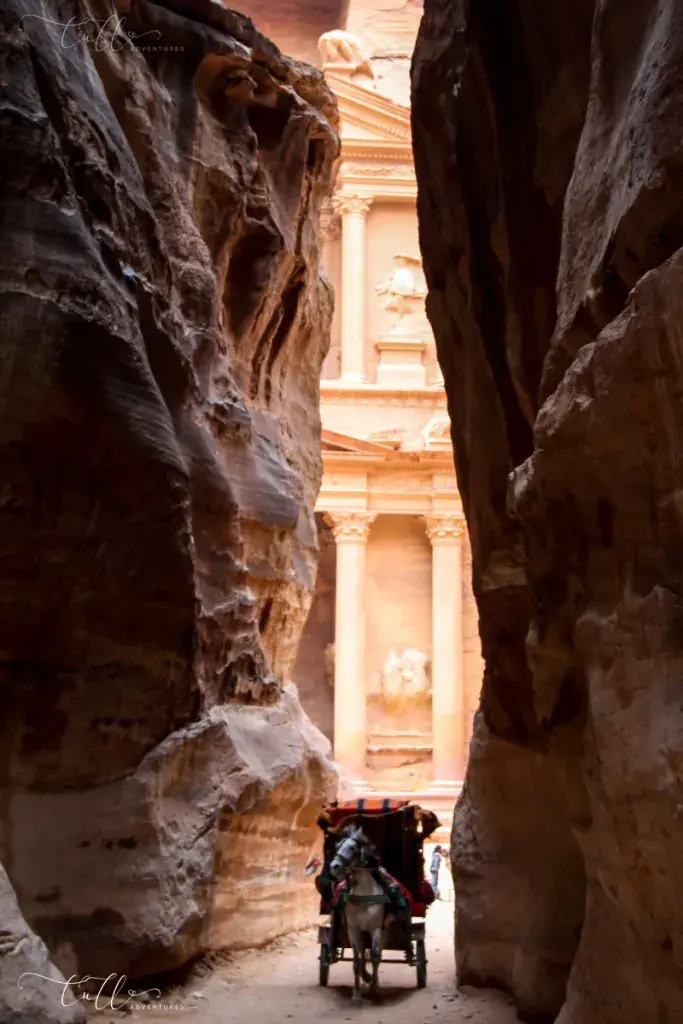
Visiting Petra requires significant physical stamina, as the site covers a vast area with rugged terrain. Most visitors begin their journey at the Siq, a narrow, winding gorge that serves as the dramatic entrance to the city. Walking through this geological formation reveals the transition from natural landscape to the monumental architecture of the Treasury, or Al-Khazneh.
To see the major highlights, follow this suggested route:
- Enter through the Siq to reach the Treasury.
- Walk down the Street of Facades toward the Roman-style Theatre.
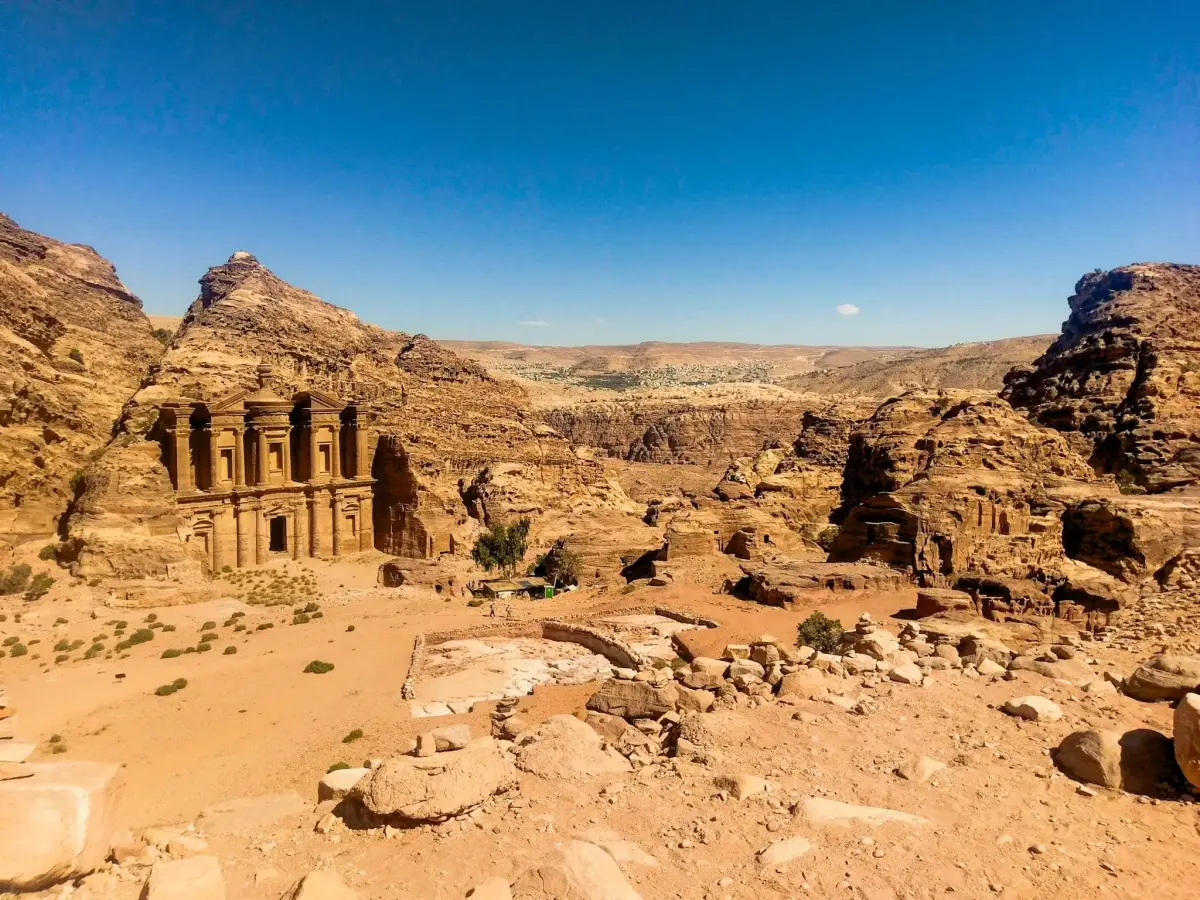
- Climb the hundreds of stairs to the Monastery, known as Ad Deir, for panoramic views.
- Explore the Royal Tombs, including the Urn Tomb and the Silk Tomb.
- Visit the Great Temple and the Byzantine Church to see well-preserved mosaics.
How to plan your trip to Petra
Planning a visit requires careful consideration of the climate and the sheer scale of the site. The best time to visit is during the shoulder seasons—spring (March to May) or autumn (September to November)—when temperatures are moderate. Summer months can see extreme heat, while winter nights are often freezing. You should allocate at least two full days to explore the park properly, as rushing through the main path ignores the many hidden trails and high-altitude viewpoints.
When preparing for your visit, keep these logistical tips in mind:
- Purchase a Jordan Pass online before arrival to cover your visa fees and entry to Petra.
- Wear sturdy, broken-in hiking boots, as you will likely walk over 10 miles per day.
- Carry a reusable water bottle and refill it at designated stations.
- Bring a hat, high-SPF sunscreen, and layers of clothing to manage shifting temperatures.
- Hire a local guide if you want to understand the complex history behind the carvings.
Common mistakes when visiting Petra
Many travelers underestimate the physical demands of the site and fail to prepare accordingly. A common error is arriving late in the day, which limits the time available to reach the Monastery or explore the peripheral trails before the sun sets. Another frequent mistake is relying solely on animal transport, such as donkeys or camels, to navigate the steep paths. These animals are often overworked and can be dangerous on narrow, slippery stone staircases.
Additionally, visitors often neglect the importance of hydration and sun protection in the arid desert environment. Do not assume that food and water will be available at every corner of the site; while there are small kiosks, they are spread far apart. Finally, avoid wandering off marked trails, as the sandstone cliffs can be unstable and the terrain is deceptively complex. Stick to the established paths to ensure your safety and to protect the delicate archaeological structures from unnecessary damage.
Why is Petra a UNESCO World Heritage site?
Petra was designated a UNESCO World Heritage site in 1985 due to its exceptional cultural and historical value. It represents a masterpiece of human creative genius, showcasing how an ancient civilization mastered the challenges of a desert environment. The Nabataeans engineered an ingenious system of dams, cisterns, and terracotta pipes to harvest rainwater, allowing a large population to thrive in a region that receives very little annual rainfall.
The site also serves as a critical bridge between Eastern and Western cultures. The architecture reflects a unique synthesis of Egyptian, Greek, and Roman influences, all filtered through the distinct Nabataean aesthetic. By preserving these structures, the global community protects a vital chapter of human history that illustrates the ingenuity of ancient trade civilizations. Ongoing conservation efforts focus on mitigating the effects of erosion, tourism pressure, and natural weathering to ensure that the "Rose City" remains intact for future generations to study and admire.
Key facts
- Petra is an ancient archaeological city located in the southwestern desert of Jordan.
- It was established as the capital of the Nabataean Kingdom as early as the 4th century BCE.
- The city is famous for its rock-cut architecture, with buildings carved directly into vibrant red, white, and pink sandstone cliffs.
- The most iconic structure, Al-Khazneh (The Treasury), stands approximately 40 meters high and was carved in the 1st century CE.
- Petra was designated a UNESCO World Heritage site in 1985 and was named one of the New Seven Wonders of the World in 2007.
- Visitors should arrive at the site by 6:00 AM to beat the heat and avoid the largest tour groups.
The bottom line
Petra remains a masterpiece of ancient engineering and artistry, showcasing the ingenuity of the Nabataean people who thrived in a harsh desert environment. By combining sophisticated water management systems with breathtaking architectural carvings, this "Rose City" serves as a profound testament to human history. A visit requires careful planning, comfortable footwear, and an appreciation for the delicate preservation of this irreplaceable global cultural treasure.
People also ask
How do I get to the main monuments?
You must walk through the Siq, a narrow, winding gorge that stretches 1.2 kilometers. The Siq serves as the dramatic entrance to the city and leads directly to the Treasury.
Is it safe to climb the rocks for a better view?
You should avoid climbing on the fragile sandstone monuments, as it damages the site and is strictly prohibited by authorities. Use only the designated hiking trails to reach high viewpoints like the Monastery.
What is the best time of year to visit?
The spring months of March to May and the autumn months of September to November offer the most comfortable temperatures. Avoid visiting in the peak of summer, when daytime temperatures often exceed 40°C (104°F).
Do I need a guide to explore Petra?
While you can explore independently, hiring a licensed local guide provides historical context and helps you navigate the vast 264-square-kilometer archaeological park. Official guides are available at the Visitor Center.
Are there facilities inside the archaeological park?
There are basic restrooms, small cafes, and souvenir shops located near the main monuments. However, you should carry a reusable water bottle and plenty of sunscreen, as shade is extremely limited.
Can I see Petra at night?
The "Petra by Night" experience takes place on specific evenings, where the Siq and the Treasury are illuminated by thousands of candles. Check the official schedule in advance, as this event is not held every night.
This answer was created with the help of AI research tools and reference sources. Spotted an error? Let us know — we correct mistakes quickly. See our editorial policy.