Why was the Canadian Pacific Railway built?
Short answer
The Canadian Pacific Railway was built primarily to fulfill a political promise made to British Columbia to secure its entry into the Canadian Confederation in 1871. Beyond national unity, the railway was designed to facilitate western settlement, promote economic expansion, and prevent American territorial encroachment by establishing a permanent, reliable transportation link.
On this page
Why was the Canadian Pacific Railway built?
The primary motivation behind the construction of the Canadian Pacific Railway (CPR) was the survival of the young Canadian nation. When British Columbia joined Confederation in 1871, the federal government under Prime Minister Sir John A. Macdonald promised to connect the Pacific coast to the eastern provinces via a transcontinental railway within ten years. Without this promise, the western colony likely would have sought closer economic and political ties with the United States.
Beyond the political necessity of holding the country together, the railway was viewed as the essential engine for economic development. The government envisioned a vast "National Policy" that would use the railway to transport manufactured goods from the east to the west, while bringing agricultural products and natural resources back to eastern markets. By creating this internal trade loop, Canada aimed to foster self-sufficiency and reduce its reliance on American trade routes, which were often vulnerable to political tensions and high tariffs.
How did the railway impact Canadian settlement?
The railway was the primary vehicle for the colonization of the Canadian Prairies. Before the tracks were laid, the vast interior was sparsely populated, making it difficult for the government to assert sovereignty over the region. The CPR facilitated the movement of thousands of immigrants from Europe and eastern Canada, who were incentivized by the promise of cheap, fertile land provided by the government.
To manage this massive influx of people and resources, the railway company implemented several strategic initiatives:
- The establishment of land grants that allowed the company to sell property near the tracks to fund construction costs.
- The creation of immigration offices in Europe to recruit farmers and laborers to settle the newly accessible western territories.
- The development of townsites along the rail line, which served as central hubs for grain collection and local commerce.
This rapid settlement transformed the demographic landscape of Canada. By the early 20th century, the Prairies had become the "breadbasket of the world," and the railway provided the necessary infrastructure to export millions of bushels of wheat to international markets, effectively turning Canada into a major global agricultural power.
What were the main challenges during construction?
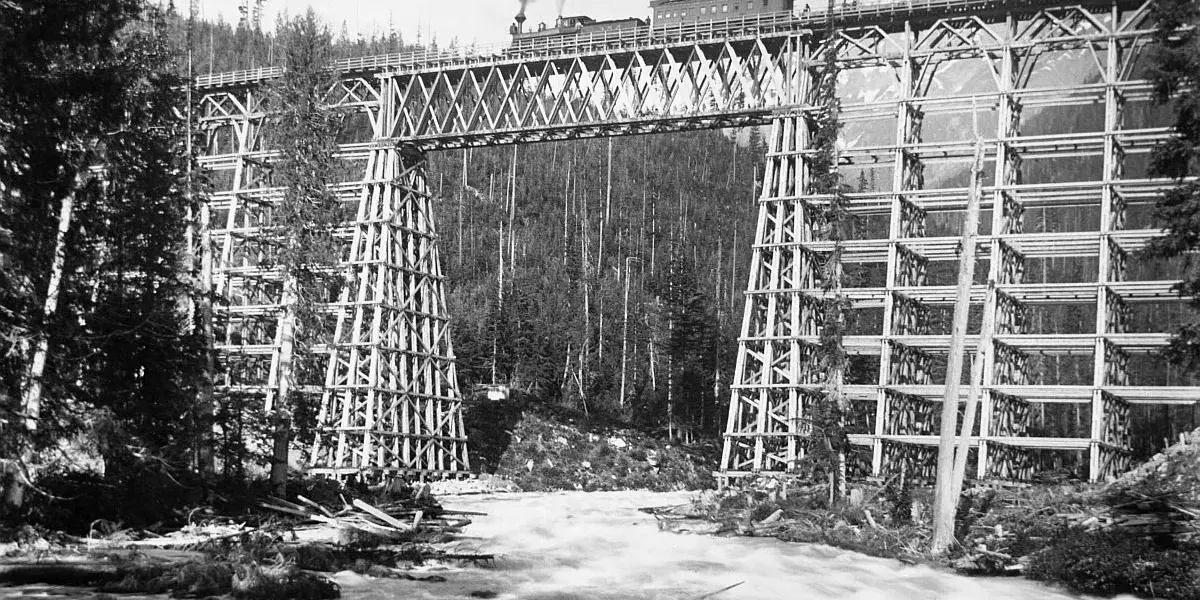
Building the CPR was an engineering feat of unprecedented scale, requiring the mobilization of thousands of workers across rugged, unforgiving terrain. The most difficult section was through the Canadian Rockies, where crews had to blast through solid rock, construct massive trestle bridges, and navigate steep mountain passes. Laborers, including thousands of Chinese immigrants, worked under dangerous conditions, facing extreme weather, disease, and the constant threat of rockslides or explosions.
Financial and political instability also plagued the project. The railway was incredibly expensive, leading to the "Pacific Scandal" in 1873, which temporarily toppled Macdonald’s government. To ensure completion, the government eventually incorporated the Canadian Pacific Railway Company in 1881, granting it significant subsidies and a monopoly on rail traffic in the west. Despite these hurdles, the project was completed in 1885, when the last spike was driven at Craigellachie, British Columbia, marking the physical unification of the nation.
How to study the history of the CPR effectively
If you are researching the history of the railway, it is best to approach the topic by looking at both the political narratives and the personal experiences of those who built it. Start by examining the official government records from the 1870s to understand the high-level strategy, then contrast this with the diaries and journals of the laborers to gain a more human perspective.
Follow these steps to conduct a thorough historical investigation:
- Identify the primary political actors, such as Sir John A. Macdonald and George Stephen, to understand the decision-making process.
- Consult maps from the 1880s to visualize how the railway dictated the placement of cities like Winnipeg, Regina, and Calgary.
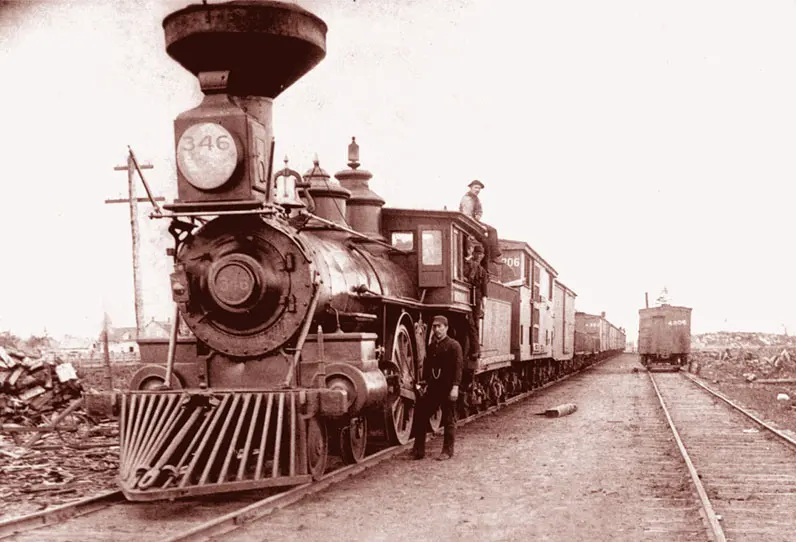
- Review archival photographs of the construction process to appreciate the physical scale of the engineering challenges faced by the crews.
- Analyze the impact of the railway on Indigenous populations, as the tracks often cut through traditional territories, leading to significant social displacement.
Common mistakes when researching the railway
A frequent error is assuming that the railway was purely a commercial venture. While the CPR was a private corporation, it was deeply intertwined with federal policy and national survival. Ignoring the political context makes it impossible to understand why the government was willing to spend such vast sums of money on a project that initially seemed financially unviable.
Another common mistake is overlooking the diverse labor force that made the railway possible. Many historical accounts focus solely on the engineers and politicians, ignoring the essential contributions of the thousands of Chinese, Irish, and other immigrant laborers. When researching, ensure you look for sources that highlight the social history of the workers, as their efforts were just as critical to the completion of the line as the capital provided by the investors. Finally, avoid viewing the railway as a neutral development; always consider the environmental and social costs that accompanied the rapid industrialization of the Canadian frontier.
Key facts
- The Canadian Pacific Railway (CPR) was a central condition for British Columbia joining the Canadian Confederation in 1871.
- Construction officially began in 1881 and was completed with the driving of the "Last Spike" at Craigellachie on November 7, 1885.
- The project spanned approximately 4,600 kilometers, connecting Montreal in the east to Port Moody on the Pacific coast.
- Prime Minister John A. Macdonald championed the railway to prevent American expansionism into Western Canada.
- The railway cost roughly $100 million to build, a massive financial undertaking that nearly bankrupted the federal government.
- Thousands of Chinese laborers were recruited to blast through the treacherous Rocky Mountains, often working in dangerous conditions for low pay.
The bottom line
The Canadian Pacific Railway was built primarily as a political necessity to secure British Columbia’s entry into Canada and to prevent American annexation of the West. By bridging the vast, rugged geography of the continent, the railway facilitated national unity, enabled mass immigration to the Prairies, and established a vital trade corridor. It remains the physical backbone that transformed a collection of colonies into a unified nation.
People also ask
How did the railway change the Canadian economy?
The CPR transformed the economy by opening the Prairies to large-scale wheat farming and grain exports. It created a reliable supply chain that linked isolated settlements to industrial markets in the East.
What was the "Last Spike"?
The Last Spike was a ceremonial iron spike driven into the ground by Donald Smith to mark the completion of the transcontinental line. It symbolized the physical unification of the country from coast to coast.
Why were Chinese immigrants essential to the construction?
Labor shortages in the rugged mountains led the company to hire over 15,000 Chinese workers. They performed the most dangerous tasks, including handling explosives to clear mountain passes for the tracks.
Did the railway face any major political scandals?
Yes, the Pacific Scandal of 1873 involved allegations that the government accepted bribes from railway contractors. This led to the temporary resignation of Prime Minister John A. Macdonald.
How long did it take to travel across Canada by train in the 1880s?
Before the railway, the journey took months by sea or through the United States. Once the CPR was finished, the trip from Montreal to the Pacific took approximately five days.
What role did the railway play in the North-West Rebellion?
The CPR allowed the Canadian government to quickly transport troops to the Prairies in 1885. This rapid deployment was crucial in suppressing the uprising led by Louis Riel.
This answer was created with the help of AI research tools and reference sources. Spotted an error? Let us know — we correct mistakes quickly. See our editorial policy.