Why did the Berlin Wall fall?
Short answer
The Berlin Wall fell on November 9, 1989, due to a combination of mounting civil unrest, shifting Soviet policies under Mikhail Gorbachev, and a bureaucratic blunder. Mass protests in East Germany and the opening of borders in neighboring Hungary created irresistible pressure, forcing the East German government to grant immediate travel freedom.
On this page
Why did the Berlin Wall fall?
The collapse of the Berlin Wall was primarily driven by the internal decay of the East German state and the changing geopolitical climate of the Cold War. By the late 1980s, the East German economy was stagnating, leading to widespread public dissatisfaction with the repressive Socialist Unity Party. Simultaneously, Soviet leader Mikhail Gorbachev introduced policies of glasnost (openness) and perestroika (restructuring), which signaled that the Soviet Union would no longer use military force to suppress dissent in satellite states.
This shift in Soviet policy emboldened activists across the Eastern Bloc. When Hungary opened its border with Austria in the summer of 1989, thousands of East Germans seized the opportunity to defect to the West through this new gap in the Iron Curtain. The resulting refugee crisis paralyzed the East German leadership, which struggled to maintain control as their citizens demanded democratic reforms and freedom of movement.
How did the protests lead to change?
The "Monday Demonstrations" in Leipzig became the focal point of the peaceful revolution that undermined the regime's authority. Starting with small prayer meetings at St. Nicholas Church, these protests grew to include hundreds of thousands of participants chanting "We are the people." The sheer scale of the movement made it impossible for the government to use force without risking a massive, bloody confrontation that they likely could not win.
- September 1989: Weekly demonstrations begin in Leipzig, growing from hundreds to thousands of participants.
- October 9, 1989: Over 70,000 people march in Leipzig; security forces are ordered not to intervene.
- October 18, 1989: Longtime leader Erich Honecker is forced to resign, signaling a loss of party control.
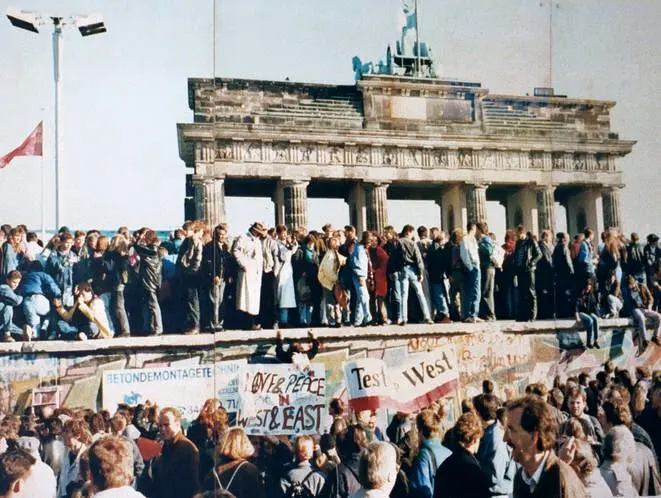
- November 4, 1989: A massive rally in Alexanderplatz, East Berlin, draws half a million people demanding democratic change.
What was the role of the bureaucratic error?
The actual opening of the wall was triggered by a poorly communicated government announcement on the evening of November 9, 1989. During a televised press conference, East German official Günter Schabowski was asked about new travel regulations intended to ease tensions. Unprepared and lacking specific instructions, he mistakenly announced that permanent exit visas would be granted immediately and without conditions.
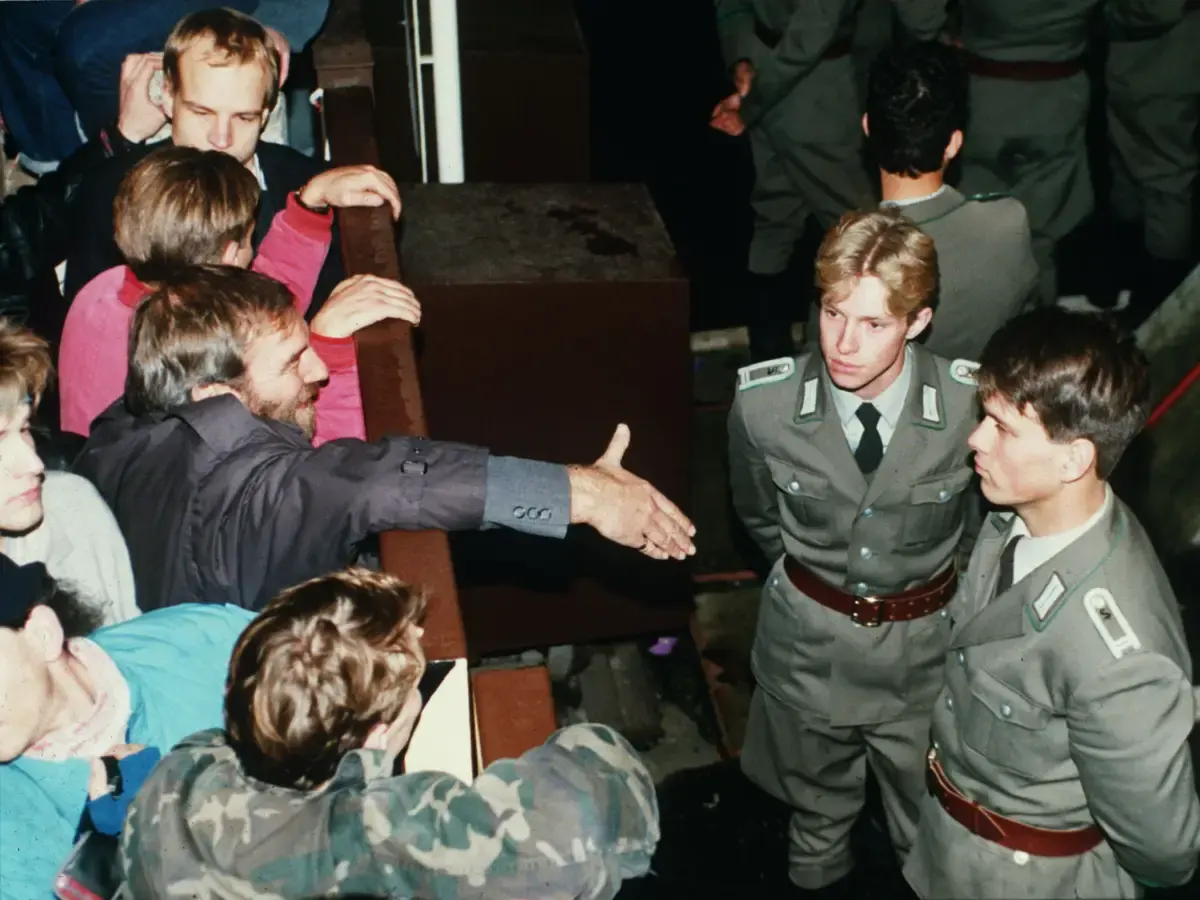
The news spread rapidly through television and radio broadcasts, prompting thousands of East Berliners to rush to the border crossings. Border guards, who had not received clear orders on how to handle the massive crowds, were overwhelmed and eventually opened the gates to prevent a stampede. This spontaneous act effectively rendered the wall obsolete, as the state lost its ability to enforce the division of the city.
Common mistakes when analyzing the fall
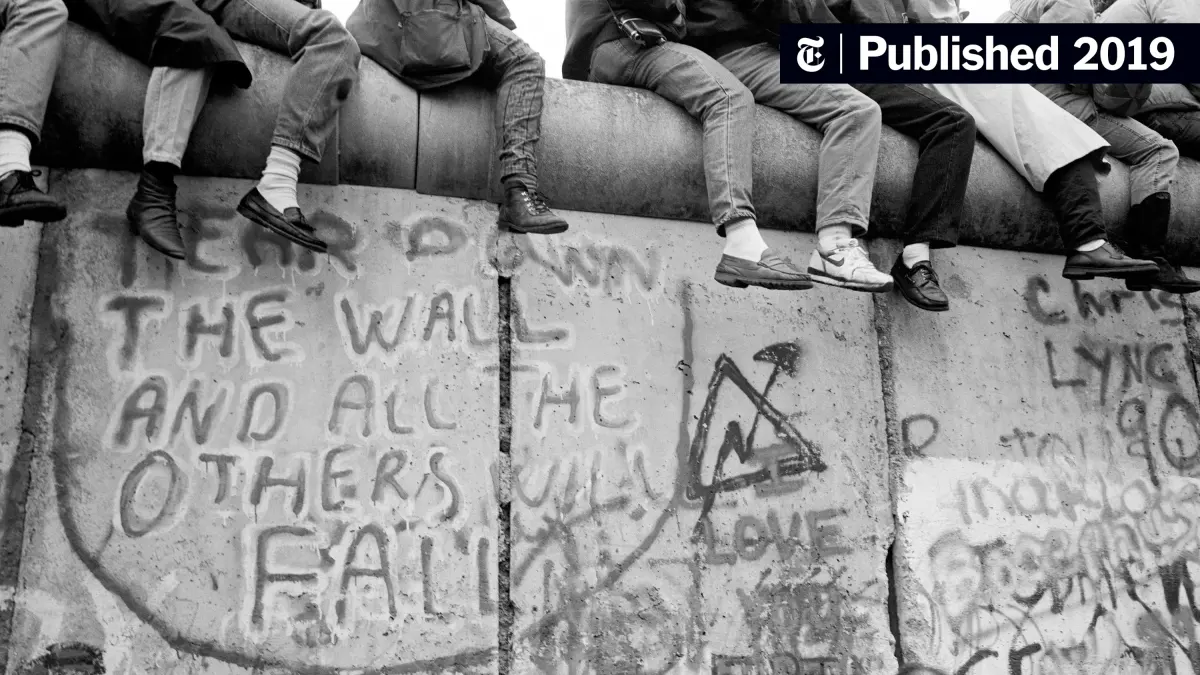
Many observers mistakenly attribute the fall of the wall solely to the actions of Western leaders like Ronald Reagan. While Reagan’s 1987 "Tear down this wall" speech was rhetorically significant, the collapse was fundamentally a bottom-up process driven by East German citizens. Attributing the event exclusively to external pressure ignores the bravery of the protesters who risked imprisonment to demand their rights.
Another common error is assuming the wall's fall was a planned, orderly transition. In reality, the event was chaotic and unplanned, catching both the East German government and the Western powers by surprise. It was not a negotiated diplomatic settlement, but a collapse of authority caused by the government's inability to manage the sudden, massive pressure from its own population.
- Overestimating the influence of foreign intelligence agencies in organizing the protests.
- Underestimating the role of the East German church in providing a safe space for dissent.
- Ignoring the economic collapse that made the state's survival unsustainable regardless of political pressure.
- Assuming the fall of the wall immediately unified Germany, when in fact reunification took nearly another year.
How the wall's end impacted history
The fall of the Berlin Wall served as the symbolic end of the Cold War and the beginning of the collapse of the Soviet Union. Within months, communist regimes across Eastern Europe fell, leading to the reunification of Germany in October 1990. The event proved that even the most entrenched authoritarian systems could be dismantled by the collective will of a determined citizenry.
Today, the site of the wall serves as a historical reminder of the dangers of political division and the importance of civil liberties. The legacy of 1989 continues to influence modern democratic movements, demonstrating that peaceful protest can reshape the global order. By understanding the specific combination of policy shifts, economic failure, and grassroots action, one can see how the wall's destruction was an inevitable consequence of an unsustainable political system.
Key facts
- The Berlin Wall fell on November 9, 1989, following weeks of civil unrest and mass protests across East Germany.
- A bureaucratic error by East German official Günter Schabowski during a live press conference triggered the immediate opening of border crossings.
- Mikhail Gorbachev’s policy of glasnost (openness) and perestroika (restructuring) in the Soviet Union signaled that Moscow would no longer use military force to suppress satellite states.
- The Pan-European Picnic in August 1989, where Hungary opened its border with Austria, created the first major hole in the Iron Curtain.
- East German citizens began fleeing to the West in record numbers via Czechoslovakia and Hungary, putting immense pressure on the regime.
- When visiting historical sites in Berlin, avoid assuming the wall was a single structure; it was actually two walls separated by a "death strip" filled with guard towers and landmines.
The bottom line
The fall of the Berlin Wall was the culmination of grassroots protest, shifting Soviet policy, and a historic administrative blunder. By ending the physical barrier between East and West, the German people effectively signaled the collapse of communist regimes across Eastern Europe. This event serves as a powerful reminder of how collective civic action and the desire for self-determination can dismantle even the most entrenched authoritarian systems.
People also ask
How long did the Berlin Wall stand?
The wall stood for 28 years, having been constructed by the German Democratic Republic starting on August 13, 1961. It remained a symbol of the Cold War division until its dismantling began in late 1989.
Did the United States tear down the wall?
While President Ronald Reagan famously challenged Soviet leader Mikhail Gorbachev to "tear down this wall" in 1987, the wall fell due to internal pressure from East German citizens. The U.S. provided diplomatic support, but the physical destruction was carried out by the German people.
What happened to the wall after it opened?
Following the initial breach, citizens known as Mauerspechte (wall woodpeckers) used hammers and chisels to chip away pieces of the concrete. The official demolition by the East German military followed shortly after, leading to the reunification of Germany in 1990.
Why was the wall built in the first place?
The East German government built the wall to stop the mass defection of its citizens to West Berlin. Between 1949 and 1961, approximately 2.5 million people fled to the West, causing a severe labor shortage and economic instability.
How many people died trying to cross the wall?
At least 140 people were killed at the Berlin Wall between 1961 and 1989. These deaths were caused by border guards shooting escapees, accidents, or failed suicide attempts during the crossing process.
Is any of the wall still standing today?
Yes, several sections remain as memorials, most notably the East Side Gallery. This 1.3-kilometer stretch features murals painted by international artists and serves as a permanent monument to freedom and the end of the Cold War.
This answer was created with the help of AI research tools and reference sources. Spotted an error? Let us know — we correct mistakes quickly. See our editorial policy.