What are the highest paying art jobs?
Short answer
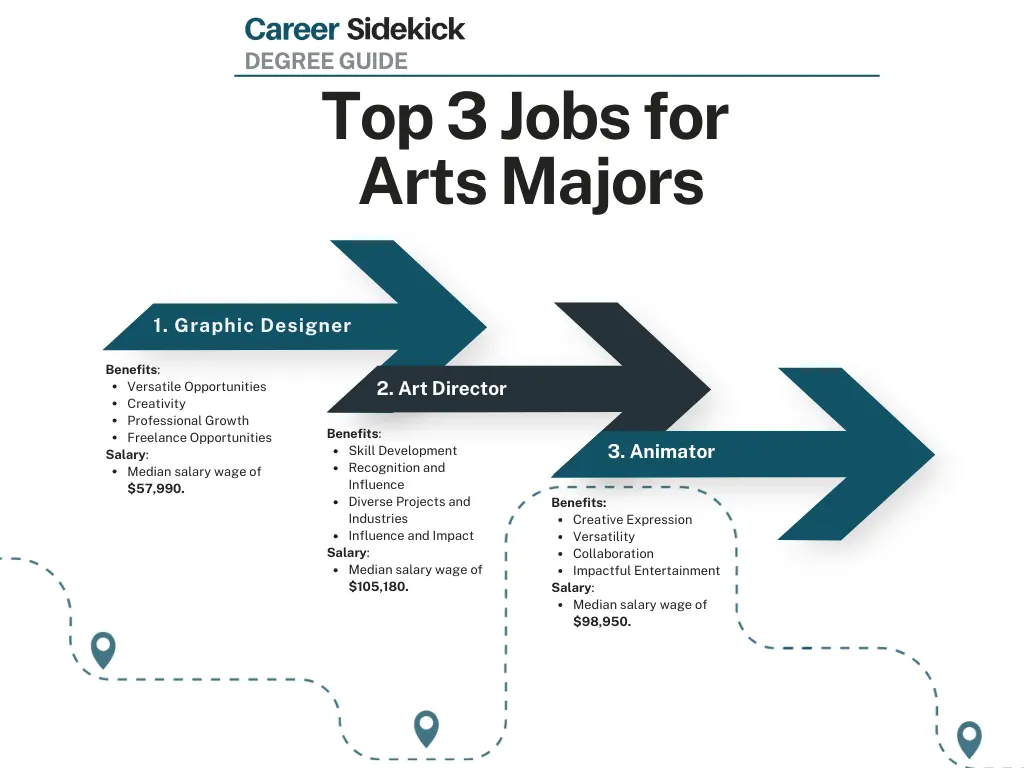
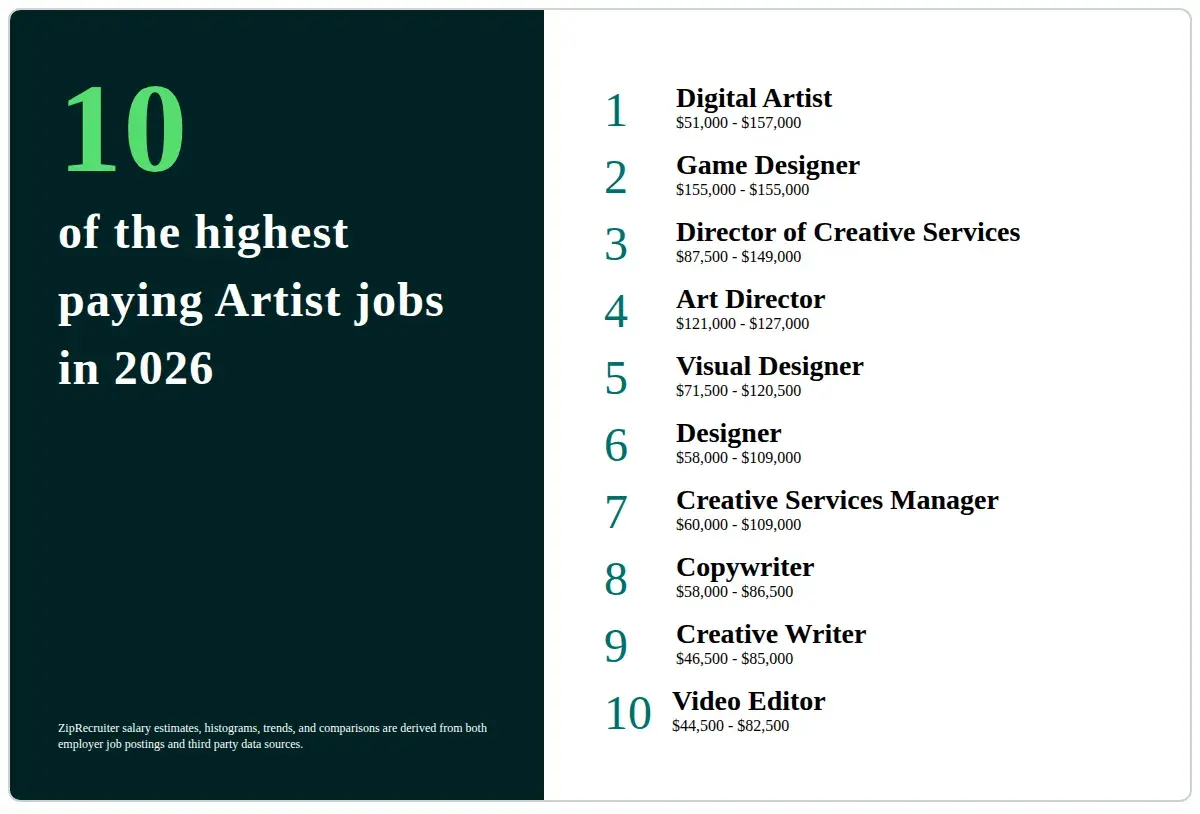
The highest-paying art careers typically involve leadership roles in commercial industries, such as Art Directors, Creative Directors, and UX Design Leads. These positions often command annual salaries ranging from $100,000 to over $160,000. Success in these fields requires a blend of advanced artistic mastery, technical proficiency, and strategic business management skills.
On this page
Which art jobs pay the most?
The most lucrative career paths for artists are found in corporate environments where design directly impacts revenue and user retention. Art Directors, who oversee the visual style of magazines, films, and product packaging, are among the top earners. According to the U.S. Bureau of Labor Statistics, the median annual wage for art directors frequently exceeds $100,000, with those in top-tier advertising firms earning significantly more. Similarly, Creative Directors—who manage entire creative departments—often command salaries well into the six-figure range because they bridge the gap between abstract aesthetics and concrete business goals.
Beyond traditional advertising, the tech sector offers substantial compensation for specialized design roles. User Experience (UX) and User Interface (UI) leads are highly sought after by software companies to ensure digital products are intuitive and visually engaging. Because these roles directly influence how customers interact with a brand, companies are willing to pay a premium for talent that can synthesize complex data into elegant visual systems. These roles often include stock options and performance bonuses, further increasing total compensation packages.
How to start a high-paying art career
Entering a high-paying creative field requires more than just natural talent; it demands a structured approach to skill acquisition and professional networking. Beginners should focus on building a robust portfolio that demonstrates both artistic versatility and technical expertise in industry-standard software. Many successful professionals begin by specializing in a niche—such as motion graphics or industrial design—before expanding their skill sets to include project management and team leadership.
- Pursue a degree or intensive certification in a specialized design field to build a foundational knowledge base.
- Develop a professional portfolio that showcases real-world problem-solving rather than just aesthetic exercises.
- Network actively by attending industry conferences and joining professional organizations like the AIGA.
- Seek internships at large firms to understand the workflow of high-budget creative projects.
- Continuously update your technical skills to stay relevant as industry software and design trends evolve.
How long does it take to reach a high salary?
Reaching a high-paying level in the arts is rarely an overnight process. Most professionals spend five to ten years honing their craft, building a reputation, and climbing the corporate ladder. The initial years are often characterized by lower-paying entry-level positions where artists learn the nuances of client relations and project timelines. As you gain experience, you transition from executing tasks to leading teams, which is the primary catalyst for significant salary growth.
Advancement speed depends heavily on your ability to demonstrate value. If you can prove that your designs increase sales or improve user satisfaction, you will likely be promoted faster than peers who focus solely on artistic output. Networking also plays a critical role in salary progression; being recommended for senior roles by established industry leaders can bypass years of traditional internal promotion cycles. Consistently delivering high-quality work under pressure is the fastest way to signal that you are ready for the responsibilities of a senior creative role.
Common mistakes when pursuing art careers
One of the most frequent errors artists make is neglecting the business side of their profession. Many talented individuals focus exclusively on refining their artistic technique while ignoring the importance of understanding market trends, budget management, and client communication. Without these skills, it is difficult to transition into leadership roles where you are responsible for the financial success of creative projects. Treat your career as a business venture by learning how to articulate the "why" behind your design choices.
Another common mistake is failing to specialize early enough. While having a broad range of skills is helpful, high-paying roles usually demand deep expertise in a specific area. Employers are rarely looking for a generalist who can do a little bit of everything; they are looking for a specialist who can solve a specific, high-stakes problem. Avoid the trap of trying to be a master of every medium. Instead, identify a high-demand industry and focus your efforts on becoming an indispensable expert within that specific niche.
Why high-paying art roles require leadership
The highest salaries in the art world are reserved for those who manage people and processes rather than just pixels or paint. As you move into roles like Art Director or Creative Director, your value shifts from your individual output to your ability to lead a team toward a unified vision. This requires strong communication skills, the ability to provide constructive feedback, and the capacity to manage large-scale budgets. Companies pay for the assurance that a project will be completed on time and to a high standard.
- Ability to translate business requirements into visual concepts.
- Proficiency in managing cross-functional teams including copywriters, developers, and photographers.
- Experience in presenting creative strategies to stakeholders and clients.
- Capability to handle high-pressure deadlines while maintaining team morale.
- Deep understanding of brand identity and how it scales across multiple platforms.
By mastering these leadership competencies, you position yourself as a strategic asset rather than a commodity. This shift in mindset is the single most important factor in moving from a standard design role to an executive-level creative position.
Key facts
- Art directors earn a median annual salary of approximately $116,000, making them one of the highest-paid professionals in the creative sector.
- Senior UX designers often command six-figure salaries by bridging the gap between aesthetic design and technical product functionality.
- Commercial illustrators and fine artists typically work on a freelance basis, meaning income fluctuates significantly based on client contracts and gallery sales.
- Specializing in a high-demand niche, such as medical illustration or industrial design, often leads to higher compensation than generalist roles.
- Building a professional portfolio that demonstrates tangible business results is more critical for salary negotiation than possessing a specific degree.
- Networking within industry-specific organizations, such as the AIGA, provides access to salary benchmarks and hidden job markets for higher-paying roles.
The bottom line
Achieving a high-paying career in the arts requires a strategic blend of creative talent and business acumen. While roles like art direction and UX design offer the most consistent six-figure opportunities, success depends on building a portfolio that demonstrates measurable value to employers. By focusing on high-demand technical skills and professional networking, artists can successfully transition from entry-level positions to lucrative, sustainable roles within the industry.
People also ask
Do I need a master's degree to land a high-paying art job?
Most employers prioritize a strong, relevant portfolio over advanced academic degrees. While a master’s degree can help in academia or specialized design fields, professional experience and proven project outcomes are the primary drivers of high salaries.
How does location affect an artist's salary?
Salaries for creative roles are significantly higher in major metropolitan hubs like New York, San Francisco, and Los Angeles. These cities host the headquarters of major media, tech, and advertising firms that offer competitive compensation packages to attract top talent.
Is it better to be a freelancer or a full-time employee?
Full-time employment offers stability and benefits, while freelancing allows for higher hourly rates and the potential to work with multiple clients simultaneously. Successful freelancers often treat their practice as a business, focusing on high-value contracts rather than small, one-off projects.
What are the most common mistakes when negotiating a creative salary?
A common mistake is failing to research industry standards before an interview. Many artists also neglect to quantify their impact, such as how their design work increased user engagement or drove sales, which is essential for justifying a higher salary.
Can fine artists make as much as corporate designers?
While most fine artists earn less than corporate designers, top-tier artists represented by major galleries can earn significantly more through individual sales. However, this path is highly volatile and lacks the consistent income associated with corporate design roles.
How can I transition from a low-paying art job to a high-paying one?
Focus on upskilling in high-demand technical areas like motion graphics, user experience, or brand strategy. Transitioning often requires updating your portfolio to reflect the type of high-stakes, commercial work that companies are willing to pay a premium to acquire.
This answer was created with the help of AI research tools and reference sources. Spotted an error? Let us know — we correct mistakes quickly. See our editorial policy.