How do you make a vision board?
Short answer
A vision board is a visual representation of your goals, dreams, and intentions, typically created using images, words, and affirmations on a physical or digital board. By assembling meaningful symbols of your desired future, you create a daily reminder that helps maintain focus, motivation, and clarity toward achieving your personal objectives.
On this page
How to prepare for a vision board
Before you begin gathering materials, you must first define your specific goals for the upcoming period. Take time to reflect on various areas of your life, such as career, health, relationships, and personal development. Writing down these intentions helps you filter the vast amount of visual information you will encounter while searching for images. A clear vision acts as a compass, ensuring that every element on your board serves a constructive purpose rather than acting as mere decoration.
Once your goals are set, choose the format that best suits your lifestyle and environment. A physical board allows for a tactile, hands-on experience that many find grounding, while a digital board offers flexibility and ease of updates. Gather your supplies based on your chosen medium to ensure a smooth creative process. Having everything prepared in advance prevents frustration and allows you to focus entirely on the visualization of your aspirations.
- Select a theme or focus area for your board.
- Draft a list of three to five primary goals.
- Choose between a physical poster board or a digital canvas.
- Gather magazines, scissors, glue, or digital design software.
What materials are best for beginners
For those creating a physical board, a sturdy base is essential. Standard poster board, corkboard, or a simple foam core board work well because they are durable and easy to mount on a wall. You will also need a collection of high-quality magazines, newspapers, or printed photographs that resonate with your goals. Scissors, glue sticks, or decorative pushpins are the primary tools required to assemble your collage. These simple items are inexpensive and widely available, making them perfect for your first attempt.
If you prefer a digital approach, several user-friendly platforms allow you to create professional-looking boards without needing graphic design skills. Tools like Canva, Pinterest, or even a simple slide presentation program provide thousands of templates, stock photos, and fonts. These platforms are excellent for beginners because they allow you to experiment with layouts and colors without permanent commitment. Digital boards are also portable, meaning you can keep your vision on your phone or computer desktop for constant access.
- Poster board or foam core for physical displays.
- Old magazines, postcards, or personal photos.
- Adhesive materials like glue sticks or mounting tape.
- Digital platforms like Canva for virtual collages.
How to arrange your vision board
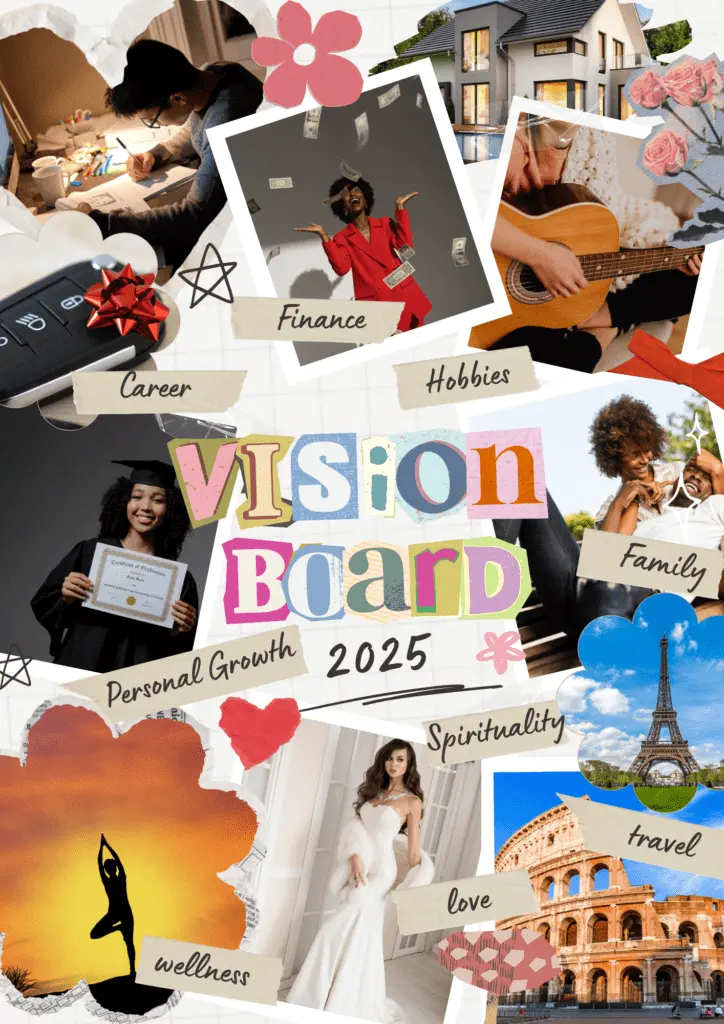
The arrangement of your board should be intuitive and aesthetically pleasing to ensure you want to look at it daily. Start by placing your most significant or "anchor" image in the center of the board. This image should represent your primary focus or a core value you wish to embody. Surround this central piece with smaller images, quotes, and affirmations that support your main goal. Balance the layout by distributing colors and shapes evenly, which helps the eye move naturally across the entire display.
Avoid overcrowding your board, as this can lead to visual clutter and mental fatigue. Leave some "white space" between images to allow each element to stand out clearly. If you are using a digital format, use the layering tools to create depth and interest. Remember that the board is a living document; it should reflect your current state of mind and your evolving ambitions. Do not be afraid to leave empty spots that you can fill as you discover new inspirations throughout the year.
How long does it take to see results
Creating a vision board is not a magic solution that yields instant results, but rather a tool for psychological priming. Studies in behavioral psychology suggest that visual cues can reinforce neural pathways associated with goal-oriented behavior. By repeatedly viewing your board, you are subconsciously reminding your brain to look for opportunities that align with your stated objectives. The timeline for seeing tangible progress varies significantly depending on the complexity of your goals and the consistency of your actions.
Most people find that the benefits of a vision board manifest through improved decision-making and increased motivation over several months. It is not enough to simply create the board; you must engage with it regularly. Spend a few minutes each morning or evening reflecting on the images and what they represent. This habit transforms the board from a static piece of art into an active roadmap. Patience is key, as the board serves to keep you persistent during the slow periods of your journey.
Common mistakes when making a vision board
One frequent error is making a board that is too vague or overly ambitious without a clear path to achievement. If your board is filled with generic images of luxury or success, it may fail to provide the specific motivation needed for daily tasks. Ensure that your images are tied to actionable steps or personal values. Another mistake is hiding your board away in a closet or a room you rarely visit. For the board to be effective, it must be placed in a high-traffic area where you will see it multiple times every single day.
Finally, resist the urge to copy someone else’s vision. A board that reflects another person’s definition of success will not provide the internal drive necessary to overcome challenges. Your board should be deeply personal, reflecting your unique dreams and the specific obstacles you need to clear. If you find that your goals have changed, do not hesitate to update or recreate your board. Flexibility ensures that your visual reminders remain relevant and powerful throughout your pursuit of personal growth and long-term success.
Key facts
- A vision board is a visual representation of your goals, typically created using images, quotes, and affirmations.
- Science suggests that visualization can prime the brain to identify opportunities that align with your stated objectives.
- You can create a physical board using poster board and magazines or a digital board using software like Canva or Pinterest.
- Effective boards focus on specific areas of life, such as career, health, relationships, or personal development.
- Placing your board in a location where you see it daily, such as a home office, reinforces your subconscious focus.
- Regularly updating your board ensures that your visual goals remain relevant as your life circumstances evolve.
The bottom line
Creating a vision board is a practical exercise in intentionality that helps align your daily actions with your long-term ambitions. By curating images and words that resonate with your core values, you transform abstract desires into a tangible roadmap. Whether physical or digital, the key is consistent engagement, ensuring your board serves as a powerful, daily reminder of the future you are actively working to build.
People also ask
Should a vision board be organized by theme or randomly arranged?
Organizing by theme often helps create a clearer mental map of your priorities. However, a collage style can be equally effective if it inspires you emotionally.
How often should I update my vision board?
Most experts recommend reviewing your board every three to six months. This allows you to remove completed goals and add new aspirations as you grow.
Is it better to use real photos or magazine cutouts?
Using personal photos can make your goals feel more attainable and grounded in your reality. Magazine cutouts are excellent for representing abstract concepts or aspirational lifestyle changes.
Can I have more than one vision board?
Yes, many people maintain separate boards for different life domains, such as professional growth and personal fitness. This prevents the boards from becoming cluttered and overwhelming.
What is a common mistake when making a vision board?
A common error is including too many vague images that lack personal meaning. Focus on items that evoke a strong, positive emotional response when you view them.
Do I need to be artistic to create a vision board?
Artistic skill is not required, as the board is a tool for personal clarity rather than an art project. The effectiveness lies in your intent and focus, not the aesthetic quality.
This answer was created with the help of AI research tools and reference sources. Spotted an error? Let us know — we correct mistakes quickly. See our editorial policy.