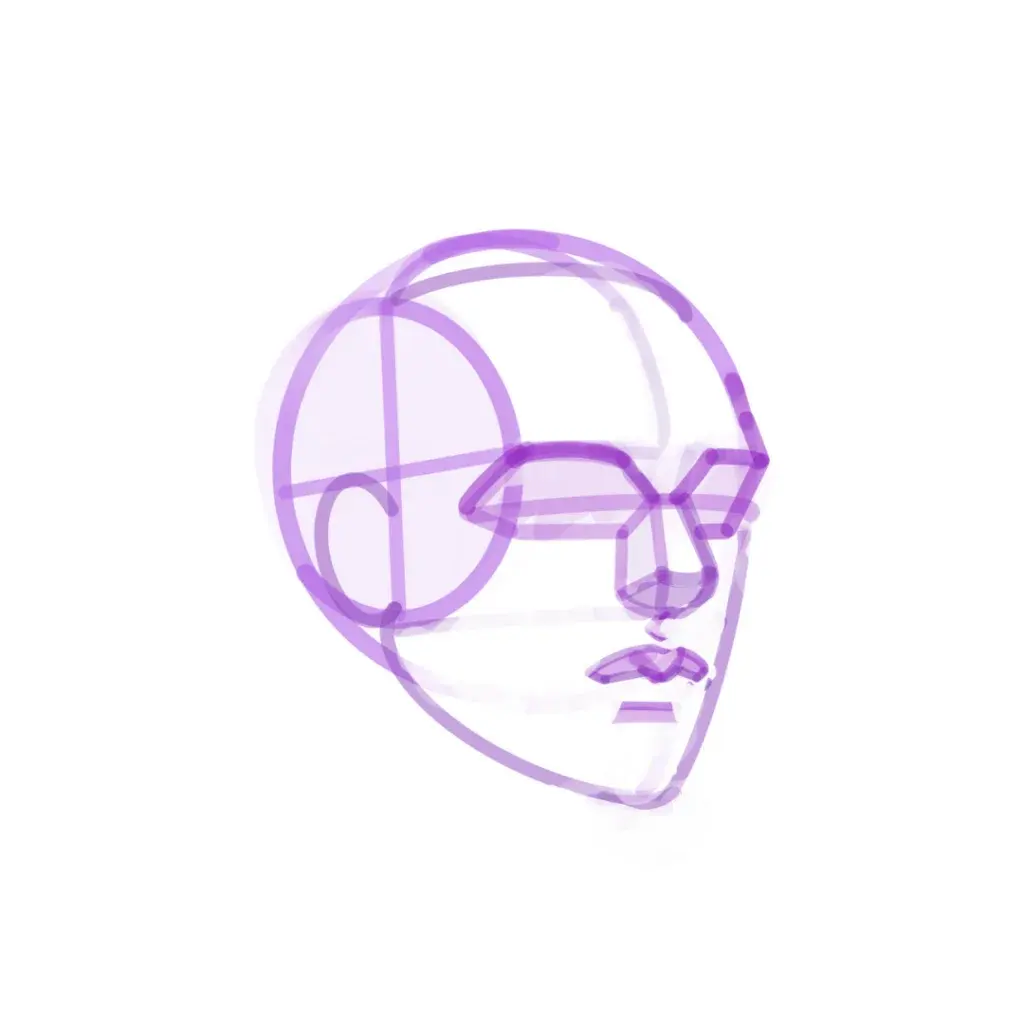
What is the Asaro head?
Short answer
The Asaro head is a three-dimensional reference tool designed to help artists understand lighting and facial structure. Created by sculptor John Asaro, it features a simplified, faceted human head that breaks complex anatomy into flat planes. By observing how light hits these distinct surfaces, artists can accurately render shadows and highlights on portraits.
On this page
What is the Asaro head used for?
The Asaro head serves as a foundational guide for painters, sculptors, and digital artists who struggle with the complexities of human anatomy. By simplifying the organic, curved surfaces of a face into a series of geometric planes, it allows artists to visualize how light behaves on a three-dimensional form. This model acts as a bridge between abstract anatomical knowledge and the practical application of shading.
When an artist understands the orientation of these planes, they can predict exactly where light will strike and where shadows will fall, regardless of the angle of the light source. This is particularly useful for portraiture, where subtle shifts in light can change the perceived expression or depth of a face. Instead of guessing how to render a cheekbone or a brow ridge, the artist can look at the corresponding facet on the model to see the correct value transition.
How to use the Asaro head for drawing
To effectively use the model, place it under a single, strong light source to create clear, high-contrast shadows. This setup highlights the difference between light, mid-tone, and shadow planes, making the structure easier to analyze. As you draw, focus on identifying which plane of the head you are currently depicting and match the value of your mark to the visual intensity of that plane.
- Position the model at eye level to maintain accurate proportions.
- Set up a single desk lamp to one side to create distinct light and shadow zones.
- Sketch the overall silhouette first, then map out the major planes of the forehead, nose, and jaw.
- Apply shading by treating each facet as a single, uniform value.
- Soften transitions only after the primary structure is established.
By following these steps, you avoid the common trap of over-blending your work too early. Keeping the planes distinct helps maintain the structural integrity of the face throughout the drawing process.
Why do artists use the Asaro head?
The primary benefit of using this tool is the rapid development of spatial awareness. Many beginners struggle to represent the human head because they focus too much on texture and detail before establishing the underlying form. The Asaro head forces the artist to prioritize the "big picture" of light and shadow, which is essential for creating a convincing sense of volume on a flat canvas.
Furthermore, the model is invaluable for learning how to handle complex lighting scenarios, such as rim lighting or extreme under-lighting. Because the planes are fixed, you can rotate the model to see how the light interacts with the nose, eye sockets, and chin from any perspective. This consistency provides a reliable reference that helps artists build a mental library of facial structures, eventually reducing their reliance on the physical model altogether.
Common mistakes when using the Asaro head
One of the most frequent errors is treating the model as a literal map rather than a conceptual guide. Beginners often attempt to copy the facets exactly as they appear, resulting in a drawing that looks robotic or overly rigid. It is important to remember that the Asaro head is an abstraction; in real life, human skin is softer and features more subtle transitions. Use the model to understand the direction of the light, but soften the edges to achieve a more naturalistic look.
Another common mistake involves ignoring the light source's distance. If the light is too close, the shadows will be distorted, making the planes look unnatural. To avoid this, ensure your light source is at least two to three feet away from the model. This creates more parallel light rays, which provides a clearer read of the planes and prevents the shadows from becoming overly exaggerated or messy.
Where to find an Asaro head model
Today, artists have several options for acquiring this tool, ranging from physical resin casts to digital 3D files. Physical models are typically made from white or neutral-toned resin, which is ideal for studying light because it does not have distracting colors or textures. Many artists prefer the physical version because it can be held and manipulated, providing a tactile experience that helps reinforce the understanding of depth and volume.
- Purchase a high-quality resin cast from reputable fine art supply stores.
- Download 3D files to view the model within digital sculpting software like ZBrush or Blender.
- Utilize free online 3D viewers that allow you to rotate the model in a web browser.
- Look for "mini" versions if you have limited desk space or need a portable reference.
Regardless of the format you choose, the key is consistent practice. By regularly referring to the model, you will gradually internalize the structure of the human face, allowing you to draw portraits with greater confidence and anatomical accuracy.
Key facts
- The Asaro head is a faceted geometric model of a human head used by artists to study light, shadow, and form.
- It was created in 1976 by American sculptor and painter John Asaro to help students visualize how light falls on complex surfaces.
- The model divides the human face into 24 distinct, flat planes that represent the major structural shifts of the anatomy.
- Artists use the model as a reference to simplify the organic curves of a face into manageable, logical planes for drawing or painting.
- The standard model is typically cast in neutral gray resin to ensure that shadows are clearly visible without being distorted by color.
- A common mistake is treating the planes as rigid edges; students should use them to map the underlying structure rather than tracing them as outlines.
The bottom line
The Asaro head is an essential educational tool that transforms the complex, organic surface of the human face into a series of simplified geometric planes. By mastering these 24 planes, artists gain a deeper understanding of how light and shadow define volume. It serves as a bridge between anatomical study and artistic interpretation, allowing creators to build convincing, three-dimensional forms in any medium they choose.
People also ask
Why do artists use the Asaro head instead of a real skull?
Real anatomy is often too complex for beginners to simplify into light and shadow. The Asaro head provides a standardized, geometric guide that clarifies exactly where a highlight ends and a shadow begins.
Can I use the Asaro head to learn portrait proportions?
While the model is excellent for lighting, it is stylized rather than anatomically perfect. It is best used for mastering value and form rather than learning precise facial measurements or likeness.
Is the Asaro head only for oil painters?
No, it is a universal tool used by digital painters, traditional sculptors, and animators. Anyone working in a medium that requires rendering three-dimensional volume on a two-dimensional surface will find it helpful.
How should I light the model for practice?
Place a single, strong light source to one side of the model to create clear, high-contrast shadows. This setup helps you see how light transitions across the planes, which is the primary purpose of the tool.
Does the Asaro head come in different sizes?
Yes, it is available in various sizes ranging from small desk-top versions to larger, life-sized busts. Smaller versions are portable, while larger ones are better for detailed study of specific facial features.
What is the most common mistake when using the model?
Beginners often try to copy the planes exactly as they appear in a drawing. Instead, use the model to understand the logic of the planes so you can apply that same structural thinking to any face you draw.
This answer was created with the help of AI research tools and reference sources. Spotted an error? Let us know — we correct mistakes quickly. See our editorial policy.