What is the Reilly method?
Short answer
The Reilly method is a systematic approach to portrait drawing developed by Frank Reilly at the Art Students League of New York. It uses a structured framework of anatomical abstractions, including specific rhythmic lines and proportional grids, to help artists accurately map the human head’s features and planes during the sketching process.
On this page
What is the Reilly method used for?
The Reilly method serves as a foundational roadmap for artists struggling with the complexities of human anatomy. By breaking the head down into a series of interconnected rhythms and geometric shapes, it provides a reliable structure that ensures consistent proportions. This technique is particularly effective for students learning to construct heads from imagination or complex angles, as it moves beyond simple observation to a deep understanding of structural relationships.
The core of the method relies on "rhythms," which are continuous lines that connect facial features and skull landmarks. These lines act as a guide for placement, ensuring that the eyes, nose, and mouth sit correctly relative to the jawline and brow. Rather than focusing on individual details like eyelashes or skin texture, the artist builds a skeletal framework that supports the entire likeness. This logical progression prevents the common issue of "feature drifting," where individual parts of the face become disconnected or misaligned during the drawing process.
How to use the Reilly method step-by-step
To begin using this technique, you must first establish the basic proportions of the skull. The process is highly methodical and requires patience to master the initial mapping phase.
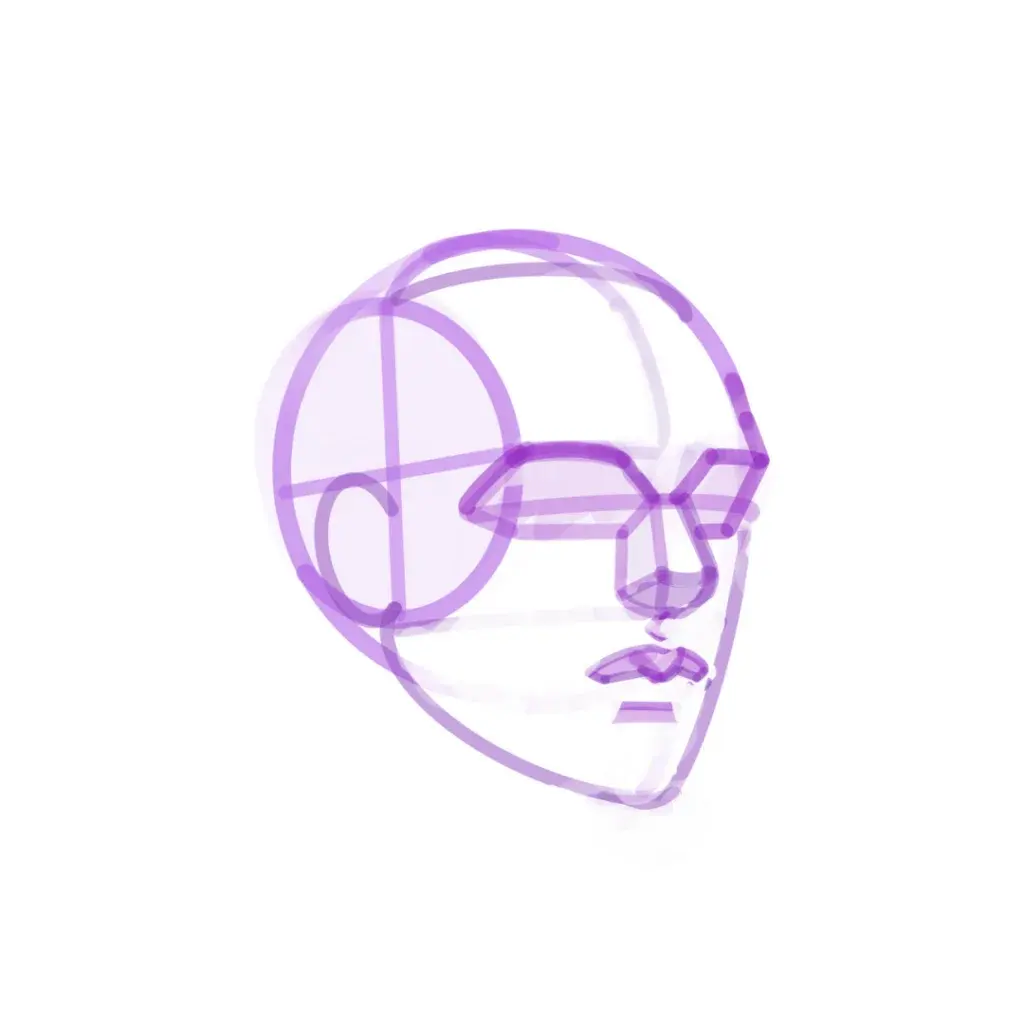
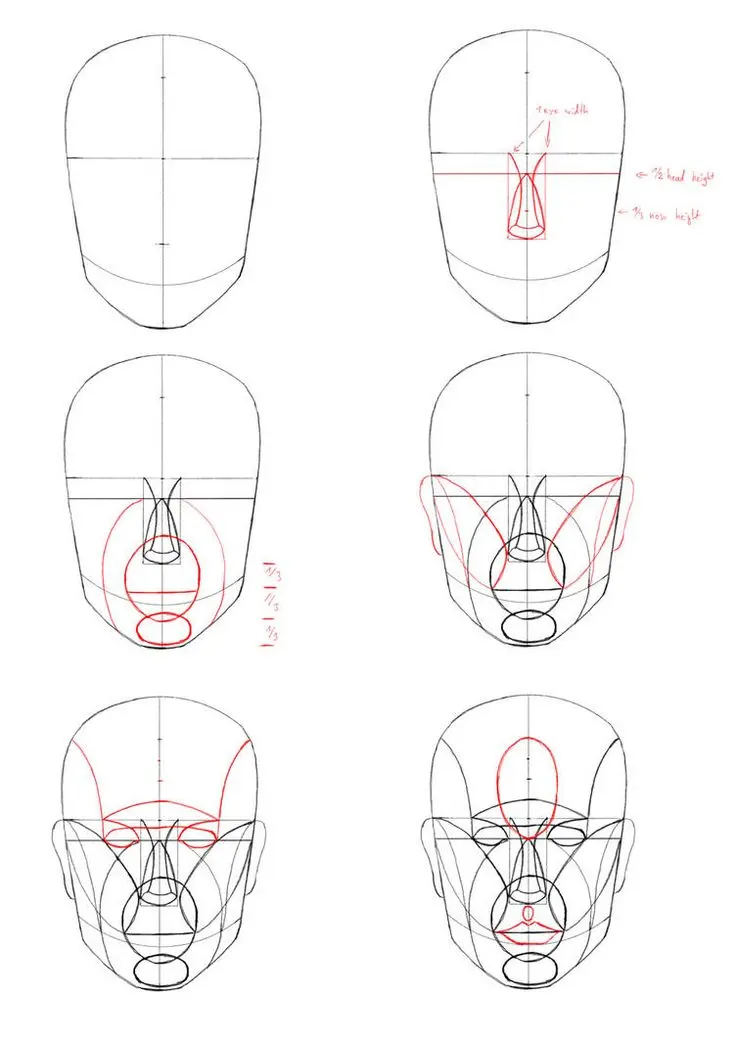
- Draw a circle to represent the cranium and add a vertical line for the center of the face.
- Mark the brow line, the base of the nose, and the chin to establish the primary thirds of the face.
- Map the "rhythm lines" that sweep from the temples down to the jaw and across the bridge of the nose.
- Use the "Reilly grid"—a series of pre-defined arcs—to locate the eyes and the corners of the mouth.
- Refine the shapes by carving out the planes of the cheeks and the structure of the chin based on these established lines.
By following these steps, you create a rigid scaffold that dictates exactly where each feature belongs. This eliminates the guesswork that often leads to distorted portraits, allowing the artist to focus on shading and expression once the structural integrity is confirmed.
Best tools for learning the Reilly method
Learning this method requires minimal equipment, but consistency in your materials will help you internalize the rhythms more quickly. Most instructors recommend starting with a standard graphite pencil, such as an HB or 2B, on smooth newsprint or drawing paper. The goal is to make the construction lines light and erasable, as they are meant to be guides that disappear into the final rendering.
- A kneaded eraser: Essential for lifting away heavy construction lines without damaging the paper surface.
- A long-lead pencil sharpener: Allows for a precise point to map out delicate rhythm lines.
- A reference mannequin or skull model: Provides a three-dimensional understanding of the planes the Reilly method maps.
- A sketchbook with a grid or light guide dots: Helps in maintaining the vertical and horizontal alignment required for the initial head structure.
Using these tools, you can practice the rhythmic arcs repeatedly until they become muscle memory. The simplicity of the required tools emphasizes that the method is about mental organization rather than complex technical drawing equipment.
Why the Reilly method is effective for artists
The primary strength of the Reilly method is its ability to standardize the human face into a repeatable pattern. Many artists struggle with the "uncanny valley" or anatomical inaccuracies because they try to draw what they see without understanding the underlying structural logic. By internalizing these rhythms, an artist can construct a head that feels solid and three-dimensional, even when the reference material is poor or non-existent.
Furthermore, the method teaches the importance of the "planes of the head." Instead of treating the face as a flat surface, the Reilly method encourages the artist to think of the skull as a series of angled facets. This transition from two-dimensional mapping to three-dimensional volume is what separates amateur sketches from professional-grade portraits. It provides a bridge between pure observation and constructive drawing, giving students the confidence to manipulate light and shadow effectively because they know exactly how the form turns in space.
Common mistakes when using the Reilly method
One of the most frequent errors beginners make is adhering too rigidly to the grid without adjusting for individual facial characteristics. While the Reilly method provides a universal template, it is meant to be a starting point, not a restrictive cage. If you fail to observe the unique nuances of your subject—such as a particularly high forehead or a narrow jaw—the drawing will look like a generic mannequin rather than a specific person.
Another common pitfall is spending too much time on the construction lines and failing to move into the rendering phase. The grid is a means to an end, not the final product. Artists often get caught in "analysis paralysis," obsessing over the perfect placement of the rhythm lines while neglecting the gesture and personality of the subject. To avoid this, set a timer for your construction phase to ensure you move forward with the drawing. Remember that the Reilly method is a tool to facilitate your artistic vision, and it should never overshadow the creative intent behind your portrait.
Key facts
- The Reilly method is a systematic approach to drawing the human head based on abstract geometric forms rather than individual features.
- It was developed by American illustrator Frank Reilly while he was teaching at the Art Students League of New York in the mid-20th century.
- The technique relies on a specific set of proportions, often referred to as the "Reilly Rhythms," to map the skull and facial features.
- Practitioners use a series of intersecting arcs and lines to establish the tilt, perspective, and placement of the eyes, nose, and mouth.
- The method is highly valued for its ability to help artists maintain consistency and structural accuracy when drawing figures from imagination.
- A common mistake is focusing on surface details like wrinkles or eyelashes before the foundational geometric structure is firmly established.
The bottom line
The Reilly method is a powerful structural tool that transforms the complex anatomy of the human head into a series of logical, geometric rhythms. By mastering these foundational arcs, artists can achieve consistent proportions and dynamic perspectives in their work. It serves as an essential bridge between rigid anatomical study and creative expression, allowing for greater speed and precision when drawing figures from memory or imagination.
People also ask
Is the Reilly method only for portraiture?
While primarily designed for the human head, the underlying principles of rhythmic flow and structural proportion can be adapted to the entire human figure. Many artists use these concepts to ensure anatomical consistency across various poses.
Do I need to be an expert in anatomy to use this method?
You do not need a medical degree, but a basic understanding of skull structure is highly beneficial. The method simplifies complex anatomy into manageable shapes, making it accessible for intermediate students.
How long does it take to master the Reilly method?
Mastery depends on consistent practice, but most students can grasp the basic construction lines within a few weeks. Dedicated daily sketching of the "Reilly head" will significantly improve your speed and accuracy over time.
Can this method be used for digital painting?
Yes, the Reilly method is frequently used in digital art for character design and concept art. Its geometric nature translates perfectly to digital layers, allowing artists to build a solid foundation before adding color and light.
What is the most common mistake beginners make?
Beginners often try to draw the features too early, ignoring the structural arcs that define the head's tilt. Always prioritize the "rhythms" of the skull before placing the eyes or nose.
Does the Reilly method account for different facial types?
The method provides a neutral, idealized starting point that can be adjusted. Once the basic structure is drawn, you can easily modify the proportions to create unique character designs or specific likenesses.
This answer was created with the help of AI research tools and reference sources. Spotted an error? Let us know — we correct mistakes quickly. See our editorial policy.