What is shibori?
Short answer
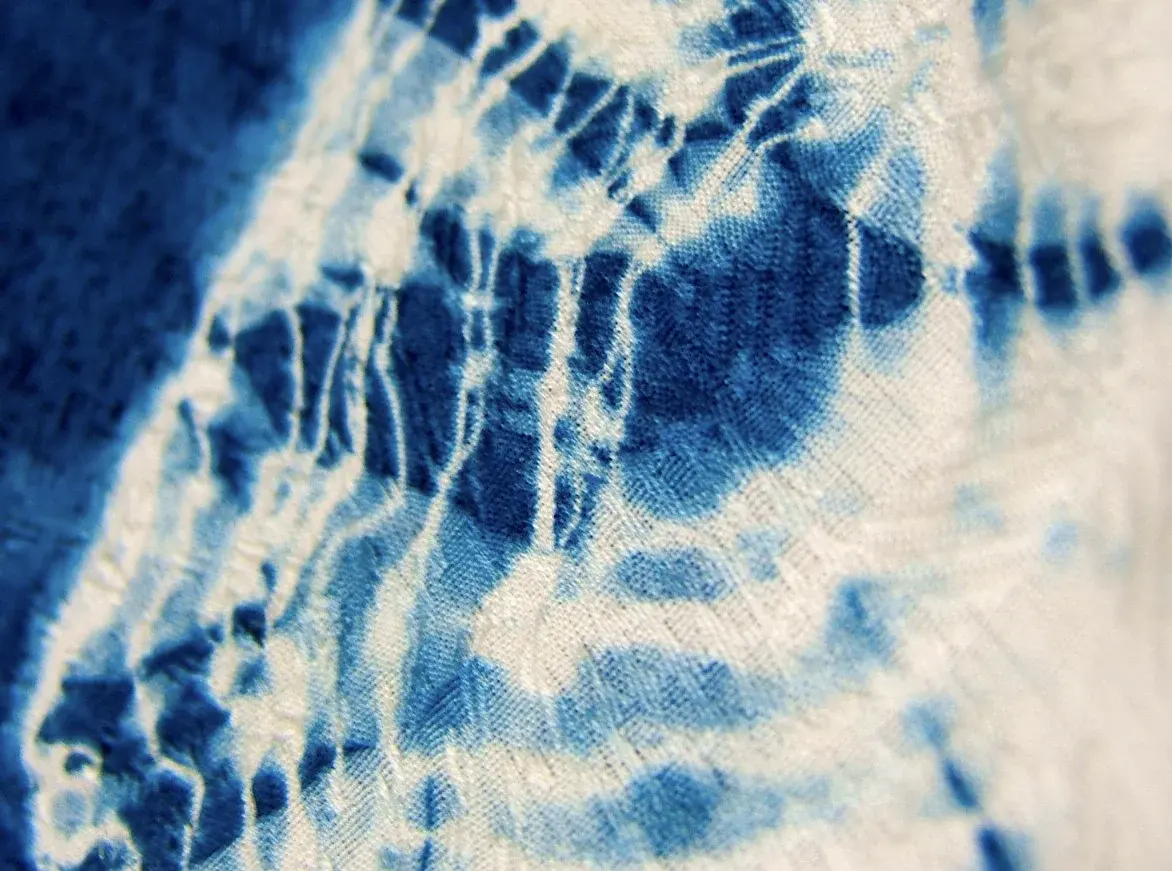
Shibori is a traditional Japanese manual resist-dyeing technique that involves binding, stitching, folding, twisting, or compressing fabric before immersing it in dye. These methods prevent the dye from reaching certain areas, resulting in intricate, organic patterns. Primarily associated with indigo, shibori creates unique, textured designs that define Japanese textile artistry.
On this page
What are the different types of shibori?
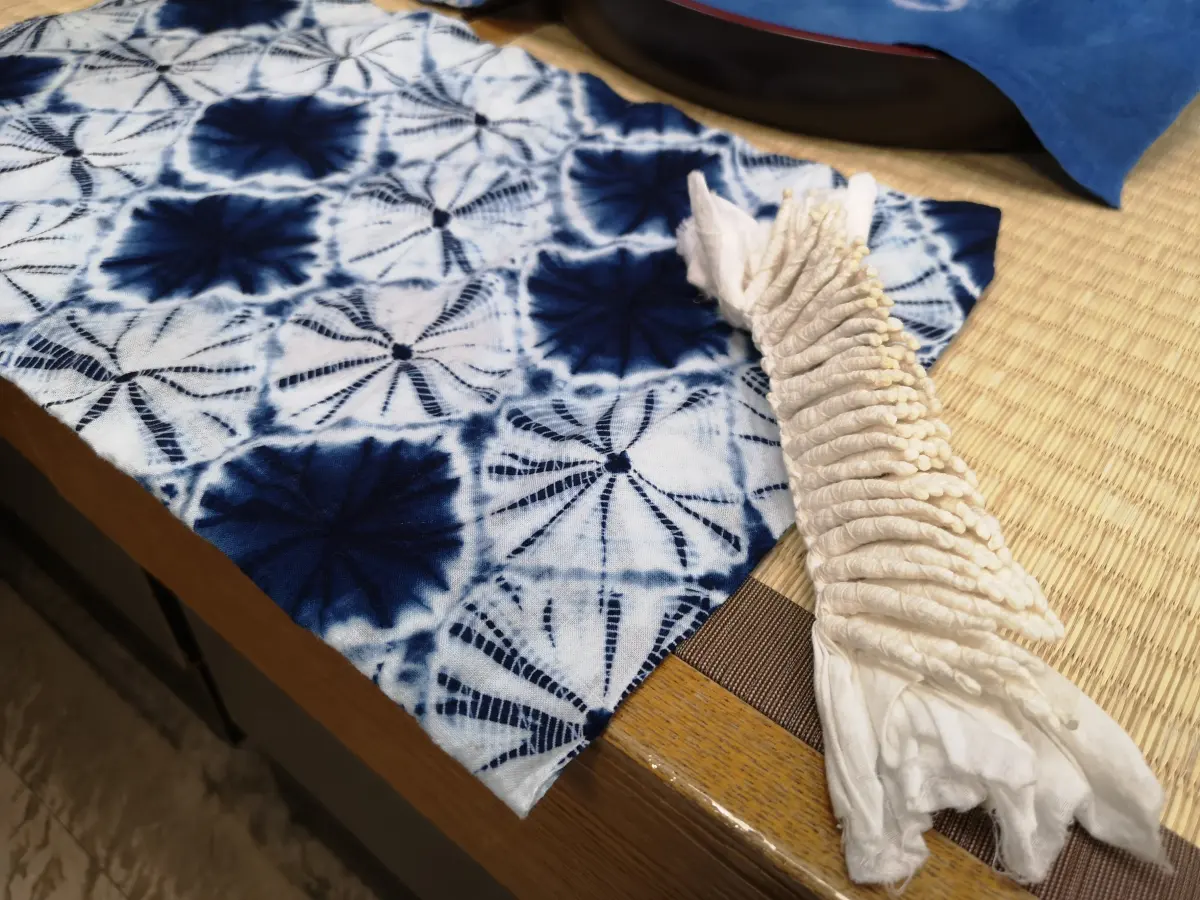
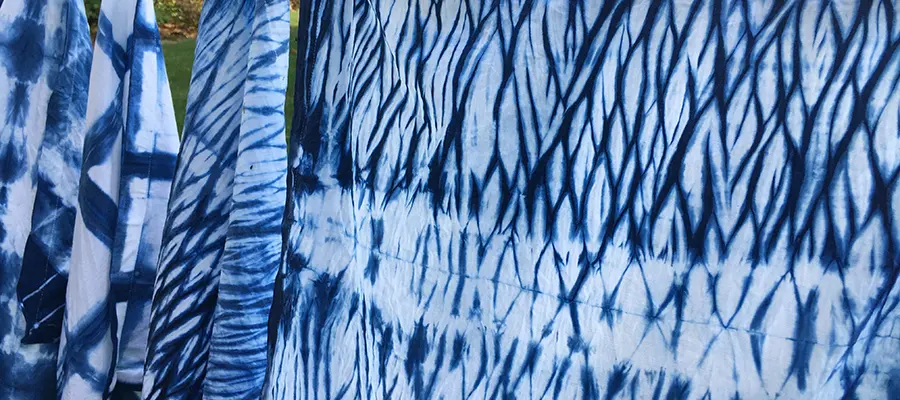
Shibori encompasses a wide range of techniques, each named for the specific way the fabric is manipulated to resist the dye. The most common methods include Kanoko, Miura, Kumo, Nui, and Arashi. Each produces a distinct visual effect, ranging from soft, cloud-like patterns to sharp, geometric lines.
- Kanoko: Fabric is bound with thread to create circular patterns, similar to Western tie-dye.
- Miura: A loop-binding technique where the fabric is plucked and secured with a thread, creating a water-like ripple effect.
- Kumo: This involves pleating and binding the fabric in sections to produce a web-like design.
- Nui: A stitching technique where running stitches are sewn into the cloth and pulled tight to create precise, defined patterns.
- Arashi: Known as "pole-wrapping," the fabric is wrapped diagonally around a pole and compressed, resulting in dramatic, slanted stripes.
These methods have been refined over centuries in Japan, particularly in the Arimatsu and Narumi regions. While modern variations exist, these traditional forms remain the gold standard for achieving authentic, high-quality textile designs.
How do you perform basic shibori?
Creating shibori at home requires only a few basic supplies: natural fabric, dye, thread, and binding tools. Cotton, silk, and linen are the best choices because they absorb dye effectively and hold creases well. Synthetic fabrics often fail to take the dye properly, leading to disappointing results.
- Prepare your fabric by washing it to remove any finishes or oils that might prevent dye absorption.
- Choose your desired pattern and manipulate the fabric using binding, stitching, or folding techniques.
- Secure the fabric tightly with thread, rubber bands, or clamps to ensure the dye cannot penetrate the resisted areas.
- Immerse the prepared fabric into the dye bath, ensuring it is fully submerged for the desired amount of time.
- Remove the fabric, rinse it in cold water, and carefully remove all bindings to reveal the pattern.
Allow the fabric to air dry completely before washing it again to set the color. The intensity of the pattern depends heavily on how tightly the bindings are applied during the preparation phase.
Why is indigo used in shibori?
Indigo dye has been the traditional partner of shibori for centuries, primarily due to its unique chemical properties and historical availability in Japan. Indigo is a vat dye, meaning it does not require heat to bond with fibers. This makes it ideal for shibori, as the delicate bindings used to create patterns would likely unravel or be damaged in a hot dye bath.
Furthermore, indigo oxidizes when exposed to air, changing from a yellowish-green to a deep, vibrant blue. This process allows the artist to build up layers of color by dipping the fabric multiple times. Each dip deepens the blue, creating a beautiful contrast between the dark dyed areas and the white resist patterns. The combination of the organic, unpredictable nature of shibori and the depth of indigo creates a visual harmony that is difficult to replicate with synthetic, single-dip dyes.
Common mistakes when doing shibori
One of the most frequent errors beginners make is failing to secure bindings tightly enough. If the thread or rubber bands are loose, the dye will seep into the resisted areas, resulting in blurry or muddy patterns instead of crisp lines. Always use strong, non-elastic thread for stitching techniques to ensure the tension remains constant throughout the dyeing process.
Another common mistake involves rushing the rinsing stage. If the fabric is not rinsed thoroughly in cold water before the bindings are removed, excess dye can bleed into the white areas, ruining the contrast. Additionally, neglecting to pre-wash the fabric can lead to uneven coloring, as factory-applied chemicals often repel dye. Finally, do not overcrowd the dye bath. If the fabric is packed too tightly in the container, the dye cannot circulate evenly, leading to patchy, inconsistent results. Take your time during the preparation phase to ensure the best possible outcome for your textile project.
How long does it take to learn shibori?
Learning the fundamentals of shibori can happen in a single afternoon, but mastering the intricate techniques requires years of practice. Beginners can start with simple folding and binding methods to see immediate results. As you gain confidence, you can move on to more complex stitching patterns like Nui, which requires significant patience and attention to detail.
- Beginners: Focus on Kanoko and simple folding techniques to understand the basics of resist.
- Intermediate: Experiment with Arashi pole-wrapping and basic Nui stitching to create more structured designs.
- Advanced: Develop original patterns and master the nuances of indigo vat maintenance and multi-layered dyeing.
The beauty of shibori lies in its imperfection. Even experienced artists often find that the process yields surprising, unique results every time. By practicing regularly and documenting your experiments, you will develop a deeper understanding of how different fabrics and bindings interact with dye. With dedication, you can transform simple pieces of cloth into sophisticated works of art that honor this ancient tradition.
Key facts
- Shibori is a Japanese manual resist-dyeing technique that dates back to the 8th century.
- The word comes from the Japanese verb shiboru, which means to wring, squeeze, or press.
- Common methods include kanoko (binding), itajime (clamping), and arashi (pole-wrapping).
- Indigo is the traditional dye used for shibori, though modern practitioners use various synthetic and natural pigments.
- The fabric's texture is as important as the pattern, as the resist method creates a three-dimensional, puckered effect.
- When binding fabric, ensure the thread is pulled extremely tight to prevent the dye from bleeding into the protected areas.
The bottom line
Shibori is a sophisticated Japanese textile art that transforms plain fabric into intricate, textured patterns through folding, binding, and clamping. By mastering the tension of your ties and the placement of your resists, you can create professional-grade designs. Whether you are using traditional indigo or modern pigments, the beauty of shibori lies in the balance between the artist's deliberate manipulation and the organic, unpredictable nature of the dye.
People also ask
Is shibori the same thing as tie-dye?
While both involve resist-dyeing, shibori is a more structured, traditional Japanese craft that focuses on intricate geometric patterns and fabric manipulation. Tie-dye typically relies on simpler knots and vibrant, multi-colored applications compared to the monochromatic precision of classic shibori.
What kind of fabric works best for shibori?
Natural fibers like cotton, silk, linen, and hemp are ideal because they absorb dye effectively and hold creases well. Synthetic fabrics like polyester often fail to retain the distinctive puckered texture created by the binding process.
How do I prevent dye from leaking into the resist areas?
The most common mistake is using loose tension when binding or clamping the fabric. Use strong, non-stretchy string and ensure your knots are secure to create a tight seal that prevents dye penetration.
Can I reuse the materials used for binding?
Yes, cotton string and wooden blocks used for clamping can be reused multiple times. Simply rinse them thoroughly after the dyeing process and allow them to dry completely before storing them for future projects.
Does shibori require a special dye vat?
Traditional indigo dyeing requires a chemical reduction vat to make the dye soluble in water. If you are a beginner, you can start with simpler fiber-reactive dyes or pre-reduced indigo kits that are easier to manage at home.
How long does the fabric need to stay in the dye?
The duration depends on the desired depth of color and the type of dye used. For indigo, dipping the fabric for a few minutes and allowing it to oxidize in the air repeatedly will result in a deeper, richer blue.
This answer was created with the help of AI research tools and reference sources. Spotted an error? Let us know — we correct mistakes quickly. See our editorial policy.