Where did Santa Claus come from?
Short answer
Santa Claus originated from the historical Saint Nicholas, a 4th-century Greek bishop in Myra, modern-day Turkey, known for his generosity. Over centuries, his legend merged with European folklore, Dutch traditions of Sinterklaas, and 19th-century American literary contributions, eventually evolving into the modern, gift-giving figure celebrated globally during the Christmas season.
On this page
Who was the real Saint Nicholas?
The origins of Santa Claus trace back to Saint Nicholas, a Christian bishop who lived in the city of Myra during the 4th century. Historical records indicate he was born around 270 CE in Patara, Lycia, and became famous for his extreme piety and secret acts of charity. Legend holds that he provided dowries for three poor sisters by dropping bags of gold through their window, which established his reputation as a protector of children and the poor.
Following his death on December 6, 343 CE, the date became a feast day celebrated across Europe. Throughout the Middle Ages, Nicholas remained one of the most popular saints in Christendom. His iconography typically depicted him in bishop’s robes, often carrying a staff or a book of gospels. While he was a serious historical figure, his legacy of anonymous gift-giving served as the foundational archetype for the modern Santa Claus.
How did Sinterklaas influence Santa Claus?
The transition from Saint Nicholas to Santa Claus was heavily influenced by Dutch settlers who arrived in the American colonies during the 17th century. In the Netherlands, the figure known as Sinterklaas—a phonetic derivation of Saint Nicholas—remained a central part of December traditions. Dutch children would leave their shoes out on the eve of his feast day, hoping to find them filled with sweets or small gifts the next morning.
When these traditions merged with English customs in North America, the name Sinterklaas was Anglicized to "Santa Claus." This cultural synthesis helped shift the focus of the saint from a religious icon to a more secular, folkloric character. Key elements of this transition included:
- The transformation of the bishop’s miter into a fur-trimmed hat.
- The shift from a feast day on December 6 to the celebration of Christmas.
- The adoption of a horse or sleigh as the primary mode of transportation.
Why did American literature change Santa's image?
The modern image of Santa Claus was significantly shaped by 19th-century American authors and illustrators who reimagined the saint for a new audience. In 1823, the poem "A Visit from St. Nicholas," commonly known as "The Night Before Christmas," introduced the idea of a jolly, rotund figure who traveled by a miniature sleigh pulled by eight reindeer. This work solidified the image of Santa as a magical being who enters homes through chimneys.
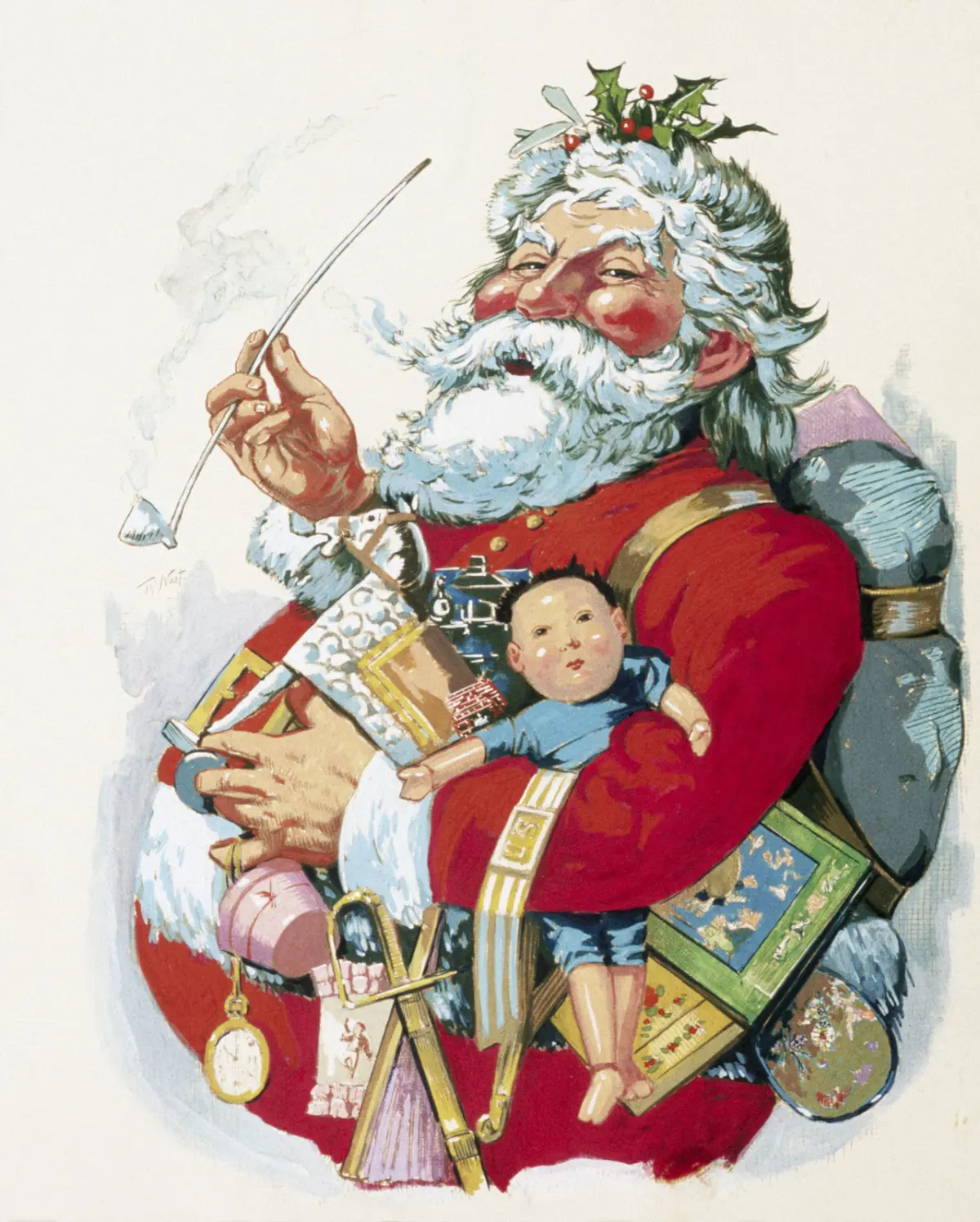
Later, in the 1860s, political cartoonist Thomas Nast began drawing Santa for Harper’s Weekly. Nast gave Santa a permanent home at the North Pole, a workshop for toy production, and a "naughty or nice" list to track the behavior of children. These additions provided the framework for the modern mythos. By the end of the century, Santa Claus was firmly established as a commercialized, benevolent grandfather figure who embodied the spirit of holiday generosity.
How do different cultures celebrate the gift-giver?
While the American version of Santa Claus is globally recognized, many cultures retain their own unique variations of the gift-giving tradition. These figures often reflect local history, climate, and religious customs, creating a diverse landscape of holiday folklore. Understanding these differences helps clarify that Santa is not a singular, static entity but a collection of regional traditions.
Common variations include:
- Father Christmas: A traditional British figure who represents the personification of holiday cheer rather than a specific saint.
- Christkind: A sprite-like child, often depicted as an angel, who brings gifts in parts of Germany, Austria, and Switzerland.
- Ded Moroz: Known as "Grandfather Frost" in Slavic cultures, he is often accompanied by his granddaughter, Snegurochka, and delivers gifts on New Year's Eve.
- La Befana: An elderly woman in Italian folklore who delivers candy and presents to children on the eve of the Epiphany.
Common mistakes when researching Santa Claus history
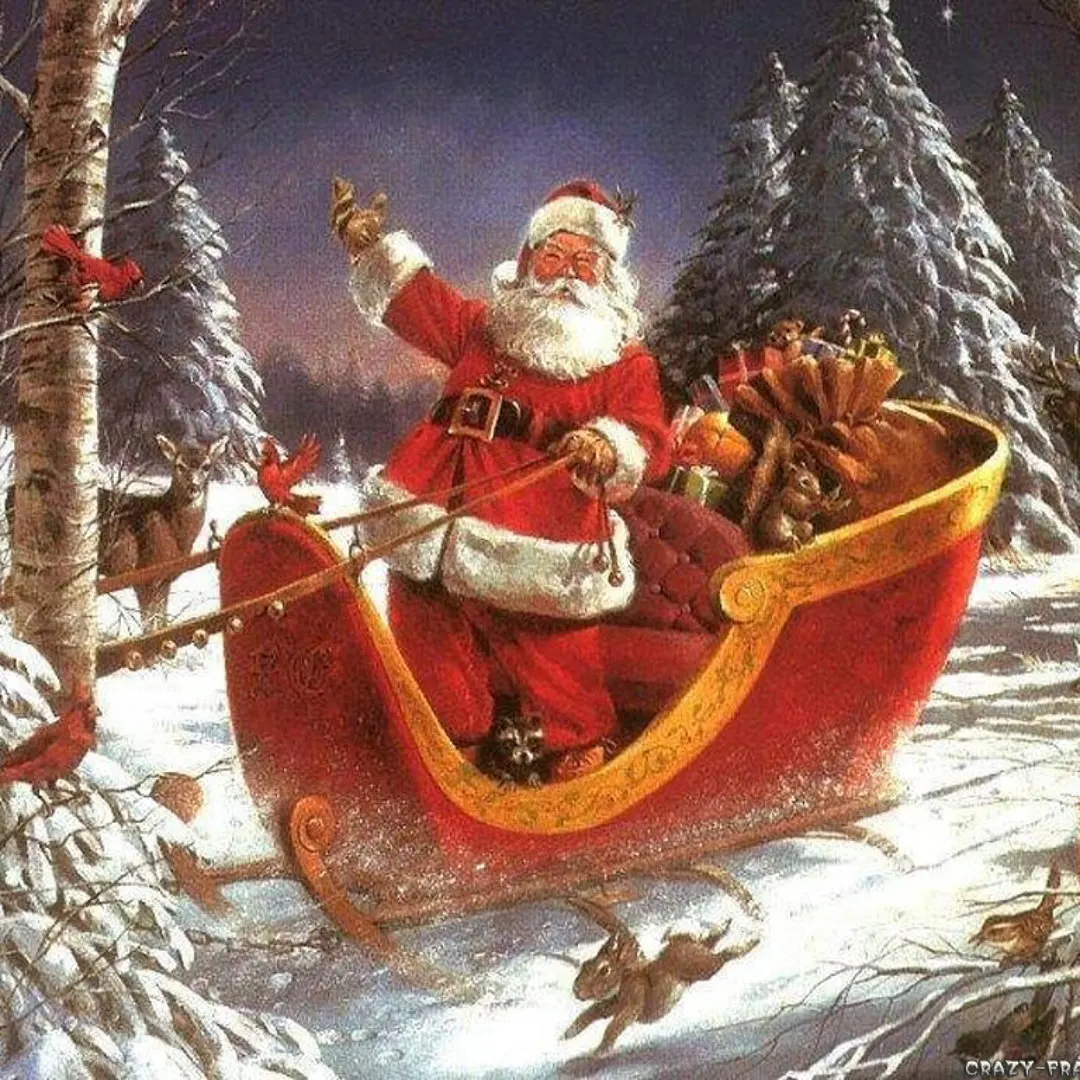
A frequent error is assuming that Santa Claus was a creation of modern advertising, specifically the Coca-Cola Company. While Coca-Cola’s advertisements in the 1930s by artist Haddon Sundblom popularized the specific look of the red-suited, white-bearded Santa, they did not invent the character. The visual identity of Santa had already been established in literature and illustrations for nearly a century before these advertisements began.
Another mistake is conflating the historical Saint Nicholas with the modern Santa Claus without acknowledging the centuries of cultural evolution in between. To understand the history accurately, researchers should:
- Distinguish between the 4th-century bishop and the 19th-century literary character.
- Recognize that the "North Pole" location was a 19th-century invention, not part of the original saint's legend.
- Acknowledge that the red suit was a gradual evolution from various European depictions of winter spirits and bishops.
By avoiding these oversimplifications, one gains a clearer perspective on how a historical saint transformed into a global icon of winter celebration.
Key facts
- The historical figure behind Santa Claus is Saint Nicholas, a 4th-century Greek bishop from Myra, located in modern-day Turkey.
- Saint Nicholas was famous for his secret gift-giving, most notably providing dowries for three poor sisters to prevent them from being sold into servitude.
- The Dutch settlers who arrived in New York brought the tradition of "Sinterklaas," which phonetically evolved into the American name "Santa Claus."
- Washington Irving’s 1809 satirical work, A History of New York, helped popularize the image of Saint Nicholas as a patron saint of New York.
- Clement Clarke Moore’s 1823 poem, "A Visit from St. Nicholas," established the modern iconography of a sleigh pulled by eight reindeer.
- Thomas Nast, a political cartoonist in the late 19th century, created the definitive visual image of Santa Claus as a jolly man in a red suit living at the North Pole.
The bottom line
Santa Claus is a cultural synthesis of historical, religious, and literary influences. Originating from the charitable acts of the 4th-century Saint Nicholas, the figure was transformed by Dutch folklore, 19th-century American poetry, and political illustration. Today, Santa represents a secular symbol of generosity and wonder, bridging ancient traditions with modern holiday customs to create a unified, global icon of childhood joy and seasonal celebration.
People also ask
Why does Santa Claus wear a red suit?
While early depictions showed him in various colors, the modern red suit was solidified by Thomas Nast’s illustrations and later popularized by Coca-Cola advertisements in the 1930s.
Is Santa Claus based on a real person?
Yes, he is based on Saint Nicholas, a Christian bishop who lived during the 4th century and was known for his extreme generosity and protection of children.
How did the North Pole become Santa’s home?
The North Pole was popularized as his residence in the mid-19th century, likely because it was a mysterious, unexplored region that added to the magical nature of the legend.
What is the difference between Saint Nicholas and Santa Claus?
Saint Nicholas is a historical and religious figure celebrated on December 6th, while Santa Claus is a secular, folkloric figure associated with Christmas Eve gift-giving.
Why do children leave cookies and milk for Santa?
This tradition evolved from the practice of leaving food and drink out for Saint Nicholas or his horse, a custom that transitioned into leaving snacks for Santa and his reindeer.
Are there other names for Santa Claus around the world?
Yes, he is known as Father Christmas in the United Kingdom, Père Noël in France, and Kris Kringle in parts of Germany and the United States.
This answer was created with the help of AI research tools and reference sources. Spotted an error? Let us know — we correct mistakes quickly. See our editorial policy.