What was the Hundred Years' War?
Short answer
The Hundred Years’ War was a series of intermittent conflicts between the kingdoms of England and France from 1337 to 1453. Primarily fought over territorial claims and the French throne, the war fundamentally transformed European military tactics, spurred the rise of national identities, and eventually led to the expulsion of England from France.
On this page
Why did the Hundred Years' War happen?
The conflict originated from deep-seated tensions regarding feudal obligations and dynastic legitimacy. King Edward III of England, whose mother was the daughter of the French king Philip IV, claimed the French throne after the death of the last direct Capetian monarch. This challenge was exacerbated by the status of Aquitaine, a region in southwestern France held by the English king as a vassal to the French crown.
Beyond dynastic disputes, economic interests played a significant role in the outbreak of hostilities. The region of Flanders, a vital center for the English wool trade, faced political instability that threatened English mercantile profits. When the French king Philip VI attempted to assert control over these territories and confiscated Aquitaine in 1337, Edward III formally declared war. This act marked the beginning of a struggle that would span over a century, involving shifting alliances and complex feudal politics.
How long did the Hundred Years' War actually last?
Despite its name, the Hundred Years' War lasted for 116 years, spanning from 1337 to 1453. The conflict was not a continuous state of warfare but rather a series of distinct phases interrupted by long truces and periods of relative peace. These pauses were often necessitated by the exhaustion of royal treasuries, the outbreak of the Black Death, or internal political uprisings in both kingdoms.
Historians typically divide the war into four major phases to track the shifting fortunes of the combatants:
- The Edwardian War (1337–1360): Marked by major English victories at Crécy and Poitiers.
- The Caroline War (1369–1389): Characterized by a French resurgence under Charles V.
- The Lancastrian War (1415–1453): Dominated by Henry V’s campaign and the eventual French victory.
- The final expulsion: The conclusion of hostilities following the Siege of Castillon.
What were the major military turning points?
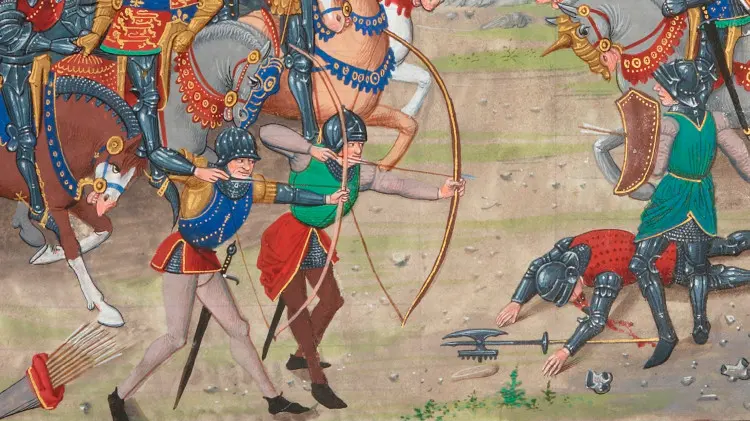
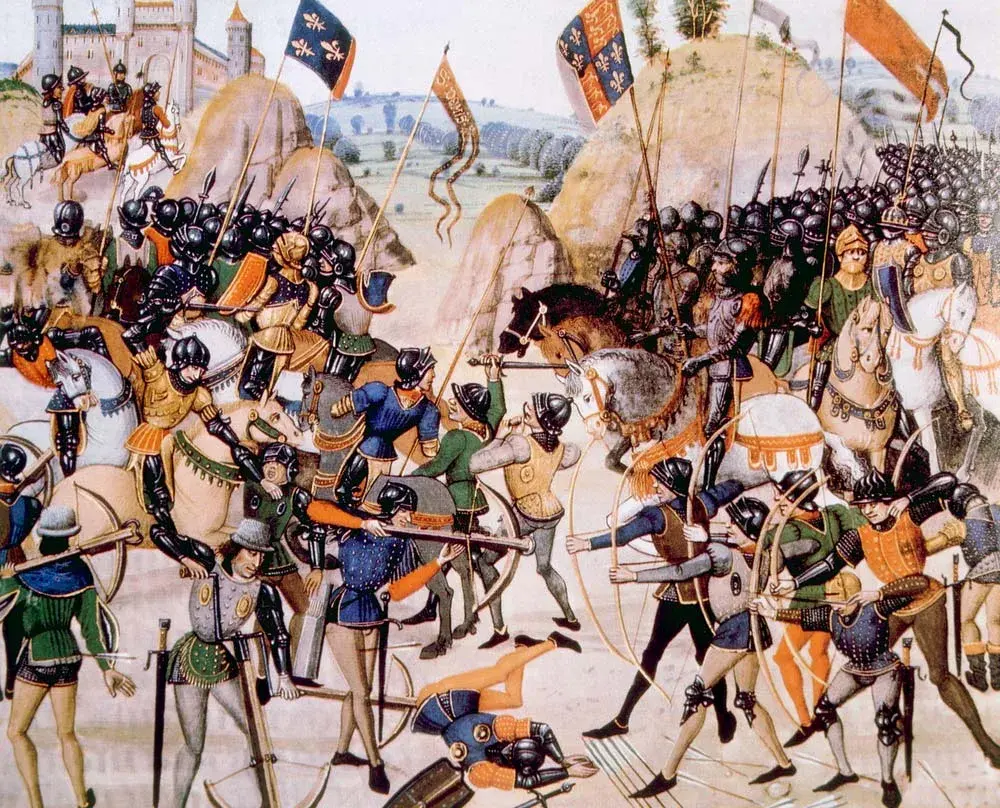
The war revolutionized medieval warfare by shifting the balance of power from armored knights to infantry and artillery. The English longbow proved devastatingly effective at the Battle of Crécy in 1346, allowing smaller forces to decimate French cavalry. Later in the conflict, the introduction of gunpowder artillery changed the nature of siege warfare, making traditional stone fortifications increasingly vulnerable to sustained bombardment.
The tide of the war shifted significantly during the 15th century due to the influence of Joan of Arc. Her leadership during the Siege of Orléans in 1429 provided the French with a crucial psychological boost, leading to the coronation of Charles VII. The war concluded with a series of French successes that utilized superior cannon technology to reclaim territory. By 1453, England held only the port of Calais, effectively ending their continental ambitions in France.
Common mistakes when studying the Hundred Years' War
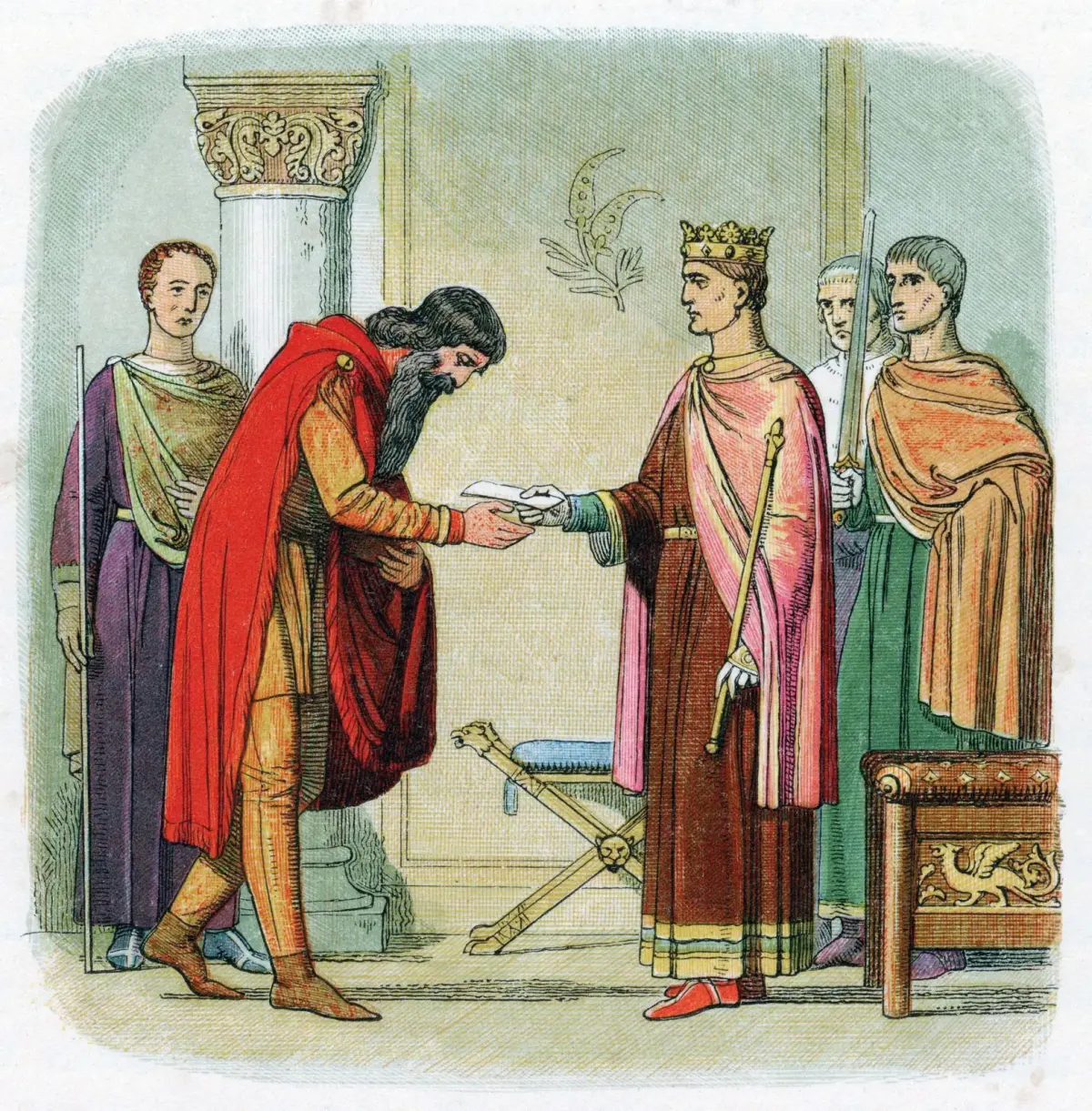
One common error is assuming the war was a unified national struggle from the start. In the 14th century, loyalty was primarily feudal rather than nationalistic; many nobles switched sides based on personal gain or regional interests. Viewing the conflict through a modern lens of patriotism ignores the complex web of vassalage and dynastic marriage that actually drove medieval politics.
Another frequent mistake is oversimplifying the role of the Black Death. While the plague decimated populations and halted military campaigns, it did not stop the war entirely. Instead, it forced both sides to adapt to labor shortages and economic instability, which in turn fueled peasant revolts like the Jacquerie in France and the Peasants' Revolt in England. Understanding these social pressures is essential for grasping why the war persisted despite the immense human cost.
How to understand the legacy of the conflict
The legacy of the war is best understood as the catalyst for the modern nation-state. By the end of the conflict, both England and France had developed stronger centralized governments, professionalized standing armies, and a clearer sense of national identity. The loss of French lands forced England to focus on its internal development and maritime expansion, while France emerged as a unified monarchy.
To study this period effectively, follow these steps:
- Identify the key monarchs involved, such as Edward III, Henry V, and Charles VII.
- Map the changing borders of Aquitaine and Normandy to visualize the territorial shifts.
- Analyze the social impact of the war, including the rise of the merchant class and the decline of the feudal system.
- Examine the role of propaganda and religious fervor in maintaining public support for the long-standing military efforts.
By following this approach, you will gain a comprehensive understanding of how a dynastic feud evolved into a transformative era that shaped the political landscape of Western Europe for centuries to come.
Key facts
- The Hundred Years' War lasted from 1337 to 1453, totaling 116 years of intermittent conflict.
- It was primarily a series of dynastic struggles between the House of Plantagenet of England and the House of Valois of France.
- The conflict was fought almost entirely on French soil, devastating the local economy and population.
- The war saw the rise of the longbow, which allowed English archers to defeat heavily armored French knights.
- Joan of Arc emerged as a pivotal figure in 1429, leading the French to key victories that turned the tide of the war.
- When studying this period, avoid assuming the war was a single continuous battle; it was a sequence of campaigns separated by long truces and treaties.
The bottom line
The Hundred Years' War was a transformative period that fundamentally reshaped Europe. By evolving from a dynastic feud into a struggle for national sovereignty, it accelerated the decline of feudalism and the rise of centralized nation-states. The introduction of new military technologies and the emergence of national heroes like Joan of Arc permanently altered the social and political landscape of both England and France.
People also ask
Why did the war last so long?
The conflict persisted because of shifting alliances, internal political instability in both kingdoms, and the Black Death, which periodically halted military operations. Neither side could achieve a decisive, lasting victory for over a century.
Did England eventually conquer France?
No, despite early successes like the Battle of Agincourt, England eventually lost all its continental territories except for the Pale of Calais. By 1453, the French had successfully expelled the English from almost all French lands.
What role did the Black Death play in the war?
The bubonic plague decimated the populations of both England and France, causing severe labor shortages and economic collapse. This forced both nations to pause major military campaigns and focus on domestic survival.
How did the war change military tactics?
The war signaled the decline of the feudal knight as the primary military force. The introduction of the longbow and later gunpowder artillery made traditional heavy cavalry vulnerable and changed how castles were defended.
Who was Joan of Arc?
Joan of Arc was a teenage peasant girl who claimed divine guidance to support the French Dauphin, Charles VII. Her leadership at the Siege of Orléans inspired the French army and became a symbol of French national identity.
What was the result for the English monarchy?
The loss of the war contributed to domestic unrest in England, eventually leading to the Wars of the Roses. The English crown turned inward, focusing on internal power struggles rather than continental expansion.
This answer was created with the help of AI research tools and reference sources. Spotted an error? Let us know — we correct mistakes quickly. See our editorial policy.