What was the Space Race?
Short answer
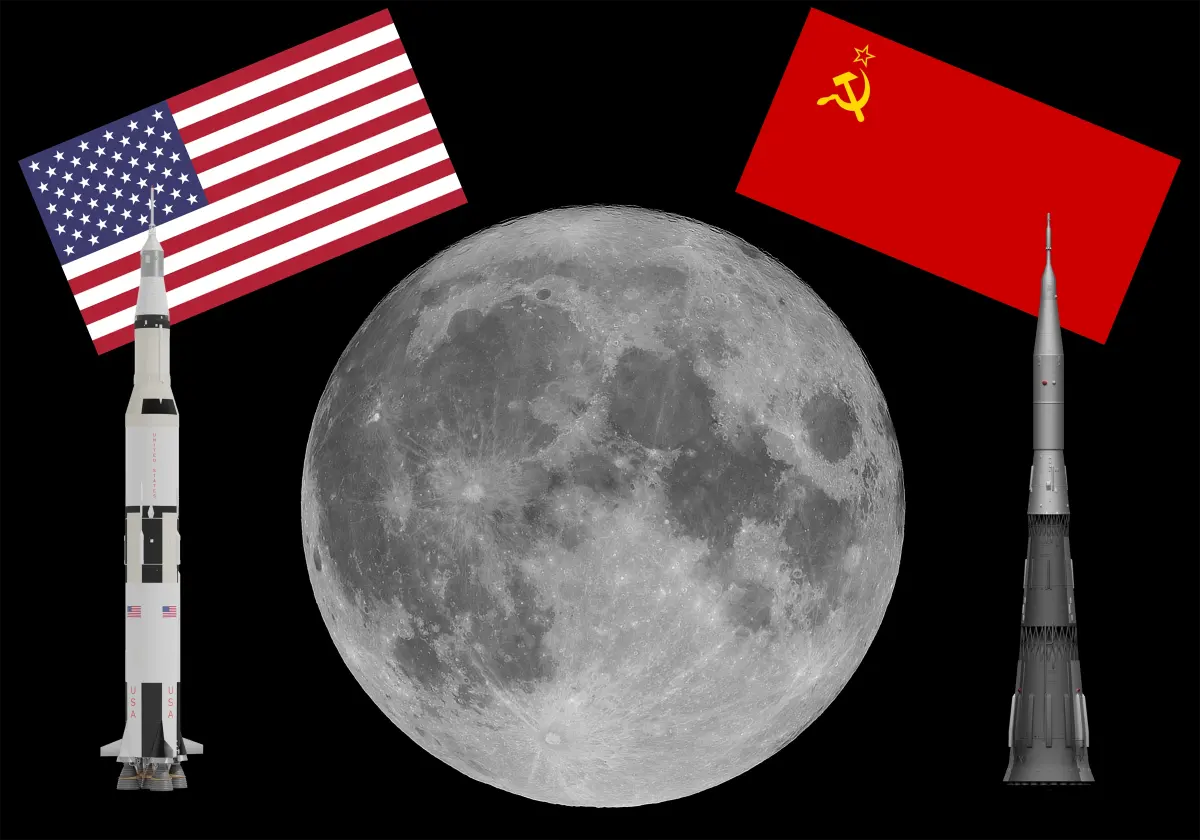
The Space Race was a mid-20th-century competition between the United States and the Soviet Union to achieve superior spaceflight capability. Spanning roughly from 1957 to 1975, it served as a proxy for Cold War geopolitical influence, driving rapid technological advancements in rocketry, telecommunications, and human space exploration, culminating in the historic 1969 lunar landing.
On this page
Why did the Space Race happen?
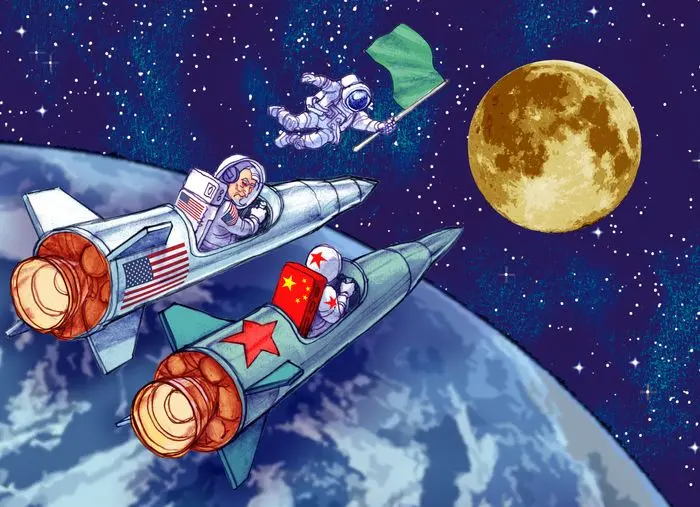
The Space Race emerged from the geopolitical tensions of the Cold War following World War II. Both the United States and the Soviet Union sought to demonstrate the superiority of their respective political and economic systems—capitalism and communism—through scientific and technological dominance. Because the rocket technology used to launch satellites was identical to that required for intercontinental ballistic missiles, space exploration became a matter of national security.
The competition was fueled by a desire to achieve "firsts" in the cosmos. Each milestone, from the first satellite to the first human in orbit, served as a powerful propaganda tool. By proving their ability to master space, these superpowers aimed to influence global politics and gain strategic advantages over their rivals.
What were the major milestones of the Space Race?
The timeline of the Space Race is marked by a series of rapid, high-stakes achievements that shifted the balance of power. The Soviet Union initially took a commanding lead, shocking the American public and government with their early successes. The United States eventually mobilized its resources through NASA to overtake the Soviets in the latter half of the 1960s.
Key events included:
- October 4, 1957: The Soviet Union launches Sputnik 1, the first artificial satellite.
- April 12, 1961: Yuri Gagarin becomes the first human in space, orbiting Earth once.
- May 5, 1961: Alan Shepard becomes the first American in space during a suborbital flight.
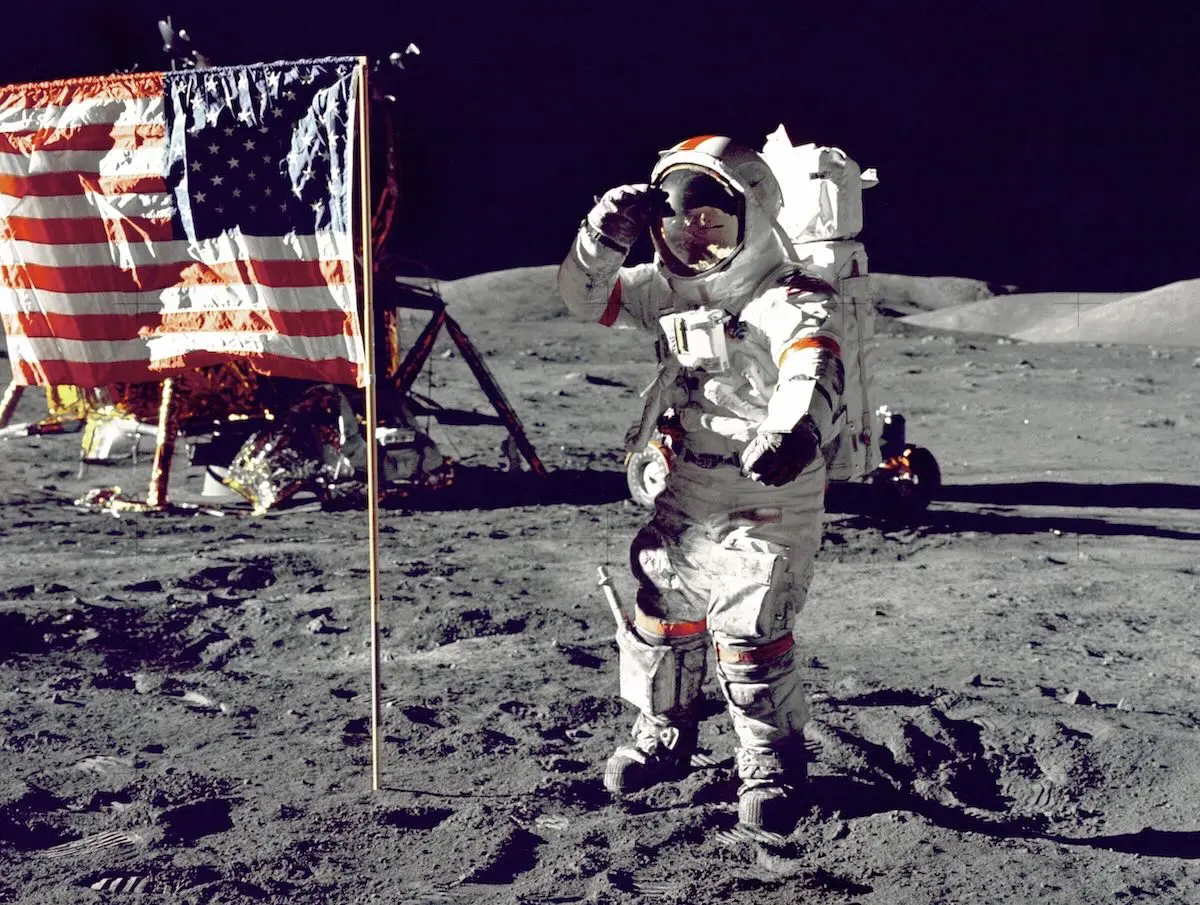
- July 20, 1969: Neil Armstrong and Buzz Aldrin land on the Moon during the Apollo 11 mission.
- July 17, 1975: The Apollo-Soyuz Test Project marks the first joint U.S.-Soviet space flight, effectively ending the race.
How did the Moon landing change the world?
The Apollo 11 mission represented the pinnacle of the Space Race and fundamentally altered humanity’s perspective of the planet. By successfully landing men on the Moon and returning them safely, the United States fulfilled the goal set by President John F. Kennedy in 1961. This achievement demonstrated unparalleled engineering prowess and project management capabilities on a global stage.
Beyond the political victory, the mission spurred significant technological innovation that persists today. Research into materials, computing, and life-support systems for space travel led to advancements in consumer electronics, satellite communications, and medical imaging. The mission also provided a unifying moment for millions of people worldwide who watched the grainy television broadcast, fostering a collective sense of human potential and scientific curiosity that continues to inspire modern space agencies.
Common mistakes when studying the Space Race
A frequent error is assuming the Space Race was solely about exploration or science. While scientific discovery was a byproduct, the primary driver was military and political prestige. Viewing these events through a purely scientific lens ignores the intense pressure of the Cold War, which dictated funding levels, mission timelines, and the selection of astronauts and cosmonauts.
Another common mistake is ignoring the immense human and financial cost of the competition. Space programs often prioritized speed over safety, leading to tragic accidents. When researching this era, avoid these pitfalls:
- Overlooking the role of German rocket scientists, such as Wernher von Braun, who were brought to the U.S. after WWII.
- Assuming the race ended immediately after the Moon landing; it continued for several years with space stations and joint missions.
- Neglecting the contributions of the thousands of engineers, mathematicians, and support staff who worked behind the scenes.
What was the legacy of the Space Race?
The legacy of the Space Race is defined by the transition from competitive hostility to international cooperation. While the rivalry accelerated progress at an unsustainable pace, it created the infrastructure for the modern space industry. The development of reusable rocket components, long-term orbital habitats, and global positioning systems all trace their roots back to the competitive pressures of the 1960s.
Today, the focus has shifted from nationalistic competition to collaborative efforts like the International Space Station. The Space Race proved that large-scale, complex engineering projects could be accomplished when nations commit significant resources to a singular goal. It established the framework for how humanity monitors Earth's climate, communicates across continents, and prepares for the future of deep-space exploration. By moving past the era of confrontation, the global community has leveraged the lessons of the 20th century to turn space into a domain for shared scientific advancement rather than a battlefield for ideological supremacy.
Key facts
- The Space Race was a 20th-century competition between the United States and the Soviet Union to achieve superior spaceflight capability.
- It began on October 4, 1957, when the Soviet Union successfully launched Sputnik 1, the world’s first artificial satellite.
- In 1961, Yuri Gagarin became the first human to travel into space and orbit the Earth aboard Vostok 1.
- President John F. Kennedy committed the United States to landing a man on the Moon before the end of the 1960s.
- The Apollo 11 mission achieved the first human Moon landing on July 20, 1969, with Neil Armstrong and Buzz Aldrin.
- To understand the era, research the development of the Saturn V rocket, which remains the most powerful rocket ever successfully flown.
The bottom line
The Space Race was a pivotal geopolitical competition that transformed humanity’s relationship with the cosmos. Driven by Cold War tensions, the United States and the Soviet Union pushed the boundaries of engineering and physics to achieve unprecedented milestones. While the era was defined by intense rivalry, it ultimately accelerated global technological progress and established the foundation for modern space exploration, satellite infrastructure, and international scientific collaboration today.
People also ask
Who won the Space Race?
Most historians consider the United States the winner because it successfully landed astronauts on the Moon in 1969. The Soviet Union achieved many early milestones, but they never successfully completed a crewed lunar landing.
How did the Cold War influence space exploration?
Space exploration served as a proxy for military and ideological dominance between the two superpowers. Advancements in rocket technology were directly linked to the development of intercontinental ballistic missiles capable of carrying nuclear warheads.
What was the purpose of the Apollo program?
The Apollo program was designed to fulfill the national goal of landing humans on the Moon and returning them safely to Earth. It involved a series of missions that tested docking, navigation, and life-support systems in deep space.
Did the Space Race end with the Moon landing?
While the Moon landing was the primary objective, the competition transitioned into cooperation in 1975 with the Apollo-Soyuz Test Project. This mission featured the first international docking between an American spacecraft and a Soviet spacecraft.
What were the biggest risks during early space missions?
Astronauts and cosmonauts faced extreme dangers from rocket explosions, radiation exposure, and life-support failures. The Apollo 1 fire and the Soyuz 1 crash remain tragic reminders of the life-threatening challenges faced during the era.
How did the Space Race change technology on Earth?
The rapid development of space hardware accelerated innovations in computing, telecommunications, and materials science. Many technologies used today, such as satellite GPS and advanced medical imaging, trace their origins to research conducted during this period.
This answer was created with the help of AI research tools and reference sources. Spotted an error? Let us know — we correct mistakes quickly. See our editorial policy.