Who invented the eraser?
Short answer
Edward Nairne, an English engineer, is credited with inventing the rubber eraser in 1770. Before this, people used moist bread crumbs to remove graphite marks. Nairne accidentally discovered the properties of natural rubber when he grabbed a piece of raw caoutchouc instead of bread, finding it effectively lifted pencil marks from paper.
On this page
Who invented the eraser?
The invention of the eraser is formally attributed to Edward Nairne, a London-based scientific instrument maker. In 1770, Nairne famously grabbed a piece of raw rubber, then known as vegetable gum or caoutchouc, to erase a pencil mistake. He realized the material was far superior to the crustless bread crumbs that had been the standard tool for artists and writers for decades.
Nairne began selling these small cubes of natural rubber for a high price, marketing them as an essential tool for draftsmen. While he is the primary figure associated with the invention, Joseph Priestley, the chemist who discovered oxygen, also noted the substance's potential for erasing graphite in 1770. Both men contributed to the early recognition of rubber as a functional stationery tool, transforming how people corrected their work.
How did early erasers work?
Early erasers were simply raw, untreated rubber. These blocks were sticky, prone to rotting, and emitted a foul odor over time because the material was not yet vulcanized. Users had to be careful, as the raw rubber could leave residue or smear the graphite if the surface was not clean.
Despite these limitations, the transition from bread to rubber was revolutionary for the drafting industry. To maintain these early tools, users often had to shave off the dirty outer layer of the rubber block with a knife to expose a fresh, clean surface. This process was tedious but necessary, as the material lacked the durability of modern synthetic compounds.
- Cut a small piece of raw rubber into a manageable cube.
- Rub the material gently over the graphite mark on the paper.
- Use a soft brush to remove the small, crumbly bits of rubber left behind.
- Trim the edges of the block periodically to ensure a clean surface for future use.
Why was the eraser attached to the pencil?
The integration of the eraser onto the end of a pencil was a significant innovation patented by Hymen Lipman in 1858. Before this, users had to carry a separate block of rubber, which was easily lost or misplaced. Lipman’s design featured a wooden pencil with a groove at one end where a small piece of rubber was glued.
This invention made the pencil a complete writing and correction system. It saved time for students and clerks who frequently needed to make quick adjustments to their notes. The convenience of having the eraser attached to the writing instrument became the industry standard almost immediately, leading to the mass production of the familiar yellow pencil with a pink ferrule and eraser.
- Improved efficiency for students and professionals.
- Reduced the likelihood of losing the eraser.
- Standardized the physical form of the writing instrument.
- Allowed for rapid, on-the-spot corrections during drafting.
How to choose the right eraser?
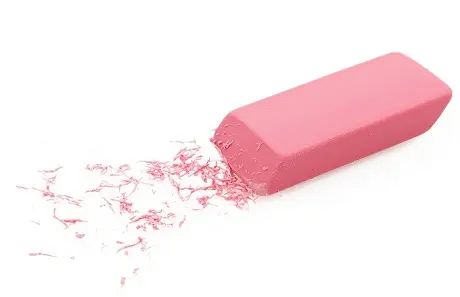
Selecting the correct eraser depends entirely on the type of media you are using. Soft white vinyl erasers are the most versatile, as they are gentle on paper and produce very little debris. These are ideal for general writing and light drawing, as they lift graphite without tearing the delicate fibers of the page.
For artists working with charcoal or heavy graphite, kneaded erasers are the preferred choice. These are pliable, putty-like tools that can be molded into specific shapes to lift highlights or erase fine details. Unlike abrasive erasers, they do not wear down or leave behind shavings, making them perfect for delicate artistic work.
- Use white vinyl for standard school or office work.
- Use kneaded erasers for charcoal and artistic shading.
- Use gum erasers for large areas of graphite on soft paper.
- Avoid abrasive, gritty erasers on thin or expensive paper to prevent damage.
Common mistakes when using an eraser
One of the most frequent mistakes is applying too much pressure when trying to remove a dark mark. Pressing down hard often causes the paper to wrinkle or tear, which makes it impossible to write or draw over the area again. Instead, use light, repetitive strokes to gradually lift the graphite from the surface.
Another common error is failing to clean your eraser before use. If your eraser has accumulated graphite from previous work, rubbing it against the paper will simply smear the old residue onto your clean page. Always test your eraser on a scrap piece of paper first to ensure it is clean and functioning properly before applying it to your final project.
- Do not scrub the paper aggressively, as this destroys the surface texture.
- Ensure the eraser is free of dark residue before starting.
- Use a light touch to prevent the paper from bunching up.
- Brush away all rubber crumbs immediately to avoid smudging the graphite further.
Key facts
- English engineer Edward Nairne is credited with creating the first rubber eraser in 1770.
- Before rubber, people used small cubes of rough sandstone or moistened crumbs of bread to remove graphite marks.
- Joseph Priestley, the chemist who discovered oxygen, noted in 1770 that a substance from the Americas was excellent for rubbing out pencil marks.
- Natural rubber was originally called "caoutchouc," but it was renamed "rubber" because it was used to rub out marks.
- Charles Goodyear invented the vulcanization process in 1839, which stabilized rubber and made erasers durable and less prone to rotting.
- In 1858, Hymen Lipman patented the first pencil with an eraser attached to the end, revolutionizing office and school supplies.
The bottom line
The invention of the eraser marked a significant shift in writing technology, transitioning from crude breadcrumbs to the durable vulcanized rubber we use today. By combining the natural properties of rubber with the convenience of an attached pencil tip, early innovators created a tool that remains essential. Proper storage and maintenance are key to ensuring your eraser continues to function effectively without damaging your documents.
People also ask
Why do some erasers leave pink smudges on the paper?
Pink erasers often contain pumice or other abrasive materials designed to sand away the top layer of paper. If the eraser is old or low-quality, the residue can transfer pigment onto the page instead of lifting the graphite.
Can you erase ink with a standard rubber eraser?
Standard rubber erasers are designed to lift graphite particles from paper fibers and cannot remove permanent ink. Erasers that claim to remove ink usually function by physically abrading the paper surface to scrape the ink off, which often damages the page.
How should you store erasers to keep them effective?
Store erasers in a cool, dry place away from direct sunlight to prevent them from hardening or becoming brittle. Keeping them in a sealed container also prevents them from picking up dust and oils that reduce their friction.
Why do erasers become hard and useless over time?
Natural rubber erasers lose their plasticizers and moisture as they age, causing the material to oxidize and harden. Once an eraser loses its elasticity, it will smear graphite rather than lifting it cleanly from the paper.
What is the best way to clean a dirty eraser?
You can clean a dirty eraser by rubbing it against a clean sheet of white paper or a piece of sandpaper. This removes the accumulated graphite and debris from the surface, restoring its ability to lift marks without smudging.
Are there eco-friendly alternatives to traditional rubber erasers?
Yes, many modern erasers are made from synthetic materials like vinyl or PVC, which are more durable and produce less waste. Some companies also produce erasers from recycled rubber or natural, biodegradable materials like soybean oil.
This answer was created with the help of AI research tools and reference sources. Spotted an error? Let us know — we correct mistakes quickly. See our editorial policy.