What is a comet?
Short answer
A comet is a small, icy solar system body that orbits the Sun. When approaching the Sun, its frozen gases sublimate, creating a glowing atmosphere called a coma and often a visible tail. Comets are essentially "dirty snowballs" composed of dust, rock, ice, and frozen gases like carbon dioxide and methane.
On this page
What is a comet made of?
Comets are remnants from the formation of the solar system approximately 4.6 billion years ago. They consist primarily of a nucleus, which is a solid core of frozen water, ammonia, methane, and carbon dioxide mixed with rocky dust and metallic grains. This structure is often described by astronomers as a "dirty snowball" or an "icy dirtball."
As a comet travels closer to the Sun, the intense heat causes these ices to transition directly from a solid state into a gas, a process known as sublimation. This escaping gas carries dust particles along with it, forming a massive, glowing cloud around the nucleus called the coma. The composition of this material provides scientists with a pristine look at the chemical makeup of the early solar nebula.
- Water ice: The primary volatile component.
- Carbon monoxide and dioxide: Gases that sublimate early.
- Silicates: Fine dust particles similar to sand.
- Organic compounds: Complex carbon-based molecules.
How do comets get their tails?
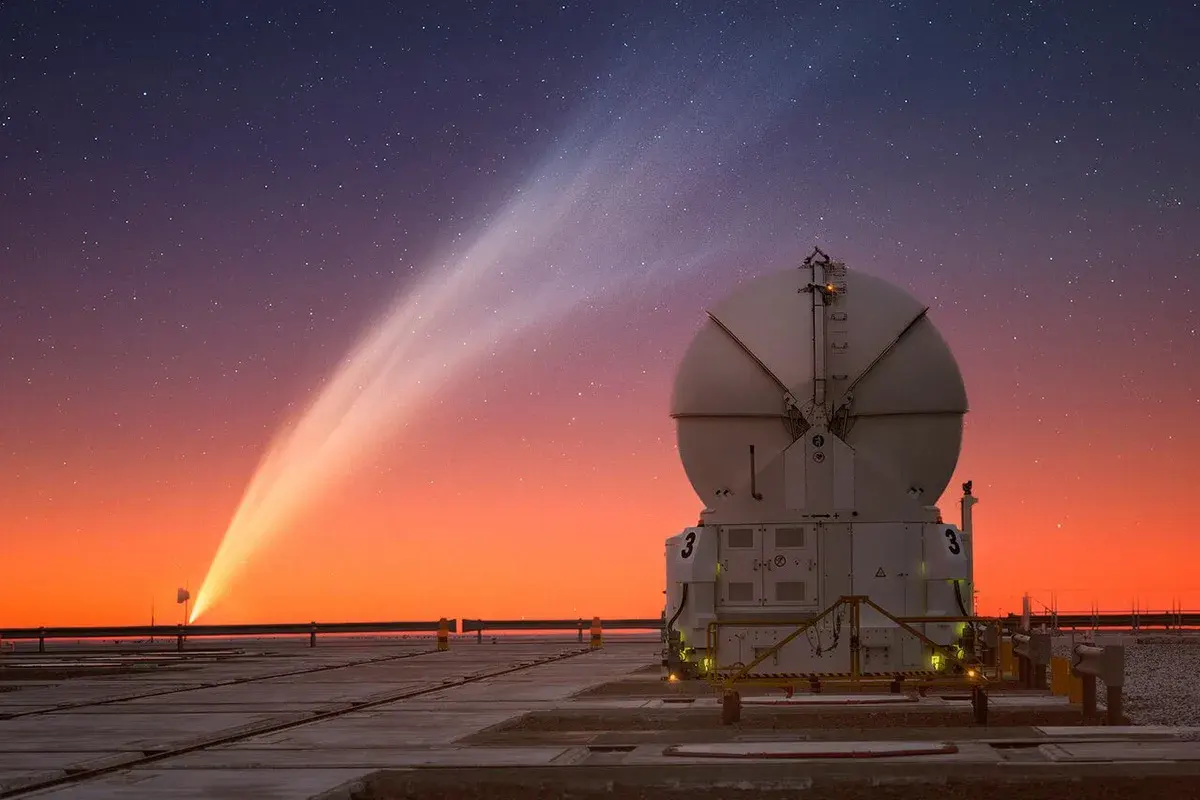
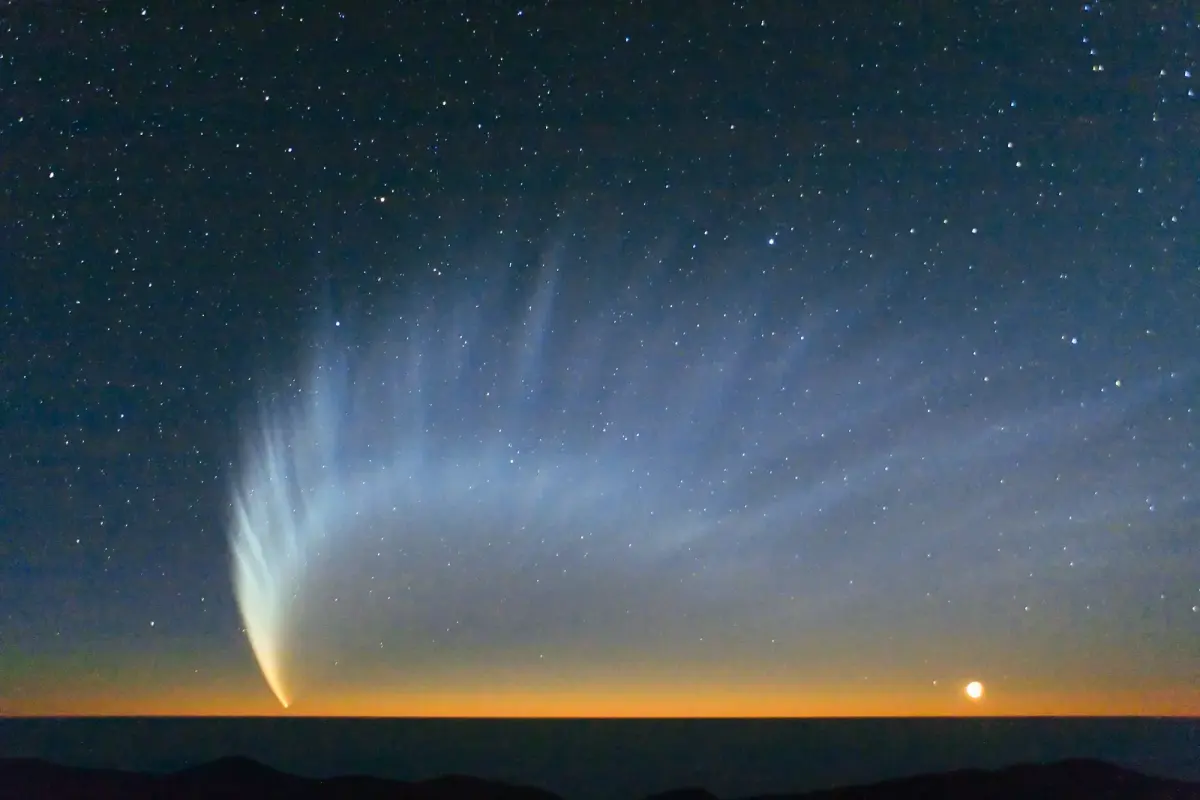
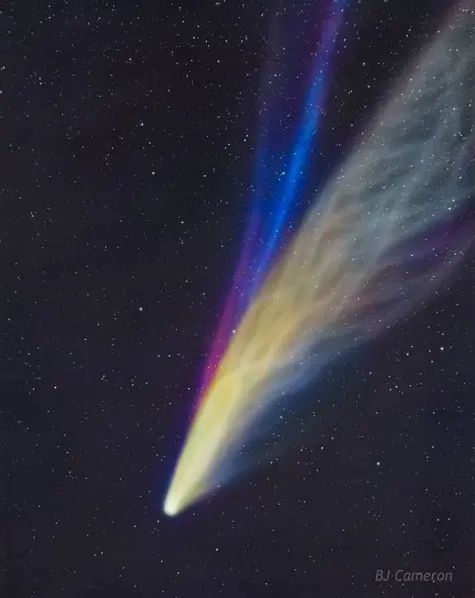
The iconic tail of a comet is a byproduct of its interaction with the Sun. As the coma expands, solar radiation pressure and the solar wind—a stream of charged particles flowing from the Sun—push the gas and dust away from the nucleus. This creates two distinct types of tails that always point away from the Sun, regardless of the comet's direction of travel.
The ion tail, composed of ionized gases, appears blue and points directly away from the Sun due to the magnetic influence of the solar wind. The dust tail, made of heavier particles, reflects sunlight and appears white or yellowish, often curving along the comet's orbital path. These tails can extend for millions of miles, creating a spectacular visual display that can sometimes be seen from Earth with the naked eye.
Where do comets come from?
Most comets originate from two primary reservoirs located at the outer edges of our solar system. Short-period comets, which complete an orbit in less than 200 years, typically arrive from the Kuiper Belt, a disk-shaped region beyond the orbit of Neptune. Long-period comets, which take thousands of years to orbit the Sun, originate in the Oort Cloud, a vast, spherical shell surrounding the entire solar system.
Gravitational nudges from passing stars, giant planets, or galactic tides can disturb these icy bodies, sending them on long, elliptical trajectories toward the inner solar system. Once a comet enters the inner regions, it may be captured into a shorter orbit by the gravity of a planet like Jupiter. Over time, repeated passes near the Sun deplete the comet's volatile ices, eventually leaving behind a dark, inactive rocky core.
How to observe a comet safely
Observing a comet is a rewarding experience, but it requires patience and the right equipment. Most comets are too faint to be seen without optical aid, so using binoculars or a small telescope is essential for spotting the fuzzy glow of the coma. To successfully track a comet, follow these steps:
- Use an astronomy app or website to find the comet's current coordinates and brightness, measured as "magnitude."
- Choose a location far from city lights to maximize contrast against the dark night sky.
- Allow your eyes to adjust to the darkness for at least 20 minutes before beginning your observation.
- Use low-magnification settings on your telescope to capture the full extent of the comet's coma and tail.
Avoid the common mistake of looking for a bright, streaking object; comets move slowly across the background stars and appear as stationary, diffuse patches of light. Do not expect to see a tail with the naked eye unless the comet is exceptionally bright, such as the famous Comet Hale-Bopp in 1997.
Common mistakes when tracking comets
One frequent error beginners make is failing to account for the comet’s orbital motion relative to the Earth. Because the Earth is also moving, a comet’s position changes nightly, meaning you must check updated star charts rather than relying on static maps. Another mistake is assuming that all comets will be bright; many are discovered when they are still very distant and remain dim throughout their entire passage.
Additionally, observers often forget to check the moon phase before planning a session. A bright, full moon can wash out the faint glow of a comet, making it nearly impossible to see. Always target dates near the new moon for the best viewing conditions. By planning ahead and managing expectations, you can enjoy the rare opportunity to witness these ancient travelers as they sweep through our neighborhood.
Key facts
- Comets are cosmic snowballs composed of frozen gases, rock, and dust that orbit the Sun.
- When a comet approaches the Sun, it warms up and releases gases, creating a glowing atmosphere called a coma.
- Most comets originate from the Oort Cloud or the Kuiper Belt, regions located at the far edges of our solar system.
- A comet's tail always points away from the Sun due to the pressure of solar radiation and the solar wind.
- To view a comet, use binoculars or a small telescope rather than the naked eye to capture faint details.
- Avoid looking for comets near bright city lights; travel to a dark-sky site for the best viewing results.
The bottom line
Comets serve as ancient, frozen time capsules that offer scientists a glimpse into the early conditions of our solar system. By studying their composition and orbital paths, researchers gain insights into the formation of planets and the distribution of water in space. Whether you are observing them through a lens or studying their history, comets remain some of the most dynamic and captivating spectacles in the night sky.
People also ask
What is the difference between a comet and an asteroid?
Comets are primarily made of ice and dust, while asteroids are composed of rocky or metallic materials. Comets develop tails when near the Sun, whereas asteroids generally remain static in appearance.
Read the full answer →How long does it take for a comet to orbit the Sun?
Orbital periods vary wildly, ranging from short-period comets like Halley’s Comet, which returns every 76 years, to long-period comets that take thousands of years. Some comets pass through the inner solar system only once before being ejected into deep space.
Can you see a comet with the naked eye?
Yes, but only if the comet is sufficiently large and passes close enough to the Sun. Most comets are too faint to be seen without optical aid, making professional predictions essential for observers.
What happens if a comet hits the Earth?
A collision with a large comet could cause significant regional or global environmental disruption due to the impact energy and dust injection into the atmosphere. However, such events are extremely rare on a human timescale.
Why do comets have two tails?
Comets often display a dust tail and an ion tail. The dust tail is composed of heavier particles reflecting sunlight, while the ion tail consists of charged gas particles pushed directly away by the solar wind.
Are comets dangerous to our planet?
While they are fascinating objects of study, the vast majority of comets pose no threat to Earth. Astronomers track "near-Earth objects" constantly to ensure that any potential hazards are identified well in advance.
This answer was created with the help of AI research tools and reference sources. Spotted an error? Let us know — we correct mistakes quickly. See our editorial policy.