What is perspective drawing?
Short answer
Perspective drawing is a technique used to create the illusion of three-dimensional depth on a two-dimensional surface. By utilizing mathematical principles, artists represent objects as they appear to the human eye, with distant items appearing smaller and converging toward specific points on a horizon line to simulate realistic spatial relationships.
On this page
How does perspective drawing work?
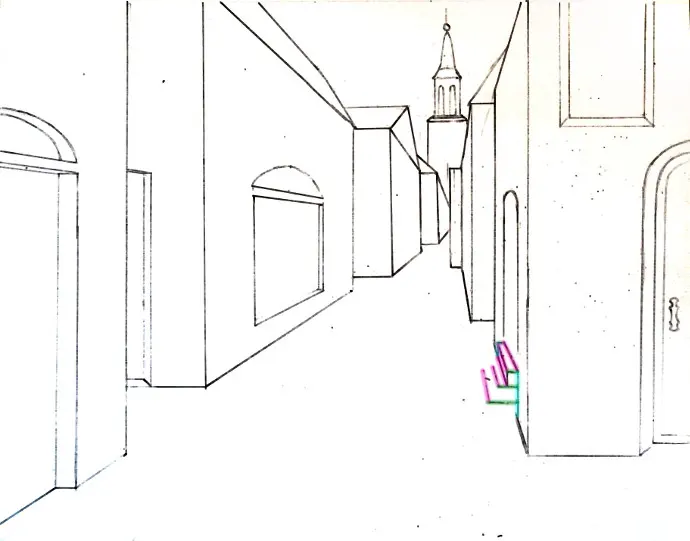
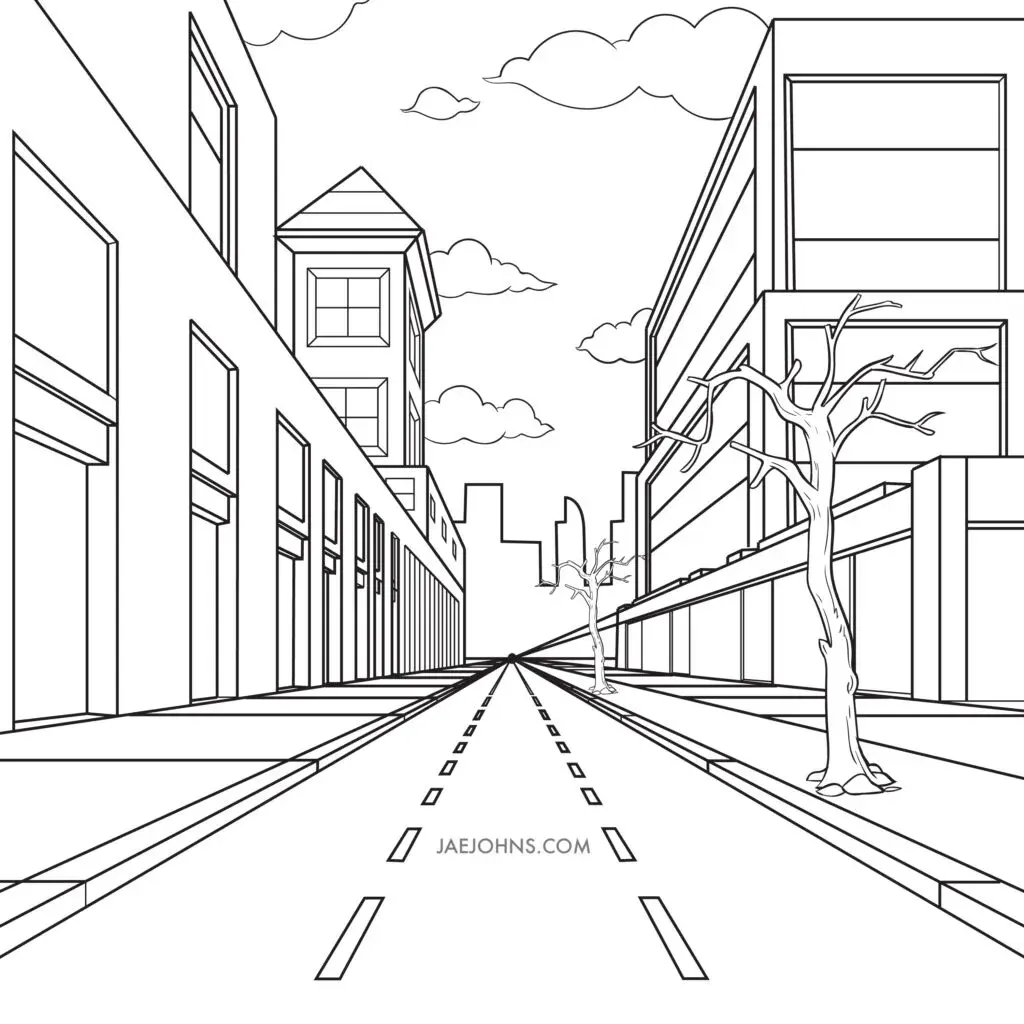
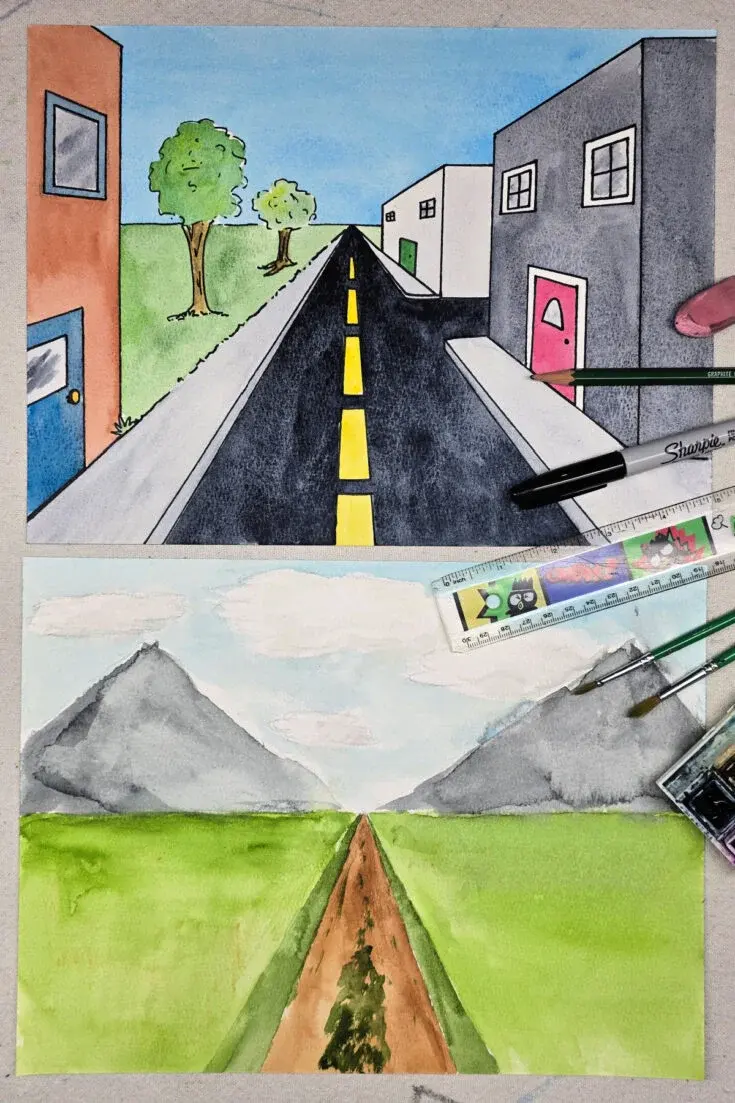
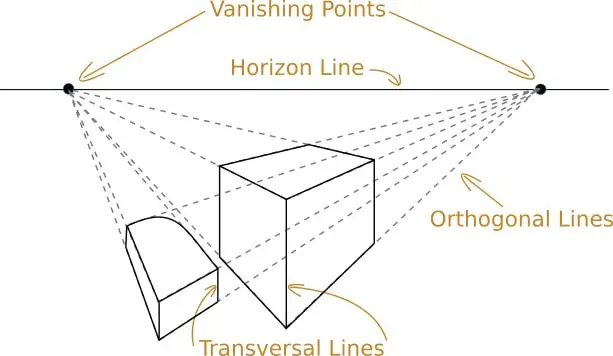
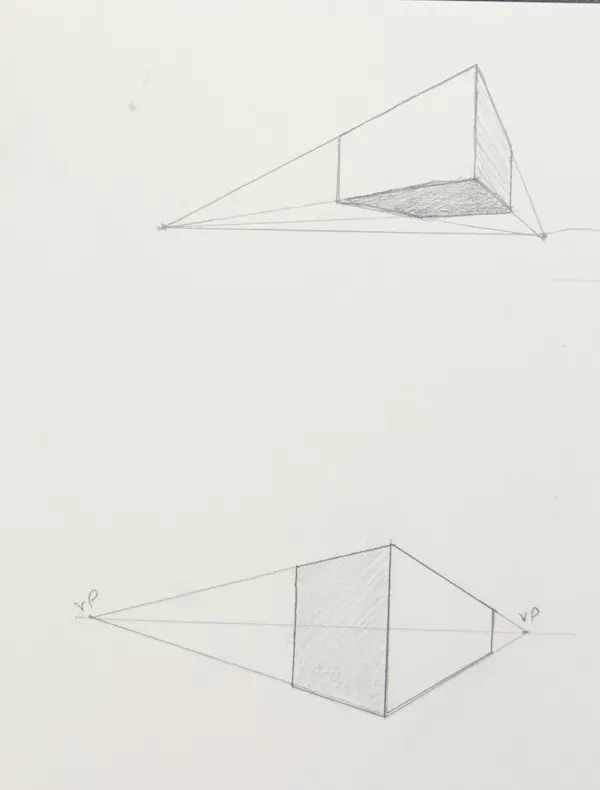
Perspective drawing relies on the geometry of sight to mimic how light hits the retina. The fundamental components include the horizon line, which represents the viewer's eye level, and vanishing points, where parallel lines appear to meet in the distance. When an artist draws a road or a building, they align the edges with these vanishing points to create the sensation of receding space.
This system was formalized during the Italian Renaissance, most notably by the architect Filippo Brunelleschi in the early 15th century. Before this discovery, artists often used "hierarchical scale," where size indicated importance rather than distance. By applying linear perspective, creators gained the ability to construct mathematically accurate environments, allowing viewers to "look into" a painting as if through a window.
What are the types of perspective?
Artists categorize perspective based on the number of vanishing points used to define the scene. Each type serves a specific purpose depending on the angle of the object being depicted.
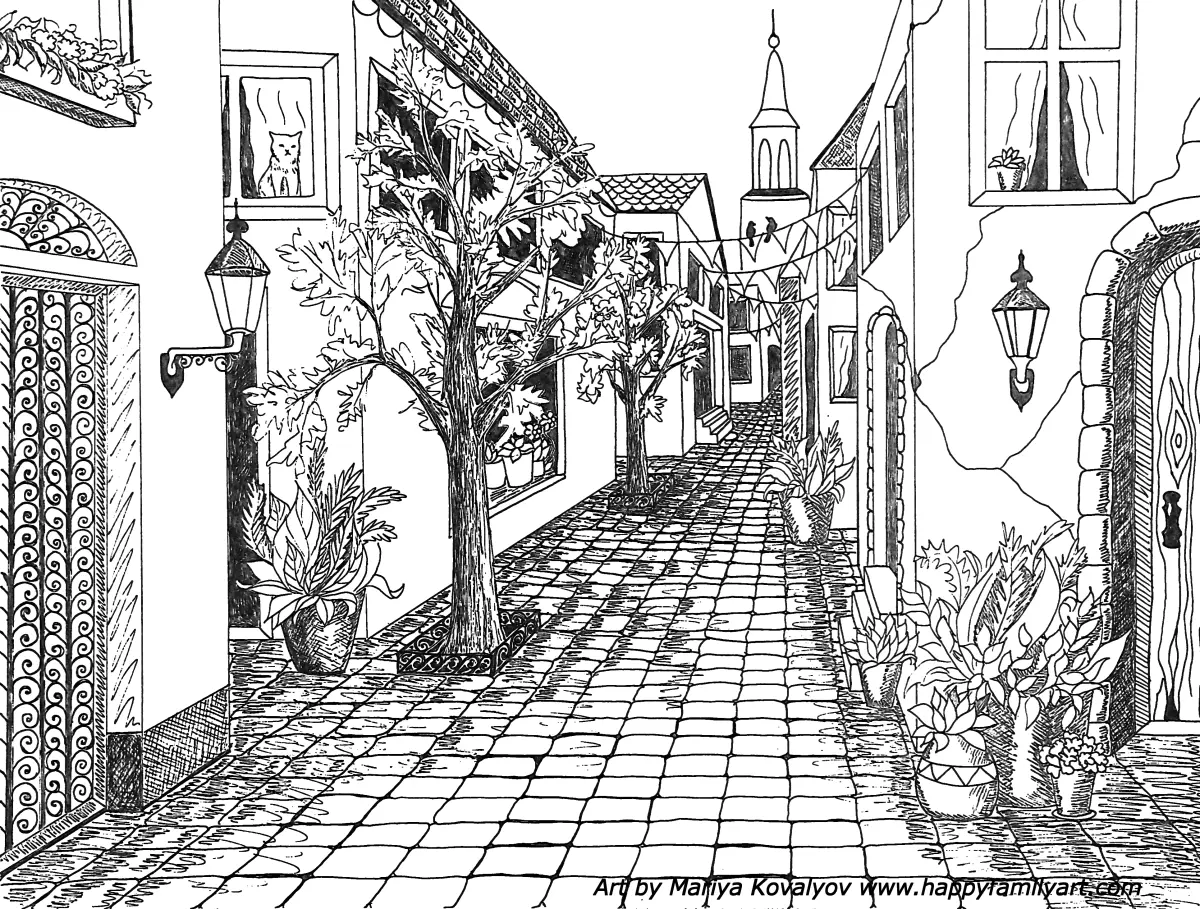
- One-point perspective: Used when the viewer is looking directly at the front face of an object, such as a box or a wall.
- Two-point perspective: Used when the viewer looks at the corner of an object, requiring two vanishing points on the horizon.
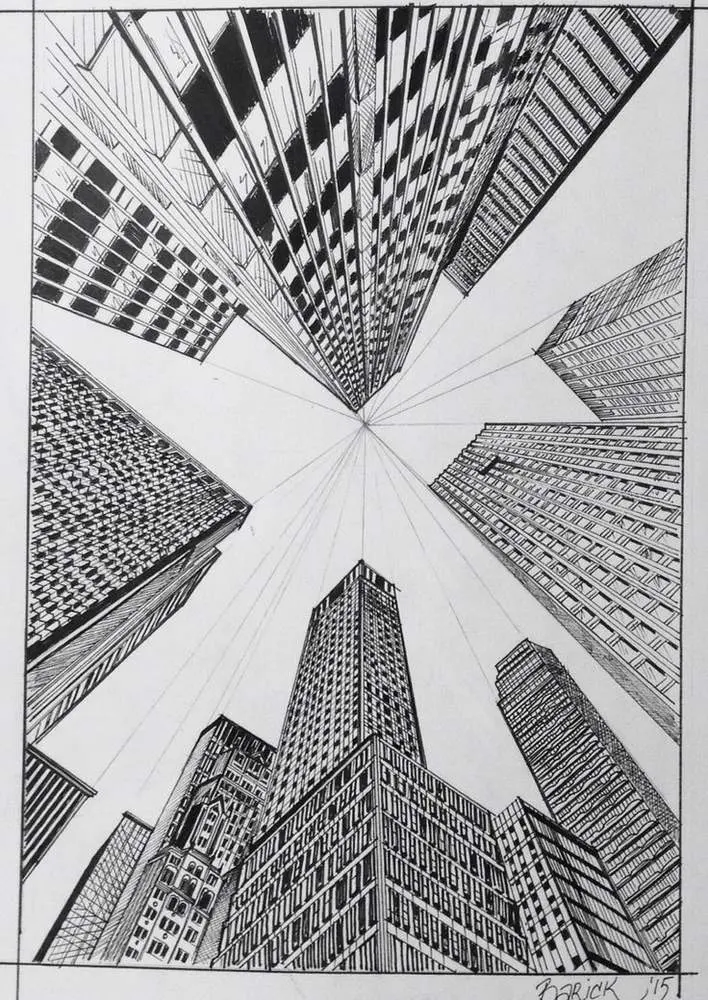
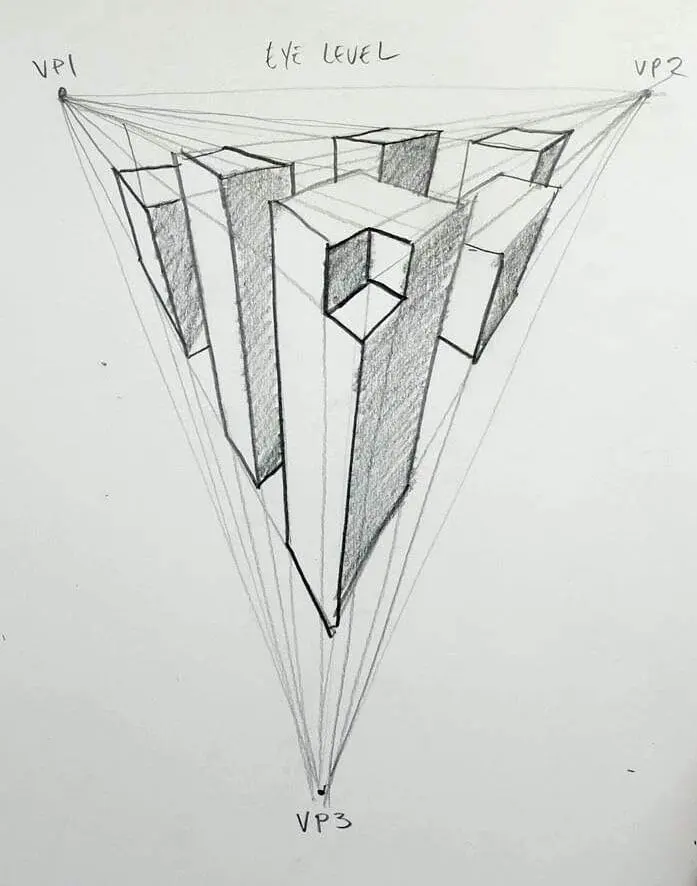
- Three-point perspective: Used for extreme angles, such as looking down from a skyscraper or up at a tall tower, adding a vertical vanishing point.
Beyond these, atmospheric perspective is a non-linear technique. It suggests depth by making distant objects appear lighter, less detailed, and bluer in color compared to objects in the foreground. This mimics the way the atmosphere scatters light over long distances.
How to start a perspective drawing
Beginning a perspective drawing requires patience and a few basic tools, such as a ruler, a pencil, and an eraser. The goal is to establish a logical framework before adding any details to your subject matter.
- Draw a horizontal line across your paper to represent the horizon line.
- Place one or two dots on this line to act as your vanishing points.
- Sketch the basic shape of your object, ensuring that all receding lines connect back to your vanishing points.
- Use light guidelines that can be easily erased once the structural integrity of the drawing is confirmed.
Focusing on the structure first prevents the common issue of "floating" objects. By anchoring every element to the horizon line, you ensure that the entire composition occupies a consistent, believable space. Practice drawing simple cubes first to master how lines converge before attempting complex architectural scenes.
Common mistakes when drawing perspective
Even experienced artists occasionally struggle with the mathematical rigor required for accurate perspective. One of the most frequent errors is the "distorted angle," which occurs when lines are drawn toward a vanishing point that is placed too close to the edge of the paper. This causes the object to look stretched or unnatural, a phenomenon known as "wide-angle distortion."
Another common mistake is neglecting the horizon line entirely. If the horizon line shifts during the drawing process, the perspective will collapse, making the building or object appear to be tilting or falling over. To avoid this, always keep your horizon line consistent throughout the entire session. Additionally, beginners often forget that vertical lines must remain perfectly perpendicular to the horizon line in one-point and two-point perspective. If your vertical lines lean, the structural integrity of your drawing will be compromised, ruining the illusion of depth.
Why perspective drawing is essential
Learning perspective is a foundational skill that elevates an artist's ability to communicate complex ideas. It provides a universal language for architects, concept artists, and illustrators to visualize structures before they are built or rendered. Without these rules, a drawing often feels flat and disconnected, lacking the spatial logic that helps the human brain interpret a scene as a physical environment.
Mastering these techniques also fosters a deeper understanding of how we perceive the world. It encourages artists to look past the surface of an object and analyze its volume and placement within a room or landscape. Whether you are sketching a simple interior or a sprawling cityscape, perspective provides the necessary scaffolding to build a convincing reality. By consistently practicing these geometric principles, you will gain the confidence to manipulate space and create immersive works of art that resonate with the viewer's own experience of reality.
Key facts
- Perspective drawing is a technique used to create the illusion of three-dimensional depth on a two-dimensional surface.
- The horizon line represents the viewer's eye level, acting as the primary reference point for all receding lines.
- Vanishing points are the specific spots on the horizon line where parallel lines appear to converge and disappear.
- Linear perspective was formally codified during the Italian Renaissance by architect Filippo Brunelleschi around 1415.
- To draw a cube in one-point perspective, all lines representing depth must connect to a single point on the horizon.
- Avoid "distortion" by keeping your vanishing points far apart; placing them too close together makes objects look unnaturally stretched.
The bottom line
Perspective drawing is the foundational skill for translating the three-dimensional world onto a flat plane. By mastering the horizon line and the placement of vanishing points, you can accurately depict depth, scale, and spatial relationships. Whether you are sketching simple geometric blocks or complex urban landscapes, these mathematical principles provide the necessary structure to make your artwork feel grounded, realistic, and professionally composed for any viewer.
People also ask
What is the difference between one-point and two-point perspective?
One-point perspective is used when looking directly at the flat face of an object, while two-point perspective is used when looking at an object's corner. In two-point, you use two distinct vanishing points on the horizon line instead of one.
Read the full answer →How do I find the horizon line in a drawing?
The horizon line is always placed exactly at the level of the artist's eyes. If you are drawing a tall building from the ground, the horizon line will be low; if you are looking down from a balcony, the horizon line will be high.
What is atmospheric perspective?
Atmospheric perspective, or aerial perspective, creates depth by manipulating color and clarity rather than lines. Objects further away appear lighter, cooler in tone, and less detailed than objects in the foreground.
Read the full answer →Why do my drawings look warped or "fish-eyed"?
This usually happens when your vanishing points are too close together on the page. To fix this, use a larger sheet of paper and place your vanishing points near or even off the edges of the drawing surface.
Can I use perspective drawing for organic shapes like people or trees?
While perspective is most obvious with geometric architecture, it also applies to organic forms. You can place a person or a tree inside an imaginary box to determine how their scale and orientation should change as they recede into the distance.
What tools are essential for learning perspective?
A long straightedge or ruler is the most important tool for ensuring lines converge accurately. Using a hard lead pencil, such as a 2H, allows you to draw light construction lines that can be easily erased after the final forms are inked.
This answer was created with the help of AI research tools and reference sources. Spotted an error? Let us know — we correct mistakes quickly. See our editorial policy.