Who invented the shopping cart?
Short answer
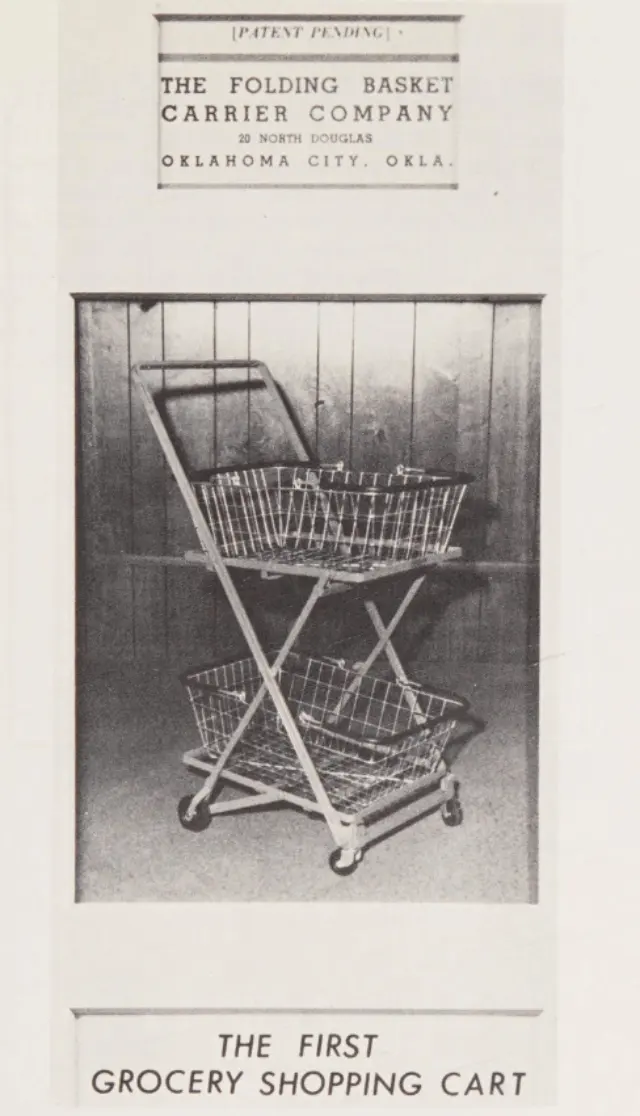
Sylvan Goldman, the owner of the Humpty Dumpty supermarket chain, invented the first shopping cart in 1937. Seeking to increase sales by helping customers carry more items, he collaborated with mechanic Fred Young to create a folding metal frame that held two wire baskets, effectively launching the modern era of self-service retail.
On this page
Who invented the shopping cart?
Sylvan Goldman was a grocery store entrepreneur in Oklahoma City during the Great Depression. He observed that shoppers often stopped buying items once their handheld wire baskets became too heavy to carry comfortably. Goldman realized that if he could provide a mobile solution for transporting goods, customers would likely purchase more products per visit.
To solve this, he worked with Fred Young, a local mechanic, to develop a prototype. They utilized a folding metal chair frame and attached wheels to the legs, adding two wire baskets to the seat and back. This early design was cumbersome but functional, proving that shoppers were willing to use a wheeled device to navigate the aisles. The invention officially debuted in his stores on June 4, 1937, and it fundamentally changed the retail landscape by increasing the average transaction size.
How did the shopping cart evolve?
The initial design faced significant resistance from customers who felt the carts looked like baby carriages or were simply too awkward to maneuver. To overcome this, Goldman hired models to push the carts around his stores, demonstrating their utility and encouraging shoppers to try them. Once the public grew accustomed to the convenience, the demand for the carts skyrocketed, and Goldman began manufacturing them for other retailers.
Over the decades, the design underwent several critical improvements to enhance durability and ease of use. Engineers shifted from the folding chair model to the nesting design, which allowed carts to be pushed into one another for efficient storage. This innovation was patented by Orla Watson in 1946, and it remains the industry standard today. The evolution of the cart reflects the shift toward larger suburban supermarkets and the need for high-volume, self-service shopping environments.
Why are shopping carts designed that way?
Modern shopping carts are engineered for specific logistical and safety requirements in a retail setting. The nesting design is the most important feature, as it saves significant floor space in store lobbies and parking lots. Furthermore, the basket is typically tapered toward the front to allow for compact stacking, while the wheels are designed to swivel for easy navigation around narrow aisles and end-cap displays.
Safety features have also become a standard part of the manufacturing process. Most carts now include:
- A child safety seat with a restraint belt to prevent falls.
- Locking mechanisms on wheels to prevent carts from rolling into traffic.
- Rounded edges and plastic bumpers to minimize damage to store fixtures and vehicles.
- High-visibility colors or reflectors to ensure they are easily spotted in large parking lots.

How to use a shopping cart efficiently
Using a shopping cart effectively can save time and prevent damage to your groceries. The goal is to maximize the space available while ensuring that fragile items remain protected throughout your trip. By following a few simple steps, you can streamline your checkout process and keep your food in better condition.
- Place heavy, non-perishable items like canned goods or bottled water at the bottom of the basket first.
- Arrange boxed items on top of the heavier goods to create a flat, stable base.
- Keep delicate items such as bread, eggs, and produce for the very top of the cart.
- Use the child seat area for smaller, crushable items if the main basket is already full.
- Group similar items together to make the scanning process faster for the cashier.
Common mistakes when using shopping carts
Many shoppers inadvertently cause damage to their groceries or create hazards in the store by failing to load their carts properly. One of the most frequent errors is placing heavy items on top of fragile produce or bread, which leads to crushed items by the time you reach the checkout counter. Additionally, shoppers often leave carts in the middle of aisles, which creates congestion and makes it difficult for others to move through the store.
Another common mistake involves ignoring the weight capacity or the safety straps for children. To avoid these issues, keep the following tips in mind:
- Never leave a child unattended in the cart seat, even for a moment.
- Always return your cart to a designated corral to prevent it from rolling into parked cars.
- Avoid overloading the cart beyond its structural capacity, as this makes it difficult to steer.
- Check the wheels for debris before starting your trip to ensure smooth movement.
By following these basic guidelines, you can ensure a safer and more organized shopping experience for everyone in the store.
Key facts
- Sylvan Goldman, owner of the Humpty Dumpty supermarket chain, invented the first shopping cart in 1937.
- The initial design featured a folding metal frame that held two wire baskets, inspired by the structure of a folding chair.
- Goldman hired mechanic Fred Young to help build the prototype, which debuted in Oklahoma City on June 4, 1937.
- Customers initially resisted the invention, as men felt it was unmanly and women felt it resembled a baby carriage.
- To increase adoption, Goldman hired models to push the carts around his store to demonstrate their convenience to shoppers.
- Orla Watson later improved the design in 1946 by creating the "nesting" cart, which allowed units to slide into one another for compact storage.
The bottom line
The shopping cart revolutionized the retail experience by enabling consumers to purchase more items than they could carry by hand. While Sylvan Goldman’s 1937 invention faced initial skepticism, clever marketing and the later introduction of the nesting design cemented its place in modern commerce. Today, the shopping cart remains an essential tool that drives retail efficiency and influences consumer behavior in stores worldwide.
People also ask
Why did Sylvan Goldman decide to invent the shopping cart?
Goldman noticed that customers stopped shopping once their handheld baskets became too heavy to carry. He realized that if he provided a way to transport more goods, shoppers would purchase larger quantities of groceries.
How did the "nesting" design change the retail industry?
Before the nesting cart, store aisles were cluttered with empty carts that took up valuable floor space. The nesting design allowed stores to stack carts in a single row, significantly increasing the number of carts available without sacrificing selling space.
Did Sylvan Goldman hold a patent for his invention?
Yes, Goldman received a patent for his "Folding Basket Carriage for Self-Service Stores" in 1940. He later founded the Folding Carrier Basket Company to manufacture and license his design to other retailers.
What was the primary material used in early shopping carts?
Early carts were primarily constructed from steel wire and metal frames. This material was chosen for its durability and ability to withstand the heavy weight of grocery items over long periods of use.
Are there different types of shopping carts used today?
Modern carts vary significantly, ranging from standard wire baskets to plastic models and specialized versions for children or people with disabilities. Some stores also offer electric carts to assist customers with limited mobility.
Why do shopping cart wheels sometimes wobble or squeak?
Wobbling is usually caused by debris, such as hair or string, wrapped around the axle or by uneven wear on the caster. Regular maintenance, including cleaning the wheels and tightening the mounts, is necessary to ensure smooth operation.
This answer was created with the help of AI research tools and reference sources. Spotted an error? Let us know — we correct mistakes quickly. See our editorial policy.