Who invented the frisbee?
Short answer
Walter Frederick Morrison is credited with inventing the modern plastic Frisbee. While pie tins were tossed recreationally for decades, Morrison developed the first aerodynamic plastic disc in 1948. He later sold the design to Wham-O in 1957, which rebranded the toy as the "Frisbee," cementing its place in popular culture.
On this page
Who actually invented the Frisbee?
The invention of the Frisbee is a story of evolution rather than a single "eureka" moment. Walter Frederick Morrison, a building inspector from California, began experimenting with metal cake pans in the late 1930s. He and his future wife, Lucile, discovered that these tins could be tossed across the beach with surprising accuracy. After World War II, Morrison realized that plastic was a superior material for flight.
In 1948, he produced the "Flyin-Saucer," the first mass-produced plastic disc. The design was intended to capitalize on the public’s fascination with UFO sightings at the time. While Morrison is the primary inventor, the name "Frisbee" originated from the Frisbie Pie Company of Bridgeport, Connecticut. College students in the Northeast frequently tossed empty pie tins from the company, shouting "Frisbie!" to warn others. Wham-O founders Rich Knerr and A.K. Melin adopted a variation of this name in 1957.
How did the design change over time?
The transition from metal to plastic was the most significant leap in the disc's history. Metal tins were dangerous, prone to denting, and lacked the stability required for long-distance flight. Morrison’s plastic prototypes were lighter and featured a rounded edge that allowed for better lift and a more comfortable grip. These early versions were often unstable in the wind.
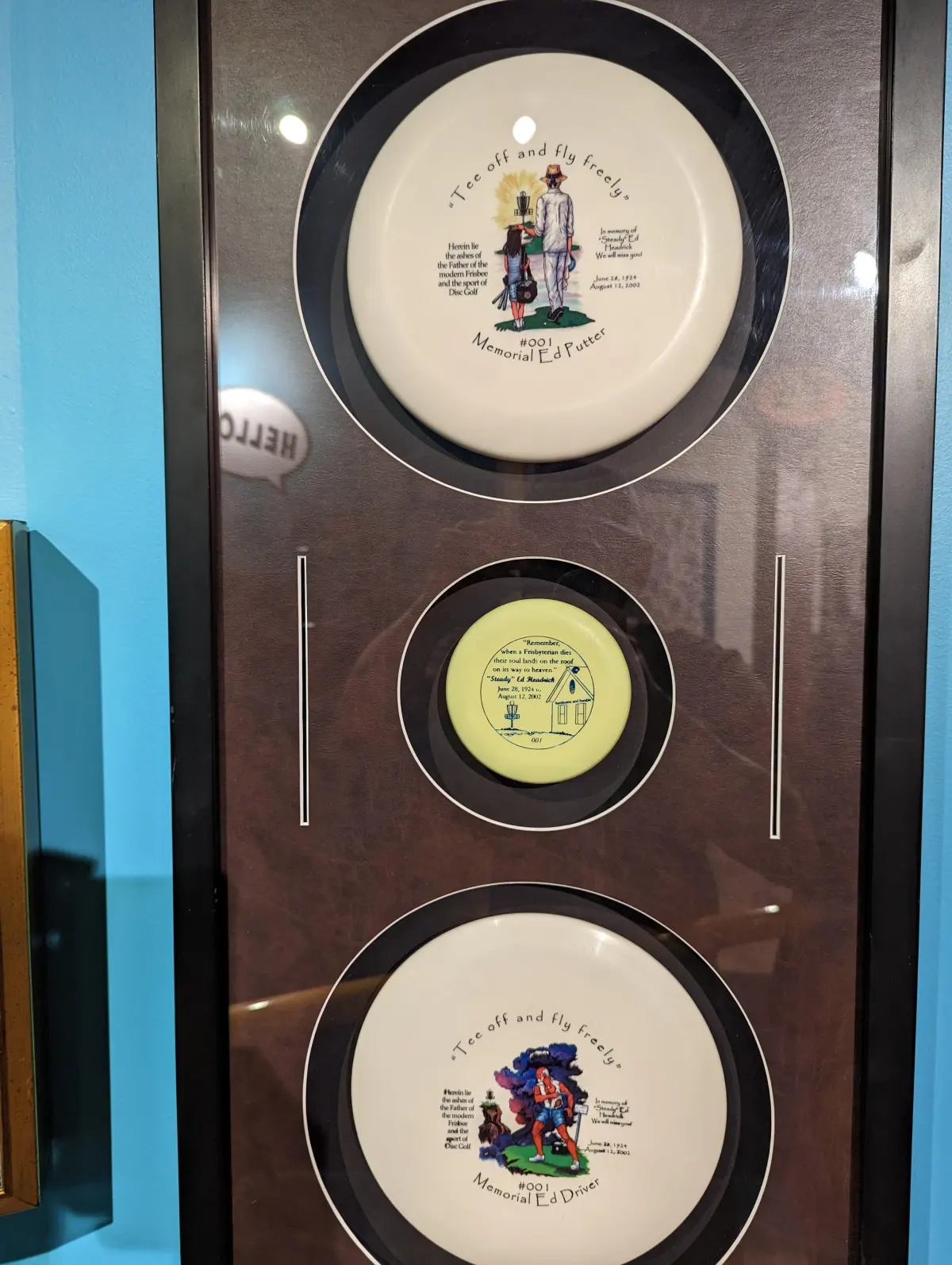
In 1964, Ed Headrick, a Wham-O employee, redesigned the disc to improve its flight characteristics. He added the "Professional Model" features, which included a series of raised ridges on the top surface known as the "Lines of Headrick." These ridges stabilized the disc by creating a turbulent boundary layer, allowing it to cut through the air with greater precision. This innovation transformed the toy into a piece of sporting equipment.
- The weight of the disc was standardized to improve consistency.
- The plastic composition was adjusted to be more durable and flexible.
- The rim depth was increased to provide a better surface for the thumb.
How to throw a frisbee correctly
Mastering the backhand throw is the foundation of all disc sports. To perform a standard backhand, stand perpendicular to your target with your feet shoulder-width apart. Grip the rim of the disc firmly with your thumb on top and your index finger along the outer edge, curling your remaining fingers under the rim.
- Reach across your body, bringing the disc toward your opposite shoulder.
- Step forward with your lead foot while keeping the disc level with the ground.
- Snap your wrist forward at the last moment to generate spin.
- Release the disc flat; if the edge tilts, the disc will curve prematurely.
Focusing on the snap of the wrist is more important than the strength of your arm. The spin provides the gyroscopic stability necessary for the disc to maintain its flight path. Practice releasing the disc at chest height to ensure a consistent, level trajectory.
Common mistakes when throwing a frisbee
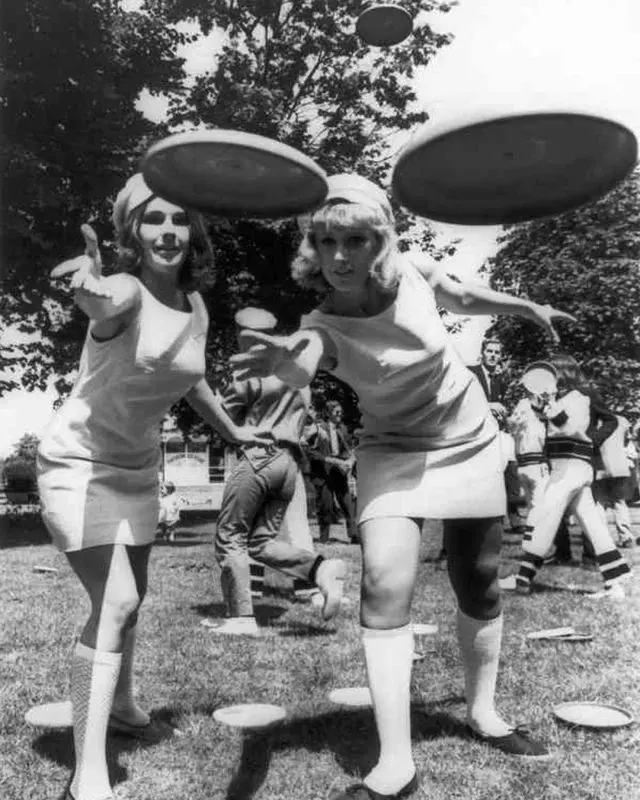
Many beginners struggle with "wobble," which occurs when the disc is released with an uneven grip or a lack of spin. If the disc is released at an upward angle, it will stall and drop quickly. Conversely, releasing it at a downward angle causes the disc to dive into the ground. Another frequent error is using the entire arm to "push" the disc rather than using a flicking motion from the wrist.
- Gripping the disc too tightly, which prevents a clean release.
- Forgetting to follow through with the arm after the release.
- Looking at the ground instead of the intended target.
- Using a disc that is too heavy or too light for the wind conditions.
To correct these errors, slow down your motion. Focus on keeping the disc perfectly parallel to the ground throughout the entire throwing arc. Recording yourself on video can help you identify if your wrist is snapping correctly or if your elbow is dropping during the follow-through.
Why do frisbees fly the way they do?
The flight of a Frisbee is governed by the principles of aerodynamics, specifically Bernoulli's principle and gyroscopic stability. As the disc spins, it acts like a gyroscope, resisting changes to its orientation in space. The shape of the disc creates an airfoil, similar to an airplane wing, which generates lift as air moves over the curved top surface.
The spin also helps the disc maintain a straight path by countering the natural tendency to tilt. When the disc begins to lose speed, the lift decreases, and gravity eventually pulls it to the ground. Advanced players manipulate these forces by changing the angle of release, known as "hyzer" or "anhyzer," to make the disc curve around obstacles. Understanding these physical forces turns a simple game of catch into a complex display of physics, allowing for the wide variety of disc sports played globally today.
Key facts
- Walter Frederick Morrison invented the modern plastic flying disc in 1948.
- The toy was originally marketed as the "Flying Saucer" to capitalize on UFO sightings.
- The name "Frisbee" was inspired by the Frisbie Pie Company, whose empty tins students tossed on college campuses.
- Wham-O bought the rights to the design in 1957 and officially branded it the "Frisbee."
- To throw a disc accurately, keep it level with the ground and snap your wrist at the end of the motion.
- Avoid throwing with a tilted edge, as this causes the disc to curve prematurely or stall in the air.
The bottom line
While Walter Frederick Morrison is credited with inventing the modern plastic flying disc in 1948, the iconic name originated from the Frisbie Pie Company. After Wham-O purchased the rights in 1957, the toy became a global cultural phenomenon. Today, the flying disc remains a simple, effective tool for recreation and competitive sports, proving that aerodynamic design and a flick of the wrist create lasting entertainment.
People also ask
What material was the original Frisbee made of?
The first version created by Morrison was made of metal, but he later switched to plastic to improve flight stability and safety.
Is a Frisbee the same thing as a flying disc?
Frisbee is a trademarked brand name, while flying disc is the generic term for the object. Many people use the terms interchangeably, but only Wham-O products are officially Frisbees.
Why do Frisbees have a curved rim?
The rim creates lift and stability through aerodynamic properties, allowing the disc to glide through the air rather than falling like a solid ball.
Can you play sports with a Frisbee?
Yes, the most popular sport is Ultimate, which is played on a field with two end zones. Disc golf is another major sport where players throw discs into metal baskets.
How do I throw a backhand flick?
Grip the rim with your fingers tucked underneath and your thumb on top. Extend your arm across your body and snap your wrist forward to create spin.
Why does my Frisbee keep nose-diving?
This usually happens because the disc is released at a downward angle. Ensure your wrist remains flat and level with the ground during the entire release.
This answer was created with the help of AI research tools and reference sources. Spotted an error? Let us know — we correct mistakes quickly. See our editorial policy.