What wax is best for candles?
Short answer
There is no single "best" wax, as the ideal choice depends on your specific goals. Soy wax is the top choice for eco-conscious beginners due to its clean burn and ease of use. Paraffin remains the industry standard for scent throw, while beeswax offers a natural, luxurious, and long-lasting golden glow.
On this page
Which candle wax is best for beginners
Soy wax is widely considered the best option for those just starting their candle-making journey. Derived from soybean oil, it is a natural, renewable resource that melts at a relatively low temperature, typically between 115°F and 125°F. This lower melting point makes it safer to handle and easier to clean up with simple soap and water. Because soy wax is softer than other varieties, it is most commonly used for container candles rather than freestanding pillars.
When working with soy wax, beginners should follow these basic steps to ensure success:
- Melt the wax flakes in a double boiler to prevent scorching.
- Add fragrance oils when the wax reaches approximately 185°F to allow for proper binding.
- Pour the wax into your container slowly at around 135°F to minimize surface cracking.
- Allow the candle to cure for at least 48 hours before lighting to improve the scent throw.
Why use paraffin wax for candles
Paraffin wax has been the dominant choice for mass-produced candles for over a century due to its incredible versatility and affordability. It is a byproduct of the petroleum refining process, making it highly refined and consistent in quality. The primary advantage of paraffin is its ability to hold a high concentration of fragrance oil, resulting in a superior "scent throw" that fills a room more effectively than most natural waxes. It is also quite rigid, which makes it the preferred choice for molded pillar candles and complex shapes.
Despite its performance benefits, paraffin requires careful temperature management during the pouring process. If the wax is poured too quickly or at the wrong temperature, it can develop air bubbles or sinkholes in the center of the candle. Experienced makers often blend paraffin with small amounts of stearic acid or Vybar to improve the wax's opacity and hardness. While some consumers prefer natural alternatives, paraffin remains the gold standard for those prioritizing scent intensity and structural integrity in their finished products.
Benefits of using beeswax for candles
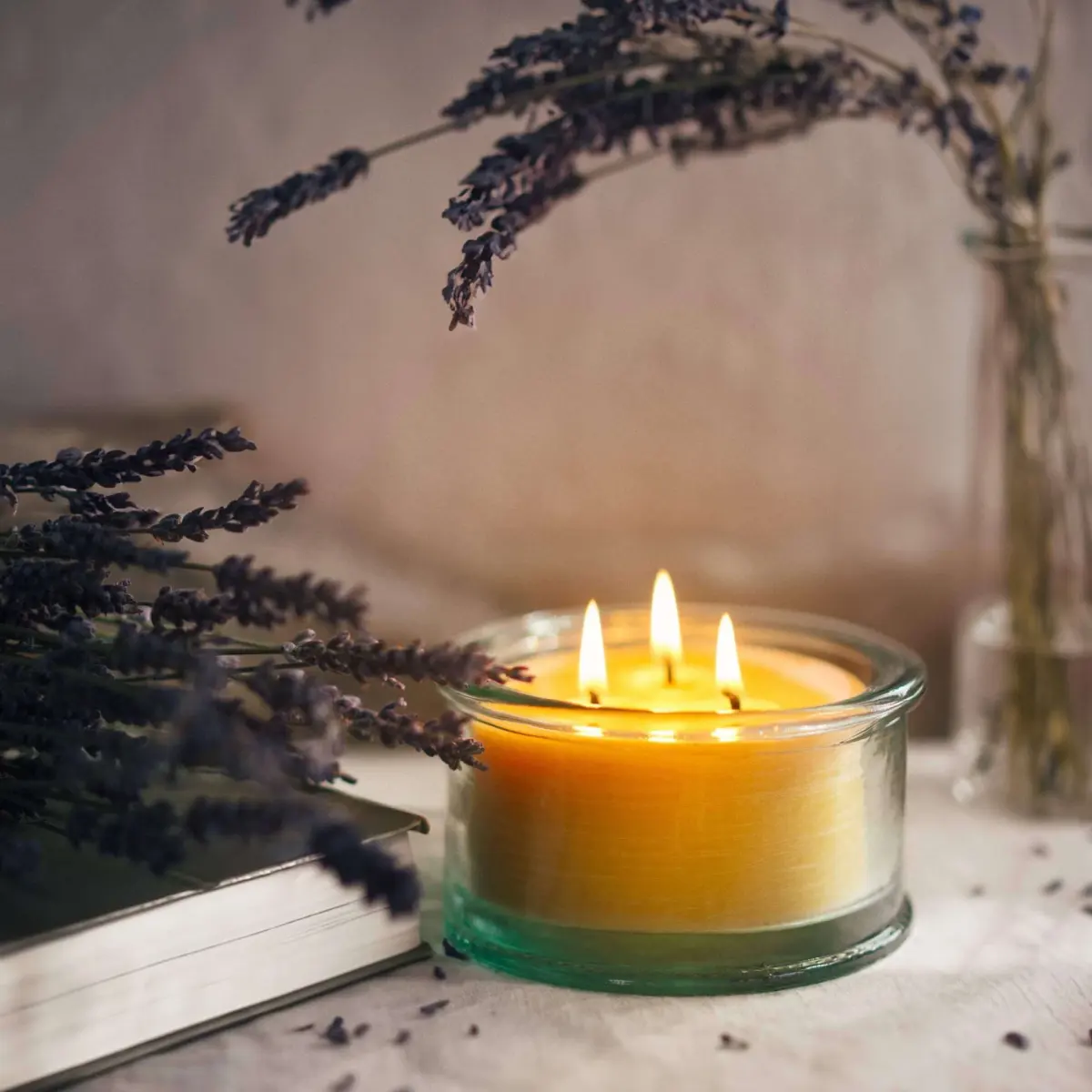
Beeswax is the oldest known candle-making material, prized for its natural honey-like scent and long, clean burn. Unlike other waxes that require additives, beeswax is ready to use in its raw state, often appearing in yellow or white pellets. It is a dense, high-melting-point wax, typically requiring larger, sturdier wicks to maintain a consistent flame. Because it is a natural product harvested from beehives, it is considered the most eco-friendly option for those who prioritize sustainability and indoor air quality.
When choosing beeswax, consider these distinct characteristics:
- It produces a bright, warm flame that mimics the spectrum of natural sunlight.
- The wax is naturally hypoallergenic and releases negative ions when burned, which can help neutralize airborne pollutants.
- It is significantly more expensive than soy or paraffin, making it a premium choice for high-end or artisanal candle lines.
- It does not hold heavy fragrance loads well, so it is best enjoyed for its subtle, natural aroma.
Common mistakes when making candles
The most frequent error in candle making is using the wrong wick size for the chosen wax type. If the wick is too small, the candle will "tunnel," leaving a ring of unburned wax around the edges of the container. Conversely, a wick that is too large will cause the candle to smoke, soot, or burn through the wax too quickly. Always consult a wick guide provided by your wax supplier, as different waxes have different viscosities when melted, which directly affects how the wick draws fuel upward.
Another common mistake is adding fragrance oil at the incorrect temperature. If the wax is too cool, the oil will not integrate properly, leading to "sweating" or oil pooling on the surface of the cured candle. If the wax is too hot, the fragrance molecules may evaporate before they have a chance to bind with the wax, resulting in a candle that smells great in the jar but has no scent when lit. Always use a digital thermometer to track your temperatures precisely throughout the process.
How to choose the right wax for your project
Selecting the right wax requires balancing your aesthetic preferences with the intended use of the candle. If you are creating container candles for gifts or small business sales, soy wax is the most forgiving and popular choice. If you are interested in creating intricate, molded pillar candles that stand on their own, you will need a harder wax like paraffin or a specialized soy-paraffin blend. For those prioritizing a luxury, natural product with a long burn time, beeswax is the superior investment.
Ultimately, the "best" wax is one that aligns with your values and your technical skill level. Many professional candle makers eventually move toward custom blends, combining the clean burn of soy with the structural strength of paraffin or the aesthetic appeal of beeswax. By experimenting with these different materials, you can develop a signature candle that performs reliably while meeting your specific scent and appearance goals. Keep a detailed log of your experiments, noting the wax type, fragrance load, and wick size, to replicate your most successful creations consistently.
Key facts
- Paraffin wax is the most common candle wax because it holds fragrance oils exceptionally well and provides a strong scent throw.
- Soy wax is a popular natural alternative derived from soybean oil, known for its slower, cleaner burn and lower melting point.
- Beeswax is a natural, long-burning option that emits a subtle honey scent and produces a bright, clean flame without additives.
- Coconut wax is a premium, high-performance option that has a smooth finish and excellent glass adhesion, though it is often blended with other waxes.
- Melting points vary significantly by wax type, with paraffin typically melting between 120°F and 150°F, while soy usually melts between 115°F and 125°F.
- When choosing a wax, consider the vessel type; container candles require softer waxes with lower melting points, while pillar candles require harder, higher-melting waxes.
The bottom line
There is no single "best" wax, as the ideal choice depends on your specific goals for scent, burn time, and environmental impact. Paraffin offers superior fragrance throw, while soy and beeswax provide cleaner, natural alternatives. For the best results, match your wax to the candle type—container or pillar—and always test your wick and fragrance load to ensure a safe, consistent, and high-quality burn.
People also ask
Why does my candle have a rough, bumpy top after cooling?
This is often caused by cooling the wax too quickly or pouring it at the wrong temperature. To achieve a smooth finish, try pouring the wax at a slightly lower temperature or gently heating the surface with a heat gun after the candle has fully set.
Can I mix different types of wax together?
Yes, many candle makers create custom blends to combine the benefits of different waxes, such as mixing soy for a clean burn with paraffin for a stronger scent. However, you must test the blend thoroughly to ensure the wick size remains appropriate for the new melting point.
How do I know which wick size to use?
Wick size depends on the diameter of your container and the type of wax used, as harder waxes require larger wicks to maintain a proper melt pool. Consult the manufacturer’s sizing chart for your specific wax type to avoid tunneling or excessive soot.
Is soy wax actually better for the environment than paraffin?
Soy wax is biodegradable and made from a renewable agricultural source, whereas paraffin is a byproduct of the petroleum refining process. While soy is often marketed as eco-friendly, both types can be produced sustainably depending on the sourcing and processing methods used by the manufacturer.
Why is my candle "tunneling" down the center?
Tunneling occurs when the wick is too small for the container or the candle was not burned long enough during its first use. Ensure the melt pool reaches the edges of the container during the first burn to prevent the wax from building up on the sides.
Does adding more fragrance oil make the candle smell stronger?
Adding too much fragrance oil can actually hinder the candle's performance by clogging the wick or causing the wax to sweat. Most waxes have a maximum fragrance load, typically between 6% and 10%, so exceeding this limit can lead to safety hazards and poor burning.
This answer was created with the help of AI research tools and reference sources. Spotted an error? Let us know — we correct mistakes quickly. See our editorial policy.