How do you start chess?
Short answer
To start chess, set up the board with the white square in the bottom right corner. Each player begins with 16 pieces, including pawns, rooks, knights, bishops, a queen, and a king. Players alternate turns moving one piece at a time, aiming to trap the opponent's king in a checkmate position.
On this page
How to set up a chessboard
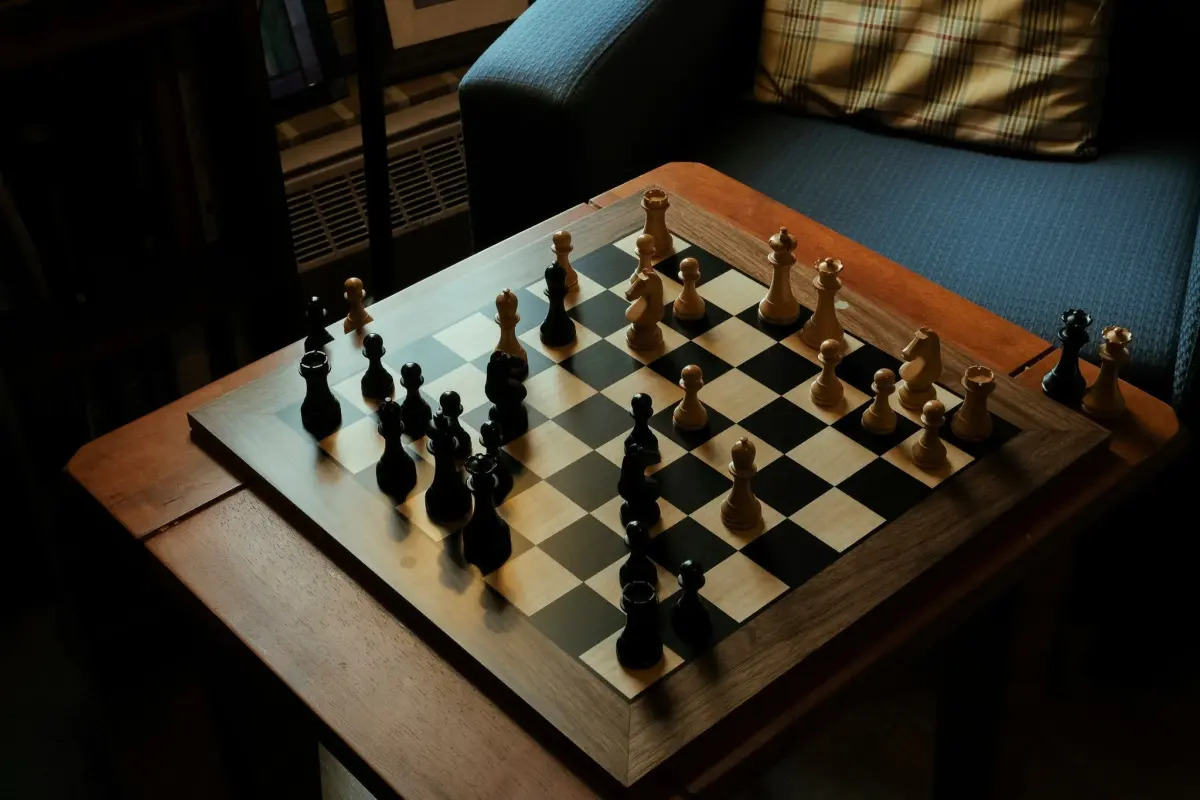
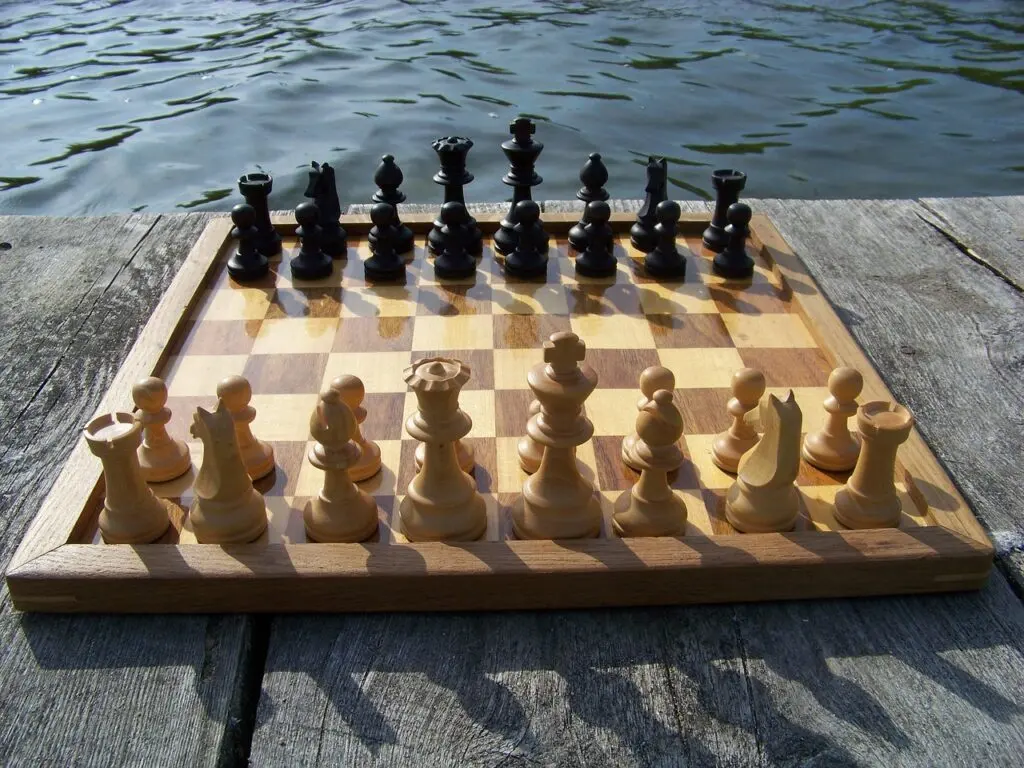
The chessboard consists of 64 squares arranged in an 8x8 grid, alternating between light and dark colors. Before placing pieces, ensure the board is oriented so that each player has a light-colored square in their bottom-right corner. The pieces are arranged in two rows on each side, with the back rank containing the major pieces and the front rank containing the eight pawns.
- Place the rooks on the corner squares.
- Position the knights next to the rooks, followed by the bishops.
- Place the queen on the square matching her color (white queen on white, black queen on black).
- Place the king on the remaining square next to the queen.
- Arrange all eight pawns in the row directly in front of these pieces.
This standardized setup ensures both players begin with identical resources. Proper orientation is vital because it dictates the movement of the bishops and the final positioning of the kings and queens.
How do chess pieces move
Each of the six types of chess pieces moves according to specific rules. Pawns move forward one square, though they capture diagonally and have the option to move two squares on their first turn. Rooks move any number of squares horizontally or vertically, while bishops move any number of squares diagonally. Knights are unique, moving in an "L" shape—two squares in one cardinal direction and one square perpendicularly—and are the only pieces that can jump over others.
- King: Moves one square in any direction.
- Queen: Combines the movement of the rook and bishop.
- Knight: Moves in an L-shape and jumps over pieces.
- Bishop: Moves diagonally across the board.
- Rook: Moves in straight lines across ranks and files.
- Pawn: Moves forward, captures diagonally, and promotes upon reaching the end.
Mastering these movement patterns is the foundation of all strategy. Beginners should practice moving each piece type individually to understand their reach and limitations before attempting full games.
Best opening strategies for beginners
The opening phase of a chess game focuses on controlling the center of the board, developing minor pieces, and ensuring king safety. Controlling the four central squares—e4, d4, e5, and d5—is critical because it allows your pieces to exert influence over the largest portion of the board. Beginners should prioritize moving their knights and bishops toward the center early, rather than moving the same piece multiple times or bringing the queen out too early.
A common and highly effective opening for white is the Italian Game, which begins with 1. e4 e5, followed by 2. Nf3 Nc6 and 3. Bc4. This setup develops pieces rapidly and prepares for castling. Castling is a special move that protects the king by tucking it behind a wall of pawns and connecting the rooks. By focusing on these fundamental principles, players can establish a solid position that supports both defensive stability and aggressive tactical opportunities in the middle game.
Common mistakes when starting chess
Many beginners fall into the trap of "hope chess," where they make moves hoping their opponent does not notice a threat, rather than playing with a clear plan. Another frequent error is neglecting king safety by delaying castling or pushing the pawns in front of the king, which creates structural weaknesses. Players also often fail to account for their opponent's last move, leading to the loss of valuable pieces to simple, avoidable tactical blunders.
- Moving the same piece multiple times in the opening.
- Bringing the queen out too early, making her a target for smaller pieces.
- Ignoring the opponent's threats and focusing only on one's own plan.
- Leaving pieces undefended or "hanging" on the board.
- Failing to control the center squares.
Avoiding these mistakes requires a disciplined approach to every turn. Before making any move, ask yourself what your opponent's last move threatened and whether your intended move leaves any of your pieces vulnerable to capture.
How to win a game of chess
The ultimate objective in chess is to achieve checkmate, which occurs when the king is under direct attack and has no legal moves to escape. If a player cannot reach checkmate, the game can also end in a draw through stalemate, where a player has no legal moves but is not currently in check. Understanding how to coordinate pieces to trap the enemy king is the culmination of all chess study.
As you gain experience, practice basic endgames, such as delivering checkmate with a king and rook against a lone king. These exercises teach you how to restrict the opponent's movement and force the king to the edge of the board. While tactical combinations and complex strategies are exciting, the ability to convert a material advantage into a win through precise endgame technique is what separates novice players from masters. Always remain patient, analyze your losses to learn from errors, and enjoy the process of improving your tactical vision.
Key facts
- A standard chessboard consists of 64 squares arranged in an 8x8 grid.
- Each player begins with 16 pieces: one king, one queen, two rooks, two bishops, two knights, and eight pawns.
- The board must be oriented so that the bottom-right square is always a light-colored square.
- White always makes the first move in a game of chess, providing a slight statistical advantage.
- The primary objective is to checkmate the opponent's king, meaning it is under attack and cannot escape.
- Beginners should prioritize controlling the center four squares of the board early in the game.
The bottom line
Starting chess requires mastering the unique movement of each piece and understanding the fundamental goal of trapping the opponent's king. By focusing on controlling the center of the board and developing your pieces early, you build a strong foundation for any match. Avoid the temptation to move the same piece repeatedly, as consistent development is the key to maintaining pressure and securing a decisive victory.
People also ask
How do the pieces move?
Each piece has unique rules: pawns move forward one square, knights move in an L-shape, bishops move diagonally, rooks move horizontally or vertically, and the queen can move in any straight direction. The king moves only one square in any direction.
What is the most common mistake for beginners?
Many new players move the same piece multiple times in the opening instead of developing all their pieces. This leaves the rest of the army inactive and makes the king vulnerable to early attacks.
How do I win if I cannot checkmate?
A game can also end in a draw if both players agree, if there is insufficient material to checkmate, or if the game reaches a stalemate where the player whose turn it is has no legal moves but is not in check.
Is it better to capture pieces or focus on the king?
While capturing pieces helps weaken the opponent, you should only trade pieces if it improves your position or prevents a loss. Always keep your ultimate goal of checkmating the king as the primary focus of your strategy.
How long does a typical chess game last?
Games can vary from a few minutes in "blitz" formats to several hours in professional tournament play. For beginners, a standard game usually lasts between 20 and 40 minutes depending on how quickly players make their decisions.
Should I memorize opening moves?
Memorizing specific opening sequences is less important than understanding the principles of development and safety. Focus on controlling the center, protecting your king, and ensuring your pieces are active before worrying about complex theory.
This answer was created with the help of AI research tools and reference sources. Spotted an error? Let us know — we correct mistakes quickly. See our editorial policy.