How big do humpback whales get?
Short answer
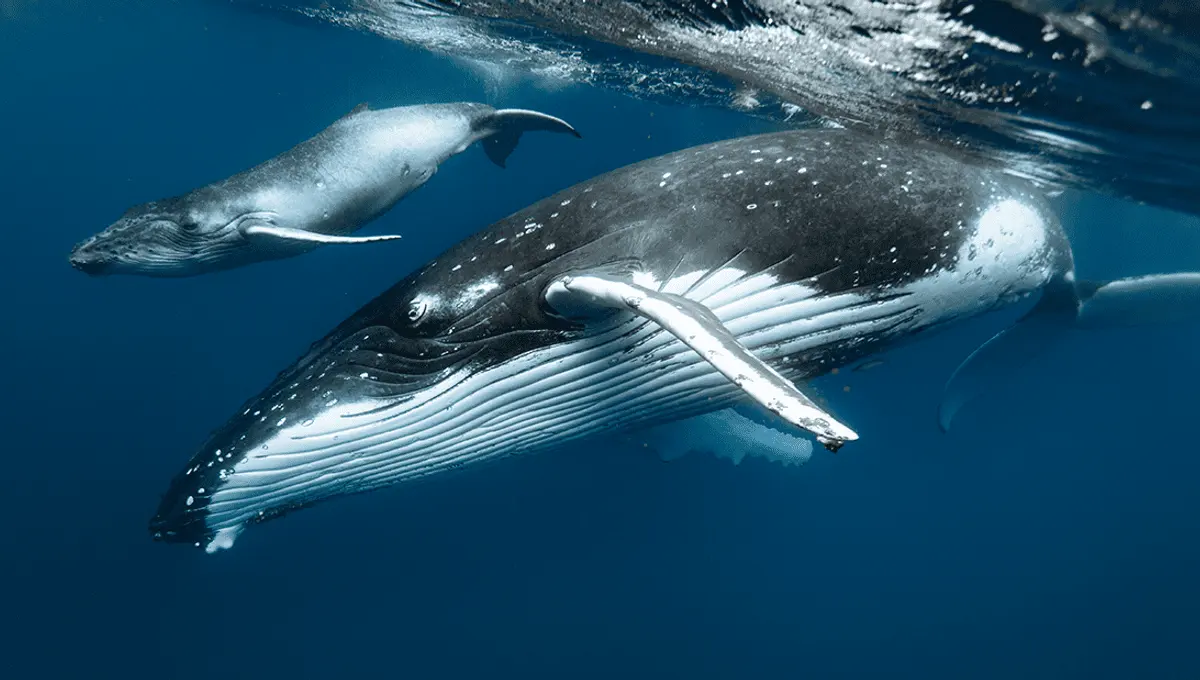
Adult humpback whales typically reach lengths of 40 to 50 feet (12 to 15 meters). Females are generally larger than males, often reaching the upper end of this range. In terms of weight, these massive marine mammals weigh between 25 and 40 tons, though exceptional individuals can occasionally exceed these standard measurements.
On this page
- How big do humpback whales get in length and weight?
- How does the size of a humpback whale calf compare to an adult?
- Why do female humpback whales grow larger than males?
- How do researchers measure the size of a whale in the wild?
- Common mistakes when estimating the size of humpback whales
- Key facts
- People also ask
How big do humpback whales get in length and weight?
Humpback whales (Megaptera novaeangliae) are among the largest animals on Earth. While they do not reach the gargantuan proportions of the blue whale, they are still immense creatures. An average adult measures between 40 and 50 feet in length. Some individuals, particularly females, have been recorded reaching lengths of up to 60 feet, though this is rare.
Weight is equally impressive, with the average adult tipping the scales at 25 to 40 tons. This weight is supported by the buoyancy of the ocean, which allows them to grow to such massive proportions without the structural stress of gravity on land. Their bodies are robust and stocky, designed for long-distance migrations across global oceans.
- Average length: 40–50 feet (12–15 meters)
- Maximum recorded length: Approximately 60 feet (18 meters)
- Average weight: 25–40 tons (50,000–80,000 pounds)
- Calf birth weight: Approximately 1–2 tons
How does the size of a humpback whale calf compare to an adult?
At birth, a humpback whale calf is already quite large by human standards. A newborn typically measures between 10 and 15 feet long and weighs about one to two tons. Despite this size, the calf is vulnerable and relies entirely on its mother for protection and nutrition during its first year of life.
Growth during the nursing period is rapid, driven by the mother’s extremely fatty milk. The calf may gain as much as 100 pounds per day during the peak of the nursing season. This accelerated growth rate is essential for the calf to build the blubber reserves required for its first migration from tropical breeding grounds to cold, nutrient-rich feeding waters.
- Birth: Calf measures 10–15 feet and weighs 1–2 tons.
- Nursing: Calf gains roughly 100 pounds daily from high-fat milk.
- Weaning: Occurs around 6 to 10 months of age.
- Maturity: Reaches full adult size between 5 and 10 years.
Why do female humpback whales grow larger than males?
In the world of humpback whales, sexual dimorphism favors the female. Females are consistently larger than their male counterparts, a trait common in many baleen whale species. This size difference is thought to be an evolutionary adaptation related to the massive energy requirements of gestation and lactation.
A female must carry a fetus for nearly a year and then produce enormous quantities of milk to support a rapidly growing calf. Larger body size allows for greater energy storage in the form of blubber, which is vital when the whale is fasting during migration or breeding. Males, meanwhile, focus their energy on competitive displays and vocalizations to attract mates, rather than the physiological demands of reproduction.
How do researchers measure the size of a whale in the wild?
Measuring a massive, moving animal in the middle of the ocean presents significant logistical challenges. Historically, whalers provided the most accurate measurements, but modern science relies on non-invasive techniques. Photogrammetry has become the gold standard for estimating whale size without disturbing the animal.
By using high-resolution cameras mounted on drones, researchers can capture images of whales from directly above. By including a known reference point or using lasers to calibrate the distance, they can calculate the exact length of the whale with high precision. This method allows scientists to track the growth of specific individuals over many years, providing deep insights into population health and environmental impacts.
- Drone photogrammetry: Uses aerial imagery and laser scaling.
- Laser photogrammetry: Projects dots of known distance onto the whale’s back.
- Historical records: Derived from catch data, though less common today.
- Visual estimation: Used by experienced observers, though prone to human error.
Common mistakes when estimating the size of humpback whales
A frequent error when observing humpback whales is overestimating their total length while they are at the surface. Because a whale rarely exposes its entire body at once, the human eye often struggles to judge the scale of the animal against the vast, featureless backdrop of the ocean. The "foreshortening" effect, caused by the angle of the animal in the water, can make a 40-foot whale appear much smaller or larger depending on the observer's position.
Another mistake is assuming that all whales of a certain age are the same size. Like humans, humpback whales exhibit individual variation in growth rates based on food availability, health, and genetic factors. Relying on "average" statistics can lead to inaccurate conclusions about the health of a specific population. Always verify observations against scientific data rather than relying on anecdotal estimates from casual sightings or photos.
Key facts
- Adult humpback whales typically reach lengths of 40 to 50 feet (12 to 16 meters).
- Females are generally larger than males, often measuring several feet longer on average.
- An adult humpback can weigh between 25 and 40 tons, roughly equivalent to a dozen large SUVs.
- Their pectoral fins are exceptionally long, growing up to 15 feet, which is about one-third of their total body length.
- Newborn calves are born at approximately 13 to 16 feet long and weigh about 1 to 2 tons.
- Avoid estimating size by looking at the dorsal fin alone, as it is small and often obscured by the whale's massive back.
The bottom line
Humpback whales are massive marine mammals that grow to impressive lengths of 50 feet and weights of 40 tons. While females are slightly larger than males, both sexes share the iconic long pectoral fins that define the species. Understanding their size helps researchers track population health and migration patterns, ensuring these gentle giants continue to thrive in our oceans for generations to come.
People also ask
How long do humpback whales live?
Humpback whales have an average lifespan of 45 to 50 years in the wild. Scientists determine their age by examining the waxy earplugs that accumulate layers over time, similar to counting tree rings.
Do humpback whales have teeth?
No, humpback whales are baleen whales, meaning they possess plates made of keratin instead of teeth. They use these fringed plates to filter krill and small schooling fish from vast gulps of seawater.
How fast can a humpback whale swim?
While they are generally slow cruisers moving at 3 to 5 miles per hour, they can reach bursts of speed up to 15 to 17 miles per hour when threatened. Their massive size makes sustained high-speed travel difficult.
How much do they eat in a single day?
During the summer feeding season, a humpback whale can consume up to 3,000 pounds of food daily. They rely on these intense feeding periods to build up the blubber reserves needed for migration.
Can you tell the age of a whale by its size?
Size is a reliable indicator for distinguishing calves from adults, but it is not precise for aging mature whales. Once a humpback reaches physical maturity around age 10, its growth slows significantly.
Why do humpback whales breach?
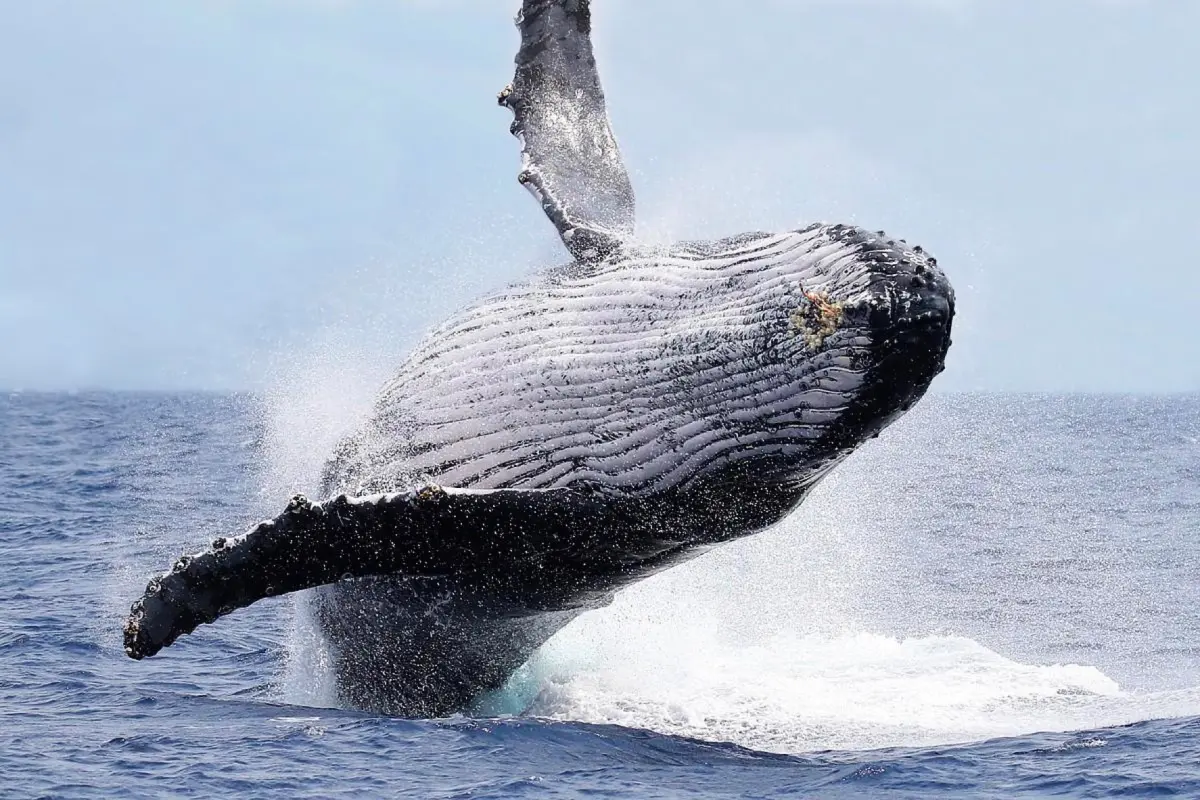
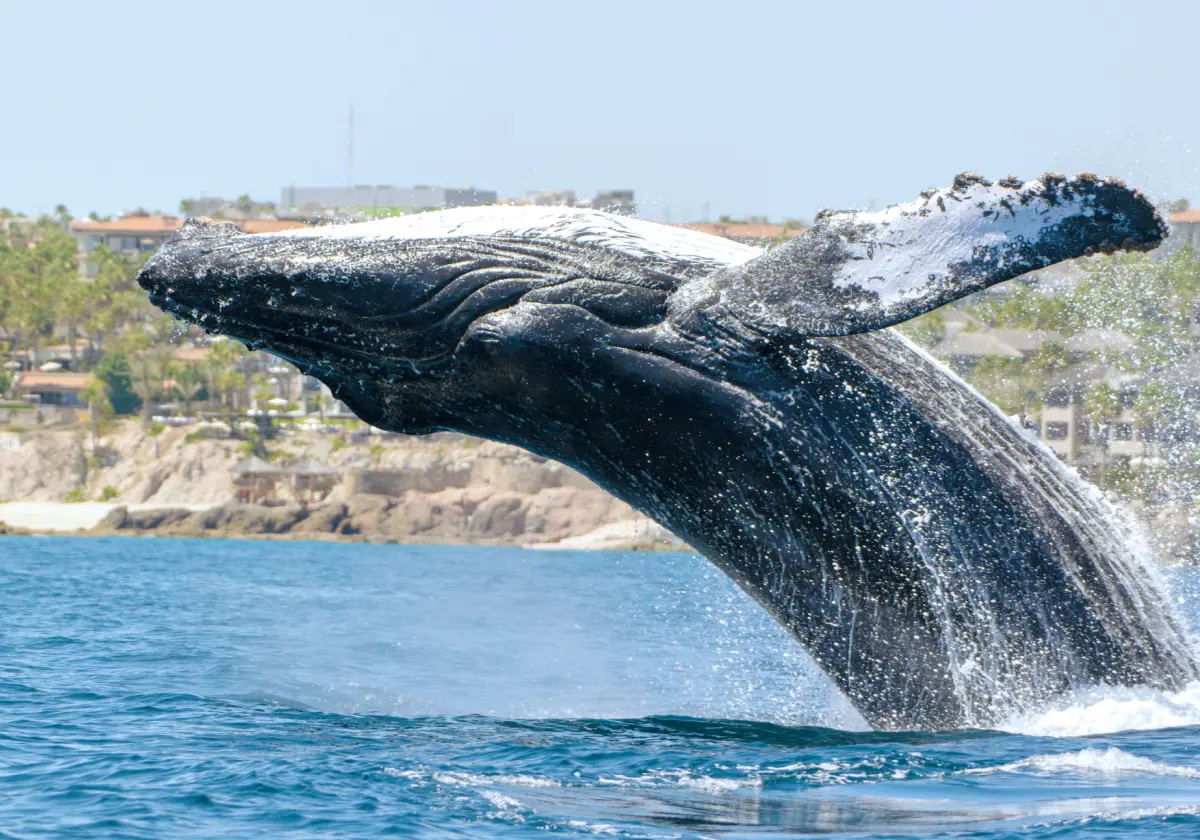
Scientists believe breaching—leaping out of the water—serves multiple purposes, including communication, removing parasites, or simply playing. The sheer force of a 40-ton animal hitting the water creates a massive splash visible from miles away.
This answer was created with the help of AI research tools and reference sources. Spotted an error? Let us know — we correct mistakes quickly. See our editorial policy.