What do axolotls eat?
Short answer
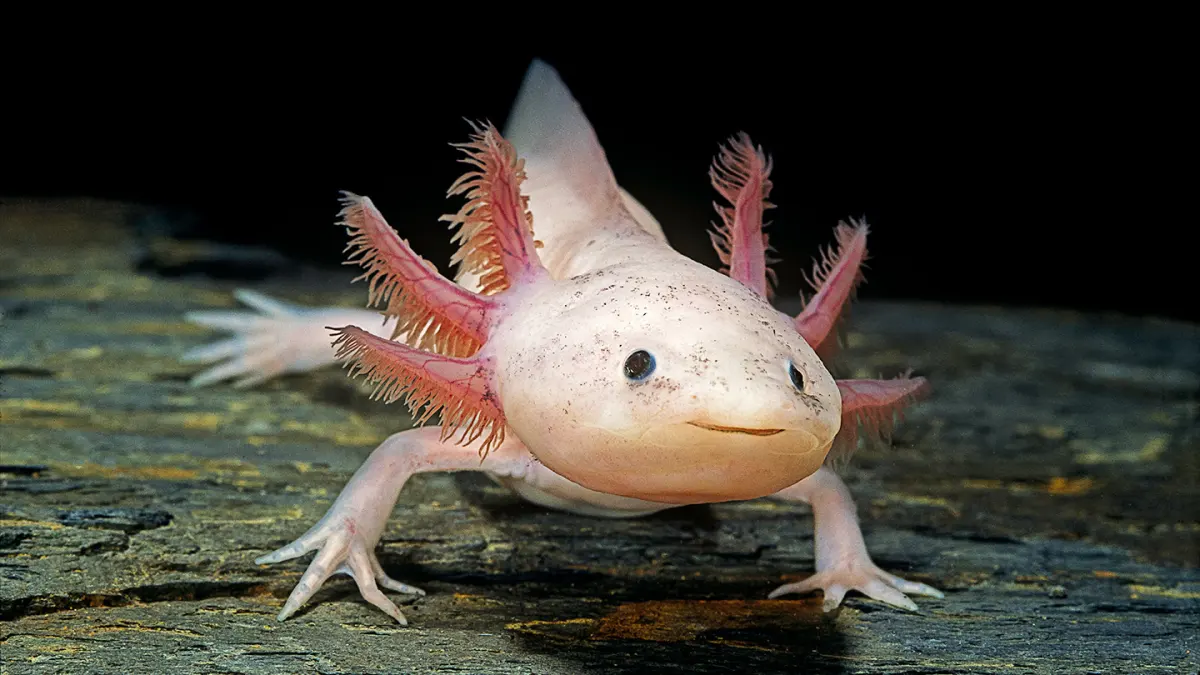
Axolotls are carnivorous predators that require a high-protein diet to thrive. In captivity, they primarily eat earthworms, bloodworms, brine shrimp, and specialized sinking pellets. Because they lack teeth, they rely on suction to capture and swallow their prey whole, making the size and texture of their food critical for digestion.
On this page
What do axolotls eat in the wild?
In their natural habitat, the ancient lake systems of Xochimilco in Mexico, axolotls are opportunistic carnivores. They hunt at night, using their keen sense of smell and vibration-sensing lateral lines to locate prey in murky water. Their natural diet consists of small fish, insect larvae, crustaceans, mollusks, and occasionally smaller amphibians. Because these lake environments provide a diverse array of living organisms, wild axolotls maintain a balanced nutritional profile through constant foraging.
This predatory behavior is deeply ingrained in their biology. They are ambush hunters that remain motionless until prey drifts within striking distance, at which point they expand their throat to create a vacuum. This suction force pulls the prey directly into their mouths. In the wild, they do not rely on a single food source, which helps them survive seasonal fluctuations in prey availability. Understanding this natural hunting instinct is the first step toward providing proper care in a home aquarium setting.
Best food for axolotls in captivity
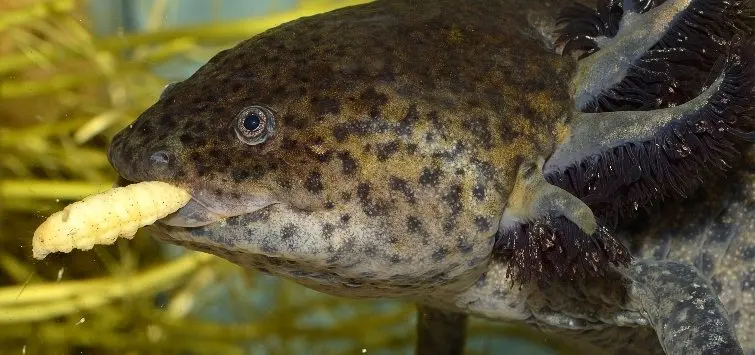
For captive axolotls, the most nutritious staple food is the humble earthworm. Earthworms, such as nightcrawlers or red wigglers, provide an ideal balance of protein, vitamins, and minerals. They are widely considered the gold standard for axolotl nutrition because they mimic the natural prey profile of the species. While pellets can be used as a supplement, they should never replace live or frozen whole foods entirely.
When selecting food, prioritize variety to ensure your axolotl receives all necessary nutrients. Consider the following options for a healthy rotation:
- Earthworms (nightcrawlers or red wigglers)
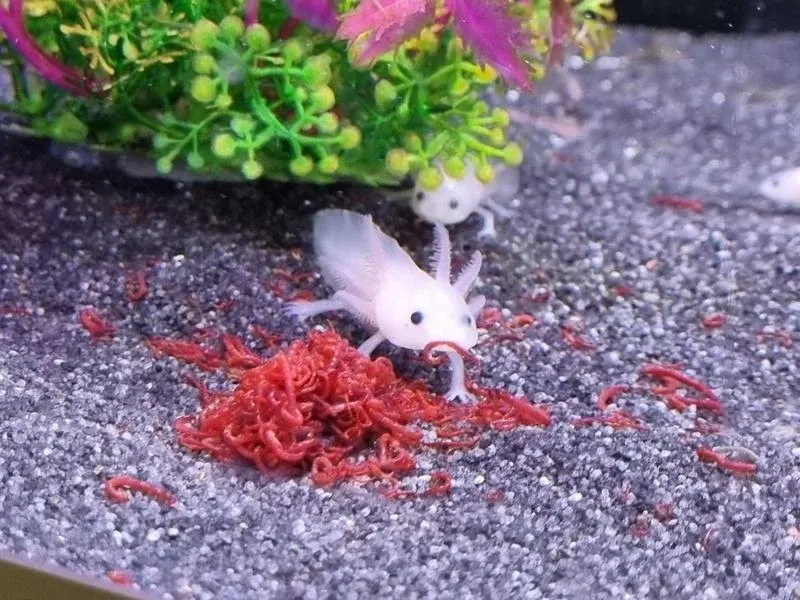
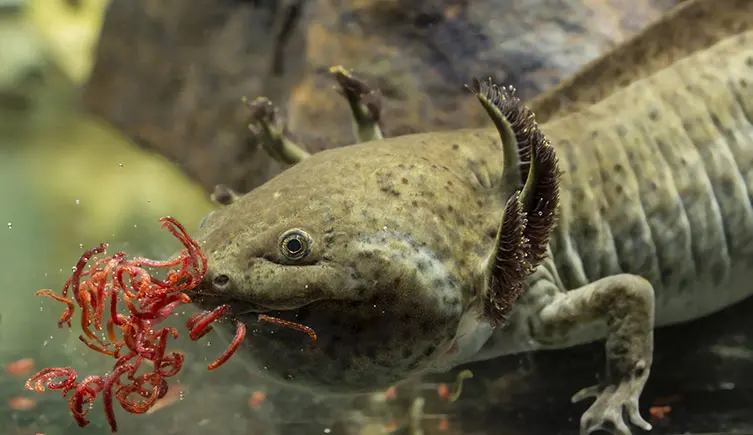
- Frozen bloodworms (best for juveniles)
- Brine shrimp (excellent for hatchlings)
- High-quality sinking salmon or trout pellets
- Frozen mysis shrimp
Always ensure that any live food is sourced from a reputable supplier to avoid introducing parasites or pesticides into your aquarium. If you choose to feed red wigglers, be aware that they secrete a bitter slime that some axolotls dislike; rinsing them thoroughly or blanching them briefly can help make them more palatable.
How to feed axolotls properly
Feeding an axolotl requires patience and a gentle touch. Because they are sight-limited and rely on suction, you should present food directly in front of their mouths using long, blunt-tipped aquarium tweezers. This method prevents the food from falling into the substrate, where it might be ignored or cause water quality issues. If you drop food into the tank, ensure it is placed on a flat surface or a feeding dish to prevent the axolotl from accidentally swallowing gravel.
Follow these steps for a successful feeding session:
- Use long, aquarium-safe feeding tongs to hold the food near the axolotl's nose.
- Gently wiggle the food to mimic movement, which triggers their predatory strike reflex.
- Allow the axolotl to latch onto the food and swallow it completely before offering the next piece.
- If the axolotl refuses the food, remove it immediately to prevent it from decaying in the tank.
Young axolotls require daily feedings to support their rapid growth, while adults generally thrive on a schedule of two to three times per week. Always monitor your pet’s body condition; the width of their stomach should roughly match the width of their head.
Common mistakes when feeding axolotls
One of the most frequent errors owners make is overfeeding, which leads to obesity and severe water pollution. Uneaten food decomposes rapidly, spiking ammonia and nitrate levels, which are toxic to axolotls. Another common mistake is feeding them improper prey, such as goldfish or other tank mates that may carry diseases or have sharp spines that can damage the axolotl's delicate digestive tract. Never feed your axolotl mammalian meat, such as beef heart or chicken, as they cannot properly digest the fats and proteins found in warm-blooded animals.
Furthermore, many beginners make the mistake of using gravel as a substrate. Axolotls are notorious for "vacuuming" up everything in their path while feeding. If they swallow gravel, it can lead to dangerous intestinal impactions that often require veterinary intervention. Always use fine sand or a bare-bottom tank to ensure that any accidental ingestion does not result in a fatal blockage. Keeping the tank clean and the diet strictly aquatic is essential for long-term health.
Why axolotl digestion matters
Axolotls are ectothermic, meaning their metabolism is heavily influenced by the temperature of their environment. In cooler water, their digestion slows down significantly compared to warmer conditions. If you feed your axolotl while the water temperature is too high or too low, they may struggle to process the nutrients, leading to regurgitation or lethargy. Maintaining a consistent tank temperature between 60 and 68 degrees Fahrenheit is crucial for keeping their digestive system functioning at peak efficiency.
Proper waste management is the final component of a healthy feeding regimen. Because axolotls have high-protein diets, they produce a significant amount of waste. Regular water changes and a robust filtration system are necessary to mitigate the impact of this waste on the tank's ecosystem. By observing your axolotl’s appetite and monitoring their waste, you can adjust their feeding schedule to ensure they remain active, healthy, and free from the common digestive ailments that plague captive specimens. Consistent care ensures they live their full lifespan.
Key facts
- Axolotls are strict carnivores that require a high-protein diet to thrive in captivity.
- Earthworms are considered the gold standard for nutrition due to their balanced mineral content.
- Avoid feeding axolotls live feeder fish, as these can introduce parasites or nip at the axolotl's delicate gills.
- Juvenile axolotls require daily feedings, while healthy adults typically only need to eat every two to three days.
- Always remove uneaten food within 30 minutes to prevent ammonia spikes and water quality degradation.
- Never feed your axolotl mammalian meat, such as beef or chicken, as they cannot properly digest animal fats.
The bottom line
Providing a healthy diet for an axolotl centers on high-protein, aquatic-based foods like earthworms and sinking pellets. By avoiding mammalian meats and risky feeder fish, you ensure your pet remains free from digestive issues and infections. Always monitor your axolotl’s body condition and maintain pristine water quality, as proper nutrition is the most effective way to guarantee a long, healthy life for your aquatic companion.
People also ask
Can axolotls eat pellets?
Yes, high-quality sinking salmon or trout pellets designed for carnivorous amphibians are excellent staples. Ensure the pellets are soft enough for the axolotl to swallow easily without choking.
Are bloodworms a healthy main diet?
Bloodworms are acceptable as an occasional treat but lack the necessary nutritional density to serve as a primary food source. Using them exclusively can lead to stunted growth and nutrient deficiencies.
How do I know if my axolotl is full?
A well-fed axolotl will have a stomach that is roughly the same width as its head. If the stomach appears significantly wider or bulging, you are likely overfeeding your pet.
Can I feed my axolotl insects like crickets?
Crickets can be fed to axolotls, but they must be gut-loaded and have their jumping legs removed first. Be cautious, as some axolotls may refuse them due to the hard exoskeleton.
What should I do if my axolotl stops eating?
First, check your water temperature and parameters, as stress from poor water quality is the most common cause of appetite loss. If the water is perfect, consult an exotic veterinarian, as internal parasites or impaction may be present.
Do axolotls need vitamin supplements?
If you provide a varied diet consisting of earthworms and high-quality pellets, additional supplements are generally unnecessary. Over-supplementation can sometimes cause more harm than good for these sensitive amphibians.
This answer was created with the help of AI research tools and reference sources. Spotted an error? Let us know — we correct mistakes quickly. See our editorial policy.