Who painted Guernica?
Short answer
Pablo Picasso painted Guernica in 1937. The Spanish artist created this monumental mural-sized oil painting in response to the bombing of the Basque town of Guernica during the Spanish Civil War. It remains one of the most powerful anti-war statements in art history, currently housed at the Museo Reina Sofía in Madrid.
On this page
Why did Picasso paint Guernica?
In early 1937, the Spanish Republican government commissioned Picasso to create a mural for the Spanish Pavilion at the Paris International Exposition. Initially, Picasso struggled with a subject, but the brutal aerial bombing of the town of Guernica on April 26, 1937, provided his focus. Nazi German and Fascist Italian warplanes, acting in support of General Francisco Franco’s Nationalist forces, devastated the town in an unprecedented attack on civilians.
Picasso was living in Paris at the time and was deeply affected by the newspaper reports and graphic black-and-white photographs of the destruction. He abandoned his previous ideas and began working on the mural in May 1937. The painting serves as a visceral protest against the atrocities of war, utilizing a stark palette of black, white, and gray to emphasize the tragedy and chaos of the event.
How was the painting created?
The creation of Guernica was a rapid and intense process, completed in just over a month. Picasso worked in his studio on the Rue des Grands-Augustins in Paris, often documenting the progress of the canvas through photographs taken by his partner, Dora Maar. This documentation provides a rare glimpse into the evolution of the composition and the artist's shifting creative choices.
- Initial sketches: Picasso produced dozens of preliminary studies and drawings to map out the positioning of the figures.
- Canvas preparation: He used a massive canvas measuring approximately 11.5 feet by 25.5 feet to ensure the work had a commanding, mural-like presence.
- Execution: He applied oil paint directly onto the primed surface, making significant adjustments to the placement of the horse, the bull, and the fallen soldier as he worked.
- Final touches: The painting was completed in June 1937, just in time for the opening of the Exposition.
What are the symbols in Guernica?
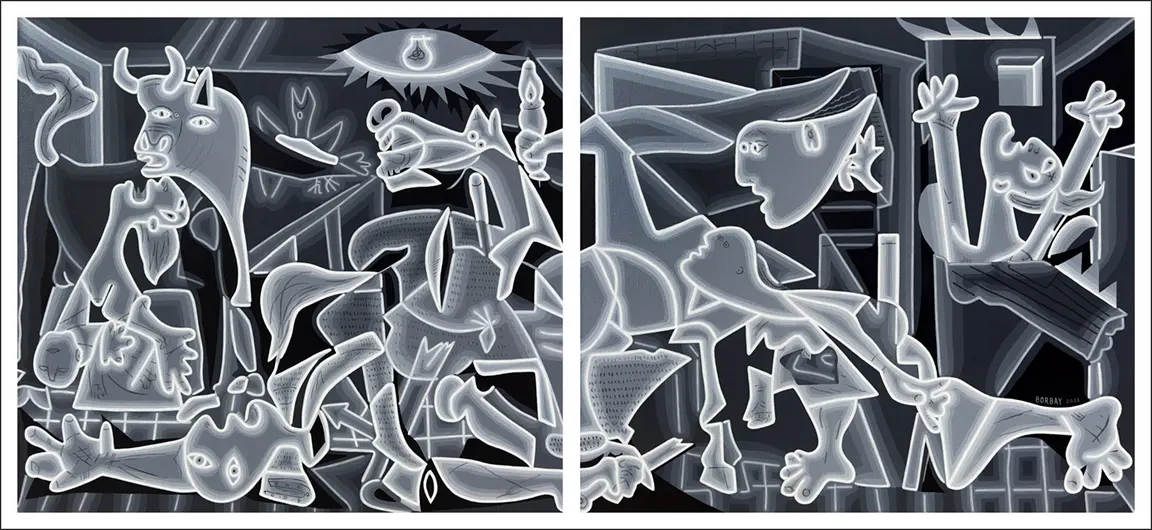
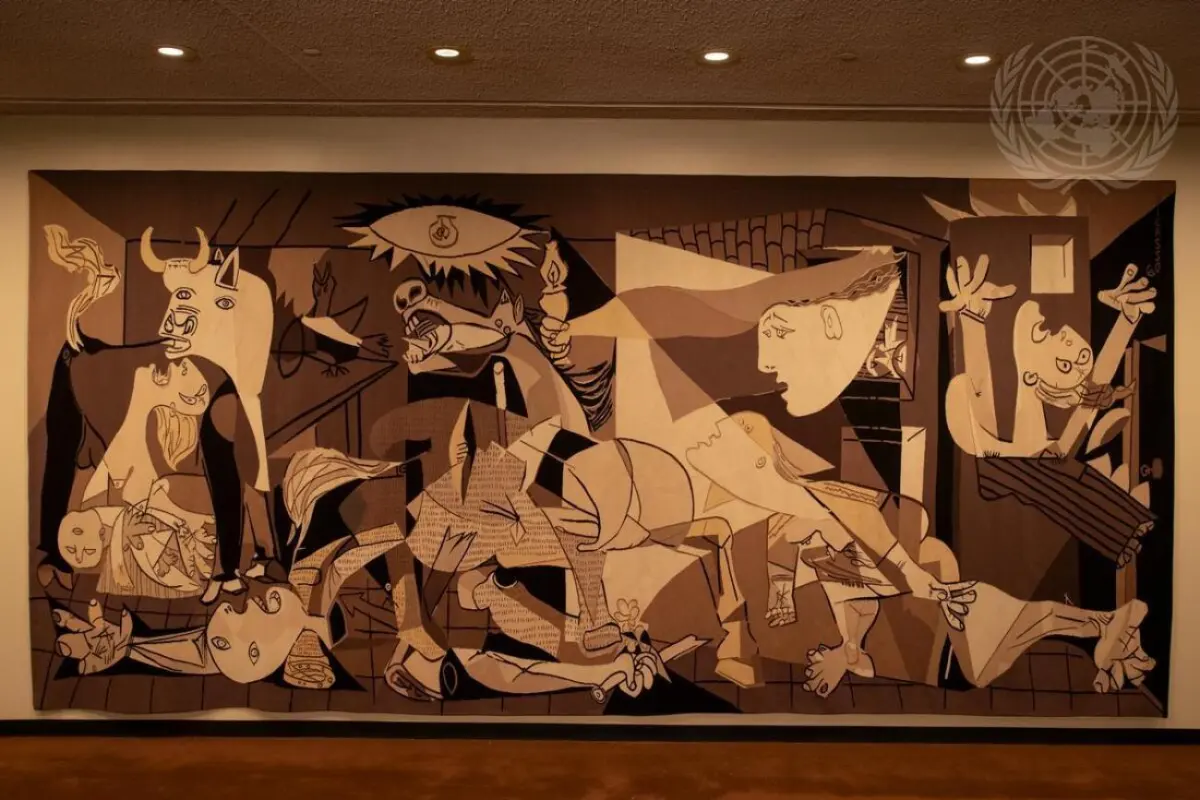
The painting is known for its complex symbolism, which avoids a literal depiction of the bombing in favor of universal suffering. The figures are distorted and anguished, reflecting the psychological and physical trauma of the attack. While Picasso rarely offered definitive interpretations, art historians have identified several key elements that contribute to the work's narrative power.
- The Bull: Often interpreted as a symbol of Spain or the brutality of fascism, though its meaning remains intentionally ambiguous.
- The Horse: Represents the suffering of the people, its mouth open in a silent scream of agony.
- The Light Bulb: Often viewed as an eye or a representation of the cold, mechanical nature of modern technology used for destruction.
- The Mother and Child: A traditional motif of the Pietà, emphasizing the loss of innocence and the grief of the victims.
- The Broken Sword: Symbolizes the defeat of the soldiers and the futility of the conflict.
Where can you see Guernica today?
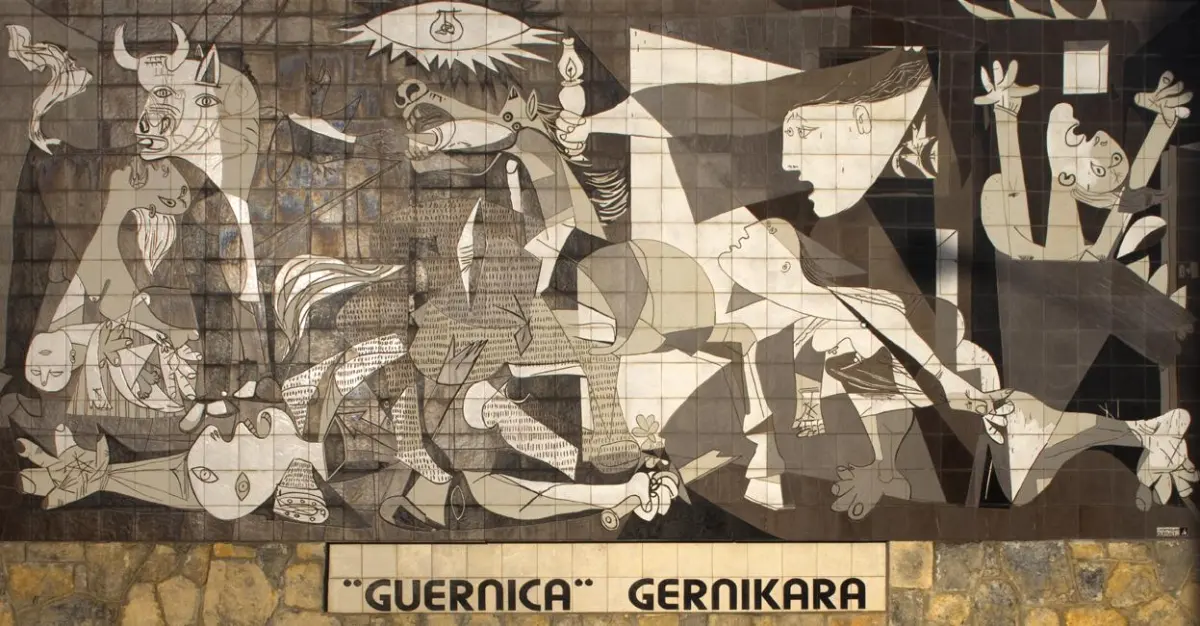
For many years, Guernica did not reside in Spain because Picasso refused to allow the painting to return while General Franco remained in power. He requested that the work only be returned to Spain once the country had restored its democratic republic. Consequently, the painting spent several decades at the Museum of Modern Art (MoMA) in New York City.
Following the death of Franco and the transition to democracy, the painting was finally returned to Spain in 1981. It was initially housed at the Casón del Buen Retiro before being moved to its permanent home at the Museo Reina Sofía in Madrid in 1992. Today, it is displayed in a dedicated gallery that allows viewers to experience the immense scale and emotional weight of the work in a controlled, respectful environment.
Common mistakes when analyzing Guernica
A frequent error is assuming that the painting depicts the specific mechanics of the air raid, such as planes or bombs. In reality, Picasso intentionally omitted direct references to modern warfare to ensure the painting remained a timeless indictment of violence. Viewers should avoid looking for a historical documentary and instead focus on the emotional resonance of the distorted figures.
Another mistake is over-analyzing the color palette as a stylistic choice rather than a functional one. The choice of black, white, and gray was heavily influenced by the monochromatic nature of the newsprint and photography that brought the news of the massacre to Picasso. By stripping away color, he forced the viewer to confront the stark, journalistic reality of the event. When visiting the museum, take time to observe the texture of the paint and the size of the figures, as these details are often lost in smaller reproductions. Avoid rushing through the gallery, as the painting requires time to fully process its overwhelming scale and intricate, layered composition.
Key facts
- Pablo Picasso painted Guernica in 1937.
- The mural is massive, measuring approximately 11.5 feet tall by 25.5 feet wide.
- Picasso created the work in response to the Nazi German bombing of the town of Guernica during the Spanish Civil War.
- The painting is executed entirely in a stark palette of black, white, and gray.
- It was commissioned by the Spanish Republican government for the 1937 World's Fair in Paris.
- The original painting is currently housed at the Museo Reina Sofía in Madrid, Spain.
The bottom line
Pablo Picasso’s Guernica remains a definitive masterpiece of 20th-century art, serving as a haunting visual indictment of war. Created in 1937 to protest the bombing of a Basque town, its monochromatic intensity and symbolic depth continue to resonate globally. Today, the mural stands as a permanent reminder of the human cost of conflict, preserved in Madrid as a testament to the power of political expression.
People also ask
What does the imagery in Guernica represent?
The painting features distorted figures, including a gored horse, a bull, and a screaming mother holding a dead child. These symbols represent the chaos, suffering, and brutality inflicted upon innocent civilians during wartime.
Why did Picasso choose to use only black, white, and gray?
Picasso used a monochromatic palette to evoke the immediacy and starkness of newspaper photography. This choice emphasizes the documentary-like quality of the tragedy and avoids the distraction of vibrant colors.
How long did it take for Picasso to paint Guernica?
Picasso completed the massive mural in just over a month. He began working on the canvas in May 1937 and finished it by early June of the same year.
Did Picasso ever return to Spain with the painting?
Picasso refused to let the painting enter Spain while Francisco Franco remained in power. It was kept at the Museum of Modern Art in New York City until 1981, six years after Franco’s death.
What is the significance of the bull in the painting?
The bull is a recurring symbol in Spanish culture and Picasso’s work. In Guernica, it is often interpreted as representing either the brutality of fascism or the enduring spirit of the Spanish people.
Is Guernica considered a political statement?
Yes, it is widely regarded as one of the most powerful anti-war statements in art history. It serves as a universal protest against the violence and destruction caused by modern aerial warfare.
This answer was created with the help of AI research tools and reference sources. Spotted an error? Let us know — we correct mistakes quickly. See our editorial policy.